
Picture this: your birds soaking up real sunlight, fluffing their feathers in a gentle sun shower, and truly stretching their wings in proper flight. An outdoor aviary isn't just a bigger cage; it's a slice of their natural world that gives their physical and mental wellbeing a massive boost. This guide is your complete Aussie roadmap to creating that perfect outdoor sanctuary.
Why an Outdoor Aviary Is a Game Changer for Your Birds
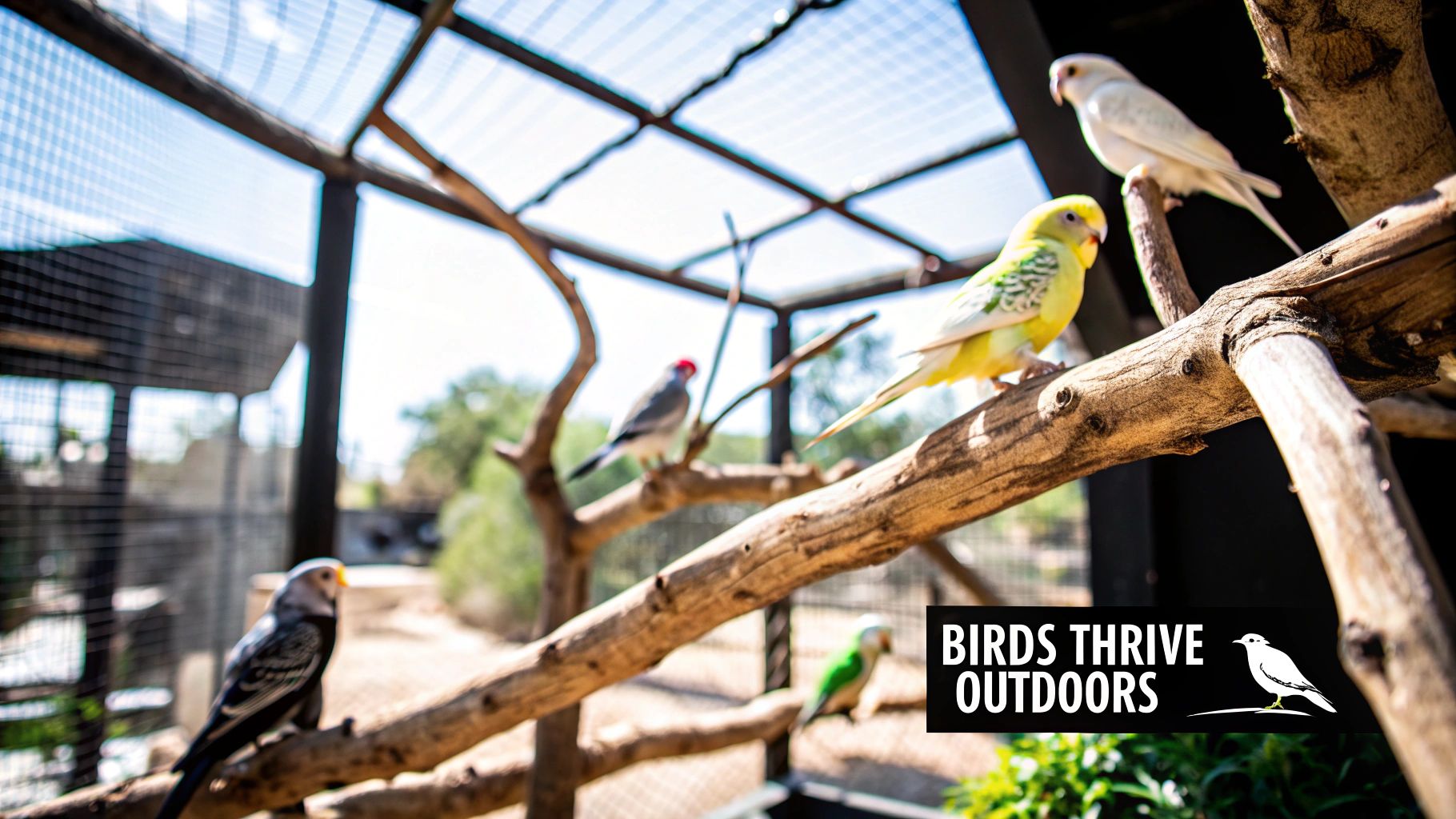
Moving your companion birds from an indoor cage to an outdoor aviary is one of the best things you can do for them. It’s so much more than a simple change of scenery. It's a fundamental shift that lets them tap into their wild instincts and provides a level of enrichment that life indoors just can't match.
Birds are wired to the natural cycles of dawn and dusk. Getting proper sunlight allows them to synthesise Vitamin D3, which is absolutely crucial for absorbing calcium, keeping bones strong, and ensuring healthy egg production. This direct sun exposure also helps regulate their sleep patterns and hormonal cycles, leading to a bird that’s not just healthier, but happier too.
Boosting Physical and Mental Health
An aviary offers something a cage never can: the space for genuine flight. The ability to fly—even short distances—strengthens muscles, improves heart health, and helps prevent the problems that come with a sedentary life. It’s a natural outlet for all that boundless energy.
The mental benefits are just as important. In an outdoor setup, your birds are surrounded by natural sounds, sights, and even weather like a light rain, which often triggers preening. This sensory richness is the ultimate cure for the boredom and stress that can lead to destructive habits like feather plucking or screaming.
Bird ownership is huge in Australia, which means countless feathered friends could benefit from an upgrade like this. A landmark survey found that 9% of Australian households keep birds as companions. That’s around 695,000 homes filled with the chirps and colours of our avian mates. You can learn more about Australia's pet ownership trends to see the full picture of our love for companion animals.
A Sanctuary for Natural Behaviours
Ultimately, an outdoor aviary allows birds to just be birds. It gives them the freedom to engage in natural behaviours that are often stifled indoors.
- Foraging: You can create a complex environment with natural ground cover and cleverly placed foraging toys, encouraging them to search for food just like they would in the wild.
- Socialising: For flock species, a bigger space allows for more natural social dynamics. This means less bickering and stronger bonds between birds.
- Bathing: A simple shallow dish becomes a bird bath where they can splash about in the sun or after a shower, which is vital for keeping their feathers in top condition.
Expert Advice: When you're setting up the inside of your aviary, think in 'zones'. Create a sheltered, quiet corner for roosting, an open area for flight and play, and a dedicated feeding station. This mimics a natural environment and helps your birds feel much more secure.
Choosing the Perfect Site and Aviary Design
The success of your outdoor bird aviary is decided long before the first wire panel goes up; it all starts with picking the perfect spot. The right location in your Aussie garden can be the difference between a thriving sanctuary and a constant headache. It’s really about creating a micro-environment where your birds feel safe, comfortable, and stimulated all year round.
When you're scouting your backyard, try to think like a bird. Where would you feel most secure? The ideal location is a careful balance of sun, shade, and shelter. Here in Australia, the intense sun is a massive factor. You'll want a spot that gets that gentle morning sun but is shielded from the harsh afternoon heat, which can quickly lead to life-threatening heat stress for your birds. Positioning the aviary near a deciduous tree is a fantastic natural solution—it offers a leafy canopy in summer and lets the welcome winter sun filter through when the leaves are gone.
Good drainage is another absolute non-negotiable. Steer clear of any low-lying areas that turn into a bog every time it rains. A damp aviary floor is a breeding ground for nasty bacteria, mould, and parasites. The site should have a gentle slope to let water run off, keeping the inside dry and hygienic.
Smart Design Tailored for Your Flock
Once you've locked in your spot, the fun part begins: the design. The size and layout of your bird aviary outdoor setup must be tailored to the birds who will live in it. A long, narrow flight is brilliant for finches who love to zip back and forth horizontally, whereas parrots really appreciate height for climbing and finding a high-up roosting spot. An indoor cage provides a safe space, but a proper outdoor aviary should offer a far more dynamic world. If you're weighing up the differences, our guide on choosing the right bird flight cage can help you grasp the core principles of creating a space that encourages natural movement.
No matter the species, some design features are essential for safety and practicality in an Australian setting.
- Double-Door Safety Porch: This is an absolute must-have. A two-door entry system creates a little airlock, which is your best defence against accidental escapes when you're going in or out. It's a simple addition that provides incredible peace of mind.
- Partially Covered Roof: Our weather can be all over the place. A solid roof over at least one-third to one-half of the aviary gives your birds crucial shelter from the scorching sun, heavy rain, and hail. The open section allows for natural light and lets your birds enjoy a bit of sunbathing or a light shower.
- Strategic Windbreaks: Protection from strong winds is vital. Position the aviary so its most solid wall faces the prevailing winds, or use solid panelling on one or two sides. This creates a calm, draught-free zone where your birds can retreat and feel secure.
Flooring and Foundations
The base of your aviary is its foundation—literally—for hygiene and security. A concrete slab is often the top choice for parrot owners because it’s incredibly easy to clean, disinfect, and stops predators from digging their way in. The downside? It can be a bit hard on birds' feet if it’s the only surface they have.
A brilliant compromise is to pour a concrete base but create designated 'natural' zones on top. You can build shallow trays or borders right onto the concrete and fill them with bird-safe materials like sand, fresh leaf litter, or organic soil. This encourages natural foraging behaviours and gives their feet a much softer surface to walk on.
Expert Advice: Before you finalise any plans, spend some real time just observing the spot you've chosen at different times of the day. Watch how the sun moves, where the shadows fall, and how the wind behaves. This simple bit of homework will help you orient your aviary perfectly to catch the morning sun while providing that all-important afternoon shade.
The table below is a great starting point for figuring out the right dimensions and bar spacing for some of Australia's most popular companion birds.
Aviary Size and Bar Spacing Guide for Popular Australian Companion Birds
This is a quick-reference guide to help you choose the right minimum dimensions and safe bar spacing for your outdoor aviary, based on the species you keep. Remember, these are minimums—bigger is always better!
| Bird Species | Minimum Recommended Dimensions (L x W x H) | Maximum Bar Spacing (mm) | Key Design Considerations |
|---|---|---|---|
| Budgies & Finches | 2.5m x 1m x 2m | 12mm | Needs a long flight path. Very susceptible to drafts, so a well-sheltered area is critical. |
| Cockatiels & Conures | 3m x 1.5m x 2m | 18mm | Appreciate vertical space for climbing. Prone to chewing, so durable materials are essential. |
| Galahs & Corellas | 4m x 2m x 2.2m | 25mm | Strong chewers that require robust mesh and framing. Need plenty of destructible toys. |
| Large Cockatoos & Macaws | 6m x 2.5m x 2.5m | 30mm | Require incredibly strong, welded mesh and steel frames. A double-door system is non-negotiable. |
Choosing the right size and bar spacing from the get-go prevents escapes and potential injuries, ensuring your birds have a safe and enriching home for years to come.
Selecting Safe and Durable Building Materials
When you're building an outdoor aviary here in Australia, the materials you choose are everything. It’s not just about building something that can handle our tough climate; it’s about creating a genuinely safe space for your birds. Get this part right, and you’ll save yourself a world of heartache—and vet bills—down the track.
The single most important decision you'll make is the mesh. Parrots are notorious chewers with powerful beaks, and they will test every inch of their enclosure. For them, the wrong material can literally be a death sentence. This is one area where you absolutely cannot cut corners.
Expert Advice: Never, ever use standard galvanised wire (the kind that's galvanised before welding) for a parrot aviary. The welding process leaves tiny, sharp zinc burrs that are toxic if ingested. Zinc poisoning can be fatal. Your only safe options are high-quality, galvanised-after-welding (GAW) mesh or, the ultimate choice, stainless steel.
The Great Debate: Wire Mesh
The wire you pick is the main barrier between your birds and the outside world. It has to stand up to everything from salty coastal air and heavy rain to determined predators and those incredibly strong beaks.
- Stainless Steel Mesh: This is the absolute gold standard for any outdoor bird aviary. It’s completely non-toxic, incredibly tough, and simply will not rust, even if you live right by the sea. Yes, the upfront cost is higher, but its sheer longevity and the peace of mind it brings make it a brilliant investment in your birds' health.
- Galvanised-After-Welding (GAW) Mesh: A more budget-friendly but still very safe choice. With GAW, the entire welded sheet is dipped into molten zinc after it’s been constructed. This process creates a smooth, durable coating with no dangerous sharp bits. It provides excellent protection against rust and is a solid, reliable option for most Australian conditions.
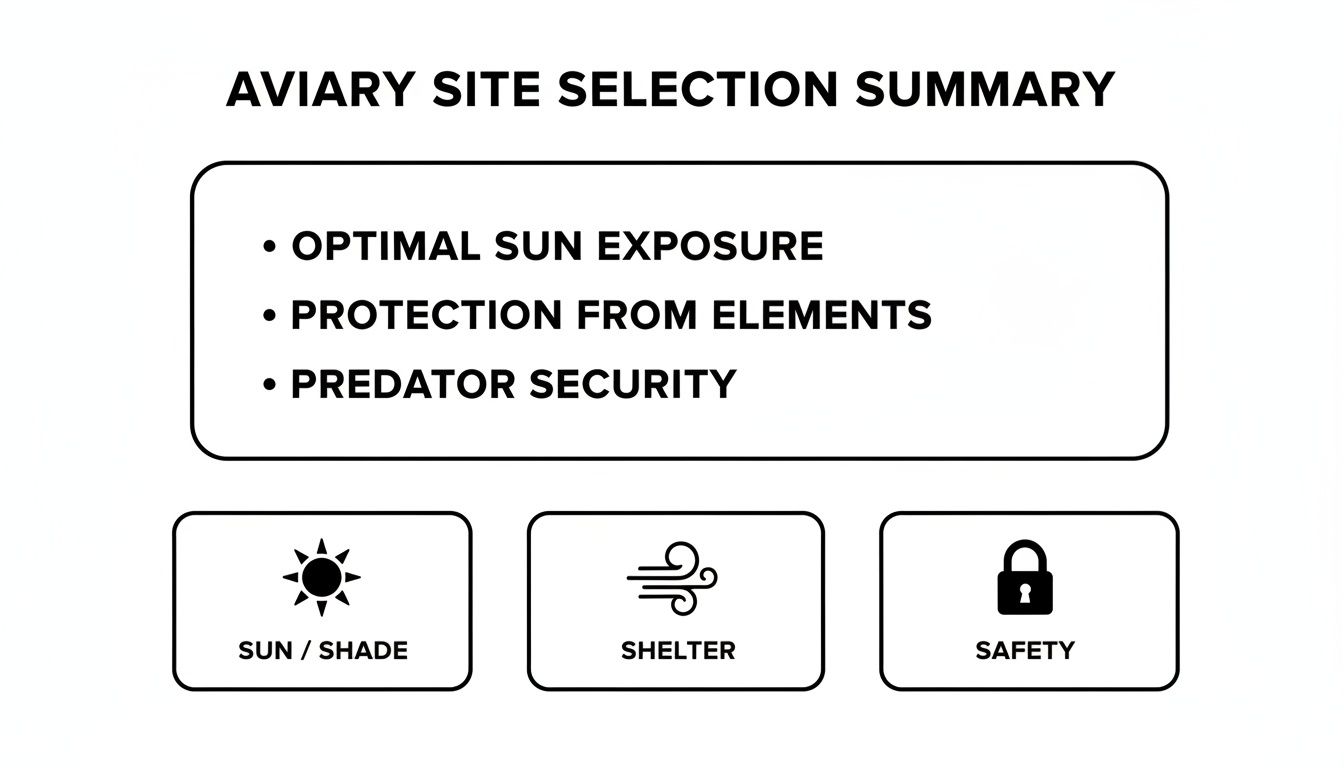
As the infographic shows, getting the balance of sun, shelter, and security right is key, and your material choices play directly into all three.
Framing Your Aviary: Timber vs. Metal
The frame is the skeleton of your aviary, giving it all its structural strength. Both timber and metal can work, but the best choice really depends on your budget, local climate, and, most importantly, the birds you’re housing.
For smaller birds like finches and budgies, a treated pine frame can look great and is pretty cost-effective. For parrots, however, timber is basically a very expensive chew toy. They can—and will—gnaw a wooden frame to pieces over time, which could eventually compromise the entire structure.
For any parrot, an aluminium or steel frame is by far the superior option. Aluminium is light and rust-proof, which makes it easy to work with. Steel offers unbeatable strength, a must-have if you’re planning to house large, powerful birds like cockatoos or macaws. Just make sure any metal frame is properly powder-coated or treated to stop rust and get rid of any sharp edges.
Finishing Touches for Ultimate Safety
Once you’ve got your main structure sorted, it’s the small details that make an aviary truly bird-safe. Every single joint, screw, and surface needs a bit of careful thought.
- Secure All Joints: Always use high-quality, bird-safe hardware. Every screw, bolt, and washer should be stainless steel to prevent rust and ensure they're non-toxic.
- Eliminate Sharp Edges: After cutting any mesh, take the time to file down every sharp point. Run your hands carefully over all the surfaces inside the aviary. If it feels scratchy to you, it could easily injure a bird’s foot or wing.
- Use Non-Toxic Finishes: If you decide to paint any part of the aviary, you must use a 100% non-toxic, bird-safe paint. Many standard paints release toxic fumes or contain lead and zinc, both of which are deadly to birds.
Finally, remember that safety extends to everything you put inside the aviary, too. When you’re adding perches or hanging up toys, always use bird-safe hardware. A good idea is to explore a range of stainless steel bird toy parts. This ensures every element you add is durable, non-toxic, and easy to keep clean, completing your birds’ safe haven.
Making Your Aviary a Fortress Against Predators and Weather
Here in Australia, building an outdoor aviary means creating more than just a home—it needs to be a fortress. The responsibility for keeping your birds safe from our incredibly clever local predators and unpredictable weather rests entirely with you. This isn't something you can cut corners on; their survival depends on it.
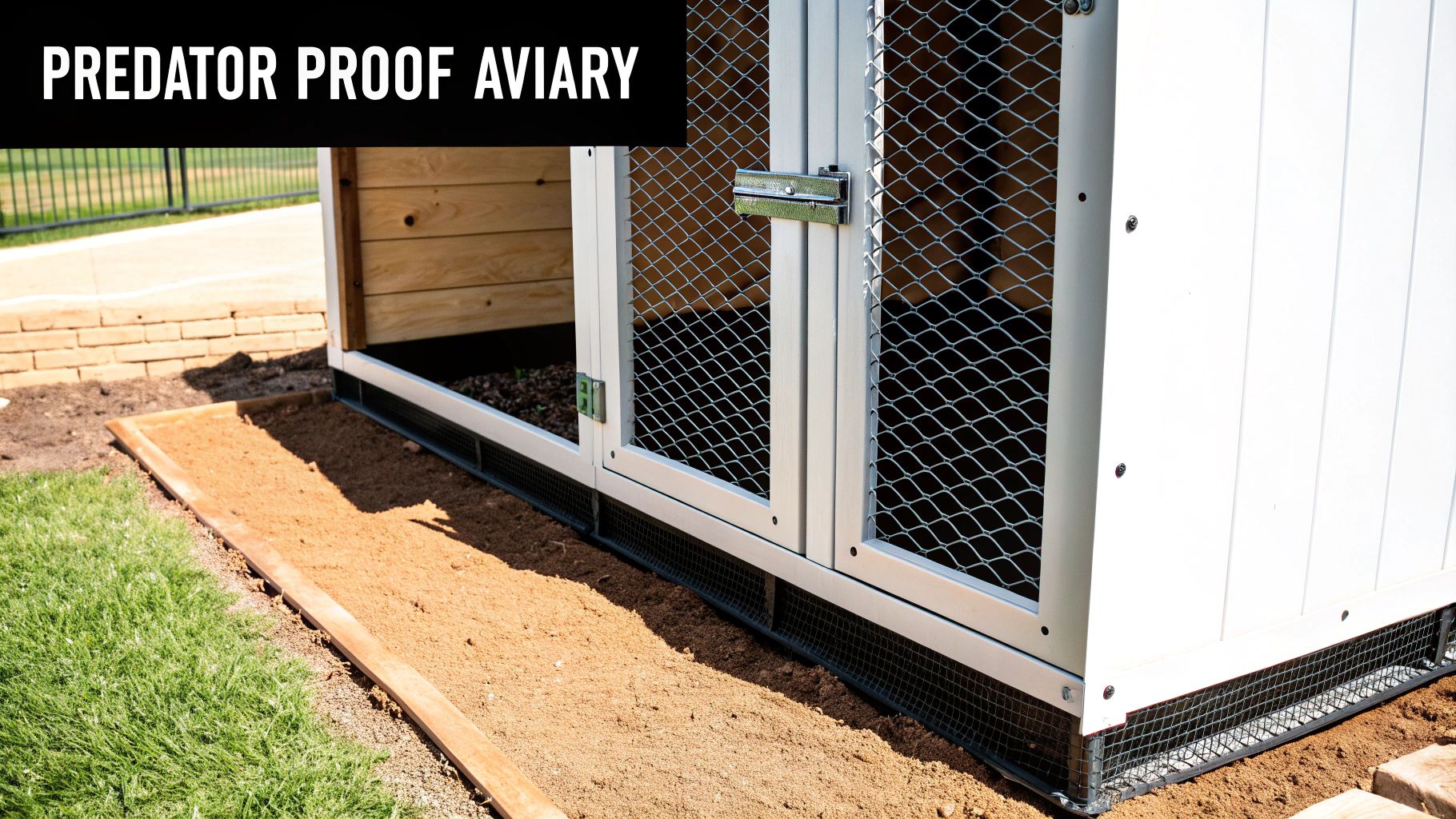
The list of potential threats is long and persistent. We're talking snakes, goannas, rodents, cats, dogs, and even predatory birds like currawongs or hawks. A flimsy latch or a tiny gap in the mesh is a wide-open invitation. Your aviary is only ever as strong as its weakest point.
Fortifying Against Ground-Based Threats
Many of our most determined predators will try their luck from the ground up. Snakes, rats, and mice can squeeze through gaps you’d swear were impossible, while goannas and quolls are powerful diggers. Your defence has to start right at the base.
- Install a Wire Skirt: This is one of the single most effective things you can do. Dig a trench at least 30-40cm deep around the entire outside of the aviary. Attach a 30cm wide strip of fine-gauge wire mesh to the bottom of the walls and lay it outwards into the trench, forming an 'L' shape. Then, simply bury it. This underground barrier physically stops anything from digging its way in.
- Use Snake-Proof Mesh: For the bottom section of your aviary walls, use a mesh with openings no larger than 6.5mm x 6.5mm. You’ll want this running up to at least 90cm high. This fine mesh is absolutely critical for stopping snakes from pushing their heads through.
While a concrete slab foundation is the gold standard against digging predators, a wire skirt is a non-negotiable addition, especially for aviaries with natural flooring.
Expert Avian Vet Insight: “Heat stress is a silent killer in Australian aviaries. Ensure at least 50% of the aviary is shaded throughout the entire day, especially during the afternoon. Misting systems can be life-savers during heatwaves, but good airflow is just as critical to prevent humidity build-up. Watch for signs like panting, holding wings away from the body, and lethargy—these are urgent red flags.”
Taming Australia’s Wild Weather
Our climate can be brutal, throwing everything from scorching heatwaves to torrential rain and chilly winter nights at us. A proper bird aviary outdoor setup must give your flock a safe place to retreat from it all.
For our intense summer sun, shade is everything. A solid, insulated roof over at least part of the aviary is a must-have. You can also plant non-toxic, bird-safe shrubs around the perimeter to help create cooler microclimates and provide some natural cover.
When it comes to wind and rain, a dedicated, fully enclosed shelter area is essential. This section should have three solid walls and a roof, creating a draught-free corner where your birds can roost comfortably and stay bone-dry. It’s also the perfect spot for your feeding station, as it keeps food fresh and free from contamination.
Creating these safe and enriching spaces has become even more important as we see worrying trends in our native bird populations. Providing exceptional care for our companion birds is a responsibility many keepers take seriously, especially when reports from BirdLife Australia show that one in six Australian bird species is now facing extinction. You can discover more about the state of Australia's birdlife and understand why ethical bird care is so vital. This commitment to welfare drives us to create habitats that support natural behaviours, keeping our birds thriving.
For enrichment that's both stimulating and safe in an outdoor environment, consider toys made from durable, natural materials that can withstand the elements. A Shreddable Rattan Swing offers a place to perch and play, while a Natural Cork & Loofah Skewer provides excellent shredding fun. For a more challenging and durable option, the Pandora's Box is perfect for encouraging foraging instincts.
Creating a Stimulating and Enriching Interior
Alright, now for the fun part—turning that structure you’ve built into a thriving home for your birds. A bare outdoor bird aviary is a recipe for boredom and stress, and that can lead to destructive habits like feather plucking. So, let's get into the interior design and transform that empty space into a dynamic, engaging environment.
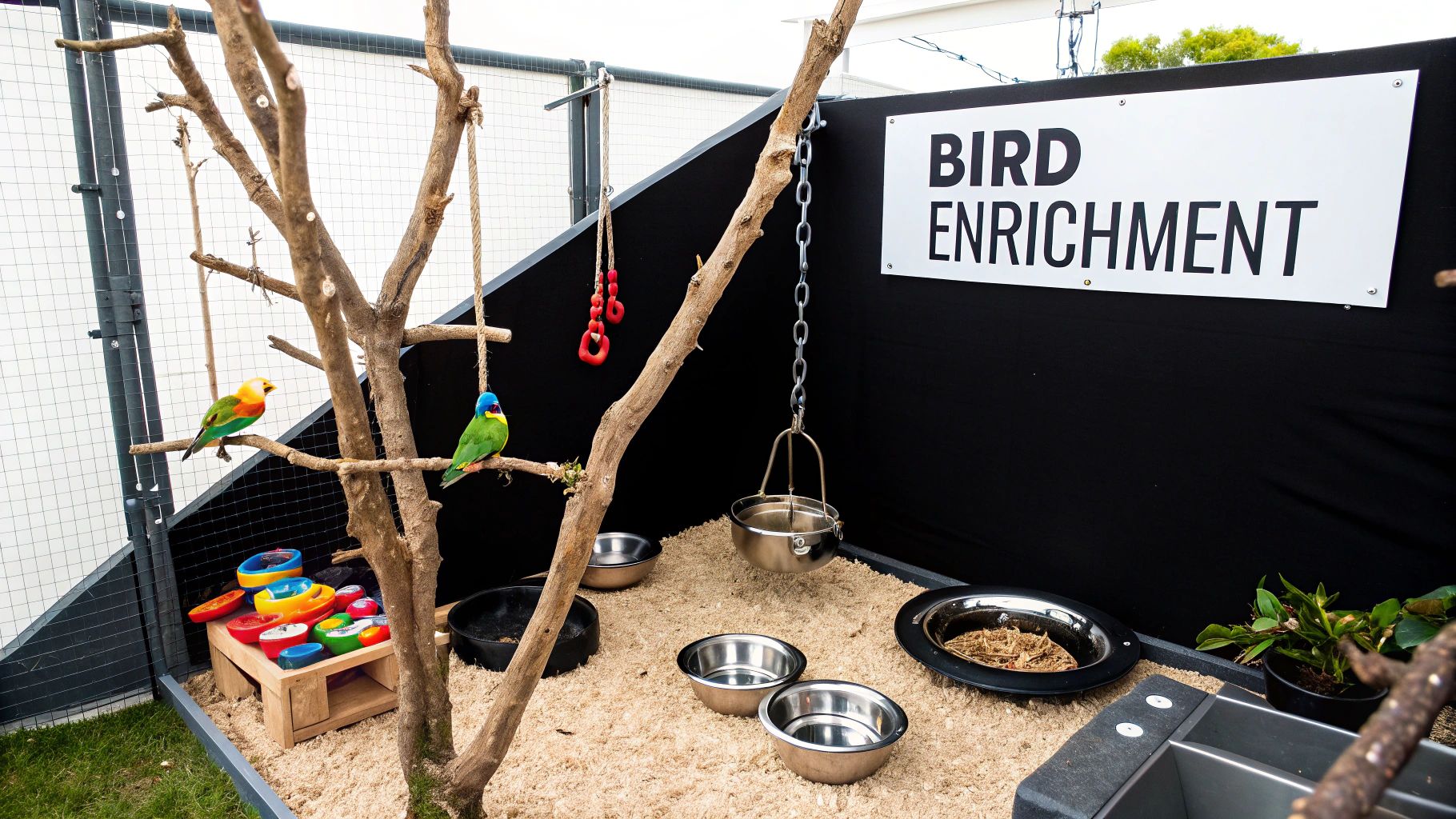
The heart of any good aviary interior is the perching. Your birds spend most of their lives on their feet, so getting the perches right isn’t just a nice extra—it’s absolutely essential for their foot health. Ditch the idea of uniform dowel perches; over time, they can cause nasty pressure sores and arthritis.
Instead, think natural. Go for a wander in your garden or a local park (away from pesticides, of course!) and gather some branches from bird-safe native Aussie trees. Eucalyptus, Bottlebrush, or Grevillea are fantastic choices. The natural twists, turns, and varied diameters force their feet to constantly adjust, exercising all the little muscles and tendons and helping prevent foot problems down the track.
Expert Advice: When you're placing perches, think of it like creating a "freeway" for flight. Arrange them around the perimeter instead of straight across the middle. This leaves a clear, open path for them to stretch their wings. It’s also a great idea to vary the heights to give your birds different spots for roosting, playing, or just keeping an eye on things.
Encouraging Natural Foraging Behaviours
Wild birds spend a huge chunk of their day just looking for food. This instinct doesn't just switch off because they're in a safe aviary with a full food bowl. Tapping into this foraging drive is one of the best ways to keep their minds sharp and boredom at bay. A simple bowl of seed just doesn't cut it.
Try setting up little foraging stations around the aviary. You could scatter seeds in a tray filled with sterilised leaf litter, tuck treats inside natural materials, or hang up toys that are designed to be pulled apart. The goal is to make them work for their food—an activity they find incredibly rewarding.
- Shreddable Toys: These are brilliant for foraging. You can stuff sunflower seeds or other treats inside toys made from palm leaf, seagrass, or mahogany pods. The act of shredding to get to the food is fantastic for their mental health and keeps their beak in good nick.
- Durable Foraging Puzzles: For the really clever parrots, you'll need to step it up with more complex puzzles. Toys that make them unscrew, pull, or fiddle with parts to get a reward can keep a sharp mind busy for hours.
If you're looking for more ideas, check out our comprehensive guide on foraging toys for birds—it's packed with suggestions for all types of birds.
Creating Zones for Play and Exercise
A great aviary should feel like a playground. Adding things that encourage movement and play is vital for keeping your birds physically healthy, preventing obesity, and maintaining strong muscles. Swings and ladders are perfect for this.
Swings aren't just for fun; they also help a bird improve its balance and core strength. Ladders, whether they're hanging down or stretched across like a bridge, give them another way to climb and explore their space from different angles. Look for items made from natural, chewable materials to give them double the enrichment. A fantastic, durable option for any outdoor setting is to use Stainless Steel Toys, as they are indestructible, completely non-toxic, and incredibly easy to clean, making them a safe and long-lasting choice.
Designing a Balanced Environment
Ultimately, the goal is to create distinct 'zones' within the bird aviary outdoor space. Giving the aviary this kind of structure helps birds feel secure and lets them carry out different natural behaviours in the right places.
- Resting Zone: Set up a quiet, sheltered corner with high perches. This gives them a safe place to roost at night or have a nap during the day. Make sure this spot is well-protected from wind and rain.
- Feeding Zone: Place food and water stations in a clean, easy-to-reach spot, ideally under some cover. This keeps the food protected from the weather and, just as importantly, from droppings from any birds perched above.
- Play Zone: This is your open, central area. It's the perfect place to hang swings, ladders, and a mix of engaging toys. A Chewable & Shredable Toy like the Coconut Shredder is ideal here, offering a fun challenge that keeps beaks trim and minds busy.
By thoughtfully arranging these elements, you're doing much more than just building an enclosure. You're creating a rich, stimulating world where your birds can truly thrive.
Aviary Maintenance and Biosecurity Routines
The hard work isn’t over once the last piece of mesh is secured. A well-built **bird aviary outdoor** structure is only half the battle; it's the diligent maintenance and solid biosecurity that truly make it a safe, thriving home for your flock. Getting into a consistent routine is the best way to head off health problems before they even have a chance to start.A clean aviary is a healthy aviary, plain and simple. The best approach is to break down your cleaning schedule into daily, weekly, and monthly jobs to keep everything hygienic and manageable.
Daily Checks and Tasks:
- Food and Water: Any soiled food or water needs to be replaced immediately. Give those bowls a good scrub daily to stop nasty bacteria from taking hold.
- Spot Cleaning: Quickly remove any fresh droppings from perches, feeding stations, and other high-traffic spots.
- Quick Visual Scan: Do a quick once-over of all your birds. You're looking for bright eyes and active, healthy behaviour.
Weekly and Monthly Deep Cleans
Once a week, it's time to roll up your sleeves for a more thorough clean. This means scrubbing down all the perches, swapping out any soiled floor substrate, and giving the main surfaces a good wipe.
Then, once a month, you'll want to do a proper deep clean using a bird-safe disinfectant. Something like F10SC Veterinary Disinfectant is a fantastic choice—it's highly effective and trusted by avian vets right across Australia.
This is also your chance to check the structure itself. Go over the mesh carefully, looking for any breaks or potential weak spots. Double-check that all locks and latches are secure, and inspect perches and toys for any wear and tear that might become a hazard.
Expert Advice: One of the biggest biosecurity risks here in Australia is your flock coming into contact with wild birds. This is a major way diseases like Psittacine Beak and Feather Disease (PBFD) are spread. Minimise the risk by never leaving leftover food out overnight and cleaning up any seed spillage around the aviary straight away. You don't want to attract any unwanted visitors.
Upholding Australian Biosecurity
Biosecurity is really just a formal way of saying you’re preventing diseases from getting in and spreading. Beyond managing food spills, think about adding a simple footbath with disinfectant at the aviary entrance. It’s a small step that stops you from tracking in contaminants on your shoes.
Being proactive is also your best defence against parasites. Check your birds regularly for any signs of mites or lice, which can easily be introduced by wild birds. For a bit more detail on what to look for and how to handle it, our guide offers practical tips on using a mite spray for birds safely and effectively.
Ultimately, these consistent routines are your best line of defence, ensuring your birds stay healthy and happy for the long haul.
Common Aviary Questions Answered
Building an outdoor aviary is a massive undertaking, and it's completely normal to have a list of questions running through your head. We've pulled together some of the most common queries from Aussie bird owners to give you practical, straightforward answers and help you plan with confidence.
Do I Need Council Approval for an Aviary?
This is the big one, and honestly, the answer is "it depends". Every local council in Australia has its own set of rules.
Generally speaking, a smaller, moveable aviary might fly under the radar. But if you're planning a large, permanent structure, you'll almost certainly need to look into permits. The main things councils look at are the aviary's size, its height, and how close you plan to build it to your boundary fences.
Expert Advice: Before you even think about buying timber or mesh, jump on your local council's website or give their planning department a call. Ask them point-blank about their rules for "outbuildings" or "animal enclosures." A five-minute phone call can save you a world of headaches, money, and potential drama with the neighbours later on.
What's the Best Flooring to Use?
The perfect floor is a balancing act between easy cleaning for you and comfort for your birds.
A sealed concrete slab is king for hygiene and security. It's a breeze to hose down and disinfect, and it’s the ultimate barrier against any predators that might try to dig their way in. The only downside is that it can be a bit tough on your birds' feet day in and day out.
A fantastic solution is to mix and match. Pour a concrete base for that rock-solid security, but then add dedicated areas on top with natural stuff like sand, gravel, or bird-safe organic soil. This gives your birds a softer surface to walk on and encourages their natural instinct to forage around.
How Should I Introduce My Bird to the New Aviary?
Slow and steady wins the race here. Rushing the introduction will only stress your bird out.
- Start with Short Visits. On a nice, calm day, pop your bird's travel cage inside the new aviary for a little while. Let them take it all in from the safety of their familiar space.
- Make It Feel Like Home. Scatter some of their favourite toys and perches around the aviary. Add their usual food and water bowls. Seeing familiar things will make the new space feel much less intimidating.
- Gradually Extend Their Stay. Over the next few days or even weeks, let them spend longer periods in the new aviary.
- Wait Until They're Comfortable. Don't leave them on their own until you're absolutely sure they're confident and know exactly where to find their food, water, and shelter. You'll know they're ready when they seem relaxed and are exploring their spacious new digs with curiosity.
Here at Lou Lou Bells Bird Toys, we're all about making your bird's aviary a true sanctuary with toys that are safe, engaging, and enriching. Check out our full collection for the perfect finishing touches to your setup at https://louloubellsbirdtoys.com.au.
Keep Reading
- Bird Flight Cage: A Comprehensive Guide for Australian Bird Owners
- A Guide to Mite Spray for Birds
- Foraging Toys for Birds: A Guide for Australian Bird Owners
Disclaimer Summary:
The information in this article is general in nature and may include external links or resources not created by Lou Lou Bells Bird Toys. Every bird is unique, so we encourage you to seek personalised advice from your own veterinarian or avian specialist. For full details, please read our complete disclaimer here.