
An Aviator parrot harness is a specially designed restraint system that lets our feathered mates safely enjoy the great outdoors without the ever-present risk of them flying off. It’s a genuine game-changer, offering peace of mind for us and incredible new experiences for our birds, making it one of the most trusted parrot supplies in Australia.
Why Aussie Bird Owners Trust The Aviator Harness
For so many of us here in Australia, the thought of taking our feathered companions outside is a mix of pure excitement and heart-stopping anxiety.
We all dream of sharing a sunny arvo in the backyard or a quiet coffee at a local café with our birds. But the fear of a sudden fly-off—triggered by a startling noise, a swooping magpie, or a sudden gust of wind—is very real and often keeps our birds cooped up indoors. This is precisely where the Aviator Parrot Harness becomes more than just an accessory; it becomes a lifeline.
It’s about turning "what if" into "why not?" Imagine sitting on your verandah, your galah safely exploring the railing beside you, without you having to clutch the cage door in constant fear. That's the freedom and security that thousands of Australian bird lovers have come to trust.
Built for Australian Conditions
Our unique environment throws up some specific challenges, and the Aviator harness is engineered to handle them. The design is deliberately lightweight so it doesn't weigh down even smaller birds like budgies or cockatiels, but it’s also incredibly strong.
- Escape-Proof Design: The single-piece construction does away with complex buckles and clips that can be weak points or, for our clever birds, a fun puzzle to solve.
- Bird-Safe Materials: Made from non-toxic, soft materials, it's gentle on a bird's delicate body and feathers. This prevents any chafing or discomfort while they're moving around.
- Resilience: The materials are built to withstand the harsh Aussie sun and are a breeze to clean after an unexpected roll in the grass or a messy encounter with a juicy piece of mango.
My Expert Advice: The real value of the Aviator harness is how it lets a bird be a bird—safely. It allows for natural flight and movement, which is so important for their physical and mental wellbeing. It’s not just a restraint; it's a genuine enrichment tool.
This focus on safety and comfort is exactly why it has become the gold standard in Australia. It gives you a secure connection that allows your parrot to feel the sun on their feathers and the breeze under their wings without that constant danger of getting lost.
For so many of us, it's the key that unlocks a whole world of shared adventures, transforming a pet into a true companion who can join in on family life beyond the four walls of your home.
Choosing The Right Harness For Your Feathered Mate
Picking the right Aviator Parrot Harness is easily the most important decision you'll make when you decide to take your bird outdoors. It’s a bit like buying a car seat for a child—getting the fit just right is non-negotiable.
A harness that’s too loose is an escape waiting to happen, while one that’s too tight can cause serious discomfort, stress, or even injury. This isn't about guesswork; it's about being precise to keep your bird safe and comfortable on every adventure you take together.
Your first step isn’t with a measuring tape, but with a good set of digital kitchen scales. Knowing your bird's exact weight in grams is the absolute foundation for getting the size right. Sure, most Australian bird species have a typical weight range, but just like us, individual birds vary. A petite galah might need a smaller size than a more robust one from the same flock.
That’s why weighing your bird at home is your best bet. Try to do it first thing in the morning before their first big meal for the most accurate reading. If your bird is comfortable with a small perch, you can pop that on the scales, zero it out, and then encourage your bird to step up.
Material Matters: Why The Aviator Harness Excels
The materials in an Aviator harness are chosen specifically with a bird's unique body in mind. It's made from a lightweight, seamless nylon webbing that's incredibly strong yet soft enough that it won't chafe their delicate skin or mess up their feathers. This is a world away from the stiff, bulky stuff you might see in harnesses for other pets.
The design is brilliantly simple. Its one-piece construction just slides over the head and cinches gently around the chest. This means no fiddly clips or hard plastic buckles that could pinch skin or, more likely, be chewed off by a determined beak. This smart design allows for a full range of motion, letting your parrot climb, forage, and even fly naturally without feeling restricted.
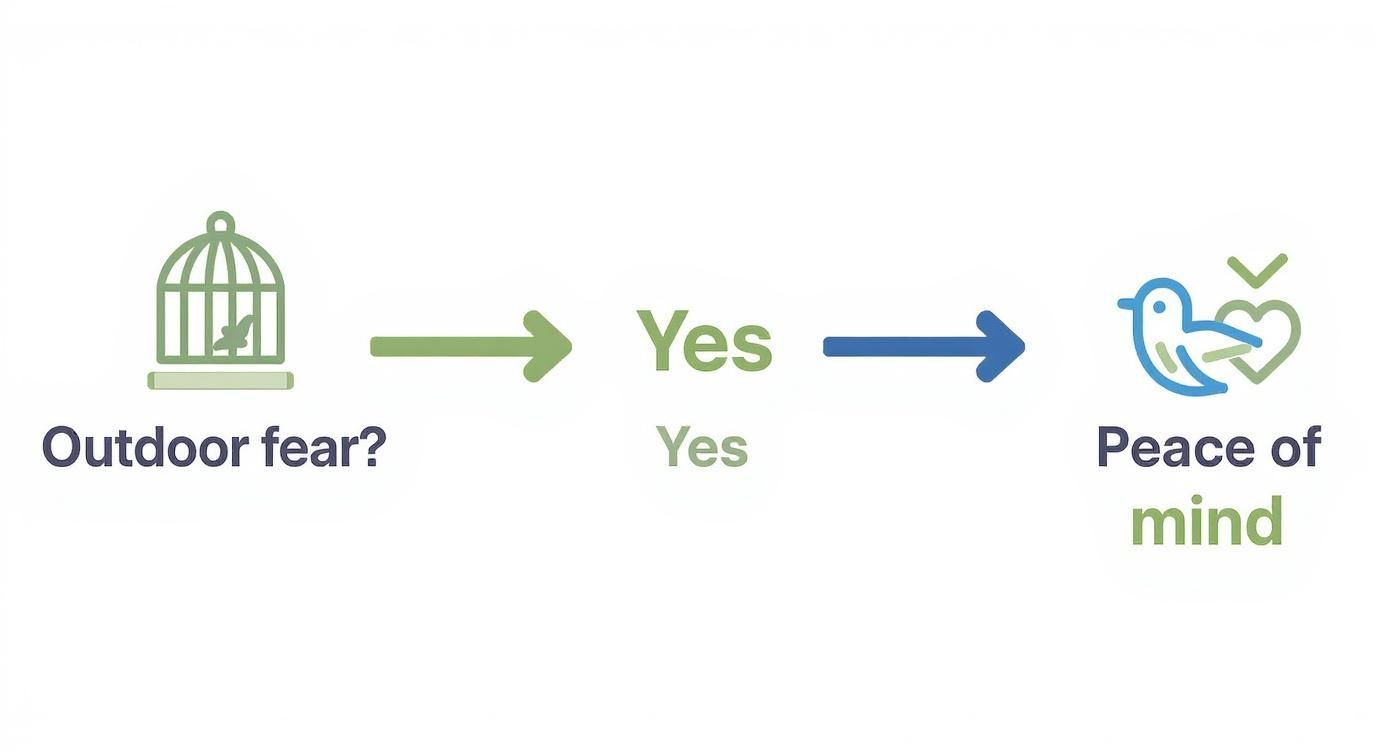
This really shows how the right gear helps you move past the anxiety of taking your bird outside, giving both of you the confidence to explore.
Navigating The Sizing Chart
The Aviator Parrot Harness is a clear leader in the Australian market, and a big reason for that is its massive size range. It’s estimated that 9 out of 10 Aussie bird owners who use a harness choose the Aviator.
This popularity comes down to its ability to fit almost any companion bird, from those weighing under 75 grams all the way up to 1600 grams. That covers just about every companion bird we have here in Australia, from tiny budgies to the biggest macaws. The 'Mini' size, for instance, is perfect for budgies and lovebirds, while the 'X-Large' comfortably fits giants like Hyacinth Macaws.
Here’s a quick guide to help you find the right fit for your local feathered friend.
| Aviator Parrot Harness Sizing Guide for Australian Birds |
| :--- | :--- | :--- |
| Harness Size | Weight Range (grams) | Common Australian Bird Species |
| Mini | 75g - 110g | Budgies, Lovebirds, Parrotlets, Small Finches |
| Petite | 110g - 190g | Cockatiels, Green Cheek Conures, Kakariki, Rosellas |
| X-Small | 190g - 425g | Quakers, Sun Conures, Galahs (smaller), Lorikeets |
| Small | 425g - 600g | Galahs (larger), Corellas, Amazon Parrots (smaller) |
| Medium | 600g - 1000g | Eclectus Parrots, Sulphur-Crested Cockatoos (smaller) |
| Large | 1000g - 1600g | Macaws (Blue & Gold), Major Mitchell's Cockatoos |
Remember, the weights above are just a guide. Always weigh your own bird to be sure.
My Expert Tip: What if your bird falls right between two sizes? Always go for the larger one. The Aviator harness is designed to be adjustable, so you can cinch a slightly larger harness for a secure fit. A harness that’s too small can’t be adjusted and will be dangerously tight.
The goal is a snug, but not constricting, fit. You should be able to slide a finger comfortably between the harness and your bird’s chest. This gives them enough room to breathe and move freely while being completely secure.
A harness is a safety tool, yes, but it’s also a key to unlocking a world of enrichment. It opens the door to new sights and sounds that are vital for your bird's mental health. And while a secure harness is crucial for outdoor trips, a great indoor space is just as important for their daily wellbeing. For more on that, check out our guide on creating the perfect bird flight cage.
Introducing The Harness: A Game of Trust and Patience
This is where the real work—and the real magic—begins. Getting your parrot comfortable with an Aviator harness isn't about just slipping it on. It's a delicate process, built entirely on trust, patience, and lots of positive reinforcement.
Forget any ideas of rushing this. The goal is to help your parrot see the harness not as a restraint, but as a wonderful signal that an adventure is about to happen.
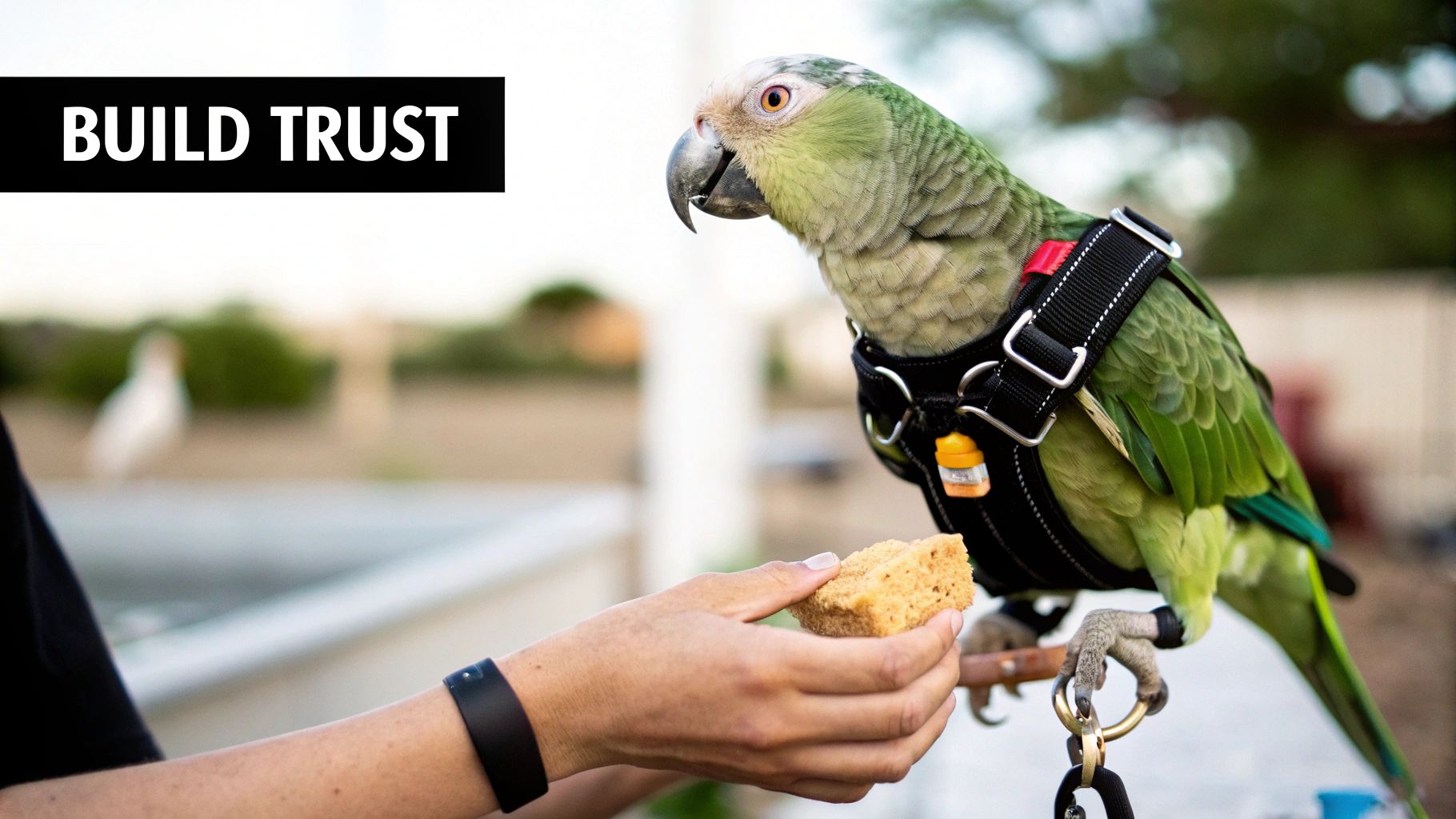
This whole journey hinges on one thing: reading your bird’s body language. Parrots are masters of subtle communication. A slight lean away, a pinned eye, or a ruffled feather tells you everything you need to know. Your job is to listen to these cues and respect them, only moving forward when your bird is calm and comfortable.
Phase 1: Building Positive Associations
Before you even think about putting the harness on, your parrot needs to see it as a completely neutral, non-threatening object. This first phase is all about desensitisation and can take anywhere from a few days to several weeks, depending on your bird's personality.
Start by simply placing the harness somewhere visible but at a distance from the cage. Leave it on a nearby table or chair while you go about your daily routine of chatting to your bird, offering treats, and playing. The aim here is for the harness to become just another boring part of the furniture.
Once your bird seems completely unfazed by its presence, you can gradually move it closer. Try placing it on top of their cage for short periods, always associating it with good things. Maybe you put it there right before offering their favourite piece of fruit.
My Expert Insight: Never force an interaction. If your bird shows any sign of fear—like backing away or hissing—you've moved too fast. Simply move the harness further away and go back to the previous step where they were comfortable. This process is a marathon, not a sprint.
This approach ensures the harness is linked with rewards and happy moments right from the very beginning.
Phase 2: Encouraging Interaction with Touch and Treats
Now that the harness is no longer a scary monster, it's time to encourage some hands-on (or beak-on) investigation. Hold the harness in your hand during your regular bonding sessions and let your bird see you touching it calmly.
Offer a high-value treat, like a sunflower seed or a tiny piece of almond, by holding it right next to the harness. At first, your bird might cautiously stretch to grab the treat while avoiding the harness. That's perfectly fine.
The progression looks something like this:
- Touch for a Treat: Encourage your bird to touch the harness with their beak. The moment they do, praise them enthusiastically and give them that high-value reward.
- Move It Around: Gently move the harness around them, letting it touch their wings or back for a split second, followed immediately by a treat. Keep these sessions extremely short—just a minute or two is plenty.
- Bridge with Familiar Items: You can also incorporate their favourite things. If your bird loves a specific foot toy, try touching the harness to the toy while they are engaged with it.
The key is to always end on a high note. If your bird successfully touches the harness three times in a row, stop the session there with a big reward. This leaves them feeling successful and more willing to try again tomorrow.
Phase 3: The First Fitting
After many positive sessions, your bird should be comfortable with the harness touching them all over. Now, you can attempt the first fitting. Choose a quiet time when your bird is relaxed and happy.
Gently slip the harness over their head. Don't even worry about adjusting it perfectly just yet. The goal is simply to have it on for a mere second or two. As soon as it's on, give them a massive "jackpot" of their absolute favourite treat and praise them like they’ve just won an Olympic medal.
Then, just as quickly, take it off. That's it. Session over.
The next day, try for three seconds. Then five. Your aim is to slowly increase the time they wear the harness, always making it the best, most rewarding experience possible. Never let them get to the point of struggling or panicking.
Understanding your parrot's overall needs is crucial for success in training, as a happy, healthy bird is a more receptive learner. For a deeper dive, our essential guide to caring for pet birds is a great resource.
By following these patient, trust-based steps, you're not just training your bird to wear a harness. You're strengthening your bond and teaching them that new things, when introduced with kindness, can lead to incredible adventures together.
Mastering The Perfect Fit And Pre-Flight Safety Checks
You’ve done the hard yards with training, and your bird is finally comfortable with the Aviator parrot harness. That's a huge win! But don't rush out the door just yet—getting the fit right is just as critical as all the training that came before it.
This isn't a "set and forget" situation. Think of it as a non-negotiable check you need to do every single time you head outside. A harness that’s too loose or too tight can turn a fun adventure into a dangerous one in a heartbeat.
The goal is to find that perfect balance: snug enough to be totally secure, with no gaps for a wing or foot to get caught, but still loose enough that your bird can move freely. They should be able to breathe easily, stretch their wings, and clamber about without any chafing or pinching. Nailing this is the foundation of safe harness adventures.
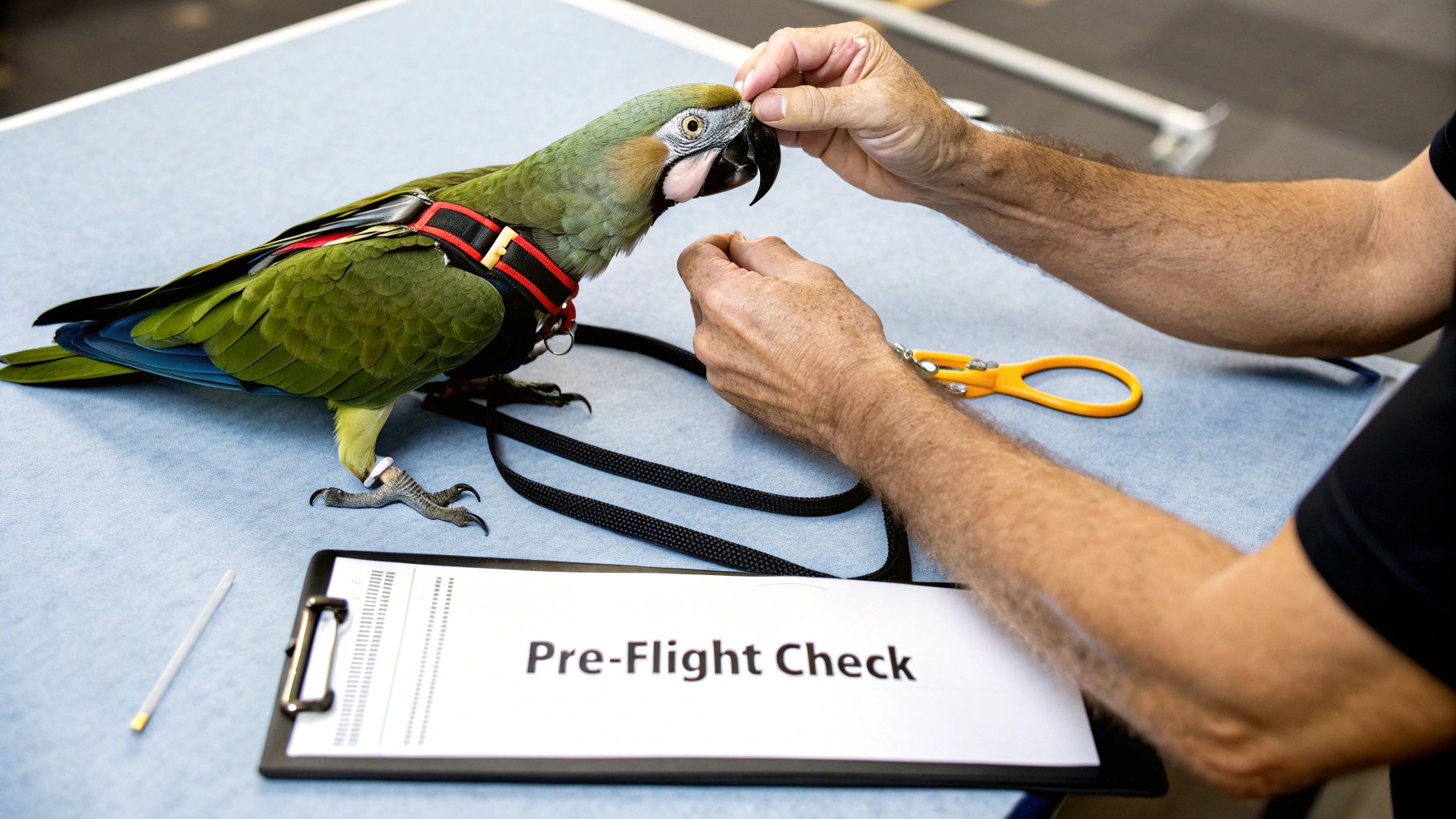
It’s all about creating a routine. Just like a pilot runs through a checklist before take-off, you need a consistent pre-flight check for your parrot. This simple habit gives both of you the confidence to get out and safely explore the beautiful Australian outdoors.
Achieving The Perfect Harness Fit
Let’s get this adjustment spot-on. Once the harness is on your bird, gently pull the adjustable strap to tighten it around their chest. You're aiming to close up any significant gaps without making it feel like a straitjacket.
The best method is the good old one-finger test. You should be able to slide one finger comfortably between the harness strap and your bird’s chest—but no more than that. If two fingers slip in easily, it's far too loose and your bird could potentially wriggle out. If you can't even get one finger in without a struggle, it's dangerously tight and could restrict their breathing.
After adjusting, just pause and watch your bird for a moment. Do they look comfortable? Are they moving naturally? Double-check that nothing is twisted or pulling on their feathers around the wings and neck. A well-fitted harness should sit smoothly against their body.
My Expert Advice: Don't forget the slider! After you've got the fit right, make sure the slider is pulled down firmly to lock the strap in place. A loose slider is a common mistake and can let the harness slacken while you're out, creating a serious safety risk.
This entire check takes less than a minute, but it’s probably the most important minute of your whole outing. It's a simple step that prevents the vast majority of harness-related mishaps.
Your Pre-Flight Safety Checklist
When it comes to your bird's safety, consistency is everything. By creating and sticking to a simple checklist before every single trip, you eliminate the risk of forgetting something crucial. It’ll quickly become second nature.
Here’s a straightforward pre-flight list to run through every time:
- Inspect the Harness Material: Before you even put it on, give the harness a quick once-over. Look for any signs of fraying, thinning, or damage from chewing. A determined beak can weaken the material over time, so a visual check is essential.
- Check the Leash Connection: Make sure the elasticated leash is securely clipped to the harness loop. Give it a gentle tug to feel that the connection is solid. While you're at it, scan the leash itself for any wear and tear.
- Perform the Final Fit Adjustment: With the harness on, do your one-finger test. Adjust the strap for that perfect snug-but-comfy fit. This is a must-do every time, as a bird's weight and fluffiness can change.
- Confirm Secure Hold: Before you open that door, ensure the end of the leash is looped securely around your wrist or held firmly in your hand. Never just clip it to your belt loop or clothes, where it can easily get snagged and detach.
Running through these four simple points builds a routine that keeps your bird safe. It's also a great idea to have some engaging foot toys ready to go, just in case your bird decides the harness looks tasty. Offering something like our Natural Pinata Parrot Toy can keep their beak busy and away from the straps. For birds that enjoy a challenge, the Foraging Star with Bell provides a fantastic distraction.
Tackling Common Harness Training Hurdles
Even if you’re armed with endless patience and the tastiest treats, you’re going to hit a few snags. That’s just part of the journey. Every single bird is different—what works a treat for a confident Galah might be way too much for a shy little Conure.
The trick is to see these moments not as failures, but as feedback. Your bird is trying to tell you something. Hitting a wall just means it's time to pause, listen, and change your approach. Let's walk through a couple of the most common issues Aussie bird owners run into and how to navigate them.
It all comes down to reading your bird’s body language and gently guiding them, turning what could be a frustrating roadblock into a chance to strengthen your bond.
My Bird Won't Stop Chewing the Harness
This one’s a classic. A parrot’s beak is like our hands—they use it to explore, feel, and test everything. So, when you introduce this strange new strap, of course, they're going to want a good old chew on it. While the Aviator Parrot Harness is built tough, it's not designed to be a chew toy, and any damage could put its safety at risk.
The key here is distraction, not discipline. Telling a bird off for chewing is like trying to hold back the tide; it’s rarely effective and can quickly make them see the harness as a bad thing. Your job is to make something else seem way more fun than those straps.
- Bring in a better toy: Before the beak even gets to the harness, hand over a fantastic foot toy. Something they can really get stuck into, like our Natural Pinata Parrot Toy, is brilliant for keeping that beak occupied.
- Engage their brain: A simple foraging toy can completely absorb their attention. A little challenge like the Foraging Star with Bell makes them focus so hard on getting the treat that they forget all about chewing the harness.
- Keep it short and sweet: Chewing often kicks in when boredom does. Keep your first few harness sessions brief and packed with positive interactions so it doesn't become a go-to habit.
This shifts the whole experience. Instead of just "wearing a harness," it becomes a fun activity session where great things happen.
My Bird Freezes or Starts to Panic
Seeing your feathered mate freeze solid or start thrashing about is genuinely confronting. It's a crystal-clear sign they feel completely overwhelmed. This is a pure fear response, and how you react in that moment is absolutely critical.
Never, ever try to push through a panic attack. Your only goal is to bring the situation back down and make your bird feel safe again.
My Personal Advice: Your calm energy is everything. If you get flustered, your bird will pick up on it instantly, making their anxiety worse. Take a deep breath, speak in a soft, soothing voice, and move slowly. Reassure them that they are safe with you.
Gently get your bird to a quiet, familiar spot, away from whatever might have set them off. If they're thrashing, don't try to rip the harness off immediately—that can escalate the panic. First, calm them with your voice and presence. Once they’ve settled, remove the harness as smoothly as you can and call it a day.
For your next session, you need to take a massive step back. We’re talking right back to the beginning—just touching them with the harness for a reward. It's all about rebuilding that trust and proving that this whole harness business is safe and positive. Patience is your superpower here. Every bird has its own timeline, and respecting that is the absolute foundation of a strong, trusting relationship.
Your Aviator Harness Questions Answered
Alright, let's wrap this up by tackling some of the most common questions I hear from Aussie bird owners. Think of this as a quick chat where we can sort out those lingering "what ifs" and give you the confidence to get started.
Is The Aviator Parrot Harness Chew Proof?
While the Aviator harness is built tough, it's not a chew toy. A determined beak—especially from a big parrot like a Sulphur-Crested Cockatoo—can weaken the fibres over time, and that's a safety risk.
The best plan is to always watch your bird closely when they're wearing it. If you see them start to chew, redirect their attention straight away. A high-value treat or an interesting foot toy is perfect for this. It teaches them that the harness is for adventures, not for beaking.
What Is The Best Age To Start Harness Training?
Honestly, success has far less to do with age and much more to do with the trust you've already built with your bird. Younger birds are often more adaptable and might pick it up faster, but a bird of any age can learn with enough patience and positive reinforcement.
With an older bird who might be more set in their ways, you just need to be prepared for the first steps to take a bit longer. Never force it. Celebrate every tiny bit of progress, like a gentle touch of the harness on their back, and always end your training sessions on a positive note.
My Expert Advice: The foundation of all training is a happy, healthy bird. A comfortable and enriched bird is a much more willing student. If you have more general questions about bird care, you can often find quick answers by checking out our frequently asked questions.
Can I Leave My Bird Unsupervised In The Harness?
This is a hard and fast rule: absolutely not. The Aviator harness is designed for fully supervised outdoor adventures only.
Leaving a bird unattended in a harness is incredibly dangerous. The leash can easily get tangled on a cage bar, a tree branch, or even a piece of furniture. This poses a serious risk of injury or, in the worst-case scenario, strangulation. Your bird needs your complete and undivided attention from the moment the harness goes on until it's safely off.
What If My Bird Panics While Wearing The Harness?
Panic can happen, especially on the first few outings when the world is full of new and startling things. If your bird freezes, thrashes about, or tries to fly away frantically, the most important thing you can do is stay calm yourself.
Speak to them in a low, soothing voice and move to a quieter, more familiar spot. Your calm energy is reassuring. Gently check what's happened—are they just scared or are they tangled? Once they've settled, take the harness off smoothly and call it a day. For your next trip, take a step back in your training to rebuild their confidence with a shorter, overwhelmingly positive experience.
Ready to start your own adventures and give your bird a whole new world to explore? At Lou Lou Bells Bird Toys, we have the perfect Aviator Parrot Harness for your feathered mate, along with the best range of enrichment toys in Australia to support your training journey. Find the right fit and start exploring today!
Disclaimer Summary:
The information in this article is general in nature and may include external links or resources not created by Lou Lou Bells Bird Toys. Every bird is unique, so we encourage you to seek personalised advice from your own veterinarian or avian specialist. For full details, please read our complete disclaimer here.