
A bird wormer is a medicated treatment specifically formulated to get rid of internal parasites like roundworms and tapeworms. It’s a non-negotiable part of your bird’s health toolkit, designed to evict unwanted guests that steal vital nutrients and can lead to serious illness. Here in Australia, our feathered mates can be exposed to all sorts of parasites, making proactive worming a cornerstone of responsible bird care.
Understanding Why Your Bird Needs Parasite Protection
Staring at a shelf full of bird health products can be a bit much, but understanding why you need parasite control makes it all a lot clearer. Internal parasites are more than just a pest; they are tiny thieves that set up camp in your bird’s digestive tract, stealing the very nutrients your bird needs to stay healthy and vibrant. Left untreated, a small worm problem can quickly spiral into a major health crisis.
This is a real risk for birds in Australia, regardless of whether they live indoors or have an outdoor aviary. Parasite eggs can be tracked in on shoes, passed on through contact with wild birds, or even hide in contaminated food or soil. Because one bird can infect an entire flock in no time, prevention and prompt treatment are essential for every bird owner.
The Hidden Impact of Internal Parasites
The damage from worms is often sneaky and subtle, which makes it easy to miss in the early days. Birds are absolute masters at hiding illness—it's a survival instinct hardwired into them. This means a bird that looks perfectly fine on the outside could be struggling with a growing parasite problem internally.
These unwelcome guests can cause a whole host of issues, including:
- Nutritional Deficiencies: Worms absorb vitamins and minerals directly from your bird's gut. This can lead to malnutrition, even if your bird is eating like a champion.
- Weight Loss and Poor Condition: A classic sign is a bird that feels light for its size or has a noticeably sharp keel bone, despite having a healthy appetite.
- A Weakened Immune System: Constantly fighting off parasites drains a bird's energy and resources, leaving them wide open to other illnesses.
- Intestinal Damage: In severe cases, a heavy worm burden can cause blockages or damage the intestinal lining, creating a life-threatening emergency.
Prevention is the Best Medicine
Being proactive about parasite management is far kinder and less stressful for your bird than dealing with a full-blown infestation. Setting up a regular health schedule, guided by your avian vet, is a key part of good bird care. You can read more about what that involves in our bird care essential guide.
An effective parasite control plan is a one-two punch of targeted treatment and top-notch hygiene. Regularly cleaning cages, perches, and food bowls is your first line of defence, as it removes parasite eggs from the environment before they have a chance to reinfect your bird.
A clean, enriching, and low-stress environment helps build a strong immune system, giving your bird the best shot at fighting off potential threats. To dig deeper into the internal threats your flock might face, you might find some useful information in a comprehensive guide to parasites. By understanding these risks, you’ll feel more confident in protecting your companion’s health and happiness for the long haul.
Spotting the Subtle Signs of Worms in Birds
Birds are masters of hiding it when they're sick. It's a survival instinct hardwired into them from their time in the wild, where looking weak could make them an easy meal for a predator. The trouble is, this means that by the time you notice something is obviously wrong—like a worm infestation—the problem is often well underway. Learning to spot the small, early clues is one of the most important things you can do for your bird.
Often, the very first sign is a simple shift in your bird's personality or daily habits. You know your bird better than anyone, so any little change from their usual self should get your attention. Maybe their cheerful morning chirps have been replaced with unusual quiet. Or perhaps their playful antics have given way to long periods of just sitting still, looking tired or uninterested.
The physical signs can be just as subtle at first. You really have to become a keen observer of your bird's body and routines to catch these changes before they get worse.
Behavioural Changes to Watch For
A happy, healthy bird is usually active, curious, and wants to be part of the action. A parasitic infection can drain their energy and enthusiasm, leading to noticeable changes in how they act day-to-day.
Keep an eye out for these behavioural shifts:
- Lethargy and Weakness: Is your normally zippy bird spending more time on the bottom of the cage or sleeping a lot more than usual? A sudden drop in energy is a big red flag.
- Fluffed-Up Feathers: While birds fluff up their feathers when they're relaxed or cold, staying puffed up for long stretches can mean they feel unwell and are trying to conserve body heat.
- Loss of Interest in Toys and Interaction: A bird that suddenly turns its beak up at its favourite shreddable toys, or doesn't want to come out and play could be feeling sick.
- Changes in Appetite: This one can go either way. Some birds might lose their appetite completely. Others might seem to eat more than ever but still lose weight because the parasites are stealing all the nutrients.
Physical Symptoms You Can't Ignore
Beyond behaviour, a worm infestation will eventually start to show on your bird’s body. These signs often mean the problem is more advanced and needs an avian vet’s attention right away.
Look for these physical red flags:
- Weight Loss: Weighing your bird regularly is so important. A noticeable drop in weight, or feeling a prominent keel bone (the bone running down the centre of their chest), is a major cause for concern.
- Poor Feather Condition: Feathers might look dull, messy, or stressed. You might also notice they’re late to moult or see stress bars appearing on new feathers.
- Changes in Droppings: This is one of the best windows into your bird’s health. Look for diarrhoea, undigested food in the droppings, or in serious cases, visible worms.
- Regurgitation or Vomiting: If your bird is frequently bringing food back up, it could be suffering from a blockage or irritation in its digestive system caused by a heavy worm load.
- Tail Bobbing: A rhythmic up-and-down movement of the tail with every breath can be a sign of breathing difficulty, which can sometimes be linked to parasites like gapeworm.
The need for bird owners to be vigilant is only growing. Recent trends show a rise in parasite cases in companion animals across Australia, which really highlights why prevention and early treatment are so critical. While data for birds isn't always reported separately, the overall pattern is a clear signal for bird owners to stay alert. You can read more about these livestock and companion animal trends to get the bigger picture.
It's vital to remember that these symptoms can also point to other illnesses. Trying to self-diagnose is risky, which is why getting a professional opinion is a must.
Expert Advice: Never just assume you know what's causing your bird's symptoms. So many avian illnesses look alike, and only an avian vet can run the right tests, like a faecal float, to get a definite diagnosis and prescribe the correct wormer for birds.
If you spot any combination of these signs, don't put it off. Book a visit with your avian vet immediately. Catching it early and getting the right treatment gives your feathered friend the best possible shot at a full and fast recovery.
Spotting the Signs: Common Internal Parasites in Australian Birds
To keep your bird safe, you first need to know the enemy. It’s a bit like gardening – you can't get rid of the weeds if you don’t know what they look like. In the bird world, understanding common internal parasites is your best defence. It helps you figure out how they got there and why a good wormer for birds is so vital.
Several types of worms are common in our Aussie birds, and they all cause trouble in their own way. Most of them take up residence in the digestive tract, stealing essential nutrients and causing internal damage right under your nose. Getting a handle on their life cycles is the key to breaking the chain of infection for good.
The Usual Suspects
While your bird could encounter many types of internal parasites, three stand out as the most common unwanted guests in companion birds across Australia. Each has its own way of operating and affects birds differently.
-
Roundworms (Ascarids): These are easily the most common internal parasites we see. Think of them as tiny, spaghetti-like freeloaders living in the intestine. Birds get infected when they swallow microscopic roundworm eggs from contaminated food, water, or droppings. Once inside, the eggs hatch, the larvae mature, and the cycle continues.
-
Tapeworms (Cestodes): These parasites have a trickier life cycle. They're flat, segmented worms that latch onto the intestinal wall. Unlike roundworms, they need a middleman—an insect, slug, or snail—to get to your bird. A bird gets infected by eating one of these bugs, which puts aviary birds with access to the great outdoors at a higher risk.
-
Gapeworms (Syngamus trachea): These are particularly nasty because they don't bother with the intestines. Instead, gapeworms set up camp inside a bird's trachea (windpipe). This can cause serious breathing problems, often showing up as a tell-tale "gasping" or gaping for air. Gapeworm is more common in birds that spend time on the ground, like poultry and some aviary finches.
How Do Infections Even Start?
Parasite problems don't just happen out of the blue. They’re almost always linked to a bird being exposed to a contaminated environment. This is exactly why being strict with hygiene is a non-negotiable part of bird ownership.
The most common way internal parasites spread is the faecal-oral route. This means a bird swallows microscopic parasite eggs shed in the droppings of an infected bird—whether it’s their own droppings or another bird's.
It’s easy to see how quickly an infection can take hold, especially in a multi-bird household or a busy aviary. Other common ways infections spread include:
- Dirty Food and Water Bowls: If not cleaned daily, these can become a breeding ground for parasites.
- Contaminated Soil: Aviaries with dirt floors can hold parasite eggs for a surprisingly long time.
- Wild Bird Contact: Droppings from wild birds visiting an outdoor aviary can introduce all sorts of parasites.
- A New Bird: Any new bird brought into your flock without being properly quarantined is a potential Trojan horse for parasites.
One of the best ways to keep your bird’s space both fun and clean is to use toys that are easy to swap out and sanitise, like our Shreddable Paper Pinata. Providing clean, safe enrichment isn’t just about fun; it’s a cornerstone of preventative health.
A Quick Guide to Common Avian Internal Parasites
To help you get your head around the main culprits, here's a simple summary table. It covers the most common parasites found in Australian companion birds, how they spread, and the key signs to watch for.
| Parasite Type | Common Name | How It Spreads | Key Symptoms |
|---|---|---|---|
| Nematode | Roundworm | Ingesting eggs from contaminated droppings, food, or water. | Weight loss despite a good appetite, diarrhoea, poor feather quality. |
| Cestode | Tapeworm | Eating an intermediate host like an insect or slug that carries the larvae. | Diarrhoea, poor condition, sometimes visible worm segments in droppings. |
| Nematode | Gapeworm | Ingesting eggs or larvae, often through earthworms or snails. | Gasping for air, coughing, head shaking, respiratory distress. |
Knowing who you're up against is the first step. By understanding how these parasites work, you can create a much safer environment for your flock and know exactly when it’s time to talk to your avian vet about a targeted wormer for birds.
How to Choose the Right Bird Wormer
Walking into a pet store and staring at a shelf of bird wormers can feel like a bit of a guessing game. But picking the right one isn't something to leave to chance. A wrong choice can be ineffective at best, and at worst, harmful to your bird. It all comes down to understanding what you're trying to treat and which active ingredients actually get the job done.
Getting your head around the basics means you can have a much more productive chat with your avian vet. It helps you move from feeling uncertain to confident, ensuring your feathered friend gets the safest, most effective treatment possible.
Understanding Active Ingredients
The real power behind any wormer is its active ingredient. These are the chemical compounds that target and knock out the parasites. In Australia, you’ll mostly see a few key players in avian wormers, and each has a specific role.
- Moxidectin: This is a fantastic broad-spectrum ingredient. It’s effective against a whole range of internal and external parasites, including many common types of roundworms.
- Praziquantel: If you’re dealing with tapeworms, this is what you need. It’s often combined with other ingredients to create a more comprehensive wormer that targets multiple nasties at once.
- Levamisole: This is another common ingredient for tackling roundworms and the dreaded gapeworms.
It’s absolutely vital to match the active ingredient to the specific parasite. Trying to treat tapeworms with a roundworm-only product will do nothing at all. This is exactly why getting a proper diagnosis from an avian vet is the critical first step before you even think about buying a treatment.
Comparing Different Formulations
Bird wormers typically come in a couple of different forms. The best one for you will depend on your bird's species, their personality, and how comfortable you are administering medication. Each method has its clear pros and cons.
In-Water Solutions This is often seen as the easiest option. You just add the medicated solution to your bird’s drinking water and let them do the rest.
- Pros: It’s a low-stress method for the bird, as it doesn’t require any direct handling.
- Cons: It’s almost impossible to guarantee an accurate dose. A sick bird might not drink enough water, leading to under-dosing, while a thirsty one could drink too much. The weather or even just the taste of the medication can also throw their water intake off.
Direct-Dose Liquids This method involves giving a precise amount of liquid medication directly into your bird's beak, usually with a small syringe.
- Pros: This is by far the most accurate way to make sure your bird gets the exact dose calculated by your vet. No guesswork involved.
- Cons: It does require confident and gentle handling of your bird. If you're not experienced, it can be a stressful moment for both of you.
Expert Advice: Always, always use products that are specifically formulated for birds. Medications made for dogs, cats, or livestock are dangerously concentrated for a bird's delicate metabolism and can be fatal. Never try to guess a dose based on a product meant for another animal.
Before you start looking for a wormer for birds, it’s worth knowing that the Australian veterinary pharmaceuticals market is huge. This means there are excellent, specialised avian products out there, but you have to navigate the market carefully with expert guidance. You can learn more about the scale of the Australian animal health market to see why specialist advice is so important.
Here’s a quick breakdown of some common active ingredients you'll find on the market.
Comparing Active Ingredients in Avian Wormers
| Active Ingredient | Targets These Parasites | Common Administration | Important Considerations |
|---|---|---|---|
| Moxidectin | Roundworm, Hairworm, Gapeworm, Air Sac Mite, Scaly Face/Leg Mites | In-water solution, topical (spot-on) | Broad-spectrum, good for internal and external parasites. Dosing must be precise, especially for small birds. |
| Praziquantel | Tapeworm | Direct dose (liquid/tablet), often combined with other ingredients | Essential for tapeworm infections. Not effective against roundworms, so often paired with another active. |
| Levamisole | Roundworm, Gapeworm, Caecal Worm | In-water solution, direct dose (liquid) | Can stimulate the immune system, but has a narrower margin of safety than other wormers. Overdosing is a risk. |
| Fenbendazole | Roundworm, Hairworm, Giardia | Direct dose (liquid/paste) | Effective, but can be toxic to certain species, particularly finches and some cockatoos, especially during moult. |
This table shows why there's no single "best" wormer—it all depends on the parasite you're fighting and the bird you're treating.
Ultimately, your avian vet is your most important partner in this decision. They can properly diagnose the parasite, weigh your bird to calculate a precise dose, and recommend a product with the right active ingredient and formulation for your specific situation. Getting the right gear for your bird's health is a big part of responsible ownership, and you can learn more about sourcing quality items in our guide to parrot supplies in Australia. By working closely with your vet, you can rest easy knowing you're giving your bird the best possible care.
A Step-By-Step Guide to Administering Medication Safely
Giving your bird medication can feel a bit nerve-wracking, but it doesn't have to be a struggle. With the right approach, you can make it a smooth, stress-free process. This guide walks you through the practical steps for safely administering a wormer, making sure your feathered friend gets the right dose without any fuss.
The single most important factor for successful treatment is getting the dose right. This means dosing based on your bird's precise weight, not just its size or species. A digital gram scale is non-negotiable for any bird owner. Without one, you're just guessing, and that’s a risky game to play.
The Dangers of Incorrect Dosing
Getting the dosage wrong isn't a small mistake—it can have serious consequences that undermine your bird's health.
-
Under-dosing is a common pitfall, especially when medication is added to drinking water. If your bird doesn't get enough of the active ingredient, the treatment won't work. The parasites will survive, continue to multiply, and can even start developing resistance to the drug.
-
Over-dosing is incredibly dangerous and can lead to toxicity. Birds have delicate metabolic systems, and too much medication can quickly overwhelm their organs, causing severe damage or even proving fatal.
This is exactly why you must always have an avian vet calculate the precise dose for your bird. They'll get an accurate weight and determine the exact amount of medication needed, taking all the risk and guesswork out of your hands.
The process is simple when you follow expert advice. The right path always involves your vet.
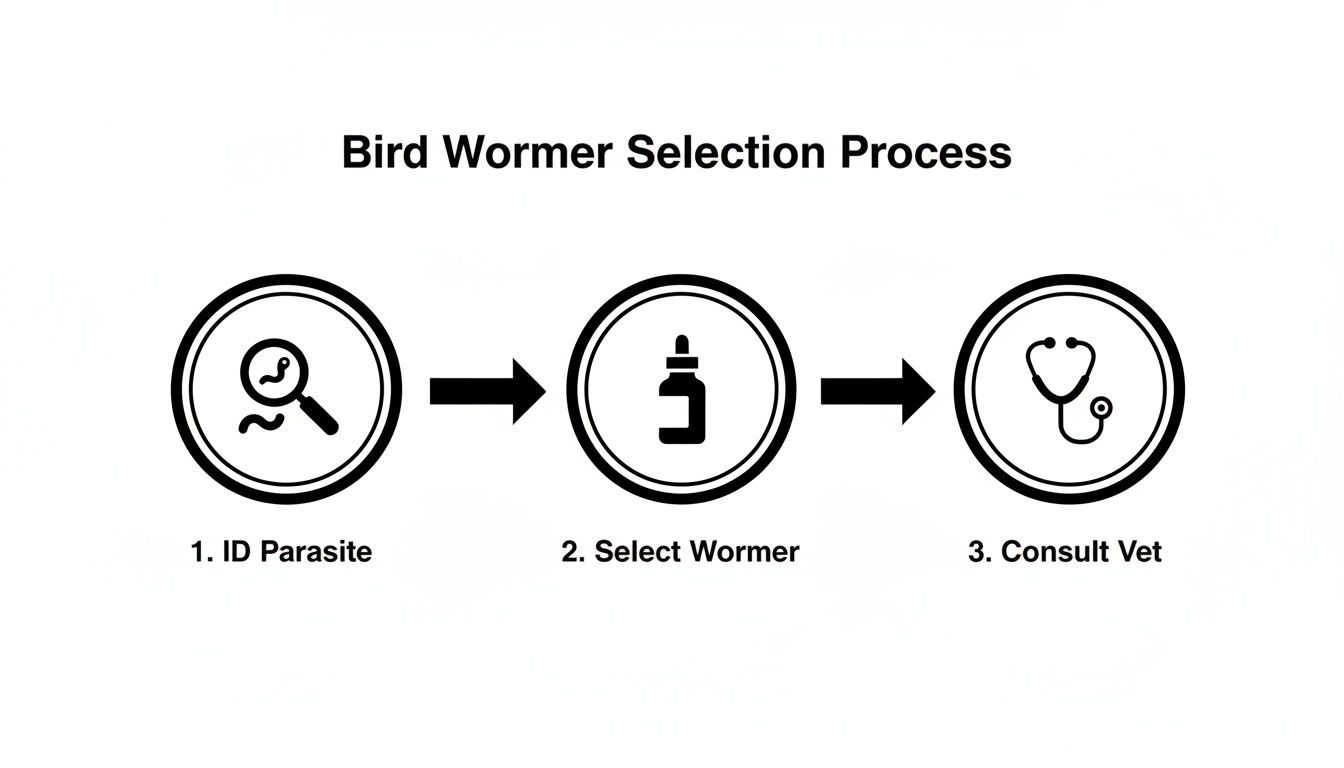
As you can see, a vet consultation is the final, crucial step before you begin any treatment. It’s your safety net.
Methods for Administering a Bird Wormer
There are two main ways to give your bird a liquid wormer. Each has its pros and cons, and your vet will advise which is best for your situation.
In-Water Treatments
This involves adding the wormer to your bird's drinking water. While it sounds easy, it's often unreliable. A bird that feels unwell or dislikes the taste of the water simply won't drink enough, leading straight back to the problem of under-dosing.
If your vet does suggest this route, follow their instructions to the letter. You'll likely need to remove all other sources of moisture—including juicy fruits and veggies—to make sure the medicated water is their only option for hydration.
Direct Dosing with a Syringe
Administering medication directly into the beak is the gold standard for accuracy. It's the only way to guarantee your bird receives the full, vet-prescribed dose.
- Prepare Everything First: Have the correct dose measured out in a 1ml syringe. Get a towel ready. Your calm and confident energy will help keep your bird calm, too.
- Gently Restrain Your Bird: Use a towel to gently wrap your bird, a technique often called "towelling." This secures their wings and feet, making the process safer for both of you. Be very careful not to put any pressure on their chest, as this can restrict breathing.
- Position the Syringe: Hold your bird securely and bring the syringe to the side of their beak. A direct, frontal approach can be intimidating for them.
- Administer Slowly: Gently drip the medication onto the lower beak or into the side of the mouth. Give them a moment to swallow naturally. Never squirt the liquid down their throat, as this carries a high risk of aspiration (getting fluid into the lungs).
Making the experience as positive as possible is key. While it’s written for dogs, this article on the best way to give medication without the struggle shares some great principles on calm, confident administration that apply here too. By following your vet's advice and using a safe technique, you can master medication time and get your bird back to full health.
Proactive Strategies to Prevent Worm Infestations
When it comes to your bird's health, that old saying, "prevention is better than a cure," has never been more true. While treating a worm infestation is something we have to do, building a fortress of hygiene and biosecurity around your flock is a much smarter strategy. By getting on the front foot and managing your bird’s environment, you can slash the risk of parasites ever getting a hold.
A clean environment is a healthy one. It cuts down your bird's exposure to parasite eggs and lowers their overall stress, which in turn builds a tough, resilient immune system. This all kicks off with a rigorous cleaning schedule for cages, aviaries, and all the bits and pieces inside.
Building Your Fortress of Hygiene
Your first line of defence is keeping your bird's living space impeccably clean. Parasites absolutely love dirty conditions, so a consistent, non-negotiable routine is your most powerful weapon.
Here’s a simple checklist for Aussie bird owners to get started:
- Daily Clean-Up: Get rid of old cage liners and pop in fresh ones every single day. Give any soiled perches or toys a quick wipe-down and wash food and water bowls properly with hot, soapy water before you refill them.
- Weekly Deep Clean: Once a week, it's time for a proper scrub. Take everything out of the cage and use a bird-safe disinfectant to clean the bars, base, and any non-porous toys and perches.
- Aviary Management: If you’ve got an outdoor aviary, make sure you're regularly raking the floor to clear out droppings and other debris. Concrete flooring is far easier to keep clean and sanitised than dirt, which can hang onto parasite eggs for months.
Choosing the right gear can make this job a whole lot easier. Good quality, easy-to-clean items are a wise investment in your bird's long-term health.
Biosecurity Best Practices
Biosecurity is really just about controlling who and what comes into contact with your flock to stop new diseases from being introduced. A few simple habits can make a massive difference.
Expert Advice: A strict quarantine period is non-negotiable for any new bird. Keep any newcomers in a separate cage in a different room for at least 30 days. This gives you time to watch them for any signs of illness and get them checked by an avian vet before they meet the rest of your flock.
You should also take steps to stop wild birds from coming into contact with your own, as their droppings can easily bring parasites into an outdoor aviary. Think about using netting or solid roofing to keep them out.
It's difficult to give accurate statistics on avian parasites in Australia because there’s a real lack of public data for the companion bird world. This information gap makes getting professional advice from your vet even more crucial. For a broader look at the animal health market, you can find more information about the livestock dewormer market.
Finally, a mentally stimulated bird is a healthier bird. Keeping your companion engaged with exciting foraging toys and stimulating chewable toys encourages natural behaviours and cuts down on stress, playing a huge part in their overall resilience. By mixing meticulous hygiene with smart biosecurity and a rich environment, you create the safest possible world for your feathered friend.
Frequently Asked Questions About Worming Birds
Let's tackle some of the most common questions and worries that Aussie bird owners have when it comes to worming. These are the things people ask us all the time, so we’ll get straight to the point with some clear, expert-backed answers.
How Often Should I Worm My Bird in Australia?
Honestly, there’s no single, one-size-fits-all answer here. The right schedule really comes down to your bird’s individual risk. A solo indoor parrot has a tiny chance of picking up worms compared to a flock living in a large outdoor aviary with a dirt floor, where parasite eggs can linger for months.
Instead of just guessing, the best approach is to chat with your avian vet and create a health plan that makes sense for your bird.
They might suggest a routine schedule—say, every 3-6 months for higher-risk birds—or they might recommend doing regular faecal tests. That way, you only treat when you know for sure there’s a problem. It’s a smarter, evidence-based way to avoid giving unnecessary medication.
Can I Use a Wormer for a Dog or Cat on My Bird?
No, absolutely never. This is one of the most dangerous mistakes a bird owner can make, and it can be fatal. Wormers designed for mammals contain different active ingredients and are formulated in concentrations that are highly toxic to birds. Their metabolisms are incredibly fast and their small body mass makes them extremely sensitive to overdosing.
Always, always use a product that has been specifically developed and approved for avian use. And just as importantly, you must get the exact dose from an avian vet. It needs to be calculated based on your bird's precise weight in grams—not its general size or species.
What Should I Do After My Bird Finishes a Worming Treatment?
Once the treatment is done, your job is to help your bird recover and make sure those pesky worms don’t come back. The focus should be on creating a clean, calm environment with plenty of fresh food and water. This is also a great time to introduce some fun new enrichment, like a shreddable toy, to lift their spirits and keep them busy.
The most important thing post-treatment is to stick to your strict hygiene routine to prevent reinfection. Your vet might also suggest a follow-up faecal test a few weeks later just to confirm the wormer did its job completely.
Following these simple guidelines will help ensure your worming protocol is both safe and effective. If you have more questions, our comprehensive FAQ page is packed with information on all sorts of bird care topics.
Keep Reading
- Feather Plucking What is it and How Can You Stop it
- Avian Vet vs Regular Vet Why Your Bird Needs a Specialist
- A Guide to Bird-Safe Timbers in Australia
Disclaimer Summary: The information in this article is general in nature and may include external links or resources not created by Lou Lou Bells Bird Toys. Every bird is unique, so we encourage you to seek personalised advice from your own veterinarian or avian specialist. For full details, please read our complete disclaimer here.