
When it comes to your parrotlet's food, the gold standard is a high-quality formulated pellet, making up 60-80% of their daily intake. Think of this as their core meal. A side of fresh veggies and a tiny sprinkle of seeds for treats will round out a truly balanced diet, giving these little dynamos all the crucial nutrients that seeds alone just can't deliver.
Building the Perfect Parrotlet Diet
Welcome to your complete guide on parrotlet food, put together especially for Australian bird owners. Getting your parrotlet's diet right is hands-down the most important thing you can do for their health, happiness, and lifespan. It's so much more than just topping up a food bowl every day.
Proper nutrition gives them the essential building blocks for a long, vibrant life. It’s like building a house – you need a solid foundation and quality materials, otherwise, things will eventually start to crumble. For a parrotlet, a premium pellet diet is that rock-solid foundation.
Why Diet Matters So Much
Don't let their tiny size fool you; a parrotlet's nutritional needs are surprisingly complex. In the wild, they’d be foraging for an enormous variety of foods. Our pet birds, however, rely completely on us to serve up a complete and balanced menu. A poor diet, particularly one loaded with seeds, is one of the leading causes of health problems seen by avian vets right across Australia.
This guide will take you beyond the generic advice to give you practical, local insights. We'll dive into:
- The crucial debate: pellets vs. seeds.
- The best fresh vegetables that are easy to find in Australia.
- Getting portion sizes right to avoid common problems like obesity.
A fantastic diet is the cornerstone of preventative health for any bird. An expert tip from Australian avian vets is that getting the food right from the get-go can help you dodge many common and expensive vet visits down the track, making sure your feathered mate stays happy and active for years to come.
With a little help from Australian avian vets, you'll learn how to pick the best commercial foods and understand how a balanced diet supports everything from feather quality to beak health. You can find more helpful tips in our essential guide to caring for pet birds. Now, let’s get started on creating the ideal meal plan for your pint-sized companion.
The Great Debate: Pellets Versus Seeds
When you first start looking into the best food for your parrotlet, you'll stumble straight into the biggest debate in bird nutrition: pellets or seeds? This isn't just about what your bird prefers; it's a huge decision that shapes their long-term health. The two options couldn't be more different, and getting your head around why is the first step to a happy, healthy bird.
Imagine letting a toddler choose their own meals. You'd get a daily diet of lollies, chips, and ice cream. It might be delicious, but it would quickly lead to serious health issues. For a parrotlet, a seed-only diet is the exact same thing—a junk food binge.
Seeds are packed with fat but seriously lacking in essential vitamins and minerals. Parrotlets are also masters of selective eating; they'll dig through a bowl to find their favourites (usually the fattiest sunflower seeds) and toss the rest aside. This pick-and-choose habit means they miss a massive range of nutrients, leading to dangerous deficiencies in things like vitamin A, calcium, and iodine.
The Problem with a Seed-Only Diet
A diet built on seeds is directly linked to some of the most common and heartbreaking health problems we see in pet birds across Australia. Because seeds are so fatty, they often cause obesity, which puts an incredible strain on a parrotlet’s tiny body. This extra weight can lead to arthritis, heart problems, and a much shorter lifespan.
Even more worrying is the risk of hepatic lipidosis, or fatty liver disease. When a bird eats too much fat, it gets stored in the liver until it can no longer function properly. It's a preventable condition that can be fatal if not caught early, and a seed-heavy diet is almost always the culprit.
Why Pellets Are the Superior Foundation
This is where high-quality formulated pellets step in. Think of pellets as the bird equivalent of a premium, scientifically balanced kibble you'd feed a dog or cat. Each and every pellet is a complete nutritional package, containing a perfectly balanced mix of vitamins, minerals, protein, and carbohydrates.
Because every bite is nutritionally identical, your parrotlet can't just pick out the "good bits." This guarantees they get everything they need for strong bones, bright feathers, and a tough immune system. A pellet-based diet is your single best defence against the nutritional train wreck that a seed-only diet can become.
This simple diagram shows how pellets form the healthy core of a parrotlet's diet, supported by fresh veggies.
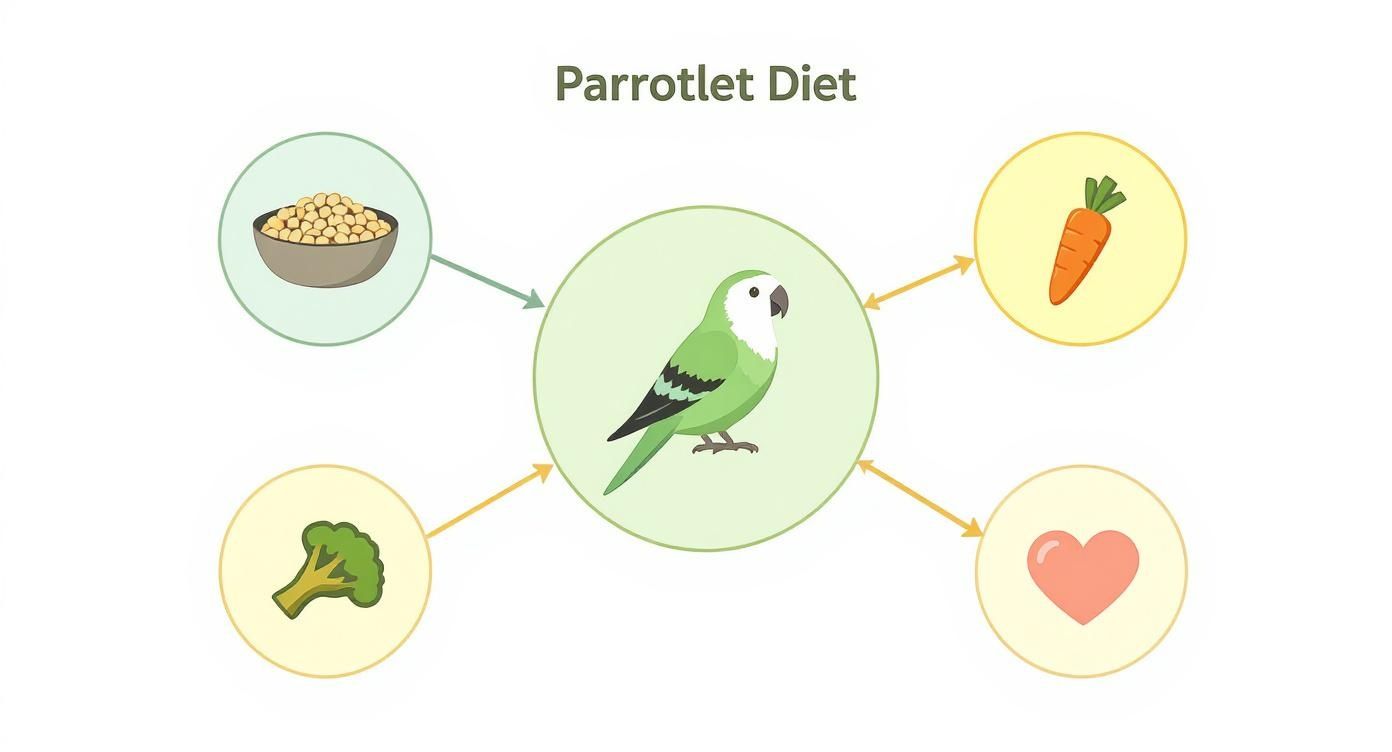
As you can see, pellets and vegetables are the foundation, making up the bulk of a healthy meal plan.
Thankfully, Australian bird owners are becoming more aware of this. A recent survey by the Parrot Society of Australia found that 68% of parrotlet owners now make pellets a major part of their bird's diet. Research backs this up, too. One study of parrotlets in Queensland and South Australia revealed that birds on a pelleted diet had a 30% lower incidence of liver disease and a 25% lower incidence of feather plucking. You can dive deeper into the science on the Parrot Society of Australia's nutrition page.
Let's break down the key differences.
Nutritional Comparison: Pellets vs. Seed-Only Diets
This table lays out exactly what you're choosing between when you decide on your parrotlet's core diet.
| Nutritional Aspect | Formulated Pellets | Seed-Only Diet |
|---|---|---|
| Nutrient Balance | Complete and balanced. Every bite contains the same mix of vitamins, minerals, and protein. | Incomplete and imbalanced. High in fat, low in crucial vitamins (A, D, E, K) and minerals (calcium). |
| Selective Eating | Impossible. Prevents birds from picking favourites and creating deficiencies. | Encourages selective eating, where birds only eat high-fat seeds, ignoring healthier options. |
| Health Risks | Significantly reduces the risk of obesity, fatty liver disease, and malnutrition. | High risk of obesity, fatty liver disease, heart conditions, and nutritional deficiencies. |
| Feather & Bone Health | Supports strong bones and vibrant feather growth with balanced calcium and vitamins. | Often leads to brittle bones, poor feather quality, and dull colour due to lack of essential nutrients. |
| Variety | Can be mixed with fresh vegetables and fruits for enrichment and added nutrition. | Lacks variety, leading to boredom and potential behavioural issues like feather plucking. |
The takeaway is clear: while seeds can be a treat, they should never be the main event. Formulated pellets provide the nutritional safety net your parrotlet needs to thrive.
Transitioning a Stubborn Seed Addict
So, what if your parrotlet is already hooked on seeds? Don't panic. It's absolutely possible to make the switch, but it takes patience and a gentle, steady hand. Never, ever try to switch them "cold turkey." A parrotlet is a tiny bird and can starve alarmingly quickly if you remove all its familiar food at once.
Here are a few humane strategies to get them on the good stuff:
- The Gradual Mix: Start by mixing a tiny amount of pellets (around 10%) into their usual seed mix. Every few days, increase the pellets and reduce the seeds just a little bit. This process can take weeks, or even a few months, so stick with it!
- Separate Bowls: Offer two bowls in the cage—one with their normal seeds and another with pellets. This lets your bird investigate the new food on their own terms, without pressure. Often, curiosity wins out.
- 'Disguise' the Pellets: Try crushing the pellets into a fine powder and sprinkling it over a small piece of their favourite moist veggie, like a bit of sweet potato or broccoli. This introduces the taste in a familiar, non-threatening way.
- Foraging Fun: Turn the new food into a game. Hide a few pellets inside a simple puzzle to spark their interest. Something like our Shreddable Foraging Ball can transform pellets from "weird new food" into an exciting treasure. For a bigger challenge, the Foraging Blocks Tower encourages them to work for their food, making it much more appealing.
Expert Tip: Try offering the new pellets first thing in the morning when your bird is hungriest. They're often far more willing to try something new before they've had their usual breakfast. Be persistent but gentle, and celebrate every tiny nibble—it's a step in the right direction.
Adding Fresh Foods to Their Bowl
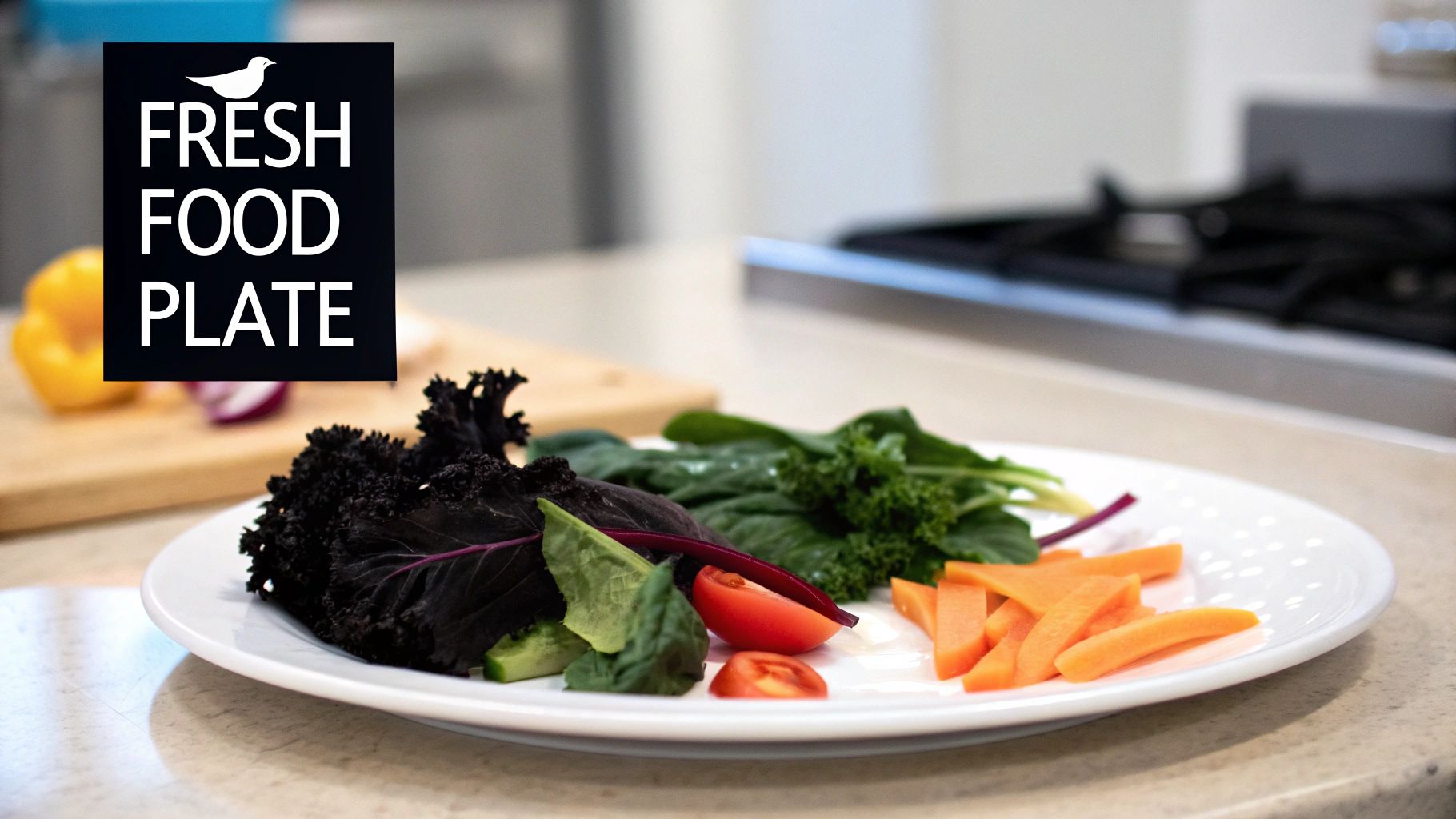
While good quality pellets are the foundation of your parrotlet's diet, they're not the whole story. Fresh food is where your bird gets the variety, micronutrients, and mental engagement that pellets alone just can't provide. It’s the difference between a functional meal and a truly thriving diet.
Think of it like our own dinner plates—a balanced meal needs different components. Adding fresh foods introduces a fantastic range of textures, colours, and flavours that keep your tiny companion mentally stimulated and physically well. Luckily for us in Australia, we have access to amazing produce all year round, making it easy to whip up a nutritious "chop" mix. The fresh part of their diet should make up about 20-30% of their total daily food intake.
The Best Veggies for Your Parrotlet
Vegetables should be the main event in your parrotlet’s fresh food bowl. They’re absolutely packed with vitamins and minerals but don't have the high sugar content that fruit does. A good trick is to offer a rainbow of colours—this ensures they get a wide spectrum of different nutrients.
Dark leafy greens are brilliant. Things like kale, silverbeet, and bok choy are nutritional powerhouses, loaded with vitamins A, C, and K, plus calcium. Colourful veggies are also a must. Bright red capsicum, vibrant orange carrots, and deep green broccoli don't just make their food look exciting; they deliver a serious nutritional punch.
Here are some top veggie choices you can grab at any local Aussie grocer:
- Dark Leafy Greens: Kale, spinach (in moderation), silverbeet, bok choy, rocket.
- Colourful Veggies: Red and green capsicum, carrots, broccoli, zucchini, sweet potato (cooked and cooled), peas, corn, and squash.
- Herbs: A little sprinkle of fresh parsley, coriander, or mint adds great flavour and extra nutrients.
Fruits as a Special Treat
Fruit is a wonderful treat, but it needs to be offered carefully. Because of its high natural sugar content, too much can lead to weight gain and other health problems down the track. It's best to think of fruit as dessert—a small, occasional indulgence, not a daily staple.
When you do offer fruit, stick to tiny, bird-safe portions. Berries like blueberries and raspberries are great choices because they're lower in sugar and high in antioxidants. Small slices of apple (with all seeds removed), pear, and melon are also good options.
A great rule to follow for fresh foods is the 80/20 rule: aim for about 80% vegetables and no more than 20% fruit. This keeps their sugar intake in check while maximising all those good vitamins and minerals.
Preparation Makes Perfect
How you prepare fresh food can be a game-changer, especially if you have a fussy or nervous parrotlet. A big chunk of carrot can look pretty intimidating to a tiny beak! The key is to make the food inviting and easy to eat.
Finely chopping or dicing vegetables into a 'chop' mix is the most popular way to go. You can mix several types of veggies together to create a colourful, nutritious blend. For leafy greens, try shredding them into thin ribbons or weaving them through the cage bars—this turns mealtime into a fun foraging activity. For harder veggies like carrot or sweet potato, grating them makes them much easier for a small bird to handle.
The Right Role for Seeds
So, where do seeds fit into all this? While a seed-only diet is a definite no-go, seeds do have their place as a high-value treat, not a meal. Their high fat content makes them irresistible to parrotlets, which is perfect for training sessions and rewarding good behaviour.
In Australia, the feeding guidelines for birds in rehabilitation make this point very clear. For many species, seeds should be no more than 30-40% of the total diet, with fresh vegetables making up 40-50%. A 2019 study across New South Wales and Victoria drove this home, finding that 78% of parrotlets on seed-only diets showed signs of nutritional deficiency, compared to just 12% on a varied diet.
A small pinch of millet or a few sunflower seeds can be a powerful motivator during training. You can also hide seeds inside a puzzle toy, like our Foraging Blocks Tower, to encourage problem-solving. By reframing seeds as a special reward, you provide fantastic enrichment and strengthen your bond without messing up their core nutrition.
Dangerous Foods to Avoid at All Costs
Knowing what to pop in your parrotlet’s food bowl is only half the battle. Just as important—if not more so—is knowing what to keep out of it. Many of the foods we eat every day are seriously toxic to birds, and with a parrotlet's tiny body, even a small nibble can have heartbreaking consequences.
It’s so tempting to share a bit of your snack with your feathered mate, but this is one area where you need to be strict. This isn’t a list of suggestions; think of it as a set of non-negotiable rules for keeping your bird safe.
The Absolutely-Never List
Some of these might seem obvious, but others are surprisingly common household items. Get familiar with this list and make sure your parrotlet never gets a chance to even accidentally taste them.
- Avocado: This is public enemy number one for parrots. Every single part of an avocado contains a toxin called persin, which can lead to breathing difficulties, heart damage, and death within a few short hours.
- Chocolate, Caffeine, and Alcohol: Anything in this group is a huge no. They wreak havoc on a bird's nervous system and heart, causing everything from seizures to cardiac arrest. It's almost always fatal.
- Onion and Garlic: These kitchen staples contain compounds that are poison for birds. They can trigger a dangerous blood condition called Heinz body hemolytic anaemia, which destroys their red blood cells.
- Fruit Seeds and Pits: While the flesh of an apple or a peach is fine, the seeds and pits are not. Apple seeds and the pits of stone fruits (like cherries, apricots, and plums) contain cyanide. Always, always remove them completely before offering the fruit.
- Salty, Fatty, or Sugary Foods: Your parrotlet’s little system just isn't built to process the chips, biscuits, and lollies we enjoy. Too much salt can cause dehydration and kidney failure, while fats and sugars lead straight to obesity and fatty liver disease.
Expert Advice: If you even suspect your parrotlet has eaten something toxic, don't wait for symptoms. Ring your closest Australian avian vet or an emergency animal hospital immediately. When it comes to poisoning, every single second counts.
Recognising the Signs of Poisoning
If your bird has managed to get into something they shouldn't have, symptoms can show up fast. You need to be on high alert for any sudden changes in their behaviour or health.
Get to a vet straight away if you see any of these signs:
- Trouble breathing or breathing with an open beak
- Vomiting or regurgitating
- Diarrhoea or odd-coloured droppings
- Weakness, stumbling, or looking lethargic
- Seizures or tremors
Honestly, keeping your bird safe is simple. Just stick to a balanced diet of high-quality parrotlet bird food and a variety of bird-safe fresh veggies. When you’re having a snack, give them a healthy alternative from their own bowl or distract them with a fun little foot toy like our Vine Ball Crunchers. It’s a simple habit that will keep them happy, healthy, and out of harm’s way.
Transform Mealtimes with Foraging
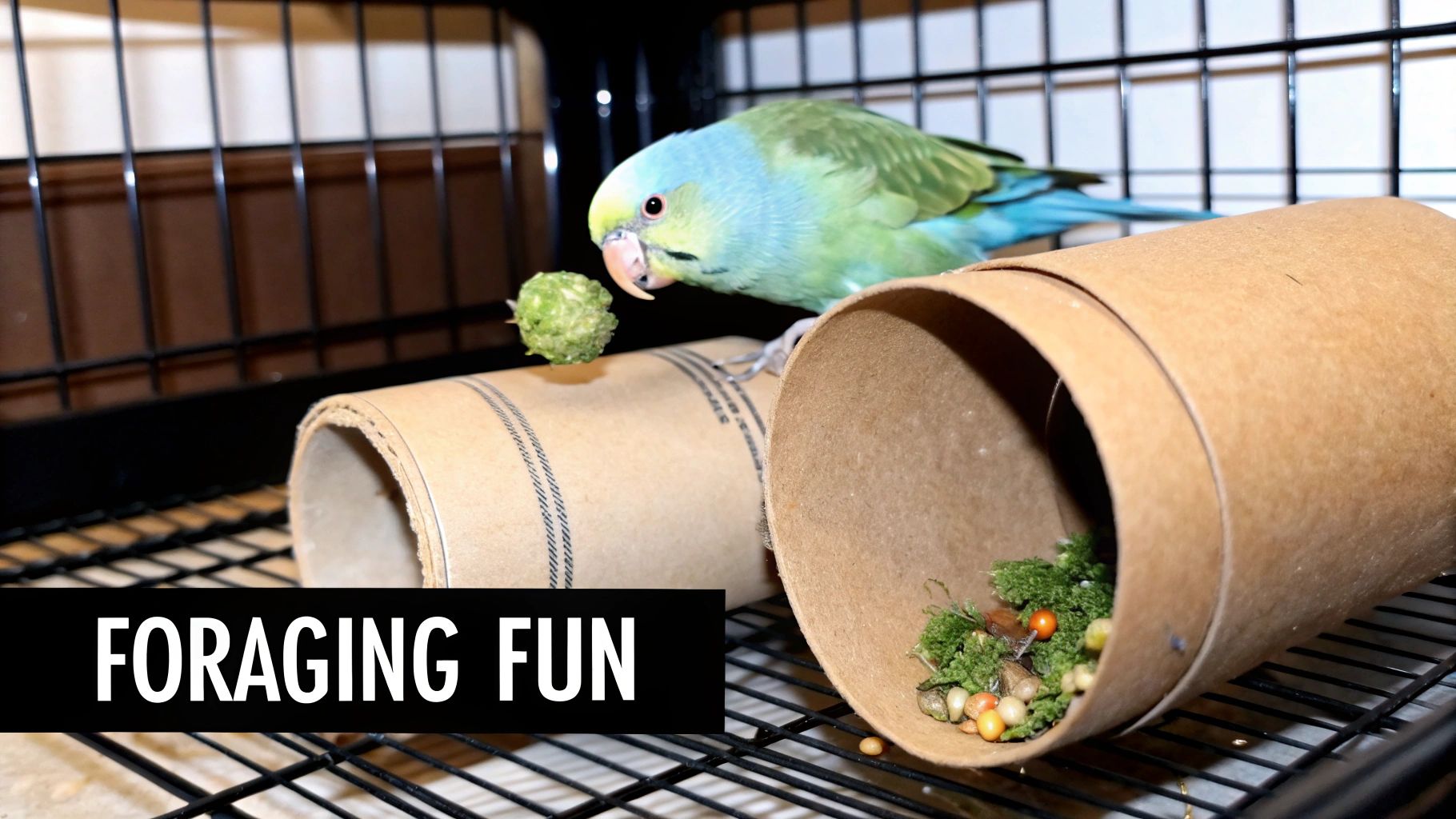
Just dropping a bowl of food into the cage every day certainly gets the job done, but it misses a massive opportunity for your parrotlet. In the wild, parrots don't just find a neat pile of food waiting for them; they spend a huge part of their day actively searching for it. This natural drive is called foraging.
Tapping into this instinct is one of the best things you can do for your bird’s mental and physical health. It turns a boring, five-minute meal into an engaging puzzle that can keep them busy, focused, and happy. Foraging busts boredom, provides crucial mental stimulation, and encourages physical activity—all of which help prevent obesity and other health issues.
Wild parrotlets spend a good chunk of their day—sometimes up to 4.5 hours—on the hunt for food. This constant activity is essential to their wellbeing, which is why we need to bring a little bit of that challenge into our pets' lives.
Getting Started with Simple Foraging
You don’t need to rush out and buy expensive, complicated toys to get started. Foraging can be incredibly simple, often using things you already have lying around the house. The goal is just to make your bird work a little for their meal, sparking their natural curiosity.
Here are a few easy DIY ideas:
- Cardboard Creations: Grab an empty toilet paper roll, stuff it with some shredded paper, and hide a few pellets or seeds inside. Pinch the ends shut and let your parrotlet figure out how to tear it open to get the prize.
- Weave and Seek: Instead of chopping up leafy greens like kale or silverbeet, try weaving the leaves through the bars of the cage. This encourages your bird to pull, tug, and shred them, mimicking how they’d eat in nature.
- Scatter Feeding: Forget the deep food bowl. For dry foods like pellets, simply scatter them across a clean, flat surface or a shallow tray. This forces them to move around and pick up each piece one by one.
Think of it this way: turning mealtime into a puzzle satisfies a deep-seated instinct in your parrotlet. It transforms their food from just a resource into a rewarding challenge, which is a powerful way to reduce stress and prevent behavioural problems like feather plucking.
Stepping Up the Challenge with Foraging Toys
Once your parrotlet gets the hang of the easy stuff, you can introduce more complex puzzles to keep their mind sharp. Commercial foraging toys are fantastic because they're designed to be durable, bird-safe, and offer a whole new level of challenge.
Start with beginner-level toys that have a clear solution. As they build confidence, you can move on to multi-step puzzles that require a bit more brainpower.
The key is to match the difficulty to your bird's skill level to keep it fun and avoid frustration. For a deeper dive into picking the perfect puzzles, check out our complete guide on how to choose foraging toys for birds.
By making foraging a part of your parrotlet's daily routine, you're not just feeding their body; you're feeding their mind.
Enrichment Feeding Ideas for Your Parrotlet
Ready to get creative? Here are a few simple to advanced ideas to turn mealtime into a fun, stimulating activity for your parrotlet.
| Difficulty Level | Foraging Idea | What You Need |
|---|---|---|
| Beginner | The Food Scatter | A shallow, clean tray or the bottom of the cage. Scatter pellets instead of using a bowl. |
| Beginner | Paper Parcel | A small piece of plain paper. Wrap a treat inside and twist the ends. |
| Easy | Veggie Weave | Cage bars. Weave long strips of kale, carrot, or silverbeet through the bars. |
| Easy | Cardboard Tube Surprise | An empty toilet paper or paper towel roll, shredded paper. Stuff with treats and pinch the ends. |
| Intermediate | Foraging Tray | A shallow tray filled with bird-safe materials like shredded paper, foot toys, or paper straws. Hide food inside. |
| Intermediate | Egg Carton Puzzle | An empty cardboard egg carton. Place treats in the cups and close the lid. |
| Advanced | Nut in a Box | A small, bird-safe cardboard box. Place a high-value nut inside and tape it shut with paper tape. |
Remember to start simple and watch how your bird interacts with the puzzle. The goal is to build their confidence and make them feel clever, not frustrated
Choosing the Best Bird Food in Australia
Walking down the pet food aisle can feel a bit overwhelming. You're faced with a wall of colourful bags, all claiming to be the best for your parrotlet. As a bird owner in Australia, you’ve got access to some brilliant local brands, but knowing what to look for—and what to walk away from—is the real secret to choosing with confidence.
Think of your avian vet as your partner in crime when it comes to your parrotlet's health. They’re an incredible resource, trained to spot the subtle, early signs of poor nutrition that can easily fly under the radar. A regular check-up gives them a chance to offer advice tailored specifically to your bird’s age, activity, and overall condition.
Listening to Your Vet's Advice
A good avian vet can tell a lot just by looking at your parrotlet. Are the feathers a bit dull? Is the beak looking flaky or overgrown? Even small changes in their droppings can signal a gap in their diet.
These vets see the long-term impact of improper feeding every single day. They can point you towards a diet that helps prevent common health issues, setting your bird up for a long and vibrant life. Honestly, a yearly wellness check is a tiny investment for the huge peace of mind it brings.
"A well-balanced diet is the single most important factor in a parrotlet's health. We can often trace issues like poor feathering, respiratory infections, and liver problems directly back to nutritional deficiencies, most commonly from a seed-heavy diet." - Australian Avian Veterinarian Insight
Decoding the Ingredient Label
When you're standing in the pet store, that ingredient label is your best friend. Learning to read it properly helps you cut through the flashy marketing and get right to what matters.
Keep an eye out for high-quality, reputable Aussie brands known for their solid research into avian nutrition. Companies like Vetafarm and Passwell are often recommended by vets across the country for a good reason—they've put the work into creating formulated pellets that offer complete, balanced nutrition. If you want more ideas on where to find great gear, check out our recommendations for top-quality parrot supplies in Australia.
When you grab a bag of food, here’s a quick checklist for the label:
- Whole Grains First: The first ingredients listed should be things like whole grains—corn, wheat, or soy are common. These provide the essential carbs your bird needs for energy.
- Fortified with Vitamins and Minerals: A good pellet will be boosted with crucial nutrients like Vitamin A, D3, and calcium to make sure nothing is missing from their diet.
- Natural Preservatives: Look for natural preservatives like mixed tocopherols (which is a source of Vitamin E) or citric acid, rather than artificial chemicals.
Just as important is knowing what to avoid. If you see these on the label, it might be best to put the bag back on the shelf:
- Artificial Colours and Flavours: These are totally unnecessary. A healthy pellet doesn't need to look like a rainbow, and these additives can sometimes cause sensitivities in birds.
- High Sugar Content: Ingredients like sucrose, corn syrup, or fructose are often just there to make the food taste better. They don’t add much nutritional value and can contribute to weight gain and other health problems.
- Vague Fillers: Be wary of non-specific ingredients like "grain by-products." The best brands are transparent about exactly what goes into their formulas.
By arming yourself with this know-how, you can confidently pick a commercial diet that builds a strong foundation for your parrotlet's health, ensuring they get the best nutrition available right here in Australia.
Common Questions About Parrotlet Food
Even with the best advice, you're bound to have questions when you're looking after a tiny bird with a big personality. To help clear things up, we’ve put together a few of the most common queries we get from parrotlet owners right here in Australia.
How Much Food Should My Parrotlet Eat Each Day?
Getting the portion size right is one of the most important things you can do to keep your parrotlet from becoming overweight.
As a solid starting point, an adult parrotlet needs about 1.5 to 2 level teaspoons of high-quality pellets each day. Think of this as their main meal. Alongside that, offer about one teaspoon of finely chopped, bird-safe fresh veggies.
Keep a close eye on your bird’s body condition and droppings. If you're ever worried about their weight, the best thing to do is have a chat with your avian vet.
My Parrotlet Refuses to Eat Pellets What Should I Do?
This is a classic parrotlet problem. They can be incredibly stubborn, especially if they’ve grown up on a seed-heavy diet. The key here is patience—never switch their food cold turkey, as that can be dangerous for a bird so small.
Instead, try these gentle methods to win them over:
- Mix and Reduce: Start by mixing a tiny amount of pellets (around 10%) into their usual seed mix. Every few days, slowly up the pellet percentage while dialling back the seeds.
- Morning Hunger: Birds are often hungriest first thing in the morning and more willing to try new things. Offer a separate bowl with just pellets for an hour or so before you give them their regular food.
- Make it Fun: Get creative! Crush the pellets into a powder and sprinkle it over their favourite moist veggies. You could also hide whole pellets in a simple foraging toy to spark their natural curiosity.
Can I Give My Parrotlet Human Food as a Treat?
Sharing food feels like a lovely way to bond, but you have to be extremely careful. While a few human foods are safe in tiny amounts, many are downright toxic to birds.
Small, occasional treats like a single piece of cooked pasta, a tiny bit of plain scrambled egg, or some unseasoned steamed rice are generally okay.
However, you must never give them anything salty, sugary, fatty, or containing ingredients like avocado, chocolate, onion, or alcohol. When in doubt, it’s always safest to stick to foods made specifically for birds.
FAQ on Parrotlet Diets
Here are a few more quick answers to some of the questions we hear all the time.
| Question | Answer |
|---|---|
| How often should I feed my parrotlet? | Twice a day is a good routine. Offer fresh food in the morning and evening, and remove any uneaten fresh food after a couple of hours to prevent spoilage. |
| Are seeds really that bad for parrotlets? | A 100% seed diet is like a human living on junk food—it's high in fat and lacks essential vitamins. A small amount of high-quality seed mix can be used for treats or foraging, but it shouldn't be the main meal. |
| What fresh vegetables are best? | Leafy greens like kale and spinach (in moderation), broccoli, capsicum, carrots, and sweet potato are all fantastic choices. Always chop them into tiny, manageable pieces. |
| Can I make my own bird food? | While possible, it's very difficult to create a nutritionally complete diet at home. It's much safer to rely on a high-quality formulated pellet as the base and supplement with fresh foods. |
Hopefully, this clears up a few things! A consistent, balanced diet is the cornerstone of a healthy and happy parrotlet.
For a deeper dive into other common questions, from cage setup to toy safety, feel free to explore our full FAQ page for more expert answers.
Expert Takeaway: Consistency is your greatest tool when managing your parrotlet's diet. Sticking to a routine with high-quality parrotlet bird food, controlled portions, and safe, fresh supplements builds the foundation for a long, healthy, and happy life.
Ready to turn mealtime into the most exciting part of your parrotlet’s day? At Lou Lou Bells Bird Toys, we handcraft a huge range of engaging and bird-safe foraging toys right here in Australia. Shop our collection of enrichment toys and give your feathered friend the mental stimulation they crave.
Disclaimer Summary:
The information in this article is general in nature and may include external links or resources not created by Lou Lou Bells Bird Toys. Every bird is unique, so we encourage you to seek personalised advice from your own veterinarian or avian specialist. For full details, please read our complete disclaimer here.