
If you've ever wondered what makes hand-raised budgies so special, it comes down to one simple thing: connection. They're known for being incredibly tame and affectionate, forming a deep, trusting bond with their human companions that you just don't see with aviary birds. This unique relationship is built through careful, hands-on nurturing from a very young age, creating a pet that's not just tame, but a genuine member of the family.
Why Choose a Hand Raised Budgie
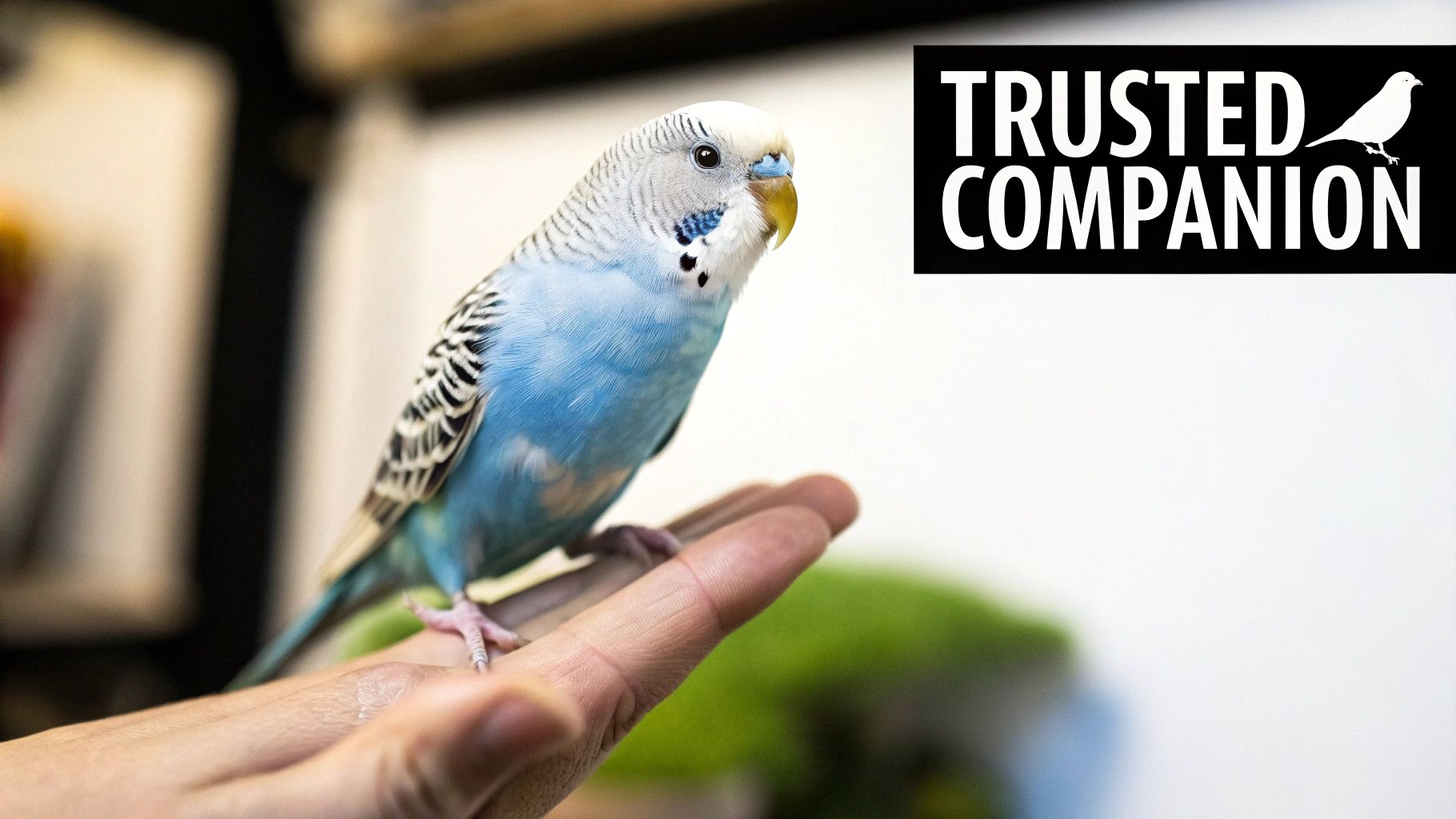
Choosing a hand-raised budgie is about more than just bringing home a pet. It’s an invitation to form a profound friendship with a small, clever parrot that sees you as its parent, flock, and protector all rolled into one. While aviary-raised birds often see humans with a bit of suspicion, a hand-raised budgie has known human kindness and gentle hands from its earliest days.
This early, intensive interaction is what builds such a social and confident companion. These little birds don't just tolerate human company; they actively seek it out. They’ll want to perch on your shoulder, preen your hair, or just chatter away to you as you go about your day. The joy this brings is immense, but it also comes with a big responsibility. You become their entire world, and they depend on you for everything—socialisation, enrichment, and affection.
The Growing Trend of Feathered Companions
Across Australia, the popularity of companion birds is really taking off, and it's easy to understand why. Their massive personalities packed into a small footprint make them brilliant pets for all sorts of living situations. Recent data really drives this home, showing a huge jump in pet ownership nationwide.
In fact, Australia's pet bird population has grown remarkably. A national survey on pet ownership trends in 2022 revealed that around 69% of Australian households own at least one pet. It's clear that more and more Aussies are discovering the unique rewards of sharing their lives with animals, including our feathered friends.
Understanding the Commitment
Bringing a hand-raised budgie into your life is a commitment to becoming a surrogate parent. This journey is about so much more than just providing food and a cage. It requires patience, consistency, and a real willingness to understand what your bird needs to thrive.
- Emotional Investment: You are the centre of your budgie's universe. They will crave your attention and can become stressed or develop behavioural issues if they feel lonely.
- Time and Interaction: Daily interaction isn't optional—it's essential. This means handling, training, and simply sharing your space with them to keep that bond strong.
- Lifelong Learning: Raising a well-adjusted bird means you're always learning. You'll need to stay on top of their diet, behaviour, and health to give them the best care throughout their life.
By choosing a hand-raised budgie, you're not just getting a pet; you're embarking on a journey of interspecies friendship. It's a commitment to nurture a tiny life, ensuring it grows into a confident, happy, and cherished member of your family.
Creating the Perfect Nursery for Your Budgie Chick
Before that tiny, fragile chick comes home, your first job is to get their nursery set up and running perfectly. Think of it less like a cage and more like a little intensive care unit. It needs to mimic the warmth, safety, and cleanliness of a natural nest, and getting it right from day one is the foundation for a healthy, happy bird.
The heart of your setup is the brooder. You can buy commercial ones, but a small plastic tub or an old aquarium with a secure lid works just as well. The most important thing is that it's easy to deep clean and holds a stable temperature. Stay away from anything absorbent like cardboard boxes – they're a breeding ground for nasty bacteria.
Essential Equipment Checklist
Getting ready for a hand-raised budgie is a lot like preparing for a human newborn. You need a very specific set of tools on hand before the chick arrives. Scrambling to find something you've forgotten is stressful for both you and the baby, so get your kit assembled well ahead of time.
- A Reliable Heat Source: A heat lamp fitted with a ceramic bulb (the kind that gives off heat but no light) is a great choice. Another excellent option is a thermostatically controlled heat mat placed underneath one half of the brooder. This creates a temperature gradient, allowing the chick to shuffle closer or further away to manage its own body heat.
- Accurate Thermometers: You absolutely need two. One stays inside the brooder to monitor the air temperature, and the other should be a digital probe thermometer for checking the formula temperature before every single feed.
- Feeding Instruments: Many experienced hand-feeders use curved-tip feeding syringes (1ml or 3ml sizes are perfect for tiny budgie beaks) or a specially designed feeding spoon. Whichever you go with, have a few spares so there's always a sterilised one ready to go.
- High-Quality Hand-Rearing Formula: This is non-negotiable. Only ever use a commercial formula made specifically for parrots, like Vetafarm Neocare or Wombaroo, readily available in Australia. Never, ever be tempted to use human baby food, cow's milk, or any homemade concoction, as these can be fatal.
- Digital Scales: A small set of kitchen scales that measures in one-gram increments is essential. You must weigh your chick every morning before its first feed. This daily check is the best way to track growth and spot potential health problems before they become serious.
- Sterilisation Supplies: You'll need a proper avian-safe disinfectant, like F10SC, to clean the brooder, feeding tools, and your hands. Scrupulous hygiene is your number one weapon against bacterial and fungal infections.
Setting the Ideal Brooder Environment
The environment inside that brooder is everything. You're trying to replicate the conditions of a snug tree hollow – warm, dark, and secure. For a bit more insight into what budgies look for in a nest, have a read of our guide on the ideal budgerigar nest box setup.
Temperature is the most critical piece of the puzzle. A newly hatched, featherless chick needs the brooder kept at a steady 35-36°C. As they begin to get their fluffy down and pinfeathers emerge, you can start to gradually lower this by a degree or so each week.
Expert Tip: You cannot guess the temperature. A chick that gets too cold can't digest its food properly because its metabolism slows right down. This leads to a dangerous condition called 'sour crop', which is often fatal. On the flip side, a chick that's too hot will dehydrate very quickly.
Finally, let's talk about what to put on the floor. The substrate, or bedding, needs to be absorbent, give the chick good grip to prevent splayed legs, and be easy to clean. Paper towels, unprinted paper, or even puppy training pads are perfect because you can just whip them out and replace them at each feed. Avoid things like wood shavings, corn cob bedding, or kitty litter – they can be eaten by mistake or cause respiratory problems.
Getting this safe, warm, and sterile nursery ready is your first big step on the rewarding journey of raising a healthy, hand-tamed budgie.
Mastering the Art of Hand Feeding
Hand-feeding a budgie chick is a delicate dance between science and connection. It’s a process that builds an incredible bond, but it demands precision, patience, and a deep respect for the tiny life in your hands. Getting this right is absolutely fundamental to raising a healthy, confident companion.
The whole thing starts with the formula. It’s not just about mixing powder and water; you're creating a warm, smooth, and easily digestible meal. Using a high-quality commercial hand-raising formula is non-negotiable. Please don't be tempted by homemade recipes, as they can easily lead to malnutrition or fatal digestive issues.
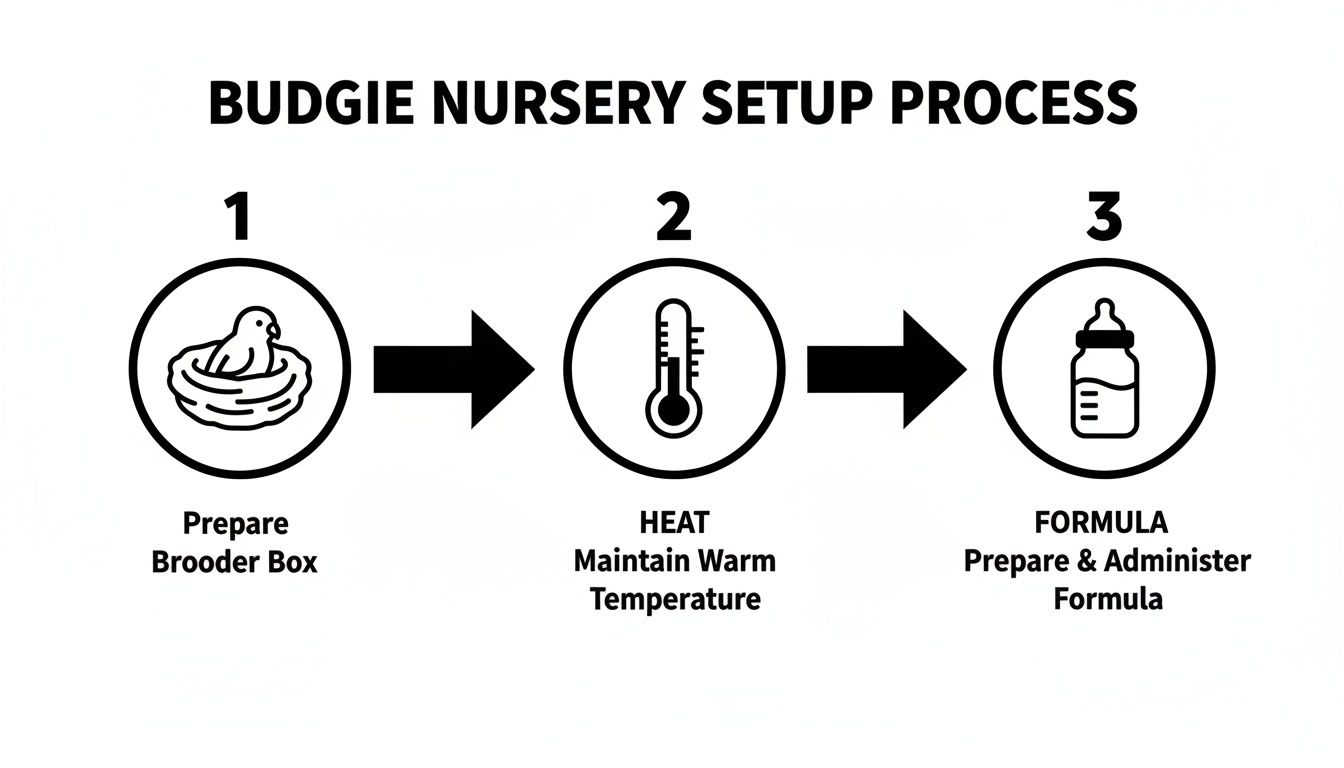
This visual guide shows just how crucial the setup is. A secure brooder, consistent heat, and correctly prepared formula are the three pillars supporting a chick's health before a single drop of food is offered.
Preparing the Formula Perfectly
Consistency is everything. You're aiming for a texture similar to thin custard or tomato sauce—smooth enough to flow through a syringe but thick enough to provide real substance. Always follow the manufacturer's directions to the letter, but be ready to make small adjustments. Very young chicks need a slightly thinner mix, which you'll gradually thicken as they grow.
But the most critical element? Temperature. The formula absolutely must be heated to between 39°C and 41°C.
If it's too cold, the chick’s digestive system will slow right down, leading to a dangerous condition called slow crop or sour crop. If it’s too hot, you can cause severe, often fatal, burns to the chick's delicate crop lining.
Never, ever use a microwave to heat the formula; it creates invisible hotspots. Instead, place your mixing cup in a bowl of warm water and stir continuously. You must check the temperature with a digital probe thermometer before every single feed.
Expert Advice: A common mistake I see is people "pumping" the syringe up and down to mix the formula. This forces air into the mixture, which the chick then swallows, causing discomfort and potential crop problems. Instead, gently stir the formula with the end of the syringe or another sterilised utensil.
Hand-Feeding Technique and Safety
Once your formula is perfect, it’s feeding time. Your technique should be calm and confident, designed to trigger the chick's natural feeding response. This gaping motion is the key to safely depositing formula into its crop without the risk of aspiration (inhaling it into the lungs).
- Get into position. Gently hold the chick in a soft cloth in your non-dominant hand. Make sure its body is supported and its head is steady and slightly elevated.
- Trigger the response. Lightly touch the side of the chick’s beak with the tip of the feeding syringe. This mimics a parent bird and should prompt the chick to start gaping and bobbing its head enthusiastically.
- Feed carefully. Only when the chick is actively gaping, insert the tip of the syringe into the left side of its beak, angling it toward the right side of its throat. This directs the formula down the oesophagus and straight into the crop.
- Pace yourself. Slowly and gently depress the plunger in time with the chick’s swallowing motions. Never, ever force formula into a chick that isn't gaping or has stopped swallowing.
Following a Feeding Schedule
How often you feed depends entirely on the chick's age and how quickly its crop is emptying. A healthy crop should feel soft and full after a feed, and it should be almost completely empty before the next one is due. This is a non-negotiable rule of hand-raising.
Here is a general guide to help you understand what to expect. Remember, every chick is an individual, so always be guided by the chick itself and your avian vet's advice.
Budgie Chick Feeding Schedule by Age
A general guide for hand-feeding frequency and formula consistency as a budgie chick matures. Always consult an avian vet for personalised advice.
| Age (Weeks) | Feeds Per Day | Approximate Formula Consistency | Key Milestones |
|---|---|---|---|
| 1-2 Weeks | Every 2-3 hrs | Thin, like creamy soup | Eyes opening, dependent on round-the-clock feeding. |
| 2-4 Weeks | Every 4-5 hrs | Slightly thicker, like custard | Pinfeathers emerging, overnight feeds can often stop. |
| 4-6 Weeks | 3-4 | Thicker, like tomato sauce | Feathers developing, start introducing soft solid foods (e.g., soaked seed). |
Remember, a chick should be fed until its crop is nicely rounded but not tight or stretched. A good rule of thumb is to feed about 10% of the chick’s body weight at each meal, which is why daily weigh-ins are so important for tracking progress and calculating feed amounts.
Troubleshooting Common Feeding Issues
Sometimes, things don't go to plan. A chick might refuse to gape or seem a bit lethargic.
If a chick is refusing to feed, the first thing to check is the formula temperature—it’s the most common culprit. Also, double-check that the brooder temperature is correct. If the chick still won't respond and you notice its crop isn't emptying between feeds, this is a major red flag. Contact your avian vet immediately. Building your confidence in these moments is what turns a good hand-feeder into a great one.
Guiding Your Budgie Through Weaning
Weaning is probably the biggest milestone in a young budgie's life. This is where they journey from formula to solid food, and your role shifts from being their primary feeder to their supportive coach. It’s a gradual process that’s more about reading your bird’s cues and encouraging their curiosity than sticking to a rigid schedule.
This isn’t something that happens overnight. Weaning is a gentle discovery for your little one, usually kicking off when they're around 5 to 6 weeks old. By then, they're fully feathered and starting to explore their world with a bit more bravado. The key is to introduce solid foods while still offering formula, letting them experiment at their own pace.
Introducing First Foods
To start, you’ll want to offer foods that are soft, easy for a tiny beak to manage, and tempting. Your goal is to spark their interest and get them pecking and playing—that’s how they learn to eat. Don’t be surprised if they just make a huge mess at first. That’s all part of the process!
- Soaked Pellets or Seed: Grab a high-quality pellet or budgie seed mix and soak it in a little warm water until it’s soft and mushy. Pop a small, shallow dish of this in their brooder or new cage.
- Spray Millet: There's a reason they call this "budgie candy." Clipping a small piece of spray millet to the side of the cage is an almost surefire way to get a young budgie to start nibbling. The tiny seeds are perfect for them to break apart and swallow.
- Finely Chopped Veggies: Introduce finely grated or chopped veggies like carrot, broccoli florets, and sweet corn. You can find out more about preparing vegetables safely in our guide on what budgies can eat. Try scattering them on a clean, flat surface to encourage natural foraging.
It’s completely normal for your budgie to ignore these new foods or just trample through them at first. Just keep offering fresh solids every day, and be sure to remove anything uneaten after a few hours so it doesn’t spoil.
Encouraging Independent Eating
Once your budgie starts showing a bit more interest in solid foods, you can begin to gently nudge them toward independence. This means gradually cutting back on the amount and frequency of their formula feeds. For instance, if you were doing three feeds a day, you might slightly reduce the midday portion. This helps them feel a little hungry, encouraging them to seek out the solid food you’ve left for them.
Expert Advice: A common worry during weaning is a slight drop in weight. It's perfectly normal for a chick to lose up to 10% of its peak body weight as it gets more active and transitions to solids. Keep up your daily morning weigh-ins to make sure the loss is gradual and stays within this range. Any sudden, sharp drop is a sign to call your vet immediately.
To make the whole thing more engaging, why not turn mealtime into a game? A simple foraging toy with some easily-won millet or a soft shreddable foot toy can make exploring new foods feel like an exciting adventure. You want them to associate eating solids with fun and discovery.
Navigating Weaning Challenges
Patience is your best friend during this stage. Some budgies take to solids like a duck to water, while others will keep begging for the comfort of warm formula for a bit longer. Whatever you do, never force it. If a chick is begging its heart out and has an empty crop, it genuinely needs that feed. Starving a chick to rush the weaning process is not only cruel but can lead to serious health and behavioural issues down the line.
The very last feed to go is usually the one at night, as this ensures they go to sleep with a full, comfy crop. The morning feed is often the second-to-last one you'll drop. You'll know your budgie is officially weaned when they've been consistently refusing formula and holding a stable weight on solid foods for at least a week. Adding different textures, like a natural wood perch for them to chew on, is great for beak maintenance and enrichment.
This successful transition is their graduation from a dependent chick to a confident, self-sufficient young bird, all set for a lifetime of new experiences.
Nurturing a Confident and Social Budgie
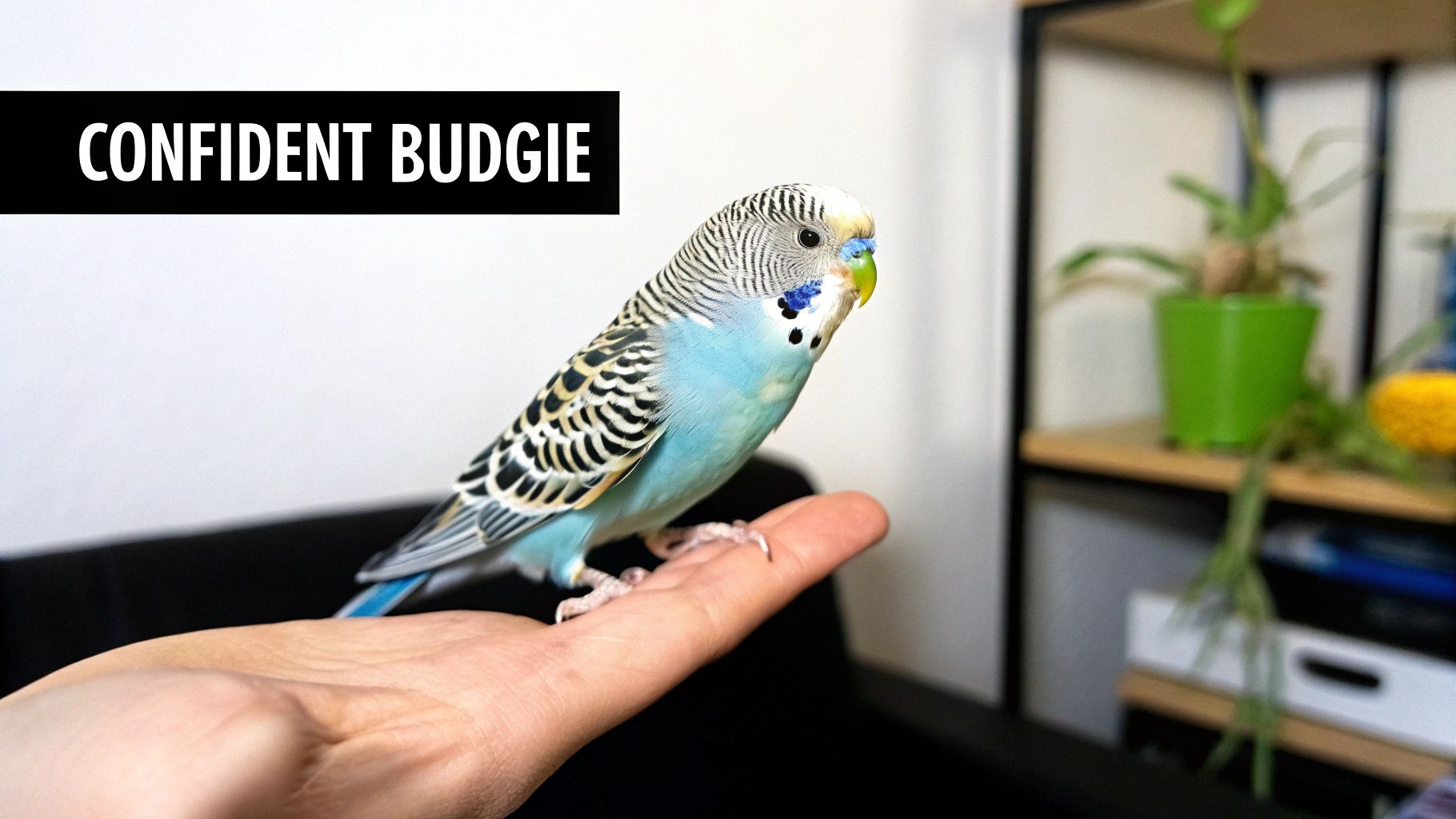
Once weaning is behind you, your job shifts. You're no longer just a provider of food; you're on your way to becoming a lifelong friend and teacher. This is the crucial window for socialisation, where all that trust you’ve carefully built becomes the bedrock for a friendly, confident, and well-adjusted companion. The goal is to raise a bird that doesn't just put up with you, but genuinely enjoys your company.
This stage is all about gentle exposure and positive reinforcement. A budgie that grows up in a silent, unchanging room can easily become fearful when faced with new people or sounds later. By introducing them to the normal hustle and bustle of your home now, you're teaching them the world is a safe and interesting place to be.
Building Trust Through Gentle Handling
Up until now, your hands have meant food, warmth, and safety. It's time to build on that fantastic foundation. The idea is to make handling a rewarding experience in itself. Always keep your interactions short, sweet, and end them on a high note before your little one gets tired or cranky.
A great place to start is by simply letting your budgie perch on your hand inside the cage while you speak in a calm, soothing voice. Once that’s comfortable, you can slowly bring your hand out of the cage for brief moments.
The "step-up" is one of the most useful skills you can teach.
- The Cue: Gently place your finger against your budgie’s lower belly, just above their feet.
- The Command: As you offer your finger, say a simple, clear command like "step up."
- The Reward: The second they lift a foot onto your finger, shower them with praise. If they hop on completely, offer a tiny reward, like a single millet seed.
This simple routine teaches them to cooperate willingly and makes future handling completely stress-free for both of you.
Expert Advice: Whatever you do, never force a budgie to step up or grab them from behind. It’s the fastest way to shatter their trust. If they seem unsure, just back off and try again later. The interaction should always be their choice.
Understanding Budgie Body Language
Learning to read your budgie's tiny signals is like learning a new language. It’s how you’ll know when they’re happy and receptive, and more importantly, when they're stressed and need some space. Getting this right is the key to preventing nips and building a relationship based on mutual respect.
Here are a few common cues to watch for:
- Content and Relaxed: Feathers are smooth and sleek. They might be chattering quietly, grinding their beak (a fantastic sign of contentment), or resting with one foot tucked up.
- Curious and Engaged: An interested budgie might lean forward, sometimes with a slightly raised crest. You might also notice "eye pinning," where their pupils quickly shrink and expand—a sign of intense focus.
- Anxious or Scared: Fluffed-up feathers (to look bigger), a slicked-down body (ready to bolt), or a stiff posture are all red flags. If you see this, stop what you're doing and give them room.
The Importance of Early Socialisation
The playful, clever nature of hand raised budgies is exactly why they are such beloved companions across Australia. These little parrots weigh only 30-40 grams, but they pack in a huge personality, forming incredibly strong bonds and even learning to mimic speech. Their suitability for family life is a huge part of their appeal, as you can read more about in this guide on the delightful nature of budgerigars.
Gently exposing your young budgie to different sounds, sights, and people is vital. Let them hear the vacuum cleaner from another room, introduce them to family members one by one, and let them see different (and safe) parts of the house. This early desensitisation prevents phobias from developing and helps them grow into a resilient, adaptable adult. For more ideas on enrichment, check out our guide to the best bird toys for budgies. Think of every new positive experience as another deposit in their confidence bank.
Recognising Health Issues and When to Call the Vet
When you're hand-raising a budgie chick, you become its primary guardian and health observer. These little ones are incredibly fragile, and their condition can change in a heartbeat. Constant, daily observation isn't just a good idea; it's the single best tool you have for catching a problem early, often when it's still an easy fix.
Think of this as your field guide, but remember it can never replace the expert eye of an avian veterinarian.
Your daily weigh-in is non-negotiable and your first line of defence. Any weight loss you can't explain, even just one gram, is a massive red flag that something is wrong. Beyond the scales, get to know your chick's normal rhythm. Is it usually chirpy and active? Are its droppings consistent? Any change from its normal baseline should be taken seriously.
Common Ailments in Budgie Chicks
Knowing what to look for is half the battle. A few common issues can pop up with baby budgies, and spotting the signs quickly makes all the difference.
- Sour Crop (Crop Stasis): This is one of the most serious and common problems you might face. The crop, a small pouch in the bird’s throat, simply stops emptying. You’ll notice the crop still feels full and squishy hours after a feed, and the chick will probably seem weak or lethargic. The formula inside can start to ferment, creating a toxic environment that is often fatal if not treated immediately by a vet.
- Dehydration: A dehydrated chick’s skin will look wrinkly. If you gently pinch it, it won't spring back quickly—this is often called "tenting." Their droppings will be small and dry, and they’ll likely be very weak. This often happens alongside overheating or another illness.
- Bacterial or Fungal Infections: These can show up in many ways—lethargy, refusing food, changes in droppings, or even breathing trouble like clicking sounds or panting. Meticulous hygiene is your best prevention, but infections can still happen and need a vet to prescribe the right medication.
When to Make the Call
While you can monitor minor things, some signs are absolute emergencies. Don't wait to "see how they go" if you notice any of the following. Call an avian vet right away.
Expert Advice: Your instinct as a caregiver is powerful. If you feel something is wrong with your chick, even if you can’t pinpoint the exact symptom, it's always better to be safe and seek professional advice. Vets would much rather see a healthy bird you were worried about than a sick bird you waited too long to bring in.
Here are the critical signs that mean an immediate vet visit is required:
- Any sign of bleeding.
- Laboured breathing, tail bobbing, or clicking noises when breathing.
- A crop that has not emptied for several hours.
- Sudden and significant weight loss.
- Inability to stand, seizures, or loss of balance.
- Vomiting or regurgitating formula (not just a small dribble).
- Any visible injuries or swelling.
Being proactive is the most crucial part of hand-raising. While you're keeping an eye on their overall health, you might also notice changes to their beak. For more information, you can learn about identifying a crusty growth on the side of a bird's beak in our detailed guide. Finding a good avian vet before you need one is one of the smartest things you can do.
Common Questions About Hand-Raised Budgies
When you bring a hand-raised budgie into your home, you're bound to have a few questions pop up along the way. It's all part of the journey! Here are some quick answers to the things we get asked most often by new budgie owners here in Australia.
How Can I Tell if My Budgie Is a Boy or a Girl?
For most adult budgies, the best clue is the cere—that fleshy bit right above their beak. A vibrant blue cere usually means you have a boy, while a tan, crusty brown, or even a pale blue/white cere points to a girl.
Keep in mind, this isn't a perfect science for very young birds or for certain colour mutations like Lutinos, where it can be tricky. If you need to know for sure, a DNA test through your avian vet is the only foolproof way to go.
What Is the Ideal Cage Size for a Single Budgie?
When it comes to cages, bigger is always better. You want to give your little mate plenty of room for a good flap and to play with their toys. We always recommend a cage that's wider than it is tall, with a minimum size of around 50cm wide x 50cm deep x 60cm high.
The most critical detail? Bar spacing must be no wider than 1.25cm. Any larger, and you risk your budgie getting their head stuck, which can be very dangerous.
My Hand-Raised Budgie Suddenly Started Biting. How Do I Stop It?
First off, don't panic! Biting in young budgies is often just a bit of exploratory 'beaking'—they're using their beak to learn about the world, and sometimes that includes you. It can also be a sign of hormones kicking in or a reaction to being frightened.
Whatever the reason, never yell or react in a big way. A firm but calm 'no' is all that's needed. Gently place them back on a perch for a moment to show them that biting ends the fun interaction. A great next step is to redirect that busy beak onto something they are allowed to chew, like this fun natural piñata toy.
To keep your budgie engaged and happy, explore the wonderful range of toys at Lou Lou Bells Bird Toys. Find the perfect enrichment for your feathered friend at https://louloubellsbirdtoys.com.au.
Keep Reading
- What is the Crusty Growth on the Side of my Bird's Beak?
- Bird Toys For Budgies
- Can Budgies Eat Carrot?
Disclaimer Summary: The information in this article is general in nature and may include external links or resources not created by Lou Lou Bells Bird Toys. Every bird is unique, so we encourage you to seek personalised advice from your own veterinarian or avian specialist. For full details, please read our complete disclaimer here.