
Yes, your budgie can absolutely eat carrots. In fact, they’re a fantastic, vet-approved addition to their diet.
Think of a plain seed mix as a very basic meal—it gives them energy but often lacks the crucial vitamins and minerals they need. Adding fresh vegetables like carrots is like giving your feathered friend a vibrant, nutrient-packed superfood that fills those gaps and helps them truly thrive.
Yes, Budgies Can Eat Carrots (And Here’s Why)
For many budgie owners across Australia, the question "can budgies eat carrots?" is a common one, especially when you're looking to move beyond a simple seed-only diet. The good news is that carrots are not only safe but highly recommended by avian experts as a cornerstone of a healthy, balanced diet for your little parrot.
I like to think of a budgie's diet as a house. Seeds are the basic frame—they provide structure and energy, but they can't protect from the elements alone. Fresh veggies like carrots are the walls, insulation, and roof. They provide the essential vitamins, minerals, and hydration needed for a complete, healthy life.
The Shift to Healthier Diets
Not too long ago, many pet budgies in Australia were fed diets consisting almost entirely of seeds. While convenient, we now know these diets are often high in fat and dangerously low in essential nutrients. Modern avian veterinary care has really brought to light the serious health risks that come with this old-school approach.
As we've learned more about what keeps our birds healthy, the trend towards incorporating fresh foods has grown massively. Leading vets now recommend that vegetables should make up a big part of a budgie's daily food intake. It's a shocking but important fact that a huge percentage of health issues in pet birds can be traced back to poor nutrition from high-fat, low-nutrient seed diets. You can learn more about this in this detailed budgie care guide from Unusual Pet Vets. This shift is exactly why adding nutrient-dense foods like carrots is so important for their long-term wellbeing.
Carrots for Budgies Quick Guide
To help you get started, here’s a quick summary of the key points when it comes to feeding carrots to your feathered companion.
| Aspect | Recommendation | Key Benefit |
|---|---|---|
| Safety | Always serve washed, fresh carrots. | Removes pesticides and bacteria. |
| Nutrients | Rich in Vitamin A (from beta-carotene). | Supports excellent vision and immunity. |
| Preparation | Grate, shred, or dice into tiny pieces. | Prevents choking and is easy to eat. |
| Frequency | Offer a few times per week. | Ensures a varied and balanced diet. |
| Hydration | High water content. | Helps keep your budgie well-hydrated. |
This table covers the basics, but we'll dive deeper into exactly how to prepare them and what to watch out for in the next sections. Getting carrots right is simple, and your budgie will thank you for it
What's Actually in a Carrot for Your Budgie?
It's easy to say carrots are "healthy" for budgies, but what does that really mean? Let's go beyond the basics and look at exactly what makes this simple root vegetable a genuine powerhouse for your little feathered mate. This isn't just about adding colour to their bowl; it's about delivering real, targeted health benefits.
The star of the show in carrots is beta-carotene. Your budgie's body is pretty clever – it converts this compound into Vitamin A, a nutrient that's absolutely vital for their wellbeing. Good levels of Vitamin A support sharp vision, help maintain a strong immune system to fight off illness, and are crucial for growing those vibrant, healthy feathers we all love to see.
More Than Just a Vitamin Hit
Beyond its famous vitamin content, the humble carrot brings a lot more to the table for your budgie's digestion and hydration. Carrots are packed with natural fibre, which is essential for keeping your bird's digestive system ticking along smoothly and preventing any blockages.
Plus, carrots have a surprisingly high water content. This is a massive bonus for Aussie budgies, especially when you think about our often warm and dry indoor environments. With a nutritional profile of roughly 88% water content, carrots are a brilliant snack for helping your bird stay hydrated. You can find more great tips on feeding your budgie from the Budgerigar Council of South Australia.
This little graphic breaks down the key perks of adding carrots to your budgie's diet.
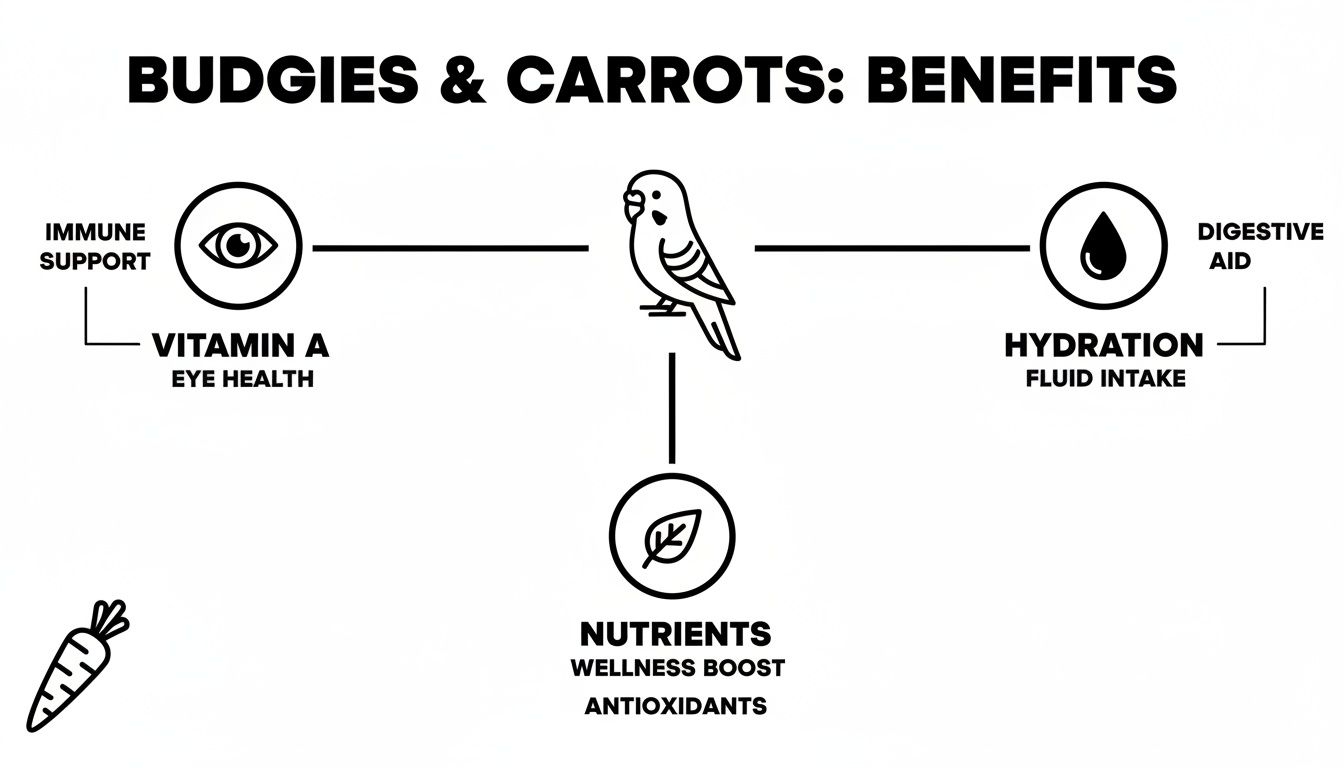
As you can see, this one vegetable delivers a real multi-pronged boost to your bird's health, from the inside out.
The Benefits You Can Actually See
Feeding carrots isn't just about ticking nutritional boxes; it translates into real, tangible results you can see in your companion. When your budgie gets a balanced diet rich in fresh veggies, you'll often notice a visible improvement in how they look and act.
Expert Advice: A well-fed budgie is very often a more active and cheerful one. The vitamins and minerals from fresh foods like carrots can lead to brighter plumage, clearer eyes, and a much more energetic personality.
At the end of the day, bringing carrots into their routine is a simple but really effective way to support your budgie's overall health. While they're a fantastic addition, it’s important to remember they are just one part of a diverse and balanced diet. For a wider look at what a healthy menu looks like, check out our detailed guide on parrot and bird food essentials. It’s all about creating that perfect mix to keep them happy and thriving for years to come.
How to Prepare Carrots for Your Budgie
Alright, so we've established that carrots are a brilliant, healthy treat for your budgie. But just handing over a carrot stick won't do. How you prepare them is just as important as the veggie itself, making all the difference between a safe, tasty snack and a potential hazard.
First up, think clean. Always wash carrots thoroughly under cool, running water before they go anywhere near your bird. This simple step gets rid of any lingering dirt, bacteria, or pesticides. Given how small and sensitive our feathered friends are, this is non-negotiable. If you can get your hands on organic carrots, that’s even better for peace of mind.
The Best Ways to Serve Carrots
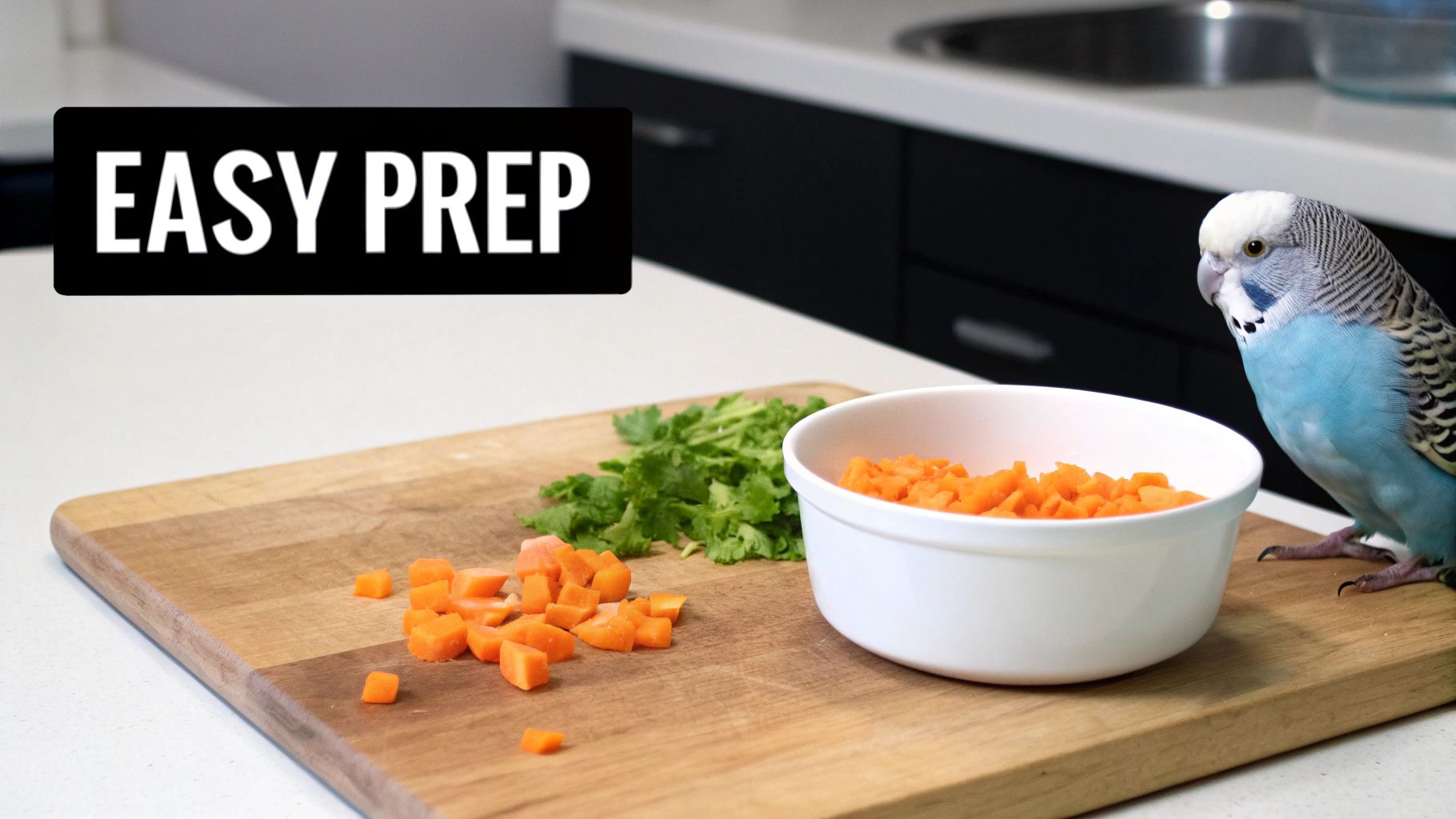
When you're prepping food for a tiny beak, you have to think small. A whole carrot or even a big chunk is a massive choking risk. Your goal is to make the pieces easy to manage and impossible to resist.
Here are a few budgie-approved ways to get it done:
- Grated or Shredded: This is often the best way to go. Grab a standard cheese grater and create fine shreds of carrot. The tiny pieces are perfect for them to pick up and swallow safely.
- Finely Diced: If you'd rather use a knife, chop the carrot into minuscule, almost crumb-like pieces. You're aiming for bits no bigger than a couple of millimetres.
- Mashed: For a softer option, you can lightly steam the carrot until it's tender and then mash it up with a fork. This is a fantastic choice for older birds or any budgie that struggles with harder foods.
Both raw and lightly steamed carrots are great. Raw carrots offer a satisfying crunch that's good for keeping their beak in shape, while steaming can make the nutrients a little easier for their system to absorb. If you do cook them, never add salt, oil, or any other seasonings. These are harmful to your budgie.
Making Carrot Time Fun Time
Serving carrots doesn't have to be just about nutrition—it's also a golden opportunity for enrichment. Budgies are incredibly smart and curious, and they thrive on a bit of a challenge. So, instead of just dropping the carrot pieces into their food bowl, why not turn snack time into a game?
Expert Advice: Foraging is a natural bird behaviour that gives them essential mental exercise. Weaving food into toys encourages problem-solving and helps prevent boredom, which can sometimes lead to issues like feather plucking.
Try stuffing some grated carrot into engaging foraging toys or weaving the shreds through the bars of their cage. You could mix it into a puzzle feeder or get creative with something like our Natural Foraging Box, which is perfect for hiding tasty surprises.
This encourages them to work for their food, just as they would in the wild. Another fantastic option is the Foraging Star Wheel, which adds movement to the fun of finding a treat. It’s a brilliant way to keep them physically active and mentally sharp.
Finding the Right Serving Size and Frequency
While carrots are a fantastic, healthy snack, balance is everything in a budgie's world. It's easy to get excited when your bird discovers a new food they love, but when it comes to serving sizes for veggies like carrots, less is often more. So, how much is just right?
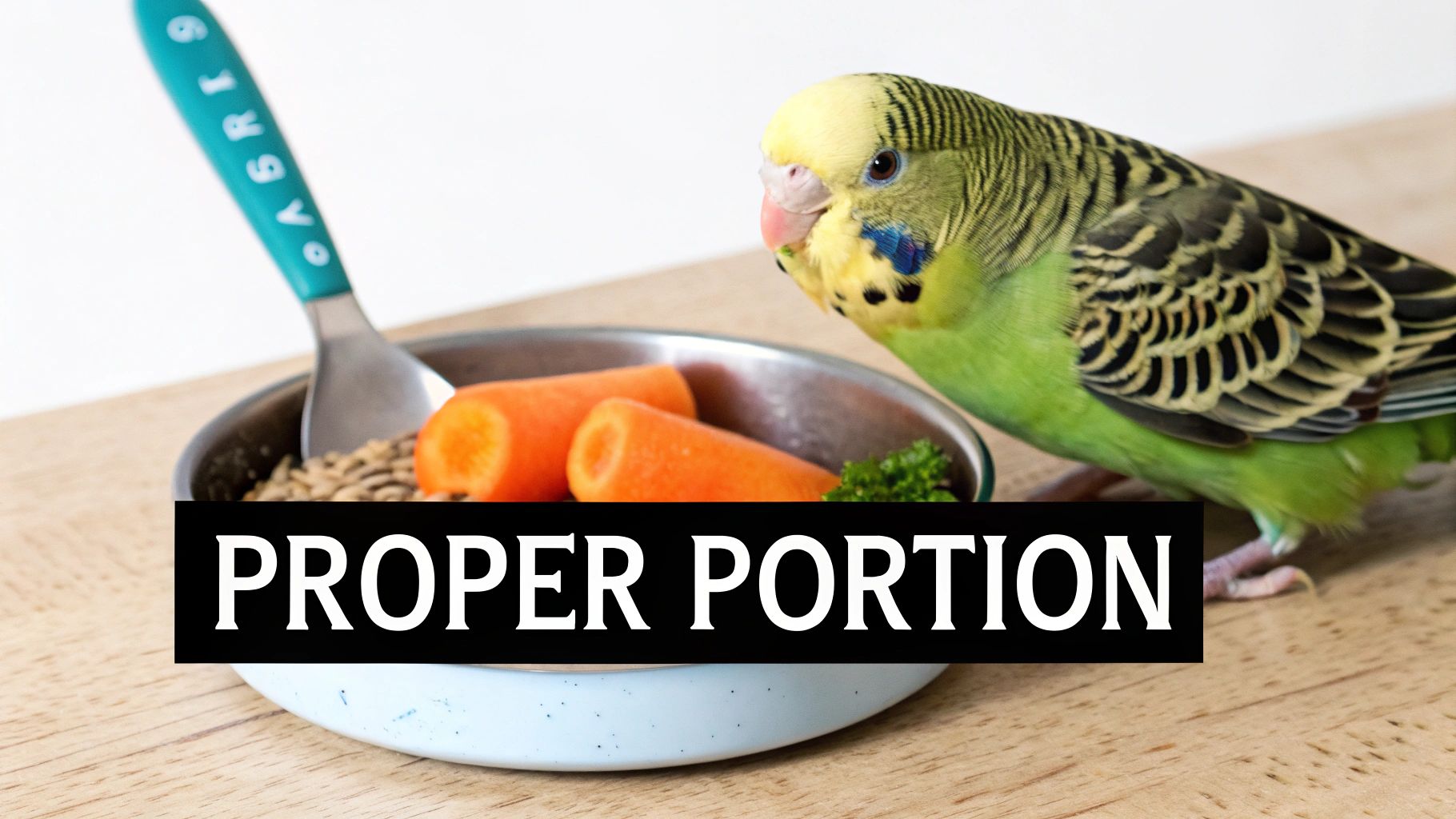
As a general rule, think small. A good guideline from many Aussie avian vets is to offer a piece roughly the size of your thumbnail. If you’re grating it, aim for about one tablespoon of finely grated carrot per budgie. This isn’t a daily staple, but rather a treat to be offered a few times a week as part of a varied and colourful vegetable rotation.
Building a Balanced Diet
Carrots should never be the only vegetable on the menu. A truly healthy diet for a budgie is built on variety and moderation. Think of it like this: carrots are one important player on the team, but you need a full roster to win the game.
The foundation of a modern budgie’s diet should be high-quality pellets, which give them a complete nutritional base. Fresh vegetables should make up a big part of their daily intake, with carrots being just one of many great options. Seed mixes, while a favourite, are best kept as a special treat due to their high fat content—much like our own indulgent snacks. We explore treat options further in our guide to offering millet for birds.
Expert Advice: Overfeeding any single food, even a healthy one like carrots, can lead to nutritional imbalances. Rotating different veggies ensures your budgie gets a wide spectrum of vitamins and minerals.
Don’t Forget the Tops
When you’re preparing carrots, don't just toss the leafy green tops in the bin! They are perfectly safe for your budgie and are surprisingly nutritious. In fact, carrot greens are packed with calcium and other valuable minerals, offering a fantastic leafy green option for your little mate.
According to veterinary advice here in Australia, carrot tops can be included as part of the recommended 20-35% vegetable component of your budgie's daily diet. Just be sure to wash them thoroughly to get rid of any dirt or residue, then offer a small amount. This is a great way to reduce food waste and add even more nutritional variety to their bowl.
How to Introduce Carrots to a Picky Eater
If your budgie grew up on a seed-heavy diet, chances are they'll give a strange new food like carrots a very suspicious side-eye. Don't feel discouraged! This is a completely normal reaction for a creature of habit. The secret to getting them on board is a gentle mix of patience, persistence, and just a little bit of creativity.
Many fussy eaters won't dive beak-first into a pile of grated carrot. The trick is to start small and almost make it seem like it was their idea all along. Begin by mixing tiny, almost unnoticeable flecks of finely grated carrot into their usual seed dish. They might eat some by accident at first, and that accidental taste is often the very first step toward acceptance.
Clever Tricks to Tempt a Fussy Beak
If the ol' "hide-and-seek" method isn't quite cutting it, it's time to get a bit more inventive. Budgies are flock animals, which means they often learn what's safe to eat by watching what others are doing. This is where you come in.
- Model the Behaviour: Try a bit of 'flock eating'. Pick up a small piece of carrot right in front of your budgie and pretend to eat it yourself, making some enthusiastic noises while you're at it. Seeing you "enjoy" the food can be the signal they need that it's safe and tasty.
- Make it a Game: This is where the real fun begins. Budgies are naturally curious little birds and absolutely love to play. Instead of just popping the carrots in a bowl, try weaving the shreds into their favourite shreddable toys. This encourages them to interact with the new food through play—a super low-pressure way to get them to have a taste.
Expert Advice: Tying new foods to playtime is a powerful enrichment technique. It taps into a bird's natural foraging instincts, transforming a suspicious-looking vegetable into a rewarding puzzle that needs solving.
Patience is Everything
The most important thing to remember here is that this can be a slow process. It might take dozens of attempts over several weeks before your budgie even dares to try the carrot. Never force them or take away their staple food entirely in hopes they'll eat the new stuff.
Just stay positive, keep offering it in different fun ways, and make sure to celebrate the small wins along the way.
Making food fun is a fantastic way to overcome picky eating. Our guide on foraging toys for birds has more great ideas for turning mealtime into a stimulating and rewarding activity for your clever little companion.
Frequently Asked Questions About Budgies and Carrots
When you're figuring out a new food for your budgie, a lot of questions pop up. It's completely normal to want to get everything just right for your little feathered mate. Here are some of the most common things Aussie budgie owners ask about carrots.
Are Carrot Tops and Leaves Safe for Budgies?
Yes, absolutely! The leafy green tops of a carrot aren't just safe; they're packed with nutrients. Think of them as a fantastic bonus veggie snack, offering a good dose of calcium and other vitamins. Just give them a really good wash under the tap first to get rid of any dirt or residues.
Should I Serve Carrots Raw or Cooked?
Both are perfectly fine, and each has its own perks. A raw carrot offers a satisfying crunch that's great for keeping your budgie's beak trimmed and healthy, plus it delivers all its nutrients in their natural state.
On the other hand, lightly steaming the carrot makes it softer, which can be easier for some birds to manage and digest. If you do cook them, remember the golden rule: no salt, no oil, no seasonings. Just plain, steamed carrot is all they need.
Can I Give My Budgie Baby Carrots?
You sure can. Those little baby carrots you find in bags at the supermarket are a handy option and just as good for your bird as regular-sized ones. The most important thing, as always, is how you prepare them. Wash them well and chop them up into tiny, beak-friendly pieces to make sure there's no choking risk.
What Should I Do If My Budgie Gets Diarrhoea?
First off, don't panic. If you notice a change in your budgie’s droppings after introducing any new food, it's often just because of the higher water content. Carrots have a lot of water! The first step is to simply cut back on the portion size.
If the loose droppings continue for more than a day or so, or if your bird seems lethargic or unwell, stop offering the new food entirely. At that point, it’s best to have a chat with your local avian vet for some professional advice.
Expert Advice: It's amazing what a difference a balanced diet makes. Here in Australia, vets have noticed huge health improvements in budgies that get fresh veggies. For example, some Australian practices have reported that budgies on a varied diet with vegetables live, on average, longer than birds stuck on a seed-only diet. You can learn more from the budgie feeding guidelines at VCA Animal Hospitals.
Keep Reading
- Bird Toys for Budgies: Keeping Your Feathered Friend Entertained
- Foraging Toys for Birds: A Guide to Natural Enrichment
- Parrot & Bird Food Essentials in Australia
Disclaimer Summary:
The information in this article is general in nature and may include external links or resources not created by Lou Lou Bells Bird Toys. Every bird is unique, so we encourage you to seek personalised advice from your own veterinarian or avian specialist. For full details, please read our complete disclaimer here.