
You've probably seen them everywhere—corrugated cardboard bins. Often overlooked as just simple packaging, these humble boxes are actually a fantastic resource for Australian bird owners. They're a surprisingly versatile, cheap, and eco-friendly way to store bird toys and create really engaging enrichment for your flock. This guide will show you how to make the most of cardboard for your feathered mate.
The Surprising Power of Cardboard for Bird Enrichment
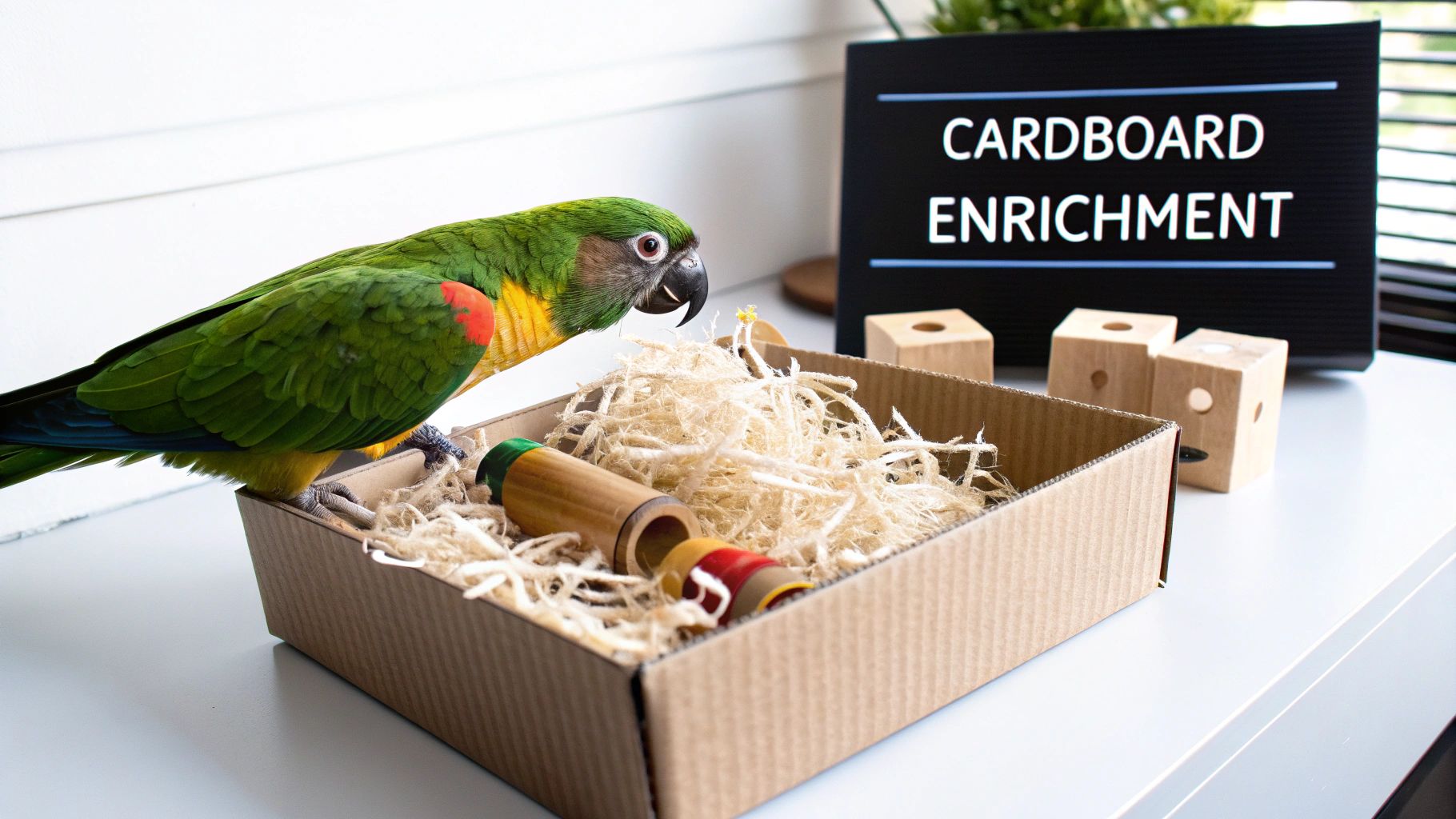
For anyone in Australia with a bird—whether it's a tiny budgie or a majestic macaw—a plain cardboard box holds a world of possibility. It can quickly transform from simple packaging into a canvas for your creativity, providing hours of stimulation that taps right into a bird's natural shredding and foraging instincts.
This guide will walk you through everything you need to know. We’ll cover how to choose the safest bins, what potential hazards to look out for, and share some clever DIY ideas to keep your companion mentally sharp and physically active. By understanding the basics of animal enrichment in Australia, you can turn a simple box into a treasured plaything.
Why Is Cardboard So Easy to Find in Australia?
It’s no accident that safe, plain cardboard is so readily available. The Australian corrugated boxes market is huge, valued at a whopping USD 5.8 billion and set for steady growth. This is largely driven by the boom in e-commerce, especially in metro areas like Sydney, Melbourne, and Brisbane.
For bird owners, this is great news. It means there’s a reliable and ever-growing supply of eco-friendly packaging material that’s perfect for turning into enrichment. You can read more about this trend in the Australia Corrugated Boxes Market report. We’ll also share tips from avian experts on how to introduce these materials safely into your bird’s life.
Expert Tip: Always supervise your bird during playtime with new things, including cardboard. Watch how they interact with it. Are they just shredding it for fun, or are they actually trying to swallow big chunks? Knowing the difference is crucial for their safety.
With the right approach, you can unlock the full potential of corrugated cardboard bins, giving your bird valuable mental and physical stimulation without spending a fortune.
Why Corrugated Cardboard Is a Game Changer for Your Bird
So, what’s all the fuss about corrugated cardboard bins? For bird lovers across Australia, these simple boxes are more than just storage—they’re a fantastic tool for enrichment that taps right into your bird's physical and mental needs. Think of them less as a container and more as a key to unlocking your bird’s natural, happy behaviours.
At its heart, cardboard offers incredible shredding satisfaction. Parrots have a deep, instinctual need to chew, tear, and demolish things. This isn't your bird being naughty; it's a vital activity that keeps their beak in good shape, busts stress, and keeps their clever minds busy. Giving them a safe outlet for this is a huge part of their wellbeing.
The Perfect Blend of Fun and Function
One of the best things about corrugated cardboard bins is how affordable they are. Creating engaging, disposable enrichment for your bird doesn't have to break the bank. You can set up elaborate foraging puzzles or simple shredding stations without worrying about the cost, which makes it easy to keep your bird’s environment new and exciting.
Beyond the price tag, cardboard is also incredibly versatile. A single box can be so many things:
- Simple Storage: Keep your bird's favourite toys tidy and clean.
- Foraging Foundation: Fill a bin with safe materials, hide a few treats inside, and you’ve got an instant foraging adventure. For more inspiration, check out our guide on bird foraging toys.
- Shredding Station: Sometimes the simplest ideas are the best. Just give them a plain box and watch the fun begin as they gleefully tear it to shreds.
- DIY Construction: Get creative! You can cut and join pieces to build tunnels, forts, or even hanging shredder toys for the cage.
An Eco-Conscious Choice
Here in Australia, we're all trying to do our bit for the planet. Using recyclable materials like cardboard fits perfectly with that mindset. Once your bird has turned their cardboard box into a work of art (or a pile of confetti), you can just pop the clean, tape-free bits into your recycling bin. It’s a guilt-free enrichment option that’s kind to both your bird and the environment.
Expert Advice: As an avian behaviourist, I always stress the importance of destructible enrichment. A parrot that is allowed to safely shred and destroy is a happy parrot. It mimics their natural activities, like chewing wood or stripping bark, which prevents boredom and the behavioural issues that stem from it.
When you get right down to it, corrugated cardboard bins offer a perfect trifecta of benefits. They are a budget-friendly, environmentally responsible, and incredibly effective way to satisfy your bird's deepest instincts.
Choosing Safe Corrugated Cardboard Bins for Your Bird
When you’re turning a simple box into a playground for your bird, safety has to be your number one priority. Not all corrugated cardboard bins are created equal, and for our feathered friends, the wrong type can spell trouble. Whether you're an Aussie bird owner, a breeder, or running a shelter, it’s vital to know how to pick boxes that are safe for chewing, shredding, and storing toys.
The absolute best choice is always plain, untreated brown corrugated cardboard. Steer clear of anything with a glossy coating, waxy finishes, or heaps of colourful ink. These treatments can hide chemicals that are harmful if your bird decides to have a nibble. It’s also a must to remove any plastic packing tape, staples, or adhesive labels before handing a box over – these are serious choking and impaction hazards.
Conducting a Thorough Box Inspection
Before you introduce a new cardboard bin into your bird's world, give it a proper once-over. A quick visual and sensory check can stop potential problems before they start. Look for any signs of moisture, weird discolouration, or funky odours. These can be tell-tale signs of mould or mildew, which are incredibly dangerous for a bird's sensitive respiratory system. Don't forget to consider what the box was used for before it got to you. It's best to avoid any cardboard that once housed chemicals or cleaning supplies, as nasty residues can linger in the cardboard fibres.
This little decision tree can help simplify the choice of whether a box is good for shredding, storage, or both.
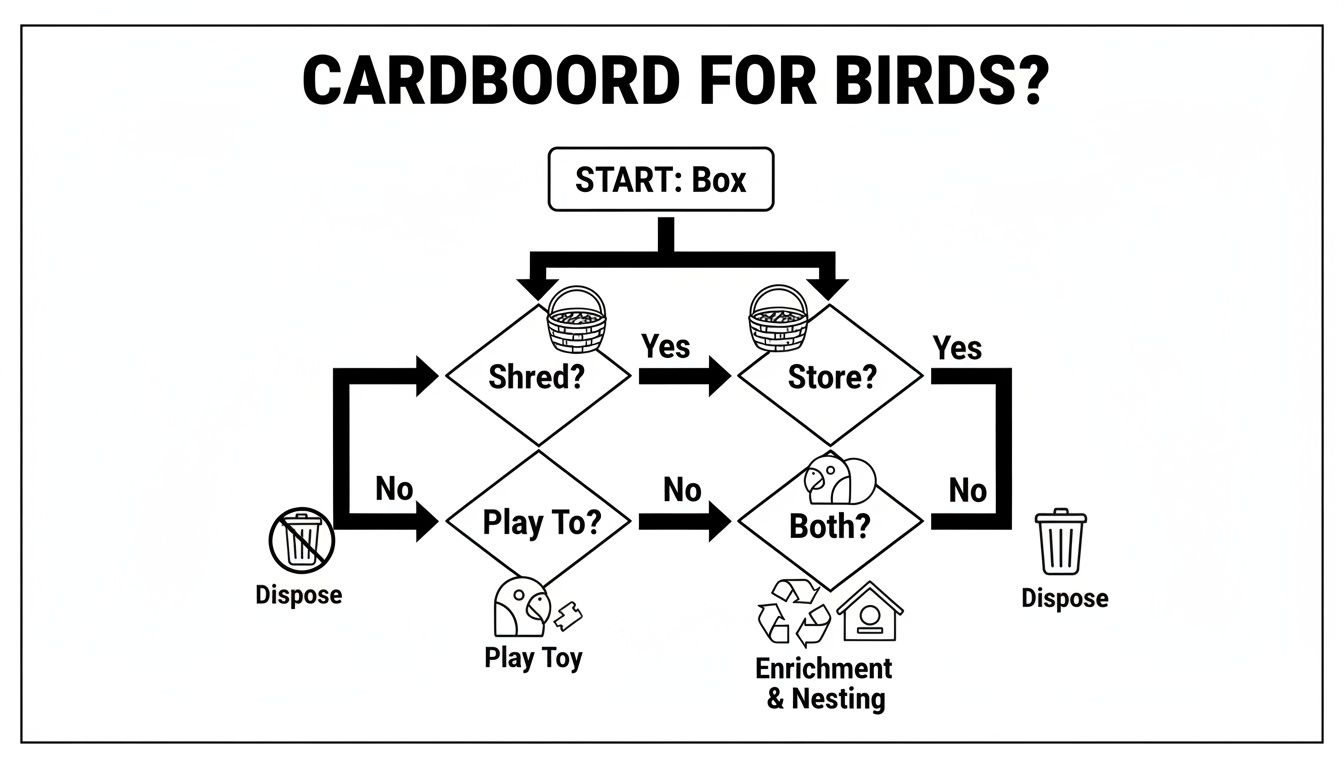
For a quick reference, here’s a simple table to help you spot the good from the bad.
Cardboard Safety Check Quick Guide
| Feature to Check | Safe (Green Flag) | Unsafe (Red Flag) |
|---|---|---|
| Surface Finish | Plain, matte, uncoated brown cardboard. | Glossy, waxy, or plastic-coated surfaces. |
| Ink & Dyes | Minimal to no printing. Vegetable-based inks are okay. | Heavy, colourful, or metallic inks. |
| Contaminants | Clean and dry. No stains, odours, or signs of mould. | Visible stains, damp spots, or a musty smell. |
| Previous Contents | Originally held food items, new products, or unused. | Previously held chemicals, cleaning agents, or pesticides. |
| Foreign Objects | Completely free of tape, staples, and adhesive labels. | Still has tape residue, metal staples, or sticky labels attached. |
Think of this as your two-minute safety scan before letting your bird have at it.
Matching Cardboard Strength to Your Bird
The secret to cardboard’s strength lies in its structure—that wavy inner layer is called a "flute." Matching the flute type to your bird's beak power is the key to giving them a satisfying and safe shredding experience.
- For Small Birds (Budgies, Cockatiels): Thinner flute types like ‘E-flute’ or ‘F-flute’ are just perfect. They're easy for smaller beaks to get a grip on, shred, and manipulate.
- For Medium Birds (Conures, Galahs): A standard ‘C-flute’, which is what most shipping boxes are made of, offers a fantastic balance of durability and shreddability. It's tough but not impossible.
- For Large Birds (Macaws, Cockatoos): You'll want to look for double-wall or even triple-wall boxes. These much thicker, tougher options provide a real challenge for those powerful beaks and will last a whole lot longer. If you need more ideas, feel free to explore our guide to the best toys for parrots.
Thankfully, finding safe cardboard is getting easier. With national targets in Australia pushing for 100% recyclable packaging by 2025, more non-toxic, plain options are hitting the shelves, making it simpler for bird owners to find safe, enriching materials.
Creative and Safe Ways to Use Cardboard Bins
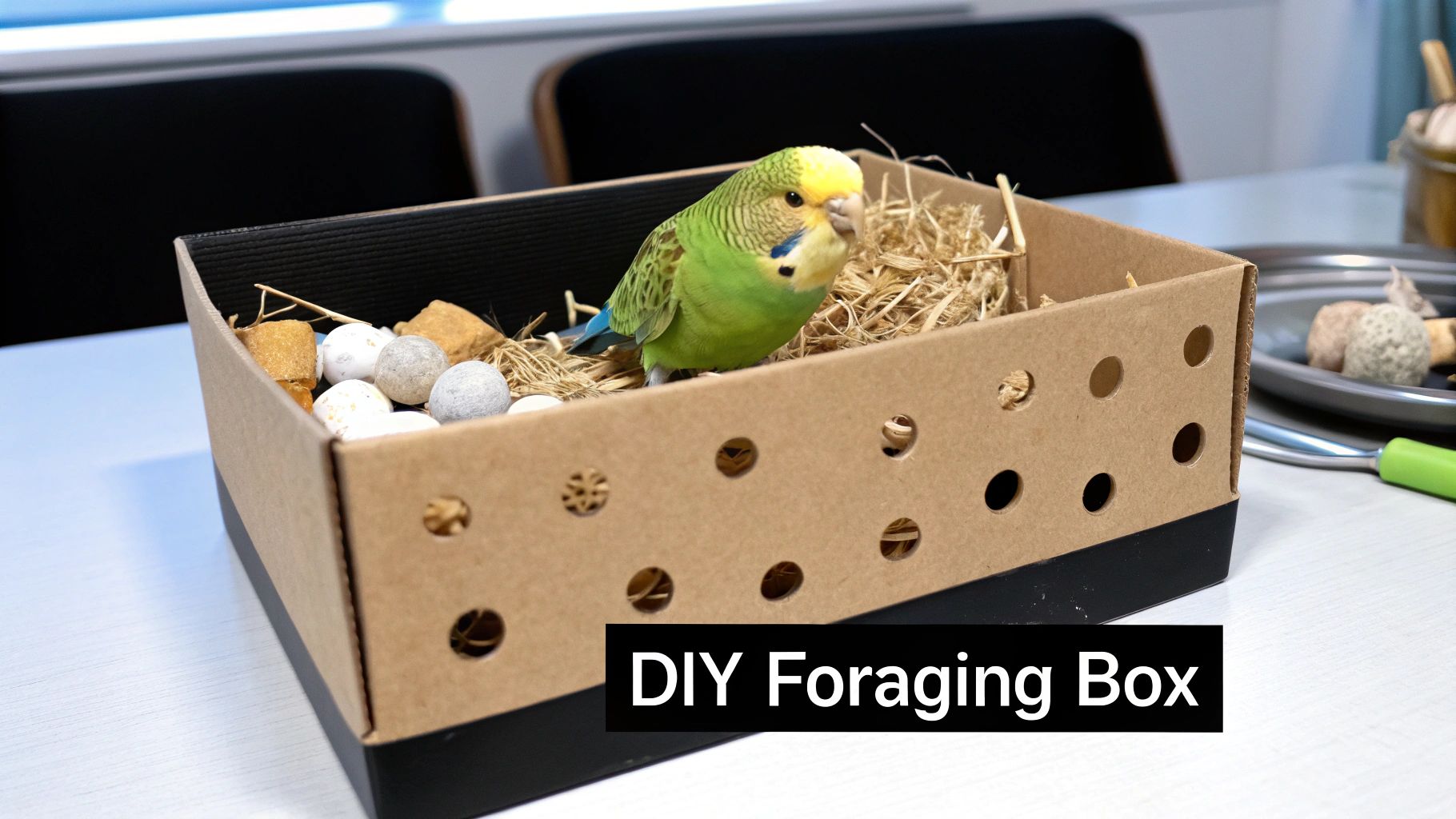
Once you've found the perfect, safe corrugated cardboard bins, the real fun can start. These humble boxes are a blank slate for your creativity, offering endless possibilities for practical storage and enriching playtime.
On a practical level, cardboard bins are a fantastic, budget-friendly solution for organising your bird’s ever-growing toy collection. You can set aside different bins for various toy types—one for foot toys, another for shreddables, and a third for foraging puzzles. This keeps everything clean, off the floor, and easy to grab when it’s time to rotate the toys in their cage.
Simple Storage Solutions
Keeping your bird's toys organised isn't just about being tidy; it’s about hygiene and keeping things interesting for your bird. A well-organised system makes it so much easier to provide variety and stop boredom in its tracks.
- Categorise Your Bins: Label each bin clearly. This helps you quickly find what you're looking for and see which types of toys might need a top-up.
- Keep a "Rotation Bin": Use one bin just for toys that have been cleaned and are ready to be put back into the cage. This way, you'll always have a fresh supply on hand.
- Create a "Foraging Kit" Bin: Store all your foraging goodies together—shredded paper, foot toys, dried nuts, and seeds. When you want to whip up a foraging tray, everything is in one convenient spot.
DIY Enrichment Projects
Now for the really exciting part—turning those corrugated cardboard bins into interactive playgrounds. These projects are easy to make and tap right into your bird's natural instincts to shred, chew, and explore.
Expert Advice: When you're creating DIY toys, safety always comes first. Cut any openings large enough for your bird to pass through easily without getting stuck. It's also best to avoid creating small, enclosed spaces where they might feel trapped. Supervision is key, especially with a new toy.
1. The Classic Foraging Box
This is probably the easiest and most effective DIY project. Just take a shallow, safe cardboard box and fill it with bird-safe materials like shredded paper or crinkle paper. Scatter a few of your bird’s favourite treats or a little of their daily food ration amongst the filler. Your bird will have a brilliant time digging, sifting, and searching for their rewards.
2. The Cardboard Condo
For a more adventurous bird, you can build a simple "condo." Take a larger box and cut out a few entry and exit holes on different sides. Make sure the holes are big enough for your bird to move through comfortably. You can hang small, shreddable toys inside or place a favourite foot toy in a corner to encourage exploration. Birds like cockatoos and galahs often love poking their heads through the holes and shredding the edges to bits.
3. Simple Shredder Strips and Kebabs
Don't throw away the offcuts! Cut clean, plain cardboard into strips of various widths and lengths. You can simply offer these strips as they are for your bird to hold and shred. Alternatively, use a bird-safe skewer or a piece of vegetable-tanned leather to thread the cardboard pieces, alternating them with wooden beads or chunks of balsa wood. For more inspiration, you can find great ideas in our guide on DIY bird toys.
Understanding and Mitigating Potential Risks
While corrugated cardboard bins are a fantastic resource, part of being a responsible bird owner means looking at potential hazards to make sure playtime is always safe. A balanced view lets you provide exciting activities while keeping your feathered friend well out of harm’s way.
The biggest worry with any shreddable material is ingestion. Most parrots will happily rip cardboard into tiny, harmless bits, but some birds might swallow larger pieces. This can lead to a serious medical emergency called crop impaction, where the material gets stuck and blocks their digestive tract.
Common Hazards and How to Avoid Them
Being vigilant is your best defence. If you're proactive and know what to look for, you can easily sidestep the common risks.
-
Ingestion vs. Shredding: The first time you introduce a cardboard toy, watch your bird like a hawk. Get a feel for their play style. Are they tearing off pieces and dropping them, or actually swallowing them? If you suspect they're eating it, take the toy away immediately and consult your avian vet.
-
Mould and Bacteria: Cardboard is absorbent. A box that gets splashed with water or soiled with droppings can become a breeding ground for mould and nasty bacteria. Check cardboard toys daily and toss them out the second they feel damp or look dirty.
-
Entanglement and Entrapment: When making DIY cardboard toys, think about safety from every angle. Any holes or openings you cut must be large enough for your bird’s entire body—not just their head—to pass through without a struggle. This simple step prevents them from getting stuck and panicking.
The growing push for reusable packaging in Australia brings up another point. While great for the planet, reusing boxes in a multi-bird environment like an aviary could easily spread disease, as noted in some Australian market insights. For your own pet bird, sticking to fresh, single-use cardboard is always the safest option.
Expert Advice on Safe Play
We reached out to an Australian avian veterinarian for their number one tip on cardboard safety.
"Supervision is non-negotiable. A toy that is safe one minute can become a hazard the next as it gets chewed down. Know when to intervene and take a toy away. If it’s been shredded into small, sharp pieces or has developed tight loops or frayed strands, it’s time to replace it."
By keeping these guidelines in mind, you can confidently use corrugated cardboard bins to give your bird endless hours of safe, enriching fun.
Eco-Friendly Ways to Dispose of Your Cardboard Bin
Being a great bird owner in Australia isn't just about top-notch care—it's also about how we handle waste. When your bird's corrugated cardboard bin has seen its last shred, getting rid of it thoughtfully is a small but powerful way to look after our local environment.
The beauty of plain, untreated cardboard is how simple it is to recycle. Once you've peeled off any leftover tape or sticky labels, the clean, dry cardboard can go straight into your council recycling bin. This one small act supports Australia’s National Packaging Targets, helping us move towards a circular economy where materials get a second life instead of ending up in landfill.
Give Your Garden a Boost with Composting
If you've got a green thumb, there's another brilliant option. Tearing or shredding the clean cardboard and tossing it into your compost heap is a fantastic way to enrich your garden soil.
Expert Tip: Cardboard is a wonderful source of carbon, or "brown" material, for your compost. It perfectly balances out the nitrogen-heavy "green" stuff like veggie scraps and lawn clippings. The result? Healthier compost and less waste.
By choosing to recycle or compost your used corrugated cardboard bins, you're making a genuinely positive choice for the environment. There's a real satisfaction in knowing you're providing incredible enrichment for your bird while also doing your part for a greener, cleaner Australia.
Your Top Cardboard Questions Answered
Even when you know the basics, it's natural to have a few more questions pop up. Let's tackle some of the most common queries we hear from Aussie bird owners, so you can feel completely confident using corrugated cardboard for your flock.
Is It Safe if My Bird Eats Small Pieces of Cardboard?
It's a great question. When your bird shreds cardboard, swallowing tiny flecks is usually nothing to worry about—they'll typically pass straight through. The key is to watch the intent. There's a big difference between shredding, which is a healthy, natural instinct, and actively consuming large chunks. If you notice your bird seems to be eating it like food, it's time to take the box away and have a chat with your avian vet.
How Often Should I Replace My Bird's Cardboard Toys?
Think of cardboard as a temporary treasure. Your main priorities here are hygiene and safety. We strongly recommend replacing any cardboard toy or hideout as soon as it gets wet, soiled with droppings, or chewed down to a point where it looks flimsy. A quick daily once-over of all their toys is a fantastic habit to get into.
Are Coloured Supermarket Boxes Safe for My Bird?
It's tempting to grab those colourful boxes from the supermarket, but we'd advise you to steer clear. It's always safest to stick with plain, unprinted brown cardboard. The problem is, you just don't know what's in the inks, dyes, and glues used on commercial packaging. The potential risk of toxicity simply isn't worth it when plain, safe options are so easy to find.
How Can I Encourage My Bird to Play with a Cardboard Box?
Got a bird giving a new box the suspicious side-eye? It happens! A bit of gentle encouragement is often all it takes to spark their curiosity. Try popping a few favourite treats or some small foot toys inside to lure them in. Sometimes, just showing them how it's done by ripping a piece yourself is enough—your enthusiasm can be contagious! You could also place a familiar shreddable toy or a beloved swing nearby to make the new object feel less intimidating.
Keep Reading
Disclaimer Summary:
The information in this article is general in nature and may include external links or resources not created by Lou Lou Bells Bird Toys. Every bird is unique, so we encourage you to seek personalised advice from your own veterinarian or avian specialist. For full details, please read our complete disclaimer here.