
When it comes to cockatiel bird toys, the best ones tap into their natural instincts to chew, shred, and forage. Without these outlets, a cockatiel can get bored and stressed fast, and that’s often when you start seeing unwanted behaviours. Providing a good mix of safe, engaging toys isn’t a luxury—it’s just part of good bird care.
Why Cockatiel Toys Are Essential for a Happy Bird
Imagine being stuck in one room all day with nothing to do. That’s pretty much what life is like for a companion cockatiel without enough to keep their mind and beak busy. Toys are so much more than just cage decorations; they're vital for your bird's mental, physical, and emotional health.
Out in their native Australian bush, cockatiels would spend their days looking for food, chewing on branches, and hanging out with their flock. Bringing those behaviours into your home is the key to a happy, well-adjusted bird.
The right mix of toys lets your little mate express these instincts in a safe, constructive way. Think of it as preventative care—good enrichment stops common stress-related problems before they even start.
Promoting Natural Behaviours
In the wild, a cockatiel’s beak is its number one tool. It’s used for everything from climbing and eating to preening and defending its patch. That instinct to chew and fiddle with things is still incredibly strong in our pet birds.
- Chewing and Shredding: Toys made from soft woods, yucca, or paper are perfect for satisfying that urge to destroy. This isn't your bird being naughty; it's a healthy way for them to keep their beak in good shape and blow off some steam.
- Foraging: Cockatiels are natural ground foragers. Puzzle toys that make them work to find hidden treats mimic the mental challenge of searching for a meal, keeping their clever minds sharp.
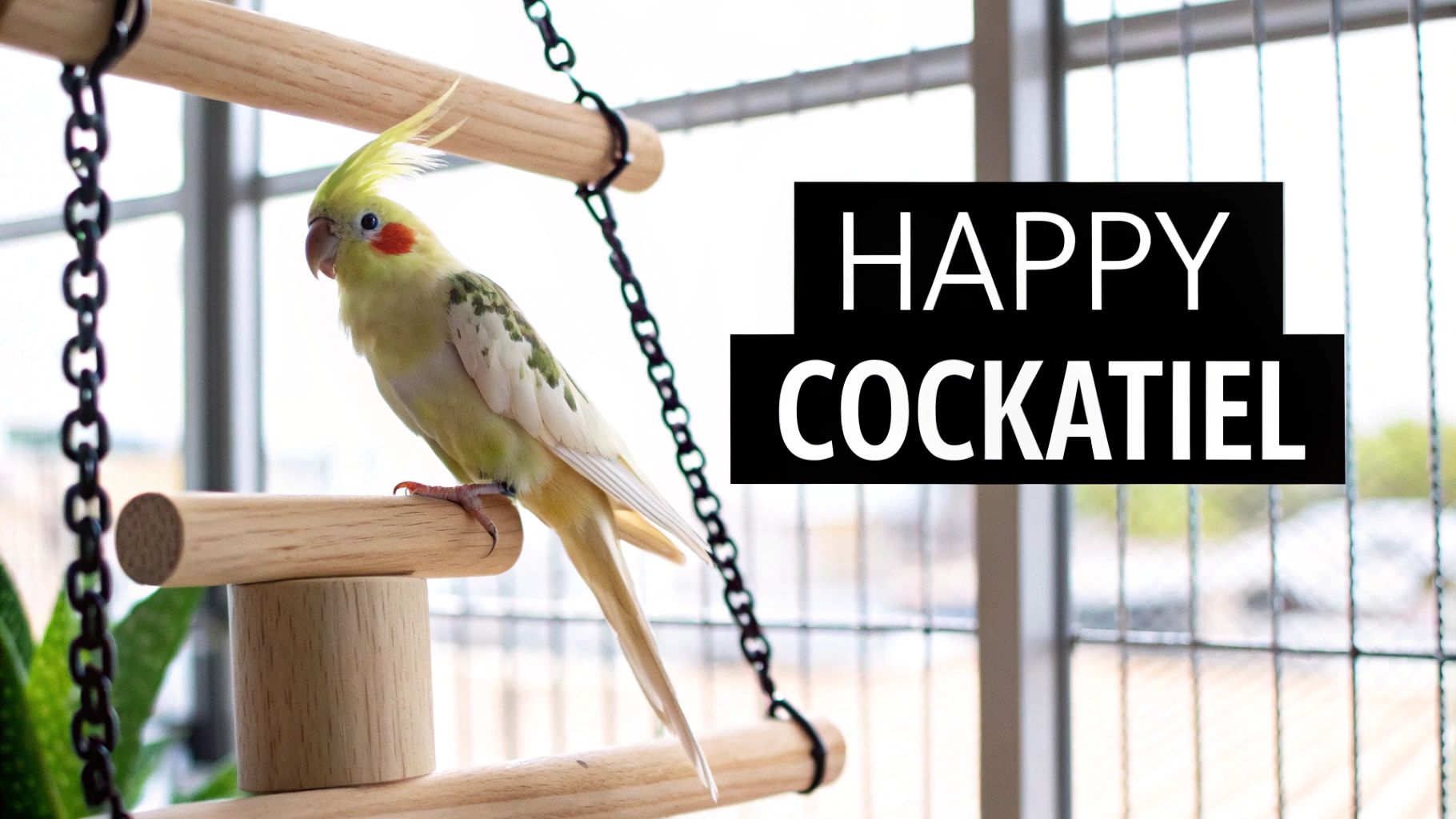
- Physical Activity: Things like swings, ladders, and climbing toys are fantastic for encouraging exercise. They help maintain strong muscles, good coordination, and a healthy heart.
Preventing Problem Behaviours
Boredom is a huge source of anxiety for intelligent birds like cockatiels. When their minds aren't occupied, they’ll often find their own—usually less desirable—ways to stay entertained.
"A well-stimulated cockatiel is quieter, healthier, and more confident, because enrichment prevents boredom before it starts." - Expert Avian Advice
An environment packed with engaging toys helps head off issues like screaming for attention, destructive chewing on your furniture, and feather plucking—a serious condition often linked directly to stress and under-stimulation.
As a caring Aussie owner, creating a vibrant home for your feathered friend is one of the best things you can do. This guide will walk you through the key types of toys your cockatiel needs and help you find The Best Bird Toys For Cockatiels to build the perfect collection.
Decoding the Different Types of Cockatiel Toys
Ever walked into a pet store or scrolled online for cockatiel toys and felt completely overwhelmed? With all the different colours, shapes, and materials staring back at you, it’s tough to know what your feathered friend actually needs. The secret is to look past the bright colours and understand the purpose behind each toy.
Think of it like building a balanced diet for your bird. A good toy collection needs variety to keep them physically healthy and mentally switched on. By offering different kinds of toys, you’re giving your cockatiel the chance to shred, chew, think, play, and preen—all the things they would naturally do.
Shredding Toys for Instinctive Satisfaction
If you’ve ever seen your cockatiel meticulously tear apart a piece of paper or cardboard with sheer delight, you’ve witnessed a deep-seated instinct in action. Shredding toys are designed specifically to satisfy this natural urge to rip things to shreds, giving them a healthy and safe outlet for that energy.
These toys are usually made from soft, easily destroyed materials perfect for a smaller beak to pull apart. We’re talking about things like palm leaf, paper, yucca, or mahogany pods. Offering plenty of shreddable options is a brilliant way to redirect that destructive chewing away from your furniture or important mail. That feeling of tearing something apart is a massive stress reliever for them.
Expert Advice: A cockatiel that shreds isn't being naughty; it's just being a bird! This behaviour is incredibly important for their psychological wellbeing, mimicking activities like nest-building and keeping their feathers in top shape.
Chewable Toys for Beak Health
While shredding toys are all about soft destruction, chewable toys offer a bit more of a challenge. A cockatiel’s beak, much like our own fingernails, is always growing. In the wild, they’d keep it trimmed and conditioned by gnawing on branches, bark, and other tough materials.
Chewable cockatiel bird toys bring this essential activity into your home. They’re made from bird-safe woods like balsa, pine, or sola wood. These are soft enough for a cockatiel's beak to handle but still provide the resistance needed to prevent overgrowth and keep their beak strong and properly shaped. Plus, it's a great workout for their jaw muscles.
Foraging Puzzles for Mental Stimulation
Cockatiels are seriously smart little birds. Back in their native Australian environment, they spend a huge chunk of their day on the ground, searching for food. Foraging puzzles are all about recreating that mental challenge right in their cage.
These toys make your bird solve a problem—like pulling a lever, opening a little drawer, or shredding through a layer—to get to a hidden treat. It’s so much more engaging than just grabbing a seed from a food bowl.
- Beginner Puzzles: Start simple to build their confidence. Think of a small cardboard box with a treat hidden inside.
- Intermediate Challenges: Introduce toys that have moving parts or a few different compartments.
- Advanced Foraging: Once they’re pros, you can try puzzle boxes or toys that require a few different steps to solve.
Foraging keeps their minds sharp, stops boredom from setting in, and can make a real difference in reducing stress-related behaviours.
Foot Toys for Dexterity and Play
Not every toy has to hang from the cage bars. Foot toys are small, lightweight items a cockatiel can hold in its foot, toss around, and manipulate. They are absolutely fantastic for improving dexterity, coordination, and balance.
Good examples include small wicker balls, plastic rings, or vine balls. These are especially great for encouraging playtime outside the cage, whether on a play stand or just on the floor. It just shows how important they are for a well-rounded enrichment plan.
Comfort and Preening Toys
Finally, there are comfort and preening toys, which serve a much gentler purpose. These are often made from soft materials like frayed, bird-safe rope (think sisal or cotton) or leather strips that mimic the feeling of preening a mate in the flock.
These toys can offer a real sense of security and companionship, which is especially helpful for single birds. A preening toy gives them a safe and appropriate place to direct those preening urges, which can help prevent feather-plucking habits. They provide a lovely, soothing activity for the quieter moments in your cockatiel's day.
A Practical Guide to Toy Materials and Safety
When it comes to cockatiel toys, safety isn't just a nice-to-have—it’s everything. Your bird explores its world with its beak, and pretty much every single thing you put in that cage will get a thorough chewing, licking, or shredding. Figuring out which materials are safe and which ones hide a nasty surprise is one of the biggest jobs for any bird owner in Australia.
This guide is here to give you that confidence. We'll break down the good, the bad, and the downright dangerous, so you can fill your cockatiel's cage with toys that are both fun and completely safe.
Spotting Hidden Hazards in Bird Toys
Not all toys are created equal. Even items marketed specifically for birds can sometimes hide unsafe bits and pieces. The trick is learning to look past the bright colours and cute shapes to see what the toy is actually made of.
Some of the biggest culprits are toxic metals and unsafe fibres. Cheap metal hardware—like quick links, chains, or bells with open clappers—can contain zinc and lead. When a bird chews on these, it can ingest tiny amounts over time, leading to heavy metal poisoning, a really serious and sometimes fatal condition.
A top tip from Australian avian vets is to always inspect the metal parts on a new toy. If you can easily scratch it with a fingernail or it looks dull and coated, it might be zinc-plated. Stick to stainless steel hardware wherever you can—it gives you real peace of mind.
It's a similar story with fibres. Loose cotton threads or synthetic ropes can be ingested, balling up in a bird's digestive tract and causing crop impaction, which is a dangerous blockage. Always keep an eye on your tiel with fibrous toys and take them away once they get too frayed.
Building a Foundation of Safe Materials
The best cockatiel toys are usually made from natural, untreated materials that are meant to be destroyed. Just think about what a cockatiel would run into in the Aussie bush—woods, grasses, leaves, and seed pods.
Here are some brilliant, bird-safe materials to look out for:
- Natural, Untreated Wood: Balsa, pine, sola wood, and yucca are all fantastic softwoods, perfect for a cockatiel's beak. Steer clear of treated or pressure-treated woods, as the chemicals are toxic.
- Vegetable-Tanned Leather: This is a safe alternative to chemically tanned leather. It's great for hanging other toy parts from and has a satisfying texture for chewing.
- Bird-Safe Plastics: Hard, durable plastics like acrylic or specific PVC parts are generally fine for hanging or foraging toys, as long as your bird can't break off and swallow small bits.
- Natural Fibres: Sisal, jute, and seagrass are excellent choices for ropes. They're natural and far less likely to cause impaction issues than cotton.
- Paper and Cardboard: Simple, plain paper and cardboard are a shredder's dream. Just avoid glossy paper, heavily inked materials, or cardboard held together with glue or tape.
This flowchart can help you decide what kind of toy your bird might need based on their natural instincts for destruction and problem-solving. 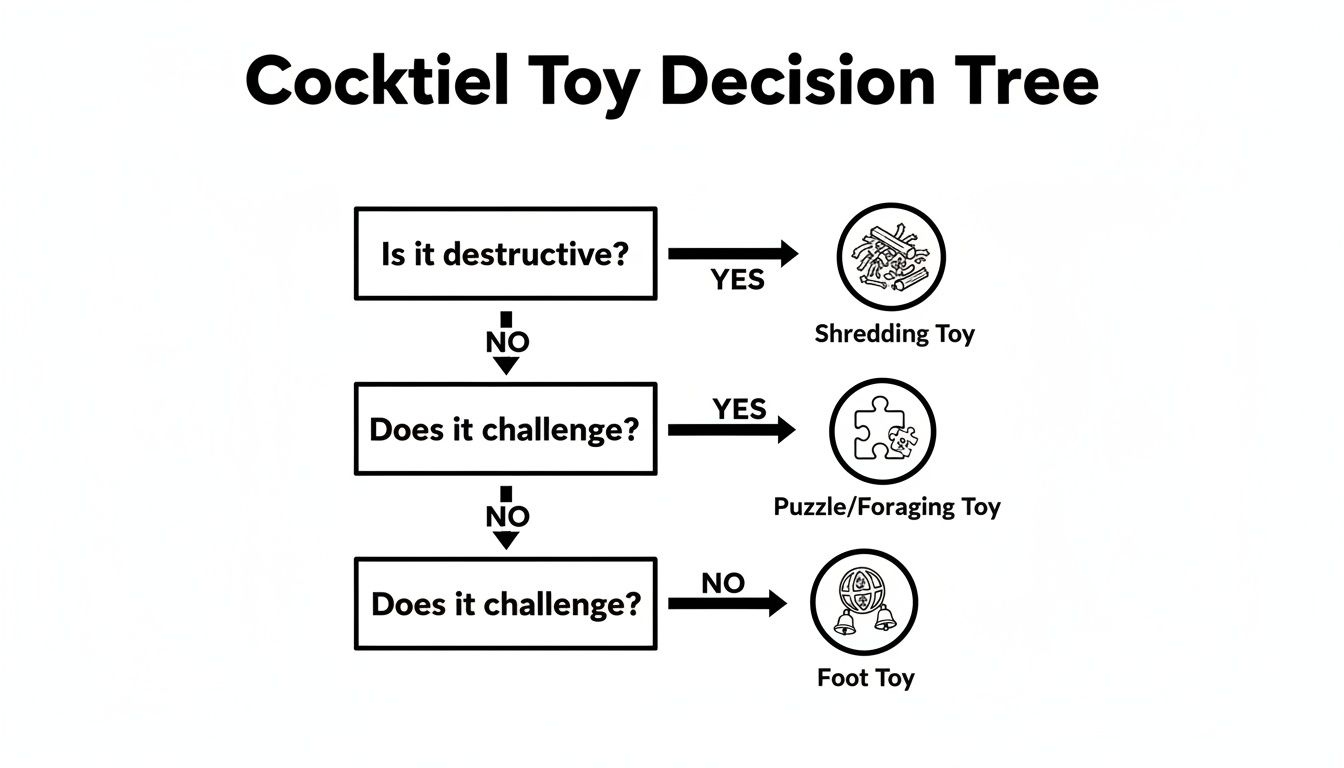 The flow helps you pinpoint whether a destructive shredding toy, a challenging puzzle, or a simple foot toy is the best fit for your bird's current enrichment needs.
Cockatiel Toy Material Safety Checklist
To make things even clearer, here’s a quick-reference table to keep handy. You can use it when shopping for new toys or even when you're getting creative and making your own. This simple checklist helps you spot potential dangers before they ever get near your bird.
| Material Type | Safe Options (with examples) | Unsafe Options (with examples) |
|---|---|---|
| Wood | Untreated balsa, pine, sola, birch, yucca, and Australian native woods like bottlebrush and gum tree branches (properly cleaned). | Chemically treated, pressure-treated, or painted wood. MDF or particleboard which contains toxic glues. |
| Metals | Stainless steel is the safest choice for all hardware, including quick links, O-rings, and bell clappers. | Zinc, lead, brass, or copper components. Rusty metal or hardware with sharp edges. Bells with easily removable clappers. |
| Fibres & Rope | Natural sisal, jute, seagrass, and vegetable-tanned leather strips. Short-fibre paper rope is also a good option. | Long-strand cotton rope, synthetic fibres like nylon, and yarn. These can cause crop impaction or entangle toes and necks. |
| Plastics & Dyes | Hard acrylic, sturdy PVC components (like those in foraging toys). Food-grade, vegetable-based dyes for colour. | Soft plastics that can be easily ingested, brittle plastics that can shatter into sharp pieces, and toys with toxic paints or glues. |
Getting familiar with this list empowers you to make smarter, safer choices for your feathered mate. If you're ever in doubt, it’s always better to be safe than sorry. Choosing The Best Bird Toys For Cockatiels from a reputable Australian supplier is a great way to know that safety standards have already been taken care of.
Mastering Toy Rotation for Maximum Engagement
You’ve picked out the perfect collection of cockatiel toys, filled the cage with fun things to do, and for a little while, your bird is in heaven. But a week or two later, that favourite shreddable toy is sitting untouched. Sound familiar? It’s completely normal. Just like us, cockatiels get bored with the same old stuff day after day.
This is where the art of toy rotation comes in. It’s one of the simplest but most powerful ways to keep your cockatiel’s mind sharp and happy for the long haul. Instead of a cage that never changes, you’re creating a dynamic little world that’s always offering something new to figure out. Think of it as redecorating their "room" every week to spark that curiosity all over again.
Creating a Simple Rotation Schedule
The goal is to keep things fresh without making your bird feel stressed by too much change at once. For a sensitive bird like a cockatiel, a gentle approach always works best. You definitely don’t need to swap out every single toy in one go.
A great place to start is the "2-for-2" rule:
- Pick two toys in the cage to take out.
- Replace them with two different toys you’ve kept aside in a "toy box" or storage container.
- Do this every week or two.
This keeps their home familiar enough to be comforting but adds just enough novelty to keep them interested. It's also a good idea to leave one or two absolute favourites in the cage permanently—like a special swing or a preening toy—as a source of security.
Strategic Placement for Movement and Fun
How you place toys in the cage is just as important as which toys you choose. Spacing them out encourages your cockatiel to move, climb, and explore every corner of their home, which is fantastic for their physical health.
Try putting a shreddable toy near a high perch and a foraging puzzle down low to get them moving between levels. This thoughtful placement turns the cage from a simple box into an interactive gym. For more ideas on using toys to encourage natural behaviours, check out our guide on bird toys for parrots.
According to avian behaviourists, a well-managed rotation can significantly improve a bird's quality of life. Simply swapping toys every one to two weeks can reduce stress-related behaviours like excessive squawking or pacing.
This insight makes perfect sense. We're seeing more and more bird owners in Australia looking for enrichment-focused items like foraging and chewing toys, moving beyond just simple perches and bells.
Introducing New Toys to a Cautious Bird
Cockatiels can sometimes be a bit neophobic—a fancy word for being wary of new things. Just dropping a strange, brightly coloured object right into their safe space can be pretty frightening for them.
A slow and gentle introduction is the way to go. Start by placing the new toy on the floor outside the cage for a day or two. Let your bird get used to seeing it from a distance. Next, hang it on the outside of the cage bars.
Once they seem comfortable and maybe even a little curious, you can finally move it inside. Put it in a less-intrusive spot, away from their food bowls or favourite sleeping perch. This patient approach teaches them that new things are exciting, not scary.
Simple DIY Enrichment for Aussie Cockatiels
Giving your cockatiel fantastic enrichment doesn't have to break the bank. In fact, some of the most engaging cockatiel bird toys are the ones you can make yourself from simple, bird-safe bits and pieces you’ve probably got lying around your Aussie home. Getting creative with DIY toys is a brilliant way to add a personal touch to their playtime and stop their environment from getting stale.
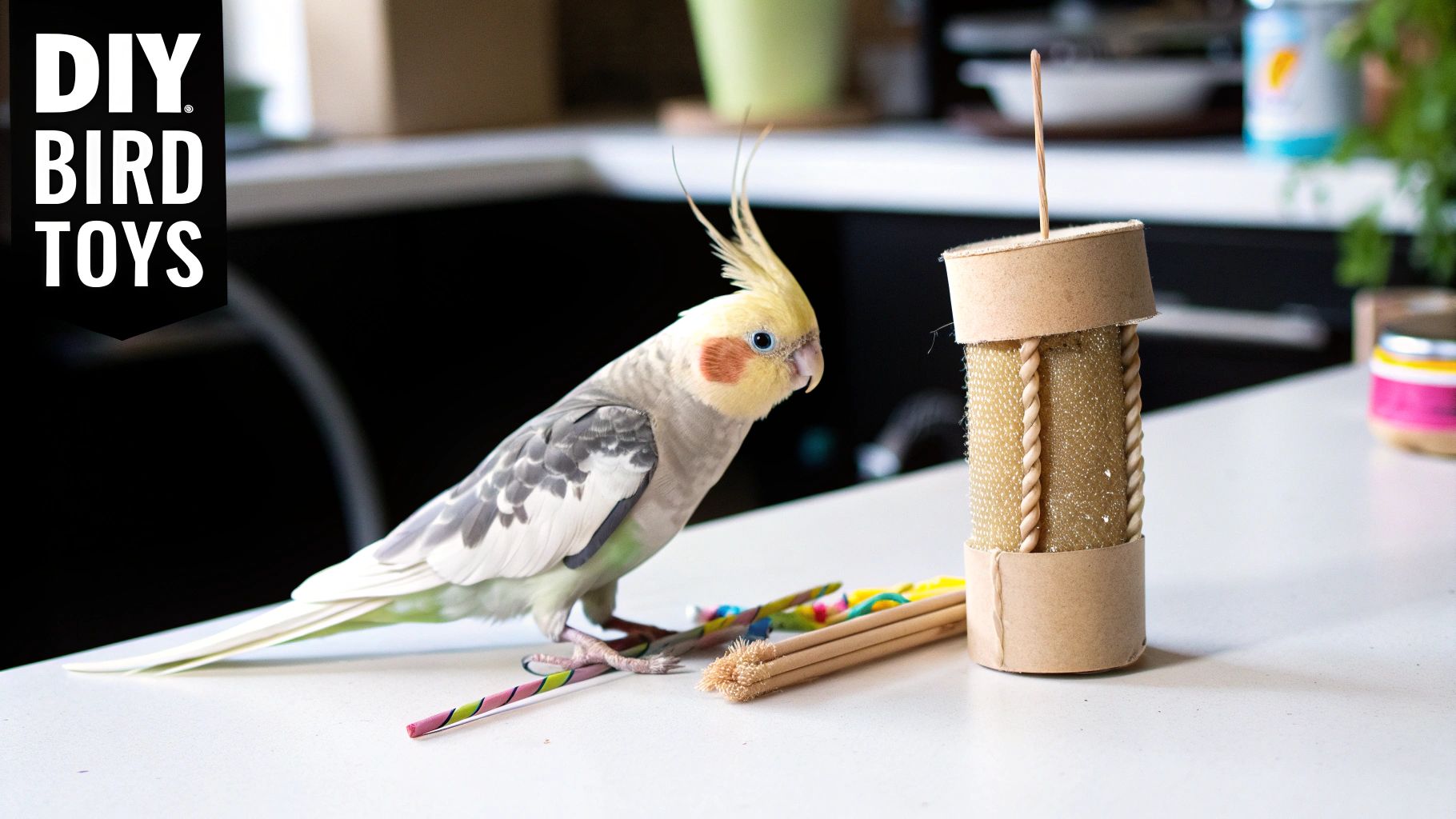
The trick is to think like a cockatiel—what can be shredded, peeled, or picked apart? Everyday items like plain cardboard toilet paper rolls, paper straws, clean coffee filters, and even native gum nuts (after they’ve been thoroughly cleaned and baked to sterilise) can become the building blocks for hours of fun.
Simple Shredding and Foraging Ideas
Foraging is a powerful, natural instinct for cockatiels. Instead of just popping treats in a bowl, making them work for their food is one of the best forms of mental stimulation you can offer. It doesn't require complex puzzles, either; simple DIY setups can be just as effective. You can learn more about the benefits in our guide to foraging toys for birds.
Here are a few easy ideas to get you started:
- Toilet Roll Forager: Grab an empty, plain cardboard toilet paper roll. Stuff it with shredded paper, crinkle paper, or even just some of their favourite seed mix. Fold the ends in to create a simple puzzle they need to tear into to get the reward. Easy.
- Cardboard Kabobs: Cut small squares from a plain cardboard box (make sure there’s no ink, tape, or glue). Thread these onto a bird-safe sisal rope or a stainless steel skewer, alternating with bits of paper straws or wooden beads.
- Muffin Tin Puzzle: Use a clean, metal muffin tin as a foraging tray. Pop a few treats in some of the cups and cover them with foot toys, scrunched-up paper, or bottle caps. Your cockatiel will have a great time tossing everything aside to find the hidden goodies.
Safety First with Homemade Toys
While DIY is fun and cost-effective, safety has to be your number one priority. Your cockatiel will explore every inch of a homemade toy with its beak, so it's absolutely crucial that every single component is non-toxic and presents no hazards.
Before you hand over any homemade toy, ask yourself a few key questions: Is this material completely free of chemicals, glues, and inks? Are there any small parts that could be swallowed? Could my bird get a toe or its head stuck anywhere?
Always supervise your bird with a new toy at first to see how they interact with it. Remember, The Best Bird Toys For Cockatiels are always the safest ones, whether they're store-bought or lovingly handmade in your living room.
Your Cockatiel Toy Questions, Answered
You want the best for your feathered mate, and sometimes that means having a few questions. To wrap things up, here are some quick-fire answers to the things we hear most from cockatiel owners around Australia. Hopefully, this helps you build confidence and smooth out any little bumps along the way.
How Many Toys Should a Cockatiel Have at Once?
It’s tempting to spoil them, but overcrowding the cage is a common mistake. A good rule of thumb is to have around four to six different types of toys in the cage at any one time. This gives your tiel plenty of choice without turning their home into an obstacle course where they can’t even stretch their wings.
Think about creating a balanced setup:
- A couple of shreddable or chewable toys, like our Paper Crinkle Toy, for pure beak satisfaction.
- One solid foraging puzzle to get their brain working.
- A swing or ladder to encourage movement and play.
- A foot toy they can pick up and toss around during out-of-cage time.
With a mix like that, you’re covering all their natural instincts.
My Cockatiel is Scared of a New Toy. What Should I Do?
This is totally normal. Cockatiels are cautious by nature, so a strange new object in their safe space can feel like an invader. The secret is a slow, patient introduction to show them it's a friend, not a foe.
Start by just leaving the new toy on the floor near the cage for a few days. Let your tiel get used to seeing it from a distance. Once they seem relaxed, you can hang it on the outside of the cage bars for another day or two. Only when they start showing some curiosity—maybe craning their neck to get a better look—should you move it inside, placing it far away from their favourite perch or food bowls.
How Often Should I Be Cleaning the Toys?
Regular cleaning is non-negotiable for your cockatiel’s health. I’d recommend giving all their toys a quick spot-clean and wipe-down weekly. Then, about once a month, it’s time for a more thorough clean, or sooner if they get visibly soiled with food or droppings.
A simple solution of white vinegar and water or a bird-safe disinfectant works perfectly. The most important step is to rinse everything thoroughly and let it dry completely before putting it back in the cage. Any dampness can lead to mould, which is really dangerous for birds. For wooden or paper toys that just can't be cleaned properly, it's best to simply replace them once they're heavily soiled.
Are Mirrors Actually Bad for Cockatiels?
This is a really hot topic in the bird world, and the general consensus among experts leans toward being very cautious. While a tiel might seem fascinated by their reflection, they often think they’re looking at a mate. This can trigger some serious hormonal and obsessive behaviours, like regurgitating food for the "other bird" or becoming aggressive and territorial over their cage.
While a mirror isn’t immediately dangerous in a physical sense, long-term exposure can cause significant psychological stress. It's almost always safer to provide interactive toys that encourage healthy, independent play, like our fun Spinning Pinwheel Toy.
At the end of the day, choosing from a great range of The Best Bird Toys For Cockatiels is always going to be a better bet for their long-term mental wellbeing.
Keep Reading
- Bird Toys for Parrots: How to Choose The Right One
- Foraging Toys for Birds: A Guide to Mental Stimulation
- The Ultimate Guide to Bird Toy Safety
Disclaimer Summary: The information in this article is general in nature and may include external links or resources not created by Lou Lou Bells Bird Toys. Every bird is unique, so we encourage you to seek personalised advice from your own veterinarian or avian specialist. For full details, please read our complete disclaimer here.