
A bird seed feeder is so much more than a convenient dish for mealtime. For any Australian bird owner, whether you have a tiny budgie or a majestic macaw, it’s a vital tool for boosting their mental stimulation and physical health. It turns feeding from a passive, boring activity into an engaging challenge that taps right into their natural foraging instincts.
Beyond The Bowl: Why a Bird Seed Feeder Is Essential
Let's be honest, a simple bowl of seed can lead to a bored bird and some pretty unhealthy eating habits. Out in the wild, birds spend a huge chunk of their day just looking for food. It’s an activity that keeps their minds sharp and their bodies fit. A good bird seed feeder brings that crucial element of work-and-reward back into their daily lives.
This shift from just eating to actively foraging is fundamental to their wellbeing. It helps head off boredom-related behaviours like feather plucking and gives them a fantastic outlet for all that boundless energy and intelligence.
The Rise of Enrichment in Australian Aviaries
Here in Australia, the love for both backyard birdwatching and keeping companion birds has really taken off. In fact, a significant number of Australian households now engage in some form of backyard bird feeding. This isn't just a passing trend; it shows a deeper understanding of what our birds need, whether they're wild visitors or part of the family.
Australian avian vets are increasingly pointing out that enriched environments, especially those with foraging toys, lead to healthier feather conditions and fewer trips to the clinic for our companion birds. You can find more insights into the bird feeder market here.
By adding a bird seed feeder to their setup, you're not just giving them food. You're offering an opportunity for enrichment that supports a happier, healthier life. It’s a simple change that delivers some pretty profound benefits, helping to:
- Stimulate their minds: It encourages problem-solving as they figure out how to get to their tucker.
- Promote physical activity: It requires them to move, climb, and manipulate the feeder, burning off that excess energy.
- Reduce stress and boredom: It keeps them occupied and engaged, which is key to preventing destructive habits.
- Mimic natural behaviours: It allows them to shred, peck, and search—instincts that are crucial for their mental health.
Making feeding time an interactive experience is one of the best things you can do for your bird. It helps create a more dynamic and stimulating home, turning a simple meal into a rewarding activity. And if you're worried about the mess, exploring options for a no-mess bird feeder can be the perfect solution.
How To Match The Right Feeder To Your Bird
Choosing the perfect bird seed feeder can feel a bit like playing matchmaker. It’s all about finding the right fit for your bird's species, size, and personality to make sure feeding time is both safe and fun. You wouldn't give a massive toy to a tiny finch, and the same logic applies here—the feeder needs to suit your bird's beak and natural foraging style.
The goal is to turn every meal into a rewarding little puzzle, encouraging the kinds of behaviours they’d have in the wild. Get it right, and you're boosting both their physical and mental health by making them work for their food, even just a little.
This simple flowchart shows just how much a good feeder contributes to your bird's overall wellbeing.
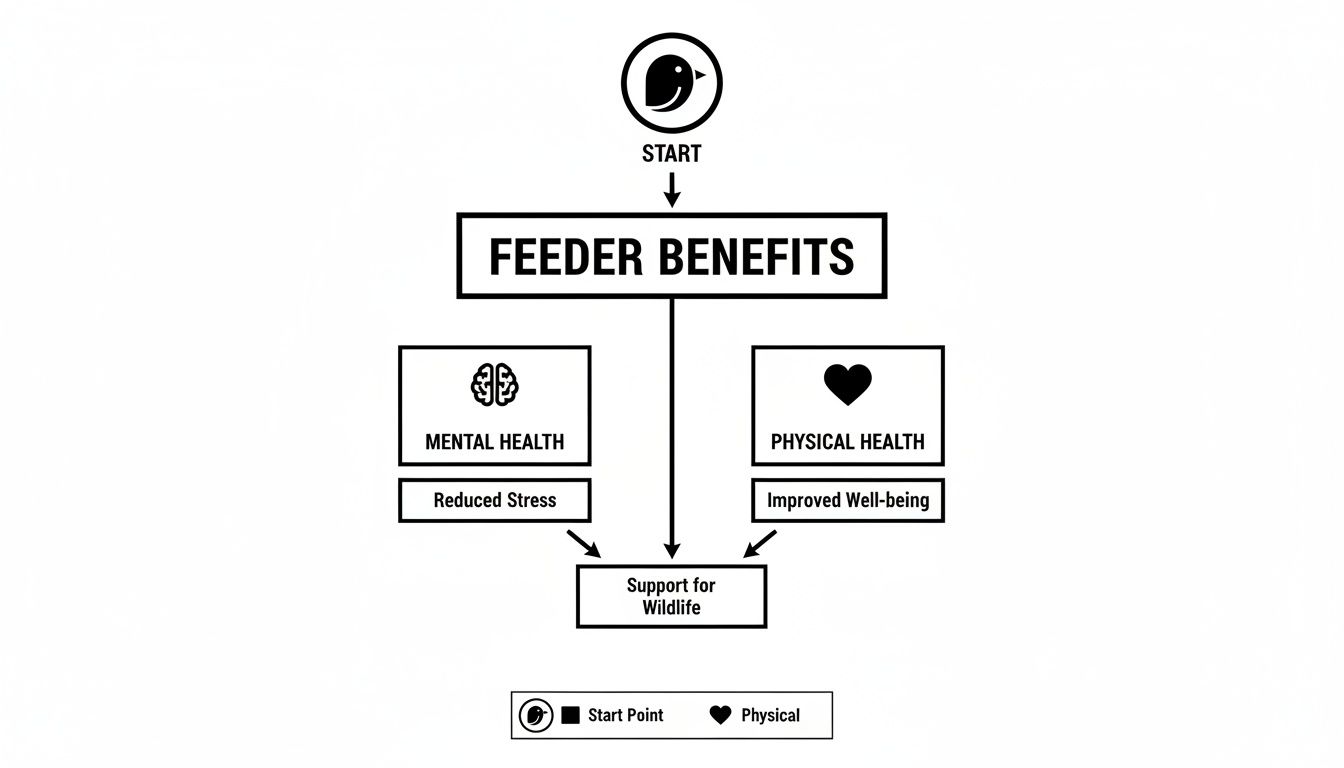
As you can see, the benefits branch out into both mental and physical health. It’s a great reminder that a simple feeder is a powerful tool for looking after your whole bird.
To help you get started, I’ve put together a quick reference table. It’s designed to help you match a feeder type to your companion bird’s size and foraging habits at a glance.
Bird Feeder Suitability By Species
| Feeder Type | Best For Bird Sizes | Key Benefits | Considerations |
|---|---|---|---|
| Tube Feeders | Small (Budgies, Finches) | Prevents bigger birds from hogging food; encourages precise pecking. | Ensure ports are small enough for your bird's beak but not frustratingly tiny. |
| Hopper Feeders | Small to Large | Gravity-fed for a consistent supply; durable if made from metal. | Can lead to overeating if not managed; larger birds may destroy plastic models. |
| Platform/Tray Feeders | Small to Medium | Easy access for birds new to foraging; allows for natural ground-feeding behaviour. | Spillage and mess are common; food can become soiled easily if not cleaned daily. |
| Puzzle/Foraging Feeders | Medium to Large | Excellent mental stimulation; slows down fast eaters and prevents boredom. | Can be too complex for some birds; requires durable, beak-proof materials. |
This table is a great starting point, but let's dive a little deeper into the specifics for different-sized birds.
Feeders For Small Birds: Budgies, Finches, and Cockatiels
For our smaller feathered friends like budgies, finches, and cockatiels, feeders need to be accessible without being intimidating. Think small and simple.
- Tube Feeders: These are a fantastic choice. The small ports are perfectly sized for little beaks, which is a big help if you have a mixed aviary and want to stop bigger, bossier birds from stealing all the food.
- Small Hopper Feeders: A gravity-fed hopper gives a steady supply of seed without overwhelming them. Just look for models with thinner perches that are a good fit for their delicate feet.
- Platform Feeders: A simple tray or platform lets them walk around and pick through seeds. It’s a great introduction to foraging for birds who are new to it, but be prepared for a bit more mess.
When you're browsing for parrot supplies in Australia, look for materials like tough acrylic or safe plastics. These smaller birds aren't typically destructive chewers, so you have a bit more flexibility.
Feeders For Medium to Large Birds: Galahs, Macaws, and Cockatoos
When you're dealing with big parrots like Galahs, Macaws, and African Greys, you're dealing with a lot of brain and brawn. They need a bird seed feeder that can handle a powerful beak and a curious mind. Durability and enrichment are everything.
Expert Advice: For large parrots, always, always choose feeders made from stainless steel or tough, bird-safe polycarbonate. A feeder made from softer materials can be destroyed in minutes, creating a real safety hazard from swallowed parts.
Puzzle or foraging feeders are where it's at for these guys. Look for ones that make them solve a problem to get their reward—things with spinning wheels, levers to pull, or parts to manipulate. This provides brilliant mental stimulation and has the added benefit of slowing down their eating. Tough, metal hopper feeders are also a great, durable option.
Integrating enrichment with feeding has really changed the game in Australian pet bird care, with a significant rise in the daily use of seed feeders linked to a welcome drop in obesity rates for captive parrots.
Selecting The Best Seeds For Your Companion
A brilliant bird seed feeder is only as good as the fuel you put in it. Choosing the right seeds is just as crucial as picking the feeder itself, because it directly impacts your bird’s health, energy levels, and overall happiness.
It’s not just about filling a container; it’s about providing balanced nutrition that supports your bird's specific needs, whether you have a playful lorikeet or a clever cockatoo.
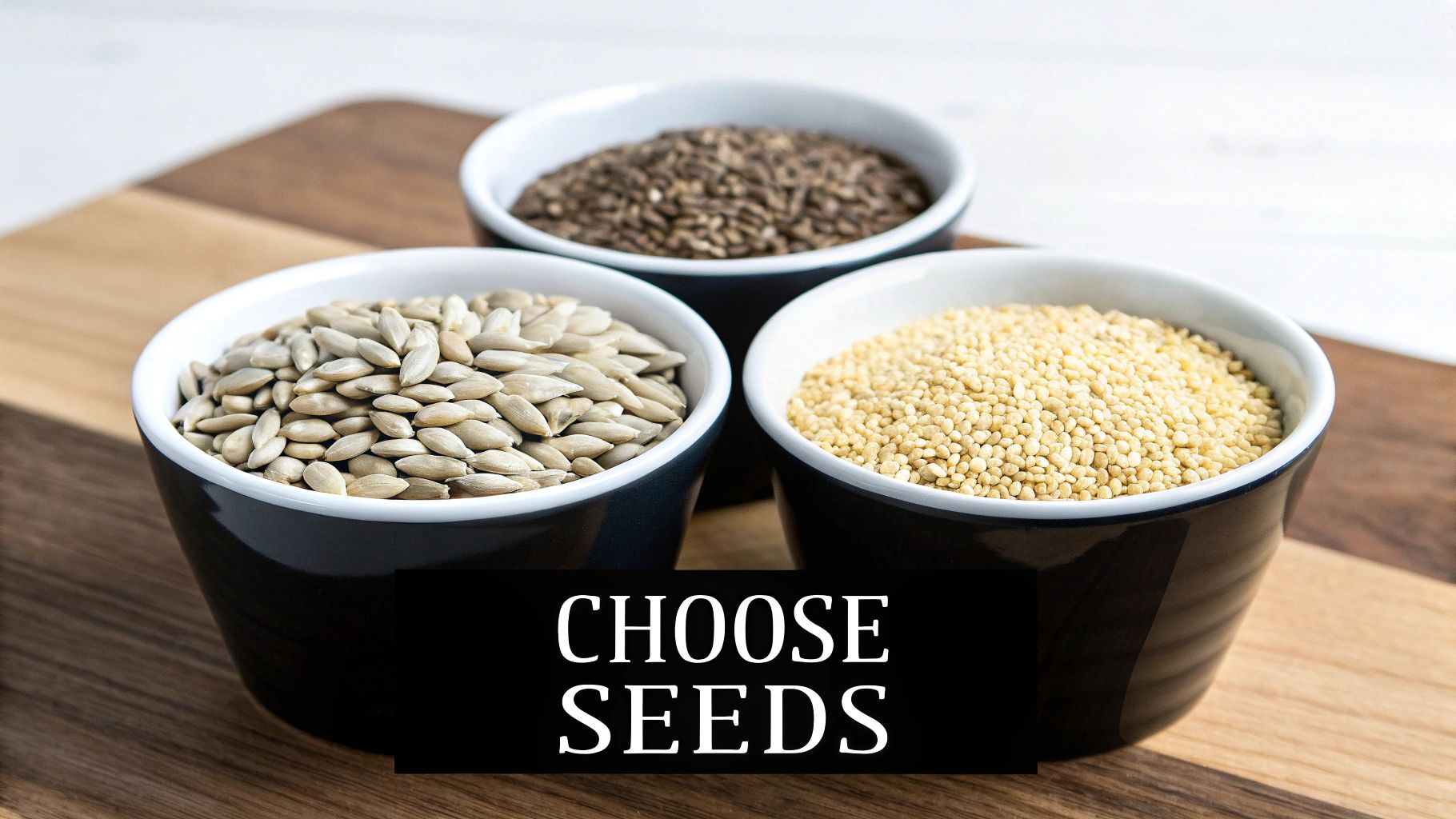
The seed aisle can feel a bit overwhelming, but it's pretty simple once you know the basics. Every seed type offers a different nutritional profile, and giving your bird a good variety is the secret to preventing picky eating and ensuring they get a well-rounded diet.
Building A Balanced Seed Mix
Grabbing a bag of sunflower seeds might seem like the easy choice, but relying on just one type of seed is like a person deciding to live on potatoes alone. Sure, it’s filling, but it’s missing the full spectrum of nutrients your bird needs to truly thrive.
Expert Advice: A classic mistake is leaning too heavily on high-fat seeds like sunflower. While they're a fantastic energy source, they should only be one part of a balanced mix, not the whole meal. Think of them as a treat or an energy booster, not a dietary staple.
A great mix for most Australian parrots will combine a variety of seeds to cover all the nutritional bases.
- Sunflower Seeds: High in fat and oil, they are an excellent source of energy, especially for active, larger parrots who burn through calories.
- Safflower Seeds: A good alternative to sunflower seeds. They have a slightly bitter taste that can sometimes stop picky eaters from just picking out their fatty favourites.
- Millet: This is a small, nutritious grain that smaller birds like budgies and cockatiels absolutely love. It’s lower in fat and makes a great staple.
- Pellets: Formulated pellets are a fantastic way to make sure your bird gets those essential vitamins and minerals that seeds alone might be missing.
Here in Australia, seed-based bird food is incredibly popular. Sunflower seeds are a massive part of that market, mostly because their high oil content is perfect for our energetic parrots. For even more details, you can discover the latest bird food market insights on FutureMarketInsights.com.
The Importance of Quality and Freshness
Always, always prioritise freshness when you’re buying seeds. You want to look for mixes that are free from dust, debris, and any hint of moisture or mould. Stale or contaminated seeds can cause serious health problems for your companion.
Remember to store your seed mix in a cool, dry place inside an airtight container. This keeps it fresh and stops pests from getting in.
Ultimately, pairing a quality seed mix with the right bird seed feeder creates a powerful combination for your bird's enrichment and health. To get a better handle on specific seed types, learn more about millet for birds in our detailed guide.
Keeping Your Bird Feeder Safe And Hygienic
A good quality bird seed feeder is a brilliant addition to your bird's setup, but all that good work is undone if it isn't kept clean. A dirty feeder can quickly turn into a breeding ground for nasty bacteria, mould, and other germs, making what should be a source of fun into a serious health risk.
When it comes to your feathered friend's safety, keeping things spotless isn't just a suggestion—it's essential.
You wouldn't eat off the same dirty plate for days on end, would you? Our birds deserve exactly the same care. Regular cleaning stops old food, droppings, and moisture from building up and causing illnesses.
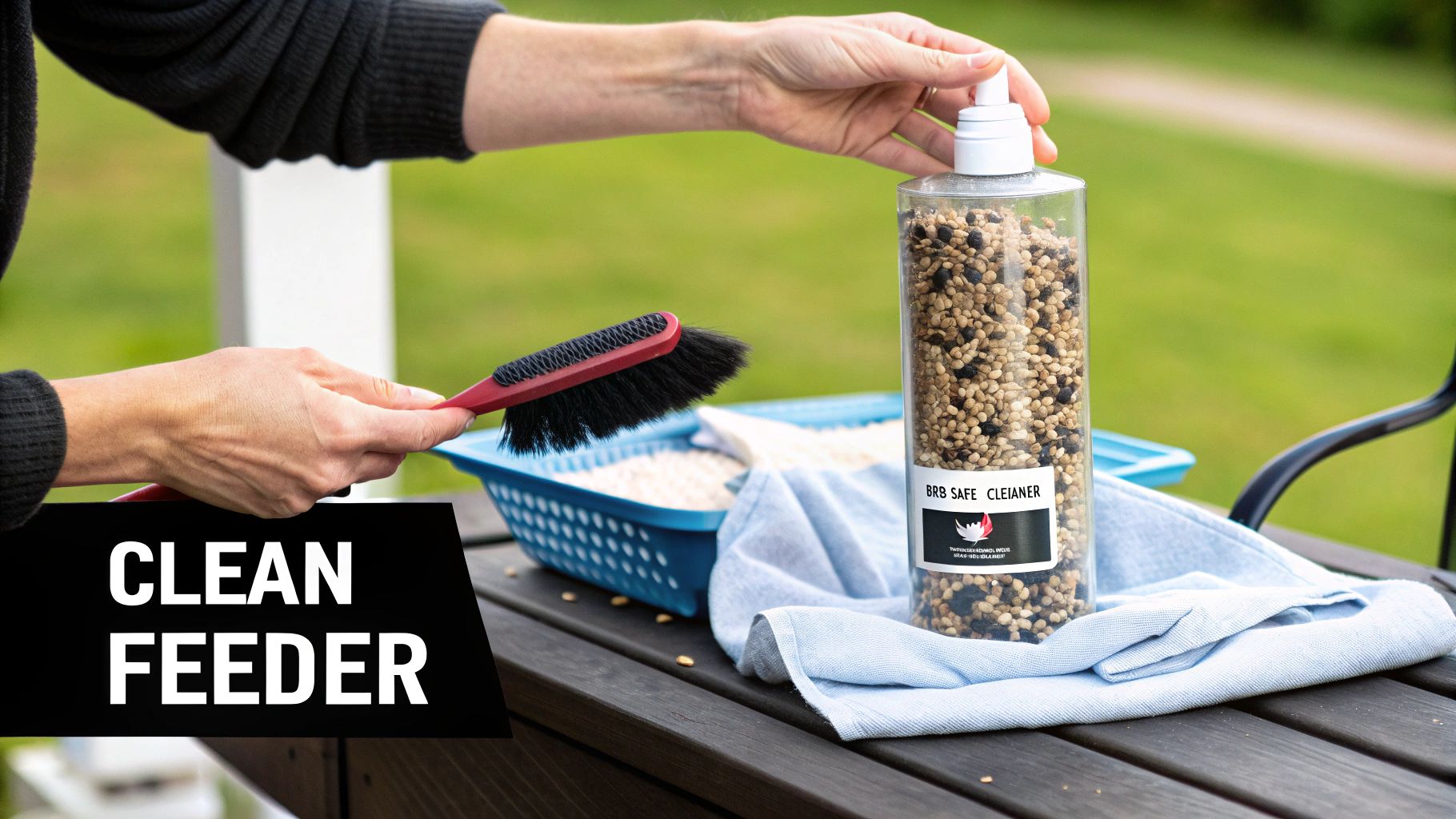
The good news is, this doesn't have to be a huge chore. By getting into a simple, regular routine, you can make sure your bird’s feeding station stays safe and inviting.
Your Simple Cleaning Schedule
How often you need to clean your bird seed feeder really depends on what you're putting in it and where it's located. A great rule of thumb is to give it a quick wipe-down daily and a proper deep clean once a week.
Expert Advice: If you're offering fresh foods like fruit or chopped veggies alongside seeds, that feeder needs to be cleaned daily, no exceptions. Moist foods spoil incredibly fast, creating the perfect party for bacteria.
For your weekly deep clean, just follow these simple steps:
- Pull It Apart: Take the feeder apart as much as you can. This is the only way to get into all those little nooks and crannies where old seed husks and germs love to hide.
- Give It a Good Scrub: Use hot, soapy water and a brush you keep just for this purpose. For an even deeper, bird-safe clean, a solution of one part white vinegar to two parts water works as a great disinfectant.
- Rinse, Rinse, Rinse: This step is crucial. Make sure every last trace of soap or vinegar is washed away. Any residue left behind can be harmful to your bird.
- Dry It Completely: Let all the pieces air-dry thoroughly before putting it back together. If you can, pop them in the sun for a bit. A damp feeder will just make fresh seed go mouldy.
Smart Placement and Regular Inspections
Where you hang the feeder inside the cage or aviary really matters. Try to position it away from any perches that are directly above it. This simple trick dramatically reduces the chances of it getting fouled with droppings and keeps it much cleaner between washes.
Doing a quick safety check is also a must. At least once a week, give the feeder a quick once-over to check for any wear and tear. Keep an eye out for:
- Sharp Edges: Plastic feeders can get sharp points if they've been chewed on, which could easily injure your bird’s beak or feet.
- Loose Parts: Check that everything is screwed in tight. Small bits that come loose can become a serious choking hazard.
- Cracks or Damage: Even small cracks can trap bacteria and make the feeder impossible to clean properly.
By mixing a consistent cleaning schedule with smart placement and regular safety checks, you create a genuinely healthy spot for your bird to eat. It’s all about being proactive to prevent problems before they start. And while you're thinking about cage hygiene, it’s useful to know about other bird-safe products. You can learn more about things like mite spray for birds to help keep their whole environment pest-free.
Turn Feeding Time Into Playtime With Foraging Toys
A standard bird seed feeder is a great start, but the real fun begins when you see it as just one piece of a much bigger enrichment puzzle. This is where you can turn simple feeding time into genuine playtime, sparking your bird’s natural instincts and keeping them busy and happy for hours.
When you combine a feeder with foraging toys and things they can shred, you’re creating a dynamic little world that mimics the challenges they’d face in the wild. It gets them thinking, moving, and gives them a rewarding job to do.
Blending Feeders And Foraging Toys
You don’t need to create some complicated setup to integrate toys with your feeder. The whole idea is just to create layers of activity that encourage your bird to move around and explore. It’s all about making them think, climb, and work a little for their meal—something they find incredibly satisfying.
A simple but really effective trick is to hang a new foraging toy right near the feeder. This naturally encourages them to check out the new object while they’re in a familiar, comfortable spot. For example, you could hang one of our Natural Foraging Bird Toys next to their seed dish, tempting them to shred and explore to find the hidden treats inside.
Expert Advice: Parrots are naturally curious but can be a bit wary of new things. Placing a new toy near their favourite food source is a low-pressure way to introduce it. They’ll start to link the toy with the good feeling of eating, which makes them much more likely to give it a go.
Creative Ideas For Maximum Enrichment
Getting a little creative with your setup can unlock endless hours of fun for your bird. It’s really about thinking outside the box—or in this case, the feeder—to stimulate both their mind and body.
Here are a few ideas to get you started:
- Create a Foraging Path: Don't just pile everything in one spot. Try hanging a feeder at one end of the cage and a fun toy, like our Shreddable Pinata Bird Toy, at the other. This encourages climbing and movement, turning the whole cage into an adventure playground.
- Stuff a Puzzle Feeder: Grab a puzzle-style feeder and fill it with a mix of their favourite seeds, some healthy pellets, and natural, bird-safe shreddable bits. This variety makes the whole foraging experience more interesting and rewarding for them.
- Combine with Durable Accessories: Use strong, bird-safe Stainless Steel Accessories to hang a few items together. You could attach a small feeder to a larger toy, creating a multi-layered foraging station that requires a bit of dexterity and problem-solving to master.
By pairing a simple bird seed feeder with the right toys, you’re doing so much more than just providing food. You’re creating an interactive environment that nurtures their intelligence, supports their physical health, and honours their wild instincts. And all of that leads to a much happier and more fulfilled companion.
Tackling Common Bird Feeder Problems
Even with the best feeder in the world, you’ll probably run into a few little hiccups. Messy eaters, bossy flock mates, and birds who are just plain suspicious of anything new are all part of the fun.
Don’t worry, though. Most of these common issues are easy to sort out with a few simple tweaks. The trick is to spot the problem and find a practical, bird-safe solution that restores the peace.
Managing Seed Mess and Spillage
Let's be honest: parrots aren't exactly known for their table manners. One of the biggest complaints from bird owners is the sheer mess they can make. Seed husks, half-eaten bits, and seeds flung with gusto can quickly cover the floor of a cage or aviary.
Luckily, you don't have to live with the chaos. Here are a few clever ways to keep things contained:
- Install a Seed Catcher: These are brilliant. They’re basically trays or nets that fit under or around the feeder to catch all the fallout before it hits the floor.
- Pick a "No-Mess" Feeder: Some feeders are specifically designed with hoods, deep bases, or smaller openings to minimise how much seed can be kicked out. They're a fantastic investment for keeping the cage tidy.
- Use the Right Seed Size: Make sure the seeds you're using aren't too small for the feeder's ports. If they are, they'll just pour out too easily, creating waste and mess.
Handling Feeder Hesitancy and Dominance
Sometimes a bird might give a new feeder the side-eye, refusing to go near it. Or, if you have a few birds, one bossy character might decide the feeder is theirs and theirs alone. Both situations just need a bit of patience and clever thinking.
Expert Advice: When you introduce a new bird seed feeder, try sprinkling some of your bird’s absolute favourite treats on it and around it. This helps them build a positive connection and encourages them to check it out on their own terms, without any pressure.
If you’ve got one bird guarding the food, the easiest fix is to set up more than one feeding spot. Pop a few feeders in different locations around the cage or aviary. This immediately cuts down on the competition and gives everyone a fair go. The dominant bird can't possibly guard all the food at once, which usually distracts them enough to bring peace back to the flock.
Encouraging a Happy Foraging Lifestyle For Your Bird
At the end of the day, a bird seed feeder is so much more than a simple dish—it's a direct investment in your bird's happiness and wellbeing. As we've seen, by thoughtfully choosing the right type, filling it with nutritious seed, and sticking to a strict hygiene routine, you can bring out the natural foraging behaviours that are so crucial for a stimulating and healthy life.
A good feeder turns a static meal into an engaging, problem-solving activity. This mental and physical workout keeps boredom at bay, helps reduce stress, and lets your bird express its innate instincts to search, shred, and explore. It’s one of the simplest yet most effective ways to enrich their daily routine.
From Feeding To Thriving
The real magic happens when you start weaving your feeder into a complete enrichment strategy. Every meal becomes an opportunity for fun, challenge, and a bit of connection with your feathered mate. The goal is to create an environment that sparks constant curiosity, keeping both their mind and body active.
Expert Advice: Don't just fill the feeder and walk away. Take a moment to watch how your bird interacts with it. You'll get incredible insights into their personality and preferences, helping you choose the next toy or challenge to keep them engaged and stop boredom from setting in.
By combining your feeder with a variety of textures and challenges, you're building a truly dynamic habitat. We encourage you to explore our full range of Natural Foraging Bird Toys to really complement your feeding setup. Think about adding shreddable items like our Shreddable Pinata Bird Toy or creating durable puzzles using our Stainless Steel Accessories. This is how you build an environment where your companion can truly thrive.
Keep Reading
- A Guide To Natural Foraging Bird Toys
- What Are The Best Toys For Budgies?
- The Ultimate Guide To Parrot Perches
Disclaimer Summary: The information in this article is general in nature and may include external links or resources not created by Lou Lou Bells Bird Toys. Every bird is unique, so we encourage you to seek personalised advice from your own veterinarian or avian specialist. For full details, please read our complete disclaimer here.