
An Aviator flight harness is much more than just another accessory. Think of it as a vital piece of safety gear, one that gives your companion parrot a secure ticket to experience the great outdoors. It’s the safest and most reliable way to prevent a heartbreaking fly-away, giving your bird the freedom to feel the sun on its feathers and the breeze in the air without the risk of escape.
Why an Aviator Harness Is Essential for Aussie Birds
Picture this: your parrot is safely exploring a sunny Aussie backyard, feeling the breeze ruffle its feathers, all without that constant knot of fear in your stomach about a fly-away. The Aviator flight harness is precisely what makes these precious moments possible, turning a simple outing into a safe, enriching adventure. It's the tool that lets you share more of your world with your feathered mate.
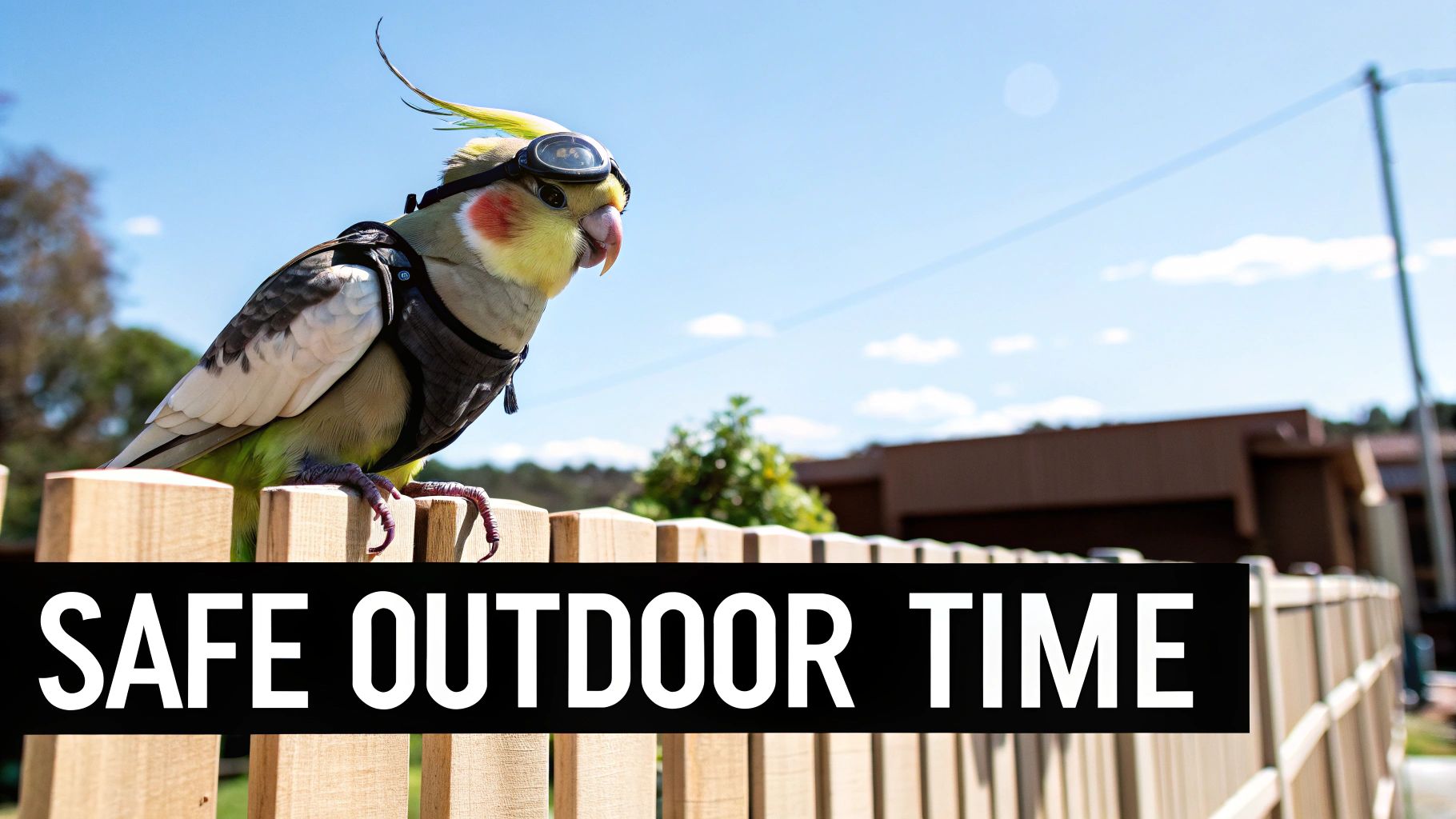
This kind of controlled outdoor time isn't just for fun; it's absolutely fundamental to a bird's well-being. Exposure to natural sunlight is crucial for Vitamin D3 synthesis, which helps your bird process calcium and maintain strong, healthy bones. A harness makes this happen without the limitations of a cage.
Beyond the physical benefits, the mental stimulation from new sights, sounds, and smells is invaluable. It’s a powerful way to combat the boredom and feather-plucking behaviours that often crop up from a monotonous indoor life. With a harness, a trip to a quiet local park or a calm beach suddenly becomes an exciting opportunity for discovery.
A Trusted Choice for Australian Bird Owners
There's a good reason the Aviator flight harness has earned the trust of avian experts and owners all across the country. From budgie keepers in Sydney to macaw enthusiasts on the Sunshine Coast, its reputation for safety and clever design is rock solid. This isn't just another item on the list of parrot supplies in Australia; it’s a foundational piece of equipment for responsible bird ownership.
Expert Advice: Always, always start harness training in a familiar, quiet indoor space. The whole point is to build a positive association with the harness before you even think about stepping outside. Patience and a stash of high-value treats are your best friends here.
One of the standout features is its incredible range of sizes, specifically tailored to the diverse companion birds we love here in Australia. It comes in nine sizes, starting with 'Mini' for tiny birds under 75 grams—perfect for the budgies and lovebirds that make up a huge portion of Aussie households.
The range goes all the way up to 'X-Large' for the gentle giants over 1000 grams, like Black Palm Cockatoos, ensuring a snug and secure fit for almost any species you can think of. It's this careful attention to detail that makes it such a reliable choice for keeping your bird safe on your adventures together.
Choosing the Right Harness Size for Your Feathered Friend
Getting the size of an Aviator flight harness right isn't just a suggestion—it's absolutely critical for your bird's safety and comfort. An incorrect fit can turn a fun adventure into a dangerous situation, so this is the one step you really need to get right from the start.
The whole system is based on your bird's weight. That’s the most reliable way to pick the right size. Guessing based on species alone just isn’t foolproof, as individual birds can vary quite a bit. A quick, stress-free weigh-in is all it takes to get the number you need for a perfect fit.
How to Weigh Your Bird Accurately
Weighing a parrot might sound tricky, but with a bit of patience, it’s actually pretty straightforward. You’ll need a digital kitchen scale that measures in grams and a small, familiar perch or T-stand that fits comfortably on it.
Trying to get your bird to stand directly on a cold, flat scale is often a recipe for a stressed-out bird. Instead, place their favourite perch on the scale and press the "tare" button to zero out its weight. Now, just ask your bird to step up onto the perched scale like it’s any other day. Using a familiar perch makes them feel secure, turning a potentially scary event into a simple 'step up' command.
You can learn more about picking the perfect perch for birds in our detailed guide.
Don't forget to reward your bird with a treat and some praise the moment they step onto the perch. This positive reinforcement teaches them that weighing is a quick and rewarding activity, making future weigh-ins even easier. Once you have their weight in grams, you're ready to find their size.
Aviator Harness Sizing Guide for Australian Birds
To help you out, we’ve put together this quick guide matching Aviator harness sizes with some of Australia's most beloved companion birds. Use this as a starting point, but always let your bird's specific weight be the final decider.
| Harness Size | Typical Weight Range (grams) | Common Australian Bird Species |
|---|---|---|
| Mini | 75-110g | Cockatiels, Small Conures (e.g., Green-cheeked), Lovebirds |
| Small | 190-425g | Galahs, Corellas, Large Conures (e.g., Sun), Rainbow Lorikeets, Alexandrines |
| Medium | 425-600g | Eclectus Parrots, Major Mitchell's Cockatoos, African Greys |
| Large | 600-1000g | Sulphur-crested Cockatoos (smaller subspecies), Large Macaws (e.g., Blue and Gold) |
| X-Large | 1000-1600g | Large Sulphur-crested Cockatoos, Green-winged Macaws, Black Palm Cockatoos |
Remember, this table is a great starting point, but it's always smart to double-check the manufacturer's specific weight recommendations for the Aviator flight harness.
The Dangers of an Improper Fit
It’s hard to overstate the risks that come with a badly-fitting harness. It’s so important to understand why getting this right is non-negotiable for your bird’s welfare.
An improperly sized harness is a significant safety hazard. A harness that is too loose can easily lead to a foot or wing getting caught, causing panic and potential injury. Worse, it creates a very real risk of the bird wriggling free and escaping—the exact scenario the harness is meant to prevent.
On the other hand, a harness that’s too tight is just as dangerous. It can restrict your bird’s breathing, put pressure on their delicate crop, and cause painful chafing or sores under their wings and across their chest.
The goal is a snug, secure fit that allows for complete freedom of movement without any risk of entanglement or escape. Taking the time to get the size right is your first and most important step towards safe and happy outdoor adventures.
Introducing the Harness with Patience and Trust
Getting your bird comfortable with a harness isn't a race. Think of it more like a slow, careful conversation built on trust, heaps of patience, and plenty of positive reinforcement. Rushing things will only backfire, creating fear that sets you right back to square one. So, take a deep breath, grab your bird’s favourite treats, and let’s get started.
First things first, let the harness just exist. Place the aviator flight harness somewhere your bird can see it from their cage, but where it isn't threatening—like on a nearby table or shelf. The goal is for it to become just another boring part of the scenery.
Anytime you notice your bird even glance at it, that's your cue. Offer some gentle praise and a high-value treat. This simple act starts building a powerful connection in their mind: that weird-looking thing makes good stuff happen.
Building Positive Associations
Once your bird seems completely unfazed by the harness sitting nearby, it's time to move a little closer. This is where touch training comes in, turning the harness from a potential threat into something interesting and rewarding.
Hold the harness in one hand and offer a treat near it with the other. Reward any interaction, no matter how tiny. At first, that might just be them looking at it in your hand. Then, they might lean towards it. Eventually, they might be brave enough to touch it with their beak. Every single one of these moments is a massive win and deserves an immediate treat.
Before you even get to this training stage, making sure you have the right harness is key. This quick guide shows the fundamentals.
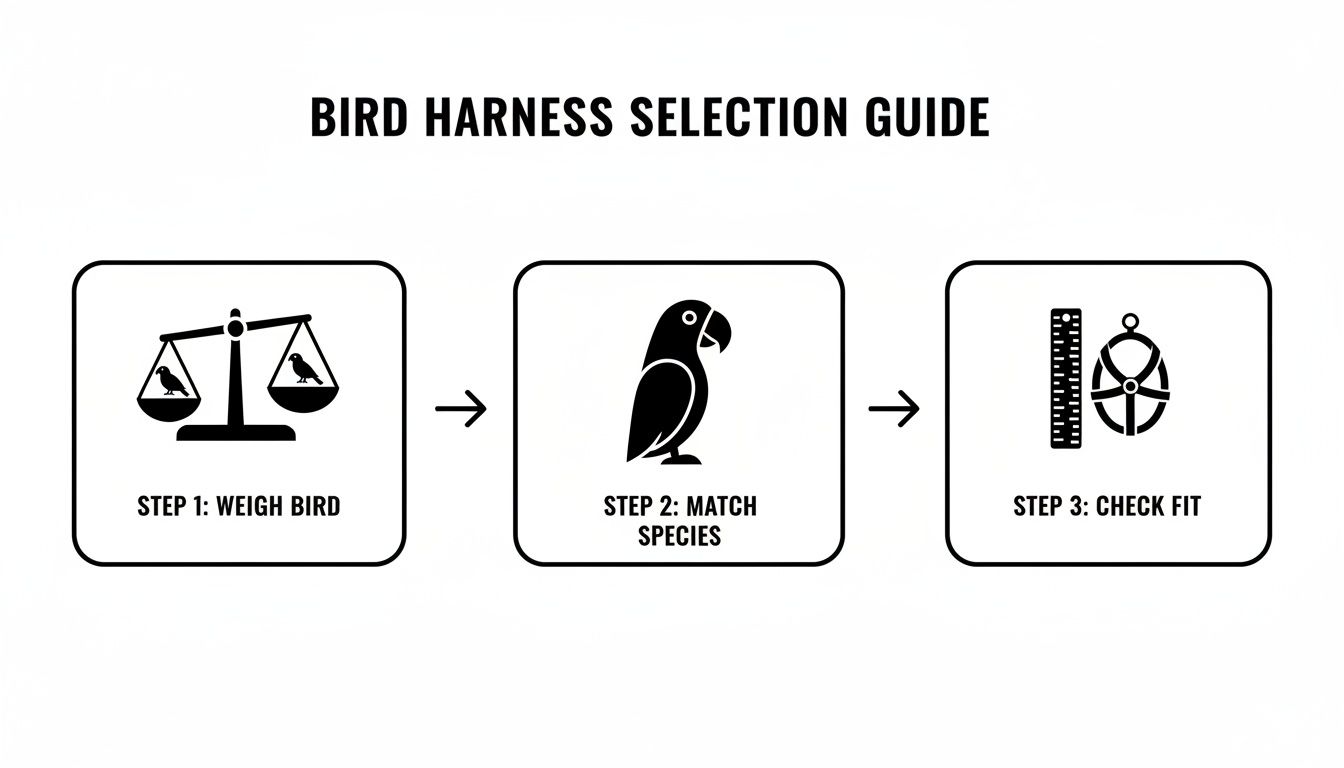
As you can see, a successful harness experience really starts with the basics: weighing your bird accurately, matching the size to their species, and doing a final check of the fit.
Reading Your Bird’s Body Language
Throughout this entire process, your most important job is to become an expert in your bird's body language. They’ll tell you everything you need to know without making a sound. Pushing them past their comfort zone is the fastest way to undo all your hard work.
Keep an eye out for these signals:
- Green Light (Relaxed): Feathers are soft and slightly fluffed, you'll see curious head tilts, and they might gently explore with their beak. They'll also be happy to take treats.
- Yellow Light (Hesitant): Watch for them leaning away, slicking down their feathers, or lifting a foot. A wide-eyed, fixed stare is another big clue. If you see this, slow down or go back a step.
- Red Light (Stressed): Hissing, lunging, biting, or trying to bolt are clear stop signs. If this happens, the session is over. End on a positive note if you can (like a simple treat for a different behaviour) and try again another day, maybe taking a few steps back in the training process.
Expert Advice: Keep your training sessions super short, especially at the start. One to five minutes is usually more than enough. It’s far better to have a bunch of short, successful sessions than one long, stressful one.
Progressing to Physical Contact
After your bird is confidently touching the harness, you can very slowly move on to draping it over their back. The first time, do it for just a second, then immediately take it away and offer a jackpot reward—something extra special they rarely get. You want them to think, “Huh, that wasn't so bad, and I got my favourite nut out of it!”
Bit by bit, increase the time the harness rests on their back, always watching their body language. The final hurdle, and often the trickiest, is slipping the loop over their head. Aim for a quick, smooth motion, followed instantly by a huge reward and lots of praise.
Don't even think about fastening it the first time. Just on, reward, and off. Repeat this over many sessions until your bird is totally cool with the whole thing. A great way to make the reward extra special is to use an engaging toy, like our Foraging Party Pinata, to turn the treat into a celebration.
Remember, your bird sets the pace. A cockatiel might get there in a week, while a more cautious Galah could take a month or more. That's completely normal. Every tiny step forward is a victory, and the trust you're building will strengthen your bond for years to come. Providing other fun distractions in the training area, like a colourful Star Weave Shredder or a clever Woven Star Foot Toy, helps keep things positive.
Getting the Fit Just Right for Your First Outdoor Adventure
Once your bird is happily accepting the harness, nailing the perfect fit is that last, crucial step before you can both head outside safely. This isn't just about slipping it on; it’s about making sure it’s a secure second skin that allows for totally natural movement while ruling out any chance of escape.
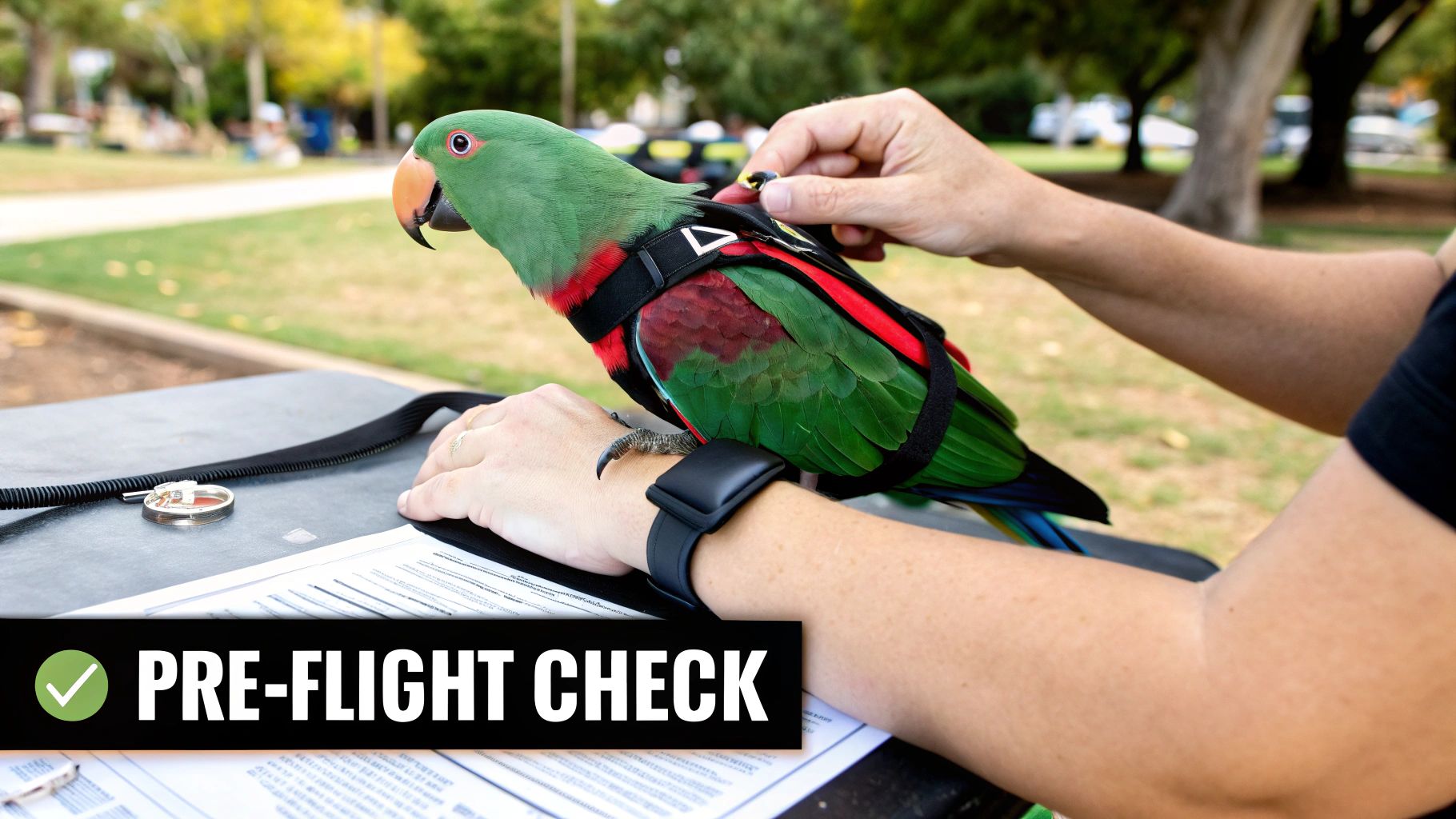
The process of putting on the aviator flight harness should be a calm and familiar one, building on all the positive training you've already put in. Gently pop the loop over your bird's head so it rests around their neck like a loose necklace. Then, carefully guide one wing through the side loop, and repeat on the other side. With both wings through, you can gently tighten the belly strap.
The secret to a safe fit is snugness. It needs to sit firmly against your bird’s body, but never so tight that it pinches, restricts breathing, or gets in the way of their movement. A properly fitted harness will have zero loose or dangling loops that a foot or wing could get tangled in.
The Two-Finger Fit Check
One of the most reliable ways to check the fit is what I call the two-finger test. After you've adjusted all the straps, you should be able to comfortably slide two fingers (one stacked on top of the other) between the harness and your bird’s chest.
If you can fit more than that, it’s too loose and a genuine escape risk. If you can't get two fingers in there without a struggle, it’s far too tight and will be uncomfortable, possibly even restricting their breathing. It's a simple check that gives you complete peace of mind before every single outing.
Your Pre-Flight Checklist for a Successful First Outing
That first moment you step outside together is a huge milestone. Making it a positive, low-stress experience is absolutely vital for building your bird's confidence for all future adventures. Running through a quick pre-flight checklist helps make sure everything goes off without a hitch.
- Final Fit Check: Do the two-finger check one last time, right before you walk out the door. No exceptions.
- Scout Your Location: Choose your spot carefully. The first trip should be somewhere quiet and familiar, like your own backyard. Steer clear of busy parks, noisy traffic, and areas with lots of dogs or potential predators like hawks or kookaburras. A controlled space, like some well-designed outdoor bird aviaries, can also be a great starting point for them to get used to the sounds and sights of nature.
- Keep It Short: The first few adventures should be very brief—just five to ten minutes is plenty. The aim is to leave them wanting more, not to completely overwhelm them with new sights and sounds.
- Pack the Essentials: Bring a small stash of your bird’s absolute favourite high-value treats. Offering these rewards outside will help them build a strong, positive association with this new experience.
- Stay Calm Yourself: Your bird takes all its cues from you. Speak in a calm, reassuring voice and project confidence. If you're a bundle of nerves, they'll pick up on it instantly.
The clever design of the Aviator harness is what makes these adventures possible in the first place. There’s a well-known story of a macaw named Annie who excitedly jumped from her owner’s hand near a busy road just as a car sped past. The harness's 1.8-metre elastic leash was a lifesaver; its shock-absorbing cord stopped her fall just 30cm from the ground, preventing what would have been a certain tragedy. This is a world away from other problematic designs like the Feather Tether harness. The Aviator’s unique construction, with its ultrasonic-welded nylon straps weighing only 25 grams for large birds, offers both security and comfort. You can read more about this incredible story of how the harness saved a bird's life.
Expert Advice: On your first few outings, don't encourage flight. The goal is acclimatisation, not acrobatics. Just let your bird sit on your hand or shoulder and take in the new environment. Flying can come much later, once they are completely comfortable and confident outdoors.
By meticulously checking the fit and planning your first few trips with care, you’re setting the stage for a lifetime of safe and joyful adventures with your feathered friend.
Safety Rules and Harness Care for Aussie Owners
Taking your bird out on an aviator flight harness is an absolutely incredible experience, but being a responsible owner means thinking beyond your own backyard. It’s about being aware of your surroundings, other people, and our local wildlife. A few simple safety habits and a well-maintained harness are all it takes to make sure every adventure is a safe and happy one.
Before you even think about stepping outside, it’s crucial to check the local council rules for where you’re headed. While plenty of Aussie parks and beaches are pet-friendly, some areas like conservation reserves or national parks have strict rules to protect native animals. A quick look at your local council's website can save you a world of trouble and make sure you’re always welcome.
Essential Outdoor Safety Protocols
Once you’re out and about, your eyes and ears are your most important tools. A bird on a harness should never, ever be left unsupervised, not even for a split second. Things can change in an instant, and you are their number one protector.
Keep a constant lookout for potential predators. This isn't just about off-leash cats and dogs; our native birds can be surprisingly bold. Kookaburras, magpies, and even larger birds of prey might see a small companion bird as a rival or, worse, a meal. Always keep a safe distance and be ready to calmly move away if you spot one nearby.
Expert Advice: Try to avoid taking your bird out in extreme Australian weather. A scorching summer arvo can quickly lead to heatstroke, while gusty winds can make it tough for your bird to feel secure, even on your shoulder. Early mornings or late afternoons are usually the sweet spot for a comfortable outing.
Keeping Your Harness in Top Shape
Just like any bit of safety gear, your Aviator harness needs a bit of TLC to do its job right. Looking after it not only protects your investment but, more importantly, keeps your feathered mate safe on every trip. Think of it as the bird equivalent of checking the tyres on your car before a road trip.
A quick "pre-flight check" before every single use is an absolute must. It only takes a minute but it’s one of the best habits you can get into.
- Check for Wear and Tear: Gently run your fingers over all the nylon straps. Pay extra attention to the spots that get the most friction, like where the leash connects. Look for any fraying, thinning, or signs of chewing.
- Inspect the Buckle: Make sure the slide buckle that adjusts the fit is working properly. It should hold the strap firmly without any slippage.
- Test the Leash Elasticity: The elastic leash is there to absorb shock. Give it a gentle tug to check it still has its spring and hasn't become stretched out or brittle.
Cleaning the harness is easy. For a bit of dirt or dust, just hand wash the straps in warm water with a tiny amount of mild, bird-safe soap. Rinse it really well to get all the soap out, then let it air dry completely before putting it away. Storing it out of direct sunlight will also stop the material from degrading over time.
Proper care guarantees your aviator flight harness stays a reliable tool for countless adventures ahead. It also means you’ll spot any potential issues long before they become a real problem. These simple checks are just part of being a responsible bird owner, right up there with making sure they have a safe and sturdy travel cage for birds when you're on the move.
Common Aviator Harness Questions Answered
Even with all the prep in the world, it's natural to have a few questions rattling around your head before you take your bird out in an Aviator flight harness. To help you feel completely confident, we’ve put together answers to some of the most common queries we hear from Aussie bird owners.
Getting these little details right is what makes every harness adventure a good one for you and your feathered mate.
Can I Use An Aviator Harness On My Untamed Or Baby Bird?
This is a really common question, but the answer is a definite no. A harness should only ever be used on a bird that is already tame and completely comfortable with you handling them all over.
Trying to wrestle a harness onto a bird that's still scared or untamed will cause a huge amount of stress. It can even lead to injury and will almost certainly set your relationship back, damaging the trust you’re working so hard to build.
With baby birds, you just have to be patient. Wait until they're fully weaned, flying confidently, and happy to have your hands near them. The training process should always start slowly, inside a safe room, and be all about building positive, happy feelings long before you even think about putting the harness on.
My Bird Chews On the Harness. How Can I Stop This?
Parrots explore the world with their beaks, so of course, they're going to give the harness a good chew! This is totally normal. The best way to handle it is with redirection, not telling them off.
The moment you see your bird start nibbling on the straps, offer them something way more interesting. This could be a high-value treat like a sliver of almond or their absolute favourite foot toy. A great trick is to keep a special toy, like our Foraging Party Pinata, just for harness time. It makes the experience more rewarding and provides a welcome distraction.
Expert Advice: If your bird is constantly chewing the harness, they might be trying to tell you something. The fit could be slightly off, with loose straps being just too tempting to ignore. Or maybe the training sessions are just dragging on a bit too long. Keep your sessions short, fun, and engaging to stop boredom-chewing in its tracks.
How Do I Know If the Harness Is Too Tight Or Too Loose?
Getting the fit right is absolutely crucial for your bird's safety and comfort. You're aiming for snug, but never restrictive.
If it’s too loose, a wing or foot could get tangled up if they get a fright. Worse, they could wriggle right out of it. If it’s too tight, it can restrict their breathing, put pressure on their crop, and cause painful rubbing.
The finger test is your best friend here. You should be able to slide one finger comfortably between the chest strap and your bird’s body. If you can fit more, it's too loose. If you can barely get one finger in, it's too tight. Make this quick fit-check a non-negotiable habit before every single trip outside.
Are Flight Harnesses Legal in Australian Public Parks?
For the most part, yes they are. But the final say always comes down to your local council. Most public parks across Australia are fine with pets as long as they are under the owner's "effective control," which a harness and leash absolutely provide. This opens up so many beautiful local spots for you to explore together.
However, you need to be very careful around protected areas. Places like national parks, conservation reserves, and some state forests often have strict "no domestic animals" policies. These rules are there for a good reason—to protect our precious native wildlife from stress and the potential spread of disease.
Before you head to a new park, always do a quick check on the local council's website or look for signs at the entrance. It’s a simple step that shows you’re a responsible and respectful bird owner.
Keen to Learn More?
Getting your bird comfortable in a harness is a huge step, but it's just one part of being a great "parront". There's always something new to discover that can make your feathered mate's life even better.
If you're ready to dive deeper, check out some of our other guides. They're packed with practical tips to help you build an amazing bond and keep your bird happy and healthy.
Keep Reading
- Foraging Toys for Parrots Benefits and Ideas
- The Ultimate Guide to Travelling with Your Parrot in Australia
- How to Bathe Your Parrot
Disclaimer Summary: The information in this article is general in nature and may include external links or resources not created by Lou Lou Bells Bird Toys. Every bird is unique, so we encourage you to seek personalised advice from your own veterinarian or avian specialist. For full details, please read our complete disclaimer here.