
Picture your bird, wings fully stretched in the warm sun, feeling a gentle breeze ruffle its feathers as it forages among real tree branches. This isn't just a daydream; it's the beautiful reality an outdoor aviary can bring to your feathered friend's life. This guide is your first step toward building a vibrant, secure world where your bird can truly flourish.
Unlocking a More Natural Life for Your Bird
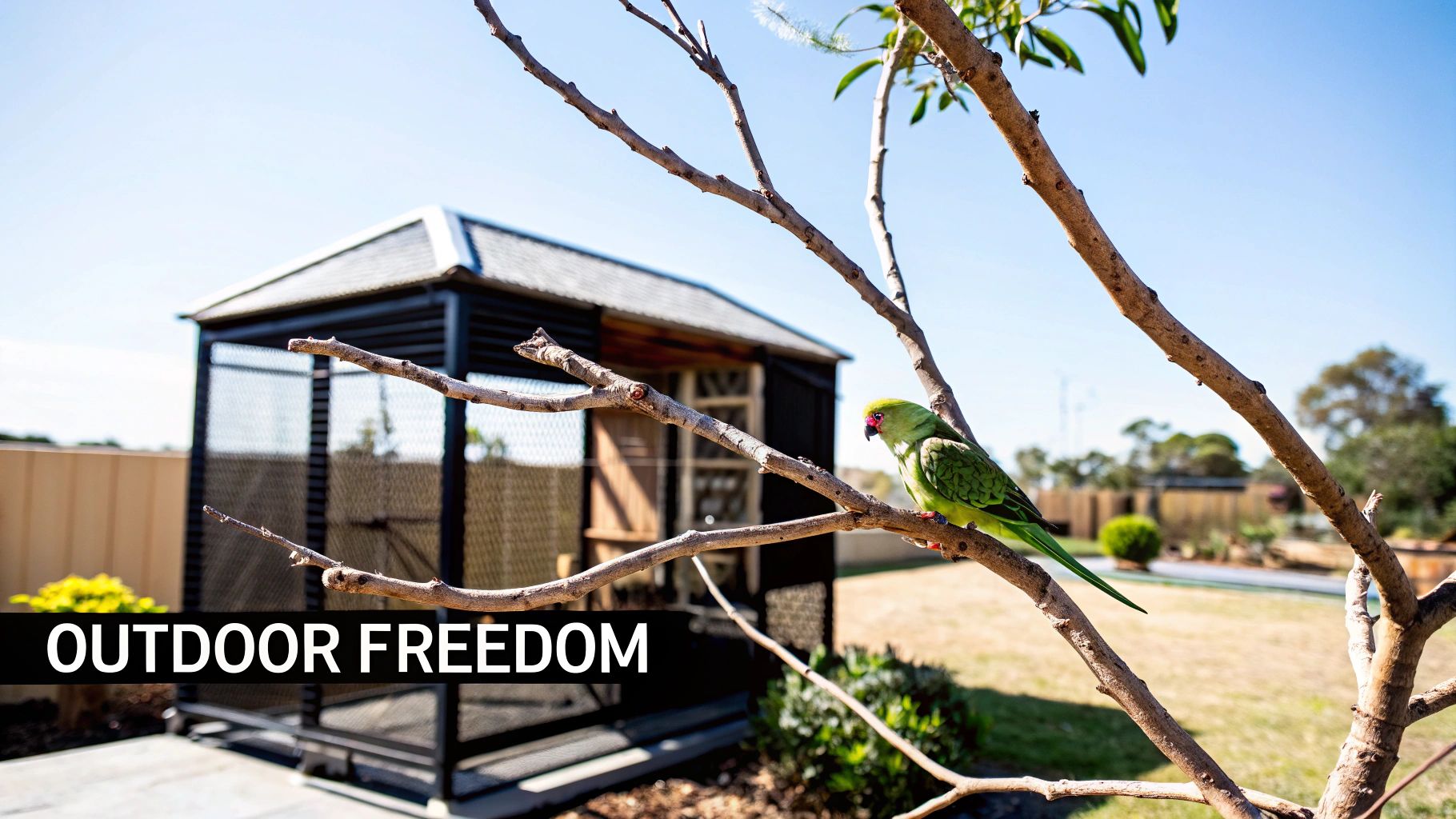
Moving a bird from an indoor cage into one of the many outdoor bird aviaries available is so much more than a simple size upgrade. It’s a massive improvement in their quality of life. Here in Australia, our climate gives us a golden opportunity to create an environment that’s a close match to their natural habitat, offering benefits that an indoor setup just can't replicate.
A well-designed aviary gives them the room for proper flight—not just a few flaps, but meaningful aerial exercise. This is absolutely crucial for strengthening their muscles, keeping their heart healthy, and preventing obesity.
The Power of Sun and Space
One of the biggest wins is direct exposure to unfiltered sunlight. This allows birds to naturally synthesise Vitamin D3, which they need to properly absorb calcium for strong bones. Sunlight also helps regulate their sleep cycles and can genuinely improve their mood.
An outdoor aviary lets your bird connect with the daily rhythms of nature. They get to experience the sunrise, feel the weather change, and hear the sounds of the local environment. All this sensory stimulation is vital for their mental wellbeing, helping to prevent the boredom and stress that can lead to behavioural problems.
Fostering Natural Behaviours
Inside a spacious outdoor aviary, you can recreate a little slice of the wild. This encourages birds to act on their innate instincts, all within a safe, controlled space.
- Foraging: You can scatter food or hide it in tricky foraging toys, making them work for their meals just as they would in nature.
- Social Interaction: If you have more than one bird, an aviary provides the space they need for complex social dynamics without the stress of being cooped up.
- Enrichment: There’s plenty of room for all sorts of different perches, swings, and shreddable toys, creating a world that is always stimulating and engaging.
At the end of the day, an outdoor aviary isn't just about giving your bird more space. It's about giving them a better, more fulfilling life that respects the wild instincts still inside them.
Choosing the Right Aviary Design and Materials
Picking the perfect outdoor aviary is about so much more than just finding the biggest one you can afford. It's a careful balancing act, matching the final design to your birds' specific needs, the space you have available, and of course, the tough Australian environment. Getting this right from the very beginning will save you a world of headaches and ensure your feathered mates have a safe, comfy, and stimulating home.
Your first big decision is the style of aviary. Here in Australia, you’ll mostly come across two main designs: the classic walk-in and the practical suspended aviary. Each has its own clear advantages.
Walk-in aviaries are what most people picture—a spacious, ground-level enclosure that you can step right into for easy cleaning, feeding, and just spending time with your birds. They give your flock plenty of room for proper flight and let you create a natural-style floor with sand or leaf litter to encourage that all-important foraging instinct.
Suspended aviaries, on the other hand, are raised off the ground on legs. This design is an absolute game-changer when it comes to hygiene. All the waste simply falls through the wire mesh floor onto the ground or a tray below, keeping the living area incredibly clean and stopping your birds from coming into contact with their own droppings. While they don't offer that ground-level foraging space, their superior cleanliness makes them a top pick for many breeders.
The Foundation of Safety: Aviary Materials
Once you've landed on a design, the materials you choose become the single most critical factor for your birds' safety and the aviary's lifespan. Not all metals are safe for birds, and getting this wrong can have serious, even fatal, consequences.
The undisputed gold standard for any outdoor bird aviary is stainless steel. It’s completely non-toxic, unbelievably durable, and stands up to rust and corrosion even in our harsh coastal or humid climates. Yes, it's the most expensive option, but its safety and sheer longevity are second to none.
A more common and budget-friendly choice is powder-coated steel. The powder coating creates a protective, non-toxic layer over the steel, making it safe for birds. The key here, though, is regular inspection. If you have a bird that loves to chew, they can sometimes chip the coating, exposing the metal underneath and creating a rust risk.
Expert Advice: Never, ever use standard galvanised wire for your aviary. Galvanised mesh is coated in zinc to stop it from rusting, but this zinc is highly toxic to birds. If they chew on it and ingest even tiny flakes, it can lead to heavy metal poisoning, a severe and often deadly condition. Always stick with stainless steel, powder-coated steel, or a specialty wire that is guaranteed to be bird-safe.
A little forethought on materials now prevents a lot of heartache later. Below is a quick comparison to help you weigh up the options for our unique Aussie conditions.
Comparing Aviary Materials for Australian Conditions
| Material | Pros | Cons | Best Suited For |
|---|---|---|---|
| Stainless Steel | Completely non-toxic and bird-safe. Extremely durable and rust-proof, even in coastal areas. Lasts a lifetime. | The most expensive option upfront. Can be heavy and harder to work with. | Serious keepers, breeders, and anyone housing destructive parrots (like macaws or cockatoos) in any Australian climate. The ultimate long-term investment. |
| Powder-Coated Steel | Bird-safe as long as the coating is intact. More affordable than stainless steel. Available in various colours. | Coating can be chipped by strong beaks, potentially exposing steel to rust. Requires regular checks for damage. | Small to medium-sized birds that aren't aggressive chewers. Good for most inland and suburban environments where salt spray isn't an issue. |
| Aluminium | Lightweight and rust-proof. Easier to move and assemble. A good mid-range cost option. | Softer than steel and can be damaged or bent by very large, powerful parrots. | Finches, canaries, budgies, and other small, non-destructive birds. Ideal for DIY projects or moveable aviaries. |
Choosing the right material is a huge step, but it’s just one piece of the puzzle. The frame, floor, and roof all need to work together to create a secure and comfortable home.
Building from the Ground Up: Flooring and Roofing
The floor and roof are just as important as the walls. They’re your primary defence against predators and the elements, and they play a massive role in the overall health of the aviary environment.
- Flooring: For a walk-in aviary, a poured concrete slab is the gold standard for predator-proofing. It stops anything from digging in from underneath and is incredibly easy to hose down and disinfect. You can then add a top layer of a bird-safe substrate like sand, gravel, or eucalyptus mulch to give them something to scratch around in.
- Roofing: In Australia, a solid, insulated roof is simply non-negotiable. It has to provide total protection from the rain and, just as importantly, offer plenty of shade from our intense sun. Corrugated metal roofing with an insulated layer underneath is a great option for keeping the aviary cool. Many keepers also integrate sections of clear or semi-clear polycarbonate sheeting to let natural sunlight filter through without any harsh, direct exposure.
The size of the aviary is another key factor, as it dictates how much freedom your birds have. It's not just about meeting minimum requirements; it's about providing enough room for genuine flight. For a deeper dive into this, you can explore our detailed guide on what makes a good bird flight cage, as many of the principles apply directly to designing a spacious and functional aviary.
How to Predator-Proof Your Aviary
Giving your bird an outdoor aviary opens up a wonderful new world for them. But here in Australia, it can also send an open invitation to some very clever local predators. A truly safe enclosure isn't about one single feature; it's about layering your defences to build a fortress that keeps unwanted visitors out and your feathered friend completely safe.
Our Aussie environment means threats can come from the ground, the air, and everywhere in between. Common predators like snakes, goannas, foxes, feral cats, and birds of prey are persistent. And they only need one weak spot to get in, which is why a thorough approach is non-negotiable.
Securing the Perimeter from the Ground Up
The most common point of failure for any outdoor aviary is its base. Animals that dig, like foxes and goannas, can easily burrow underneath a frame that just sits on the dirt. That makes a solid foundation your first and most critical line of defence.
The gold standard is a poured concrete slab. It creates a completely impenetrable barrier that stops anything from digging under. For maximum security, the aviary walls should be bolted directly into the concrete.
If a full slab isn't an option, the next best thing is installing a wire mesh skirt around the entire perimeter. Here's how:
- Dig a trench at least 30cm deep and 60cm wide around the outside of the aviary.
- Lay strong, welded wire mesh in an 'L' shape at the bottom, running it up the side of the aviary wall.
- Backfill the trench with soil and rocks. This creates an underground barrier that will stop an animal dead in its tracks when it tries to dig down and under.
The type of mesh you use at ground level is also crucial. The lower section of your aviary walls—at least one metre up from the base—needs to be fitted with fine, welded ‘snake-proof’ mesh. Look for apertures no larger than 6.5mm x 6.5mm to prevent even small snakes from squeezing through.
Double-Wiring for Ultimate Protection
Even with a secure base, a predator can still harm your bird through the wire. A goanna climbing the mesh or a bird of prey landing on the roof can grab a toe or a wing right through the wire, causing serious injury. This is where a double-wire system becomes a very smart move.
Expert Advice: Installing a second layer of mesh about 5cm out from the main aviary wall creates a vital safety gap. This 'airlock' prevents a predator's claws or a snake's bite from ever reaching your birds, even if they're perched right on the inside wire. This is especially important for the roof.
Your choice of aviary style also impacts security. This simple decision tree can help you visualise which design might work best for your space and needs.
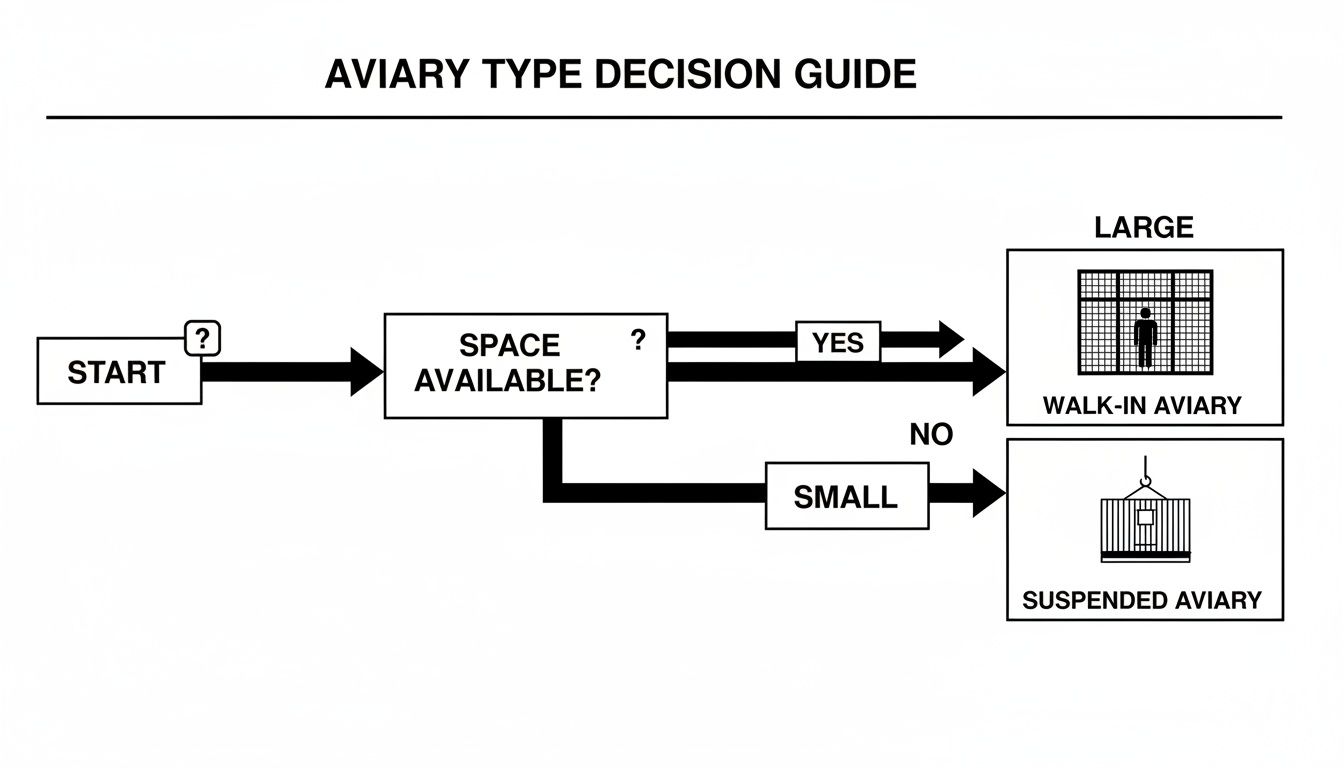
As the chart shows, suspended aviaries naturally offer better protection from ground-based predators. Walk-in designs, on the other hand, need that extra attention to ground-level proofing to be truly secure.
Final Security Checks
Beyond the main structure, a few simple habits can make a world of difference. Always use quality padlocks on all doors, as crafty predators like goannas have been known to figure out simple latches. It's also a good idea to keep the area around your aviary clear of overgrown bushes or debris where predators could hide and wait.
Finally, think about your feeding setup. Open food bowls can attract mice and rats, which in turn attract snakes. Switching to clever feeding systems is a great way to minimise spillage and deter pests. You can get some ideas on this by reading about the benefits of no-mess bird feeders, which help keep the aviary cleaner and far less attractive to unwelcome visitors.
Creating a Stimulating and Enriching Aviary Habitat
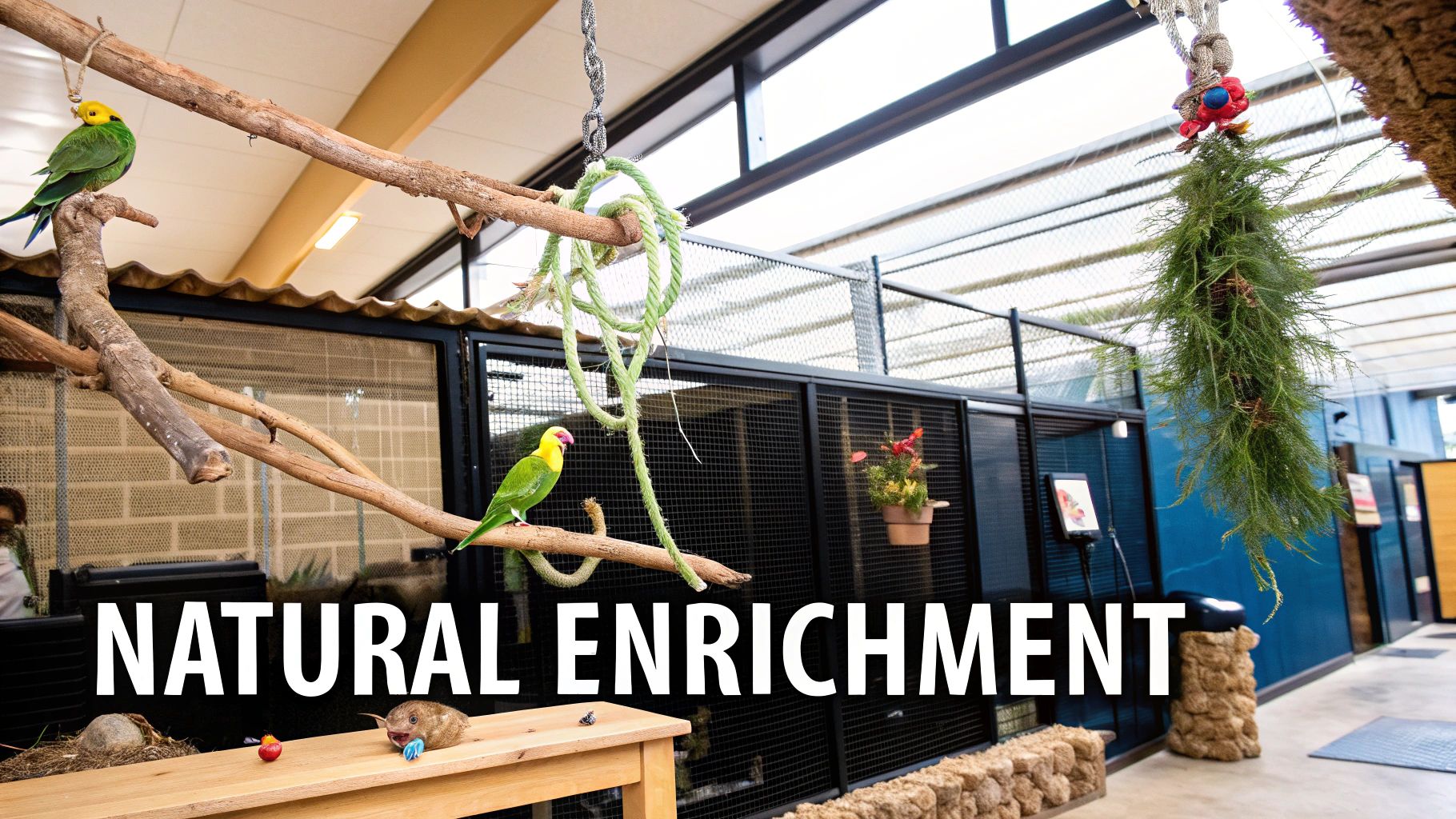
A secure and well-built outdoor bird aviary is a fantastic start, but the real magic happens when you turn that empty space into a vibrant, engaging home. An aviary should be so much more than just walls and a roof; it needs to be a dynamic playground that nurtures your bird's physical health and keeps their sharp mind busy.
The goal is pretty simple: create an environment that stops boredom in its tracks and lets your bird just be a bird.
Without things to do, birds can get stressed and develop behavioural issues like feather plucking or repetitive screaming. A stimulating aviary channels all that energy into healthy, natural activities like foraging, climbing, and chewing. It's absolutely fundamental to their long-term wellbeing.
Building a Natural Foundation with Perches
If there's one thing you need to get right inside any outdoor aviary, it's the perches. Out in the wild, birds land on branches of countless different shapes, textures, and thicknesses. Trying to replicate this variety is crucial for their foot health. It helps to exercise the tiny muscles and tendons in their feet, preventing problems like arthritis or pressure sores down the line.
Here in Australia, we're lucky to have access to a huge range of bird-safe native woods. Branches from eucalyptus, bottlebrush, banksia, and grevillea trees are all excellent choices.
- Vary the Diameter: Put in a mix of thick, sturdy branches for resting and thinner, bouncier ones that make them work on their balance.
- Change up the Texture: Use smooth, weathered branches alongside rougher, bark-covered limbs. This gives them different surfaces to grip and feel.
- Create a Flight Path: Don't just place perches randomly. Arrange them to create clear, open flight paths across the aviary to encourage as much exercise as possible.
Expert Advice: Before you put any natural branches in your aviary, make sure they come from a pesticide-free source. Give them a good scrub with a bird-safe disinfectant and let them dry completely in the sun. This kills off any nasty bacteria, fungi, or contaminants from wild birds.
Encouraging Foraging and Play
A bored bird is an unhappy bird. To keep their minds sharp and their bodies active, you have to give them opportunities to work and play. This is where enrichment toys become essential, turning a simple enclosure into an interactive world of discovery.
A simple trick is to place multiple feeding and water stations at opposite ends of the aviary. This forces your birds to fly the full length of their home to get a drink or a bite to eat, ensuring they get regular exercise. You can even go a step further by hiding food instead of just offering it in a bowl.
But integrating a variety of toys is the real key to an enriching aviary. You need to provide options that appeal to different instincts.
- Foraging Toys: These are basically puzzles that make your bird work for its food. Hiding seeds or nuts inside a toy that needs to be chewed open or manipulated is one of the best ways to bust boredom. To see how these work, check out our guide on the benefits of foraging toys for birds.
- Durable Chew Toys: Parrots, especially, have a powerful natural instinct to chew and destroy things. Giving them safe, shreddable toys made from materials like wood, yucca, or cardboard provides a healthy outlet for this behaviour, which is vital for beak health.
- Swings and Acrobatic Toys: Things like swings and hanging ladders encourage movement, improve balance, and give your birds a really fun way to play and burn off energy.
By thoughtfully combining natural perches with a rotating selection of engaging toys, you create a habitat that supports every single aspect of your bird's wellbeing.
Meeting Australian Regulations and Biosecurity Standards
Building the perfect outdoor bird aviary is a fantastic project, but before you even think about turning the first sod, it’s vital to get the official side of things sorted. Here in Australia, putting up any permanent outdoor structure usually means having a chat with your local council. They’ll have specific rules about setbacks from property lines, maximum height, and whether you need a building permit.
Honestly, a quick phone call or a look at your council's website can save you a world of trouble down the track. Getting this sorted from the get-go means your dream aviary won’t accidentally breach any local planning schemes. It’s all about peace of mind, knowing your setup is fully compliant.
This responsible approach has deep roots in Australian aviculture. The way we keep native birds has changed dramatically over the years, moving from widespread commercial trade to a necessary focus on regulation. In the past, smuggling caused immense damage to wild populations, forcing governments to bring in strict permit systems and promote responsible care. This push helped popularise large, well-managed outdoor bird aviaries over small cages, which brings today's biosecurity needs into sharp focus. You can read more about the history of Australian aviculture regulation to see just how far we've come.
Your First Defence: Biosecurity Protocols
Once your aviary is up and running, biosecurity becomes your number one job. Think of it as the set of practices you use to shield your flock from disease, pests, and parasites. A clean environment is a healthy one, and it all starts with a simple, consistent schedule.
- Daily Checks: Whisk away leftover food, give the water bowls a refresh, and spot-clean any significant droppings. This simple habit stops bacteria from getting a foothold.
- Weekly Cleans: Give perches, toys, and feeding stations a proper scrub with a bird-safe disinfectant. A favourite among Aussie bird keepers is F10SC Veterinary Disinfectant.
- Monthly Deep Cleans: This is the big one—a full scrub-down of the aviary walls, mesh, and floor. If you have a concrete floor, a high-pressure hose will be your best friend for this job.
Pest control is another massive part of good biosecurity. Rodents can carry nasty diseases, and ants can quickly contaminate food. The fix? Store all your bird feed in sealed metal containers and make sure the predator-proofing on your aviary is always in good nick. For tackling common parasites, our guide on choosing a safe mite spray for birds is packed with practical advice on effective, non-toxic solutions.
The Golden Rule of Quarantine
Now for what is perhaps the single most critical biosecurity measure: a strict quarantine for any new bird. Never, ever introduce a new arrival straight into your main aviary, no matter how healthy they look.
Expert Advice: Every new bird must be kept in a separate cage, in a different room or building, for a minimum of 30 to 45 days. This isolation period gives you time to observe them for any signs of illness that weren't obvious at first glance.
During this time, keep a close eye on their droppings, appetite, and general behaviour. A check-up with an avian vet during this period is also a brilliant idea. This one simple step is the most effective way to prevent a devastating disease outbreak and protect the health of your entire flock.
Steal Ideas from Australia's Best Aviaries
Ever wonder what's truly possible with a backyard aviary? Sometimes the best inspiration comes from looking at what the pros do on a massive scale. Australia is home to some incredible public aviaries, and while you probably don't have acres to play with, the principles they use are gold. You can scale them down to create something amazing in your own backyard.
By seeing how these large-scale habitats are designed, we can borrow proven ideas for everything from maximising flight paths to integrating native plants. It's all about creating a space that genuinely helps a bird thrive.
Lessons from a Free-Flight Paradise
To see this in action, look no further than the Flying High Bird Sanctuary in Queensland. It's Australia's largest free-flight outdoor aviary and a masterclass in habitat design.
Opened back in 2002, its main aviary now covers over two acres, stands more than seven metres high, and has 300 metres of rainforest-style trails winding through it. With thousands of birds living there, it’s a perfect example of how promoting natural flight, foraging, and socialising benefits all kinds of species.
The biggest takeaway from places like this is their obsession with vertical space and uninterrupted flight paths. They don't just build wide; they build tall, letting birds soar up and swoop down naturally. They also place perches and feeding stations strategically to encourage long, sweeping flights instead of just short hops.
Applying Big Ideas to Your Backyard
You can bring these same concepts home to your own aviary, no matter its size.
Instead of cluttering the middle of your aviary, keep it open. This creates a clear flight line from one end to the other. Use a mix of perches, including long, natural branches that span the length of the enclosure to encourage this movement.
Expert Advice: Try to think like a bird. Put the highest perches in sheltered spots to create safe, secure roosting areas. Then, place interesting foraging toys down low to encourage your birds to explore and move through the whole space.
Conservation programs also use highly specialised aviaries for breeding and reintroduction, meticulously planned to mimic natural conditions. This just reinforces how critical a well-designed space is for a bird's welfare.
You can do the same by planting bird-safe native shrubs like bottlebrush or grevillea inside or around your aviary. It’s a simple trick that provides natural enrichment, foraging opportunities, shade, and a crucial sense of security for your flock. By taking cues from the best, you can turn a simple enclosure into a tiny, thriving ecosystem.
Got Questions About Outdoor Aviaries? We’ve Got Answers.
Building an outdoor aviary for the first time brings up a lot of questions. That’s completely normal. Getting the practical stuff right from the start is the key to creating a space that’s safe, comfortable, and a true paradise for your birds. Let's tackle some of the most common queries we hear from Aussie bird owners.
Where’s the Best Spot in My Garden for an Aviary?
Choosing the right location is probably the single most important decision you'll make. You're looking for that perfect balance of morning sun and afternoon shade. This is crucial for preventing your birds from overheating during the peak of a scorching Australian summer day.
It also needs to be sheltered from strong, prevailing winds, which can cause a lot of stress and even illness. Try to position it away from constant noise—think busy roads or the neighbour's yappy dog—as this can really frazzle a bird's nerves. And always, always build on level ground with good drainage. The last thing you want is a floor that turns into a muddy, unhealthy mess every time it rains.
How Do I Get My Bird Used to Its New Aviary?
Slow and steady wins the race here. A patient, positive introduction is the only way to go. If you rush it, you risk making your bird terrified of its new home. Start by placing your bird’s familiar travel cage inside the new aviary for short, supervised periods each day.
After a few days of this, simply open the cage door and let them venture out on their own terms. Don't push it. Make the aviary as tempting as possible with their favourite foods, some familiar perches, and a few engaging new toys. Never force them out of their cage, and keep a close eye on them during these early stages until you're confident they feel safe and secure.
Expert Advice: A bird's trust is a fragile thing. Forcing them into a new environment can create negative feelings that are incredibly difficult to reverse. Let them set the pace—their comfort is your number one priority.
Can I Keep Different Types of Birds Together in One Aviary?
Creating a mixed flock can be incredibly rewarding, but it’s not something to jump into without serious thought and research. You can only house species that are known to get along, considering their size, temperament, and what they eat. Putting a big, bossy parrot in with a few small, timid finches is just asking for trouble.
To head off potential squabbles, the aviary needs to be big enough for everyone to have their own space. Providing multiple feeding stations and plenty of visual barriers or hiding spots also helps cut down on competition and stress. If you have any doubts at all, have a chat with an avian vet or an experienced breeder before you introduce new species.
Keep Reading
- What Makes a Good Bird Flight Cage?
- The Ultimate Guide to Foraging Toys for Birds
- Safe and Effective Mite Spray for Birds
Disclaimer Summary:
The information in this article is general in nature and may include external links or resources not created by Lou Lou Bells Bird Toys. Every bird is unique, so we encourage you to seek personalised advice from your own veterinarian or avian specialist. For full details, please read our complete disclaimer here.