
That unassuming wooden cable spool you might see at a work site or behind a local business? To a bird owner, it's a goldmine of DIY potential. With a bit of elbow grease and a strong focus on safety, these tough industrial reels can become incredible, long-lasting playgrounds for parrots of all sizes.
Why Upcycle a Wooden Cable Spool for Your Bird?
Imagine turning a discarded industrial item into the ultimate playground for your feathered friend. This guide is all about showing Australian bird owners how to safely upcycle a wooden cable spool into a durable, cost-effective enrichment centre. From the smallest budgies to the biggest macaws, a well-prepped spool encourages natural behaviours and provides that critical mental and physical stimulation they need.
Key Benefits of a DIY Spool Playground
A repurposed wooden cable spool brings a unique mix of benefits that you just don't get with standard toys. They're built tough, which makes them a fantastic choice for even the most destructive beaks out there.
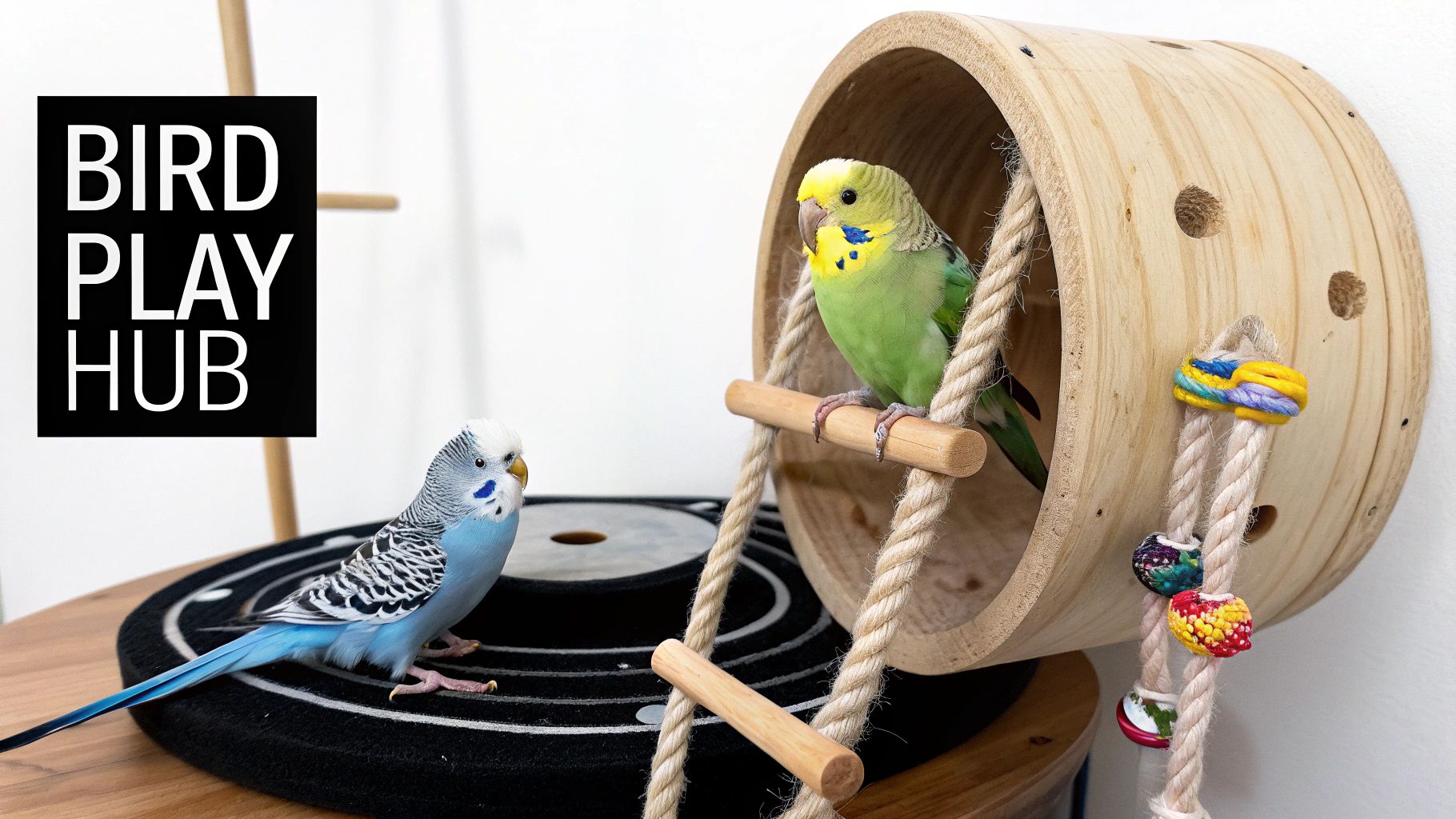
The tiered design and large, flat surfaces create an excellent structure for:
- Climbing and Exercise: Multiple levels invite birds to climb, hop, and explore. This is brilliant for maintaining their muscle tone and overall health.
- Foraging Opportunities: Those flat surfaces are perfect for scattering treats or attaching foraging toys, tapping right into your bird’s natural instinct to search for food. You can learn more about how to get started with foraging toys for birds in our detailed guide.
- Chewing and Beak Maintenance: The solid wood gives birds a really satisfying and appropriate outlet for their need to chew, helping to keep their beaks in top condition.
- Cost-Effective Enrichment: Finding a used spool for free or very cheap from a local business can save you a serious amount of money on large-scale enrichment.
Expert Advice: The goal here isn't just to make another perch; it's to create a multi-functional activity hub. Think of the spool as the base structure you can build on. Customise it with hanging toys, ropes, and ladders to keep your bird truly engaged.
We'll walk you through the whole process, from sourcing to setup, focusing heavily on the safety steps you simply can't skip. We also get that this DIY approach isn't for everyone. That's why we'll also point you towards some expertly crafted, ready-to-use alternatives, ensuring every bird gets the fun and enrichment they deserve.
How to Source a Bird-Safe Wooden Cable Spool
Finding the right wooden cable spool is easily the most important part of this whole DIY project. Get this step right, and you're on your way. Get it wrong, and you could be putting your bird at risk. The safety of your feathered companion really does hinge on making a smart choice from the very beginning.
In Australia, your best bet for sourcing a free or cheap spool is to start a conversation with people who handle them every day. Think local electricians, telecommunications contractors, and even construction site managers. With all the infrastructure work going on, especially the NBN rollout, there’s a steady stream of these spools looking for a new home.
Asking the Right Questions
Once you’ve found a potential spool, it’s time to play detective. Don't be shy about asking some direct questions, because the answers are critical for your bird's safety.
Here’s what you need to ask:
- "What kind of cable was on this spool?" This gives you a clue about its past life. A spool that held clean fibre optic cable is a much safer bet than one used for greasy, industrial wiring that might have been coated in lubricants or other chemicals.
- "Has the wood been treated with any chemicals?" This is the deal-breaker. You’re looking for a confident "no." Many spools are pressure-treated to withstand the weather, but those very chemicals can be toxic to birds if chewed.
- "Can I have a close look for any stamps or markings?" Get right up to the wood and look for any symbols that have been heat-stamped into the surface.
Decoding the Stamps
Industrial wood products are often stamped to show how they’ve been treated for international shipping. These little markings tell a big story about whether the spool is safe for your aviary.
Expert Advice: A heat-treated (HT) stamp is the green light you're looking for. This means the wood was sterilised using high temperatures, not nasty chemicals. If you see an MB stamp, walk away immediately. This stands for methyl bromide, a highly toxic fumigant that is extremely dangerous for birds.
The growth in Australia's telecommunications and energy sectors is good news for bird owners. It means more of these spools are popping up, with projections showing the Australian cable wood drum market is set to grow significantly. This is fantastic for rescues and individuals wanting to find eco-friendly materials for robust, cost-effective enrichment that can stand up to even the strongest beaks. You can read more about these market trends in this detailed report on the cable wood drum market.
Ultimately, your goal is to find an untreated, clean spool. If you have any doubt at all about chemical exposure or you can't get clear answers, it's always safer to pass and keep looking. No DIY project is worth risking your bird's health.
Getting Your Spool Prepped and Bird-Safe
You’ve managed to get your hands on the perfect untreated wooden cable spool. Awesome! Now the real work begins—turning that rough, industrial piece into a safe and exciting playground for your bird. This part takes a bit of elbow grease and a sharp eye, but trust me, seeing your feathered mate enjoy the finished product makes it all worthwhile.
First up, you need to go on a treasure hunt for metal. These spools are usually held together with a bunch of nails, heavy-duty staples, and sometimes massive metal bolts. Your job is to find and pull out every single one. Grab a good set of pliers and a hammer and get to work, checking every seam, surface, and crack. A single missed staple is a recipe for a nasty foot or beak injury.
A Proper Deep Clean is a Must
Once all the metal is gone, it’s time for a serious scrub-down. That spool has probably spent a lot of time outdoors in the Aussie weather, collecting everything from dirt and grime to mould spores. A quick wipe isn’t going to cut it here.
You’ll want to give the whole thing a really good, vigorous scrub. A stiff brush and a bird-safe disinfectant are your best friends for this task. We always recommend a vet-grade cleaner like F10SC, which is brilliant at knocking out bacteria, viruses, and fungi without leaving nasty chemicals behind (as long as you rinse it properly).
People often ask about using household cleaners like bleach, but the risk of toxic residue is just too high for our feathered friends. Stick to products made specifically for animal safety. And while we're on the topic of cleaning products, it's important not to get things mixed up. Some people wonder about using mite sprays, but these are for treating parasites, not for cleaning surfaces. To get a better handle on the right products for the right job, you can find more info about bird-safe parasite control here.
After the big scrub, rinse the spool like you’ve never rinsed anything before. A good hosing down will get rid of any leftover cleaning solution. Then, let it dry completely in the sun. The Aussie sun's UV rays are a fantastic natural steriliser, helping to finish off any stubborn mould or bacteria. Don’t rush this part—the wood needs to be absolutely bone dry before you move on.
The Finishing Touch: Sanding for Smoothness
The last step before you can call it ready is sanding. The wood on industrial spools is often rough as guts and full of potential splinters. This is a massive hazard for a bird’s delicate feet and beak. Even a tiny splinter can cause painful injuries or lead to nasty infections like bumblefoot.
Get some medium-grit sandpaper and go over every single surface your bird is likely to touch. Pay extra attention to the cut edges of the spool discs and any spots that feel particularly coarse. You’re aiming for a finish that’s completely smooth to the touch. A good way to check is to run your own hand over it—if you feel any rough patches, keep sanding.
Expert Advice: If you have one, a power sander will make this job go a lot faster, especially with a big cable spool. I’d still recommend finishing it off with a light hand-sanding, though, just to make sure every last bit is perfectly smooth. This isn't just about making it look nice; it's a non-negotiable safety step to protect your bird.
This whole process—stripping it down, disinfecting, and sanding—is absolutely critical. It’s what takes a piece of industrial rubbish and transforms it into a custom-made, safe, and enriching centrepiece for your beloved companion.
Customising the Spool for Maximum Enrichment
Alright, this is where the real fun begins. You’ve got your prepped and safe wooden cable spool, and now it’s time to turn it into your bird’s favourite hangout spot. A plain spool is a great blank canvas, but the magic happens when you start customising it for your bird's size, species, and unique personality.
The best designs tap into a bird’s natural instincts. For smaller parrots like cockatiels, conures, or budgies, you can create a pretty complex climbing and shredding paradise. Think about drilling small holes through the wooden discs to hang shreddable toys, weaving natural ropes through the structure to create a climbing frame, or even attaching little ladders between the levels.
Scaling Up for Power Chewers
When you’re dealing with the big guns—macaws, galahs, or cockatoos—the game changes. Forget delicate shreddables; these birds need durable, long-lasting challenges. For them, you'll want to bolt on tough hardwood blocks, stainless steel bells, and foraging toys that require some serious beak-work to crack. The whole point is to give them a satisfying outlet for all that power.
Expert Advice: One of the easiest ways to keep a custom spool interesting is rotation. Don't load it up with everything at once. Keep a small stash of different toys and swap them out every week or so. This simple change of scenery is often all it takes to reignite your bird's curiosity and stop boredom in its tracks.
As a quick reminder, here’s the simple process for prepping any wooden cable spool. It's crucial to make sure it's always safe before you start adding the fun stuff.
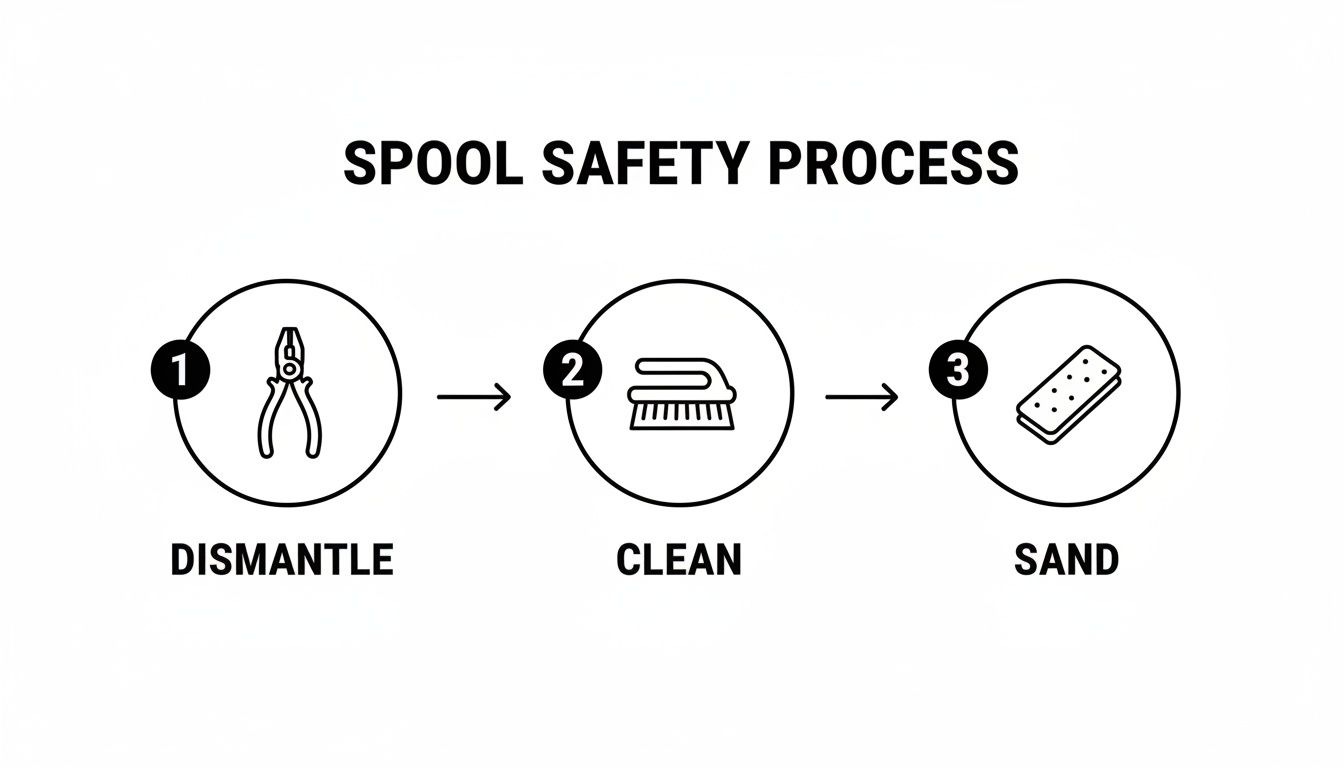
This visual guide is a great summary of the non-negotiable safety steps: dismantle, clean, and sand. These must be done before a single toy is attached.
Integrating Professionally Designed Toys
To really take your spool to the next level, you can mix in some expertly designed, pre-made toys. This approach gives you the best of both worlds: the solid foundation of the spool combined with the proven enrichment value of toys built for a purpose. It's a brilliant way to ensure your DIY project is as stimulating as possible and a great starting point if you're hunting for more DIY bird toy ideas and inspiration.
Try adding a few key pieces to cover all the bases:
- For Shredding Fun: Something like our Large Triple Banger is perfect. It offers layers of shreddable material that really satisfies that natural urge to destroy.
- For a Chewing Challenge: A durable toy like the Big Log Chew gives powerful beaks a long-lasting project to work on.
- For Foot and Beak Health: A multi-textured toy such as The Big Foot Toy encourages different foot positions and provides varied surfaces for beak conditioning.
By using a wooden cable spool, you're also doing something great for the environment. Here in Australia, there are many initiatives focused on extending the life of these reels. It means there’s a steady supply of returned and repaired spools available, which we at Lou Lou Bells often repurpose into our own range of safe, shreddable toys. Adding these kinds of purpose-built toys transforms a simple wooden structure into a complete activity centre that supports your bird's total wellbeing.
Long-Term Maintenance and Safety Checks
Once your wooden cable spool is set up, the job isn't quite done. Think of it less as a one-off project and more as an ongoing commitment to your bird's safety and happiness. Keeping a close eye on it ensures the spool stays a fun playground, not a potential problem.
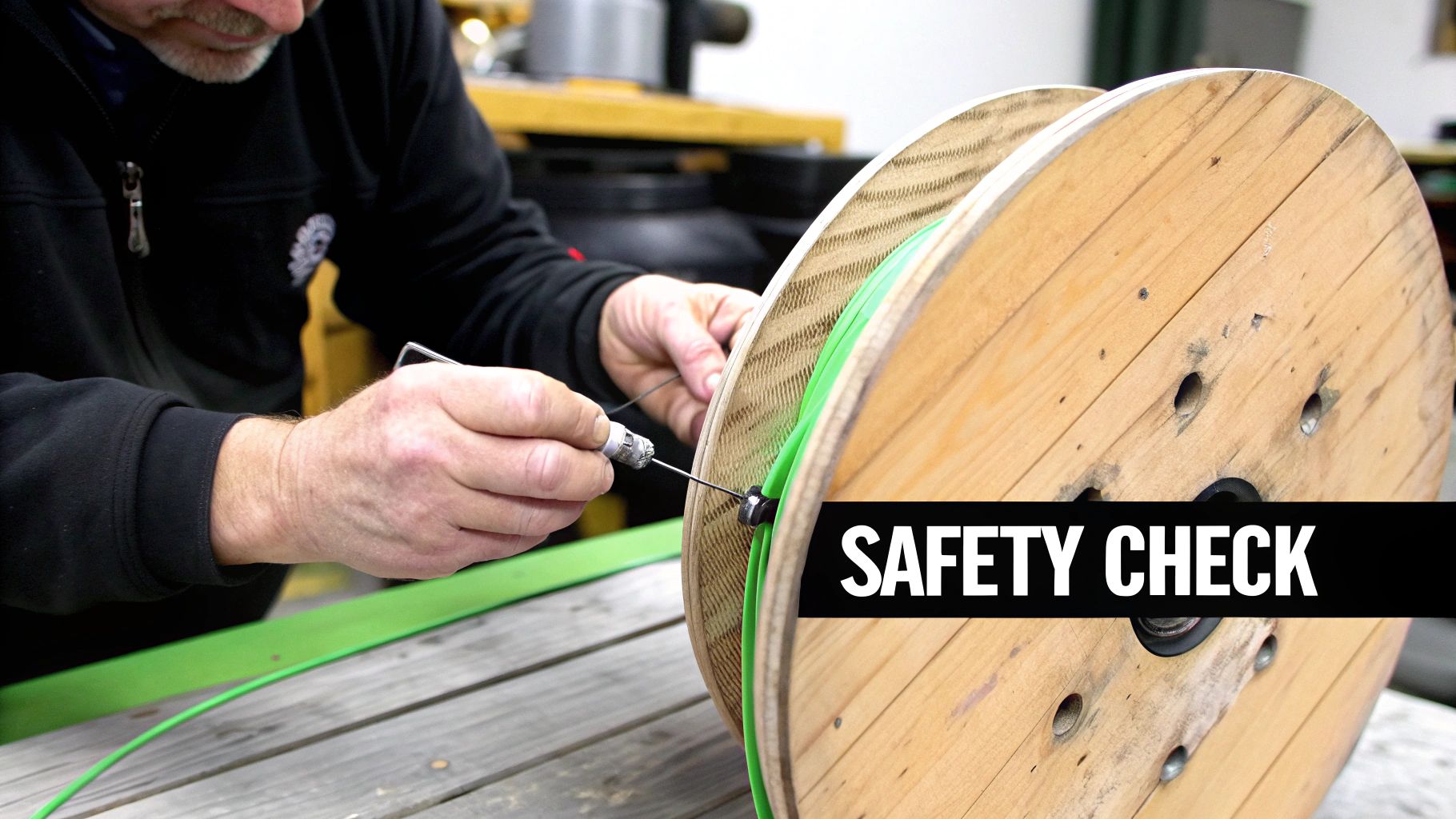
It’s a good idea to get into the habit of a quick daily once-over. This literally takes seconds but can stop small issues from becoming big ones. Just cast your eye over it, looking for any new splinters, sharp edges from enthusiastic chewing, or any fresh cracks that weren't there yesterday. You'll also spot any messy areas that need a quick clean-up.
Your Regular Cleaning Schedule
A solid cleaning routine is an absolute must, particularly with Australia's climate where humidity can encourage bacteria and mould to set up shop. A simple schedule makes it easy to stay on top of things.
- Weekly Wipe-Down: Once a week, grab a cloth dampened with a bird-safe disinfectant (F10SC is a go-to for many of us) and give all the surfaces a good wipe. This handles the day-to-day mess and keeps germs in check.
- Monthly Deep Clean: At least once a month, it's worth taking the spool out for a proper scrub. This is also the perfect time to inspect any attached toys, ropes, or perches for wear and tear. Anything looking a bit frayed or on its last legs should be replaced.
This kind of proactive care is a huge part of providing top-notch animal enrichment in Australia. It’s not just about keeping your bird busy, but also keeping their environment healthy.
Expert Advice: Really watch how your bird uses the spool. If you notice they’re obsessively chewing on one specific spot, make a mental note to check that area more often. A determined beak can wear down a single point much faster than general use, creating weak spots or splinters before you know it.
For those of us with birds in Australia, these spools can become incredible tools for getting our birds moving and staving off boredom. But good upkeep is everything. You’ll develop a feel for when a little light sanding can smooth over a rough patch, versus when the whole spool needs to be retired. If you start seeing deep cracks appear, or if the wood feels soft and brittle, it's definitely time for a replacement.
Got Questions About Using Wooden Spools?
Taking on a DIY project like turning a wooden cable spool into a bird gym is fantastic, but it's natural to have questions pop up. When our birds are involved, safety is everything. We've pulled together the most common queries we get from Aussie bird owners to give you clear, practical answers so you can build with total confidence.
What Kind of Wood Are Spools Made From, and Is It Safe?
Most of the big industrial spools you'll find around Australia are made from pine, plywood, or sometimes a laminated veneer lumber. Plain, untreated pine is generally fine for birds to chew on. The real worry isn't the wood itself, but what it might have been treated with.
Here’s the golden rule: you absolutely must confirm the spool is untreated. Steer clear of anything made from particleboard or MDF, as the glues and resins holding them together are toxic if your bird decides to have a nibble.
Always give the wood a thorough inspection for stamps. A heat-treated (HT) stamp is perfectly fine, but if you see an MB stamp, that’s a huge red flag. It stands for methyl bromide, a highly toxic fumigant that makes the wood extremely dangerous for your bird.
Will a Spool Stand Up to a Heavy Chewer Like a Macaw?
Yes, a well-chosen wooden spool can be an incredible, long-lasting playground for power-chewers like Macaws and Sulphur-crested Cockatoos. These spools are built to be seriously tough and can offer a far more satisfying chew than many standard bird toys.
The trick is to pick a large, heavy-duty spool and, as we’ve covered, make sure every last bit of hardware is gone. You can even beef it up by attaching harder wood toy parts or using stainless steel hardware to hang other challenging toys from it. Just remember, even the toughest spool will eventually start to show some wear and tear.
A Tip from Experience: For a big chewer, the flat edges of the spool discs are usually the first thing they go for. Keep a close eye on these areas. If they start getting splintered or sharp, a quick go-over with some sandpaper will smooth them right back down and keep playtime safe.
What if I Can't Find a Safe Spool? Are There Alternatives?
Absolutely! If you've been searching everywhere and just can't find a spool you know for sure is untreated, or if you simply don't have time for a big DIY job, don't worry. There are plenty of brilliant, ready-made alternatives that give you similar benefits without any of the prep work.
At Lou Lou Bells Bird Toys, we have a huge range of large, durable climbing gyms, perches, and chew toys, all made from certified bird-safe, natural materials. These options give you complete peace of mind, knowing they were designed from the ground up with your bird's safety as the top priority.
Consider some of these professionally crafted options:
- Java Wood Stands: These are amazing for climbing. Their natural, intricate shapes mimic a real tree structure, which birds instinctively love.
- Large Natural Perches: Great for foot health, these can be set up inside an aviary to create a jungle gym effect.
- Durable Chew Toys: For those powerful beaks, you need toys made from tough, bird-safe woods. Something like our Big Log Chew is designed to handle a serious chewing session. For shredding fun, the Large Triple Banger is always a hit, and for varied textures that are great for feet, The Big Foot Toy is a perfect choice.
In the end, whether you decide to DIY a wooden cable spool or go for a professionally made product, the goal is the same: to give your feathered mate a safe, stimulating, and enriching world where they can just be a bird.
Keep Reading
- The Ultimate Guide to Australian Native Nuts & Seeds for Parrots
- Feathered First Aid: Assembling Your Bird's Emergency Kit
- Decoding Parrot Body Language: What Is Your Bird Really Saying?
Disclaimer Summary: The information in this article is general in nature and may include external links or resources not created by Lou Lou Bells Bird Toys. Every bird is unique, so we encourage you to seek personalised advice from your own veterinarian or avian specialist. For full details, please read our complete disclaimer here.