
Having a reliable source of fresh, clean water is non-negotiable for your bird's health, and believe me, the right water feeder makes all the difference. A quality water feeder for birds isn't just some plastic container; it's a vital bit of kit that stops contamination, encourages your birds to drink properly, and honestly just makes your daily routine a whole lot easier, especially in our demanding Aussie climate.
The Lifeline of Hydration: Why Water Matters So Much
It sounds basic, but providing a constant, clean source of water is one of the most fundamental jobs of any bird keeper. Just like us, birds need water for pretty much every bodily function—from keeping their temperature in check to digesting their food and absorbing nutrients. Here in Australia, where the mercury can really climb, that need becomes even more critical.
Good hydration is your first line of defence against heat stress, a serious and often fatal condition for many bird species. A bird that's had enough to drink is far better equipped to handle a scorching day, keeping its energy up and staying healthy. It's best to think of a good water feeder not just as another cage accessory, but as a cornerstone of preventative health for your feathered mate.
More Than Just a Drink
Beyond just keeping them alive, a clean water source plays a massive role in preventing sickness. We've all seen it: open water dishes that quickly turn into a soup of food scraps, droppings, and dust. That's a perfect breeding ground for nasty bacteria. This is where modern water feeder designs really come into their own.
A dedicated water feeder brings some key benefits:
- Less Muck and Grime: Enclosed or specially designed feeders protect the water from debris, keeping it cleaner and fresher for much longer.
- Disease Prevention: By cutting down on bacterial growth, you seriously lower the risk of common avian illnesses. Ask any avian vet—they'll tell you they've seen a huge drop in dehydration cases in pet parrots like budgies and cockatiels when owners switch to more hygienic options.
- A Consistent Supply: Gravity-fed and automatic systems make sure water is always there for them, even when you're not at home.
Beyond keeping your own birds healthy, providing a reliable water source is a key part of learning how to attract wild birds to your yard. A clean, dependable drink is a huge drawcard, helping you create a thriving, welcoming space for both your pets and the local wildlife.
Exploring Different Types of Bird Water Feeders
Choosing the right water feeder for your birds can feel like a big decision, but it really just comes down to your bird's unique needs, their environment, and your daily routine. Getting your head around the different options we have here in Australia—from a simple dish to more advanced systems—is the first step to making sure your feathered friend stays perfectly hydrated.
Let's break down the most common types you'll come across. Each has its own set of advantages and is suited to different situations, whether you have a single budgie in a cage or a bustling outdoor aviary.
To help you get a quick overview, here's a simple comparison of the most popular water feeders for Australian birds.
Water Feeder Comparison for Australian Birds
This table offers a quick snapshot of different water feeder types to help you choose the best option for your bird's species and living environment.
| Feeder Type | Best For (Species) | Pros | Cons | Ideal Setting |
|---|---|---|---|---|
| Open Bowls/Dishes | All bird species, especially large or destructive parrots. | Easy for birds to use, simple to clean and refill. Mimics natural water sources. | Easily contaminated by food and droppings. Requires daily (or more frequent) cleaning. | Cages and aviaries where daily cleaning is practical. Stainless steel is best for hygiene. |
| Gravity-Fed Silos | Small to medium-sized birds (budgies, finches, cockatiels). | Keeps the main water supply clean and protected. Holds more water, reducing refill frequency. | The drinking tray still needs regular cleaning to prevent slime and bacteria build-up. | Indoor cages or protected aviaries where a full day's water supply is needed. |
| Bottle Feeders | Small birds like finches, canaries, and budgies. | Exceptionally hygienic as water is sealed. Prevents contamination from food and waste. | Birds must be trained to use it. Sipper tube can get blocked. | Cages for small birds, especially in breeding or quarantine setups to minimise disease risk. |
| Automatic/Nipple Systems | Large flocks in breeding setups, big aviaries, or rescues. | Highest level of hygiene and convenience. Minimal water waste and zero contamination. | Requires initial setup and plumbing. Higher upfront cost. | Large-scale aviaries or professional breeding facilities where efficiency is key. |
Choosing the right feeder is all about balancing convenience with the specific needs of your birds and their home. Now, let's dive into the details of each type.
Classic Open Bowls and Dishes
The most straightforward option is the classic open bowl. Often made from stainless steel, ceramic, or a tough, bird-safe plastic, these are dead simple for birds to access and just as easy for you to clean and refill. They copy natural water sources like puddles, which birds instinctively get.
The biggest drawback, however, is hygiene. Because they're wide open, they are a magnet for contamination from food, droppings, and dust. This means they need daily—and sometimes even twice-daily—cleaning and refilling to stop nasty bacteria from taking hold, especially in our warm Aussie climate.
- Best For: All bird species, and they're a particularly solid choice for larger parrots who might make short work of less sturdy feeder types.
- Ideal Setting: Cages and aviaries where you can commit to a strict daily cleaning routine. Stainless steel is the top pick for durability and how easy it is to sterilise.
Gravity-Fed Silo Waterers
Gravity-fed waterers, which you'll often see called silo or fountain feeders, use an inverted bottle or reservoir that automatically tops up a small drinking tray at the base. As your bird has a drink, a little more water flows down to keep the tray full.
This design is a huge leap forward in hygiene compared to an open bowl. The main water supply stays enclosed and safe from contamination, keeping it fresher for longer. They're a brilliant choice if you have a few birds or just need a water source that will last the day while you're out. Just don't forget that the drinking tray itself still needs a regular scrub.
Bottle Feeders with Sipper Tubes
You’ve probably seen these in cages for smaller birds like finches, canaries, and budgies. Bottle feeders work with a vacuum seal and a metal sipper tube that has a little ball bearing inside. Birds quickly learn to nudge the bearing to release a drop of water.
Expert Tip: Bottle feeders are exceptionally hygienic because the water is almost completely sealed off from the cage environment. This design makes it nearly impossible for food or droppings to soil the supply, which is a major plus for preventing bacterial infections.
While they're fantastic for cleanliness, it's vital to make sure your bird actually knows how to use one. When you first introduce a bottle feeder, always leave their old water source in the cage until you've seen them confidently drinking from the new one. It's also a good habit to check the sipper tube daily to make sure it hasn’t become clogged. For more tips on keeping your bird's space tidy, check out our guide on the best no-mess bird feeders.
This simple chart really gets to the heart of bird hydration—it's a clear path from providing water to ensuring it's clean, which leads directly to a happy, healthy bird.
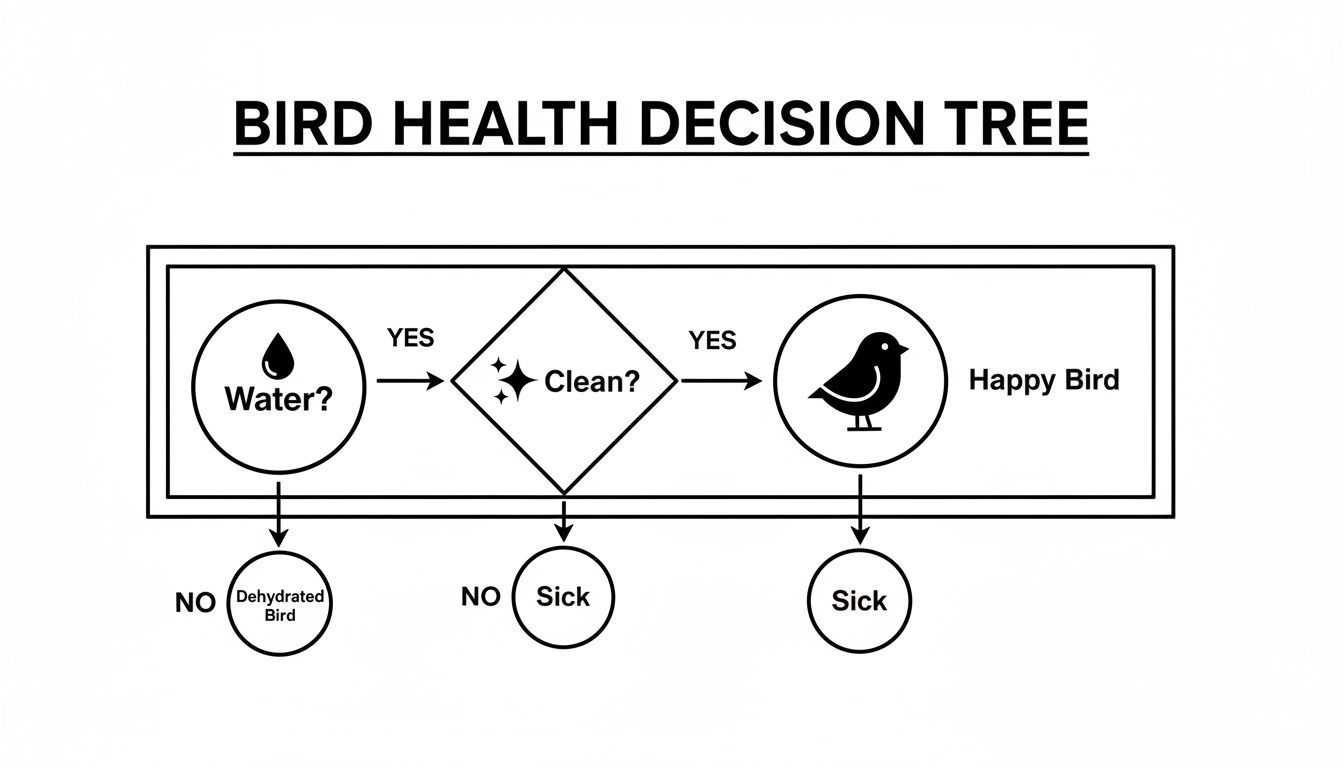
What this shows us is that just having water available is step one; the cleanliness of that water is the critical bit that decides whether the outcome is a good one for your bird's health.
Automatic and Nipple Watering Systems
For the serious setups—large aviaries, breeders, or rescue operations—automatic watering systems are an absolute game-changer. These systems hook up directly to a water supply and use special valves to deliver water through a network of pipes to individual drinking stations, which are usually fitted with nipple drinkers or small cups.
Nipple drinkers work a bit like sipper tubes but are built for bigger, more complex systems. Birds peck at a small valve to release water, which means zero contamination and hardly any waste. They do take a bit more work to install, but for managing water for a large flock, they offer the best hygiene and convenience you can get.
Mastering Water Hygiene for Your Bird's Health
It sounds dramatic, but a contaminated water feeder is one of the quietest dangers your bird will ever face. What looks perfectly clean to us can be a full-blown party for harmful bacteria. This isn't about scaring you; it's about giving you the knowledge to turn a potential hazard into a source of health for your feathered mate.
This goes way beyond a quick rinse under the tap. It’s a small, consistent commitment that pays off big time. After all, responsible bird care starts with the absolute basics, and nothing is more essential than fresh, clean water.
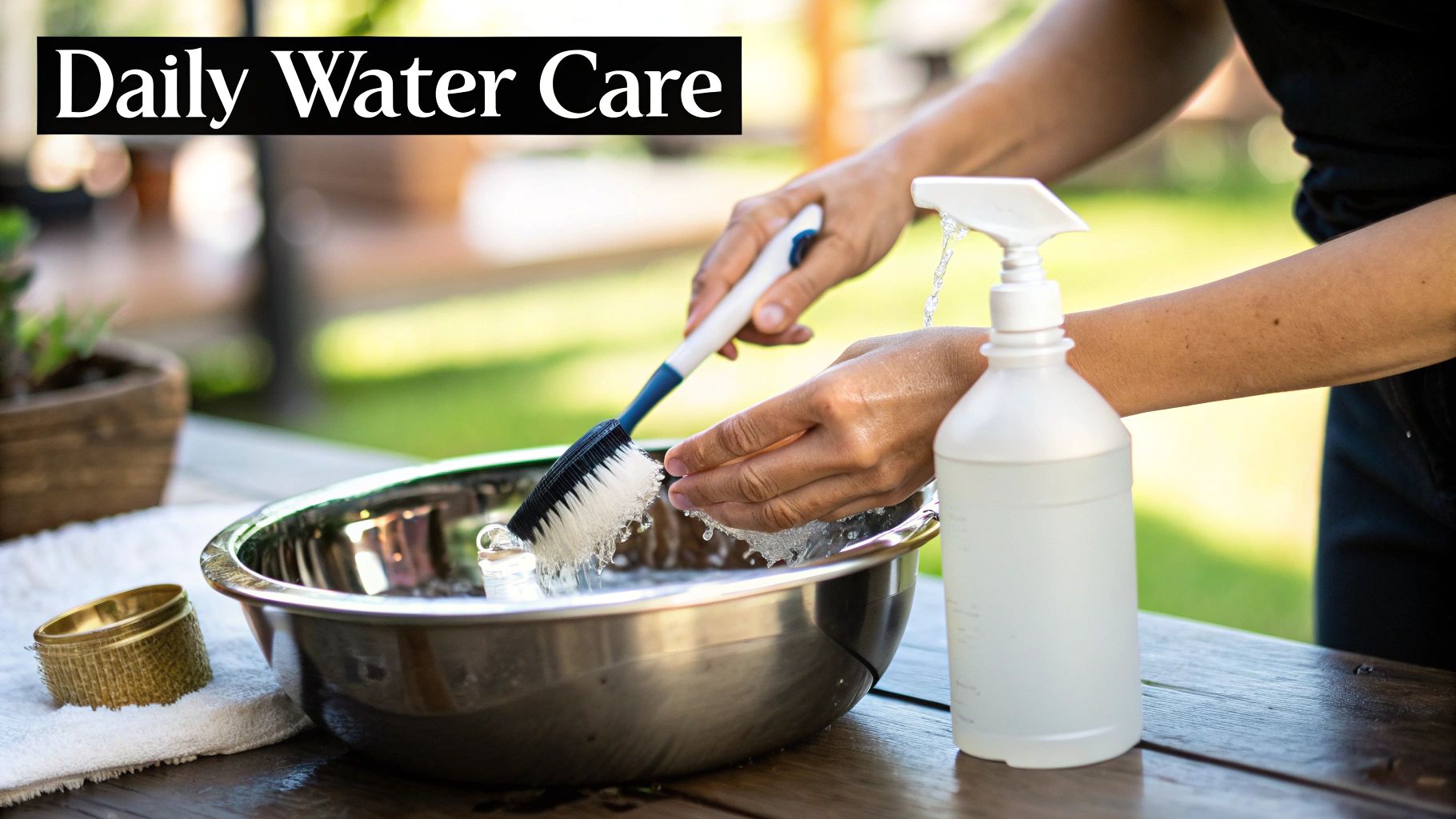
The Unseen Threat: Biofilm
Ever run your finger inside a water dish and felt that slick, slimy coating? That's biofilm. It's a stubborn, almost invisible layer of bacteria that glues itself to surfaces. This film acts like a shield for nasty microbes, protecting them from a simple rinse and instantly contaminating any fresh water you add.
Just tipping out the old water and pouring in the new simply won't cut it. To keep your bird safe, you need to physically scrub that biofilm away every single day. It's the only way to get the surface genuinely clean.
Your Daily and Weekly Cleaning Schedule
Consistency is your best friend here. A solid cleaning routine is the ultimate defence against water-borne illnesses. Most avian experts swear by a simple two-part schedule to keep things manageable and effective.
Daily Cleaning (The Non-Negotiable Part):
- Empty and Disassemble: Pull the water feeder completely apart.
- Scrub Thoroughly: Get in there with hot, soapy water and a dedicated brush or cloth. You want to scrub every single surface, paying extra attention to corners, spouts, and any little crevices where biofilm loves to hide.
- Rinse Completely: This is critical. Rinse every part under fresh running water until you're certain there’s no soap residue left. Leftover soap can be harmful.
- Dry and Refill: Let the parts air-dry or wipe them down before putting it all back together and filling with fresh, clean water.
Weekly Deep Clean (The Sanitisation Step):
Once a week, you'll want to take things a step further to sanitise the feeder. This is your chance to knock out any lingering bacteria that a simple scrub might have missed.
- Choose a Bird-Safe Disinfectant: Plain old white vinegar is a fantastic, safe option. Alternatively, a specialised avian-safe disinfectant like F10SC Veterinary Disinfectant, which is trusted across Australia, works wonders. Never, ever use household bleach or other harsh chemicals that can leave toxic fumes or residues.
- Soak and Scrub: After its daily scrub, soak all the feeder parts in your disinfectant solution for about 10–15 minutes (just follow the dilution instructions on the bottle).
- Final Rinse: This is the most important part. Meticulously rinse every piece under running water to wash away every last trace of the disinfectant, ensuring it's completely safe for your bird.
A clean feeder is a healthy feeder. Think of it like this: a restaurant owner wouldn't serve guests on dirty plates. We owe our birds that same level of care. Meticulous cleaning prevents the spread of illness and ensures every sip they take is a safe one.
Preventing Contamination in the First Place
While cleaning is your main weapon, you can also set things up to keep the water cleaner for longer. Prevention is always better than cure, and a few clever adjustments can make a real difference.
- Strategic Placement: Position the waterer away from any perches directly above it. This simple trick stops droppings from accidentally fouling the water. It’s also a good idea to place it at the opposite end of the cage from the food bowls to cut down on the amount of seed and pellets that get dunked.
- Use Covered Feeders: As we’ve talked about, silo and bottle feeders are naturally better at shielding water from contamination. If you're set on an open bowl, look for one with a partial hood or guard.
- Discourage Bathing: If your bird treats its drinking bowl like a personal bathtub, it’s time to offer a better alternative. Provide a separate, shallow bird bath to encourage them to keep their drinking water just for drinking. A good bird care essential guide can offer more tips on creating a healthy and fun environment.
By making this hygiene routine a habit, you’re no longer just providing water—you’re actively protecting your bird’s health for years to come. It’s a simple act of love that results in a vibrant, happy companion.
How to Choose the Right Water Feeder
Figuring out the perfect water feeder for your bird isn't as complicated as it seems. It really just comes down to matching the right product to your bird, your home, and your day-to-day life. This guide cuts through the noise to focus on what truly matters for Australian bird owners.
The first thing to think about is your bird's species and its own little quirks. A tiny finch and a big, boisterous macaw have completely different needs, so the size and sturdiness of the feeder is your starting point.
Matching the Feeder to Your Bird
A bird's size and the power in its beak are the most critical factors. Small birds like finches and budgies get on brilliantly with bottle feeders or little gravity-fed silos, which are perfectly scaled for them.
On the other hand, a large cockatoo or galah could make short work of a flimsy plastic feeder, probably dismantling it in a matter of minutes. For these feathered powerhouses, a heavy-duty stainless steel bowl is almost always the most practical and durable choice. It can stand up to their strong beaks and is also the most hygienic option out there.
Don't forget to consider your bird's personality. Is yours a messy character who loves dunking pellets in their water? If so, a covered feeder or a bottle-style waterer will be a game-changer, helping to keep their drinking supply clean and fresh. If you're also wondering about the best food setups, our guide on choosing a bird seed feeder has some great tips that go hand-in-hand with good hydration.
Considering Flock Size and Your Local Climate
Next up, how many birds will be sharing the water? A single pet will be perfectly happy with a small bowl or bottle that you change daily. But if you’re looking after a larger flock in an aviary, a high-capacity gravity feeder or an automatic watering system is a lifesaver. It’ll save you time and ensure no one goes thirsty.
Your local Australian climate plays a huge part in this decision too.
- Hot, Humid Climates (like Queensland): In these sticky conditions, bacteria and algae can go wild. Enclosed feeders like bottles or silos are fantastic for slowing down this growth, though daily cleaning is still non-negotiable.
- Dry, Hot Climates (like Outback SA): Water can evaporate in a flash out here. A larger capacity feeder is a smart move to make sure the supply doesn’t run dry on a scorcher of a day.
- Cooler Regions (like Tasmania): While less of a worry, try to place the feeder where it gets a bit of morning sun. This will stop the water from getting unpleasantly cold overnight.
Prioritising Safety and Smart Placement
Safety should always be front of mind. Stick to water feeders for birds made from non-toxic, bird-safe materials.
Expert Advice: Stainless steel is the gold standard, and it's what most avian vets recommend. It's non-porous, which means it resists bacteria, is incredibly easy to sterilise, and is tough enough for even the strongest beaks. High-quality, BPA-free plastic is a decent alternative, but it can get scratched over time, creating tiny crevices where germs can hide.
Look for designs that you can pull apart completely for a proper scrub. Avoid any feeders with fiddly parts or nooks and crannies that are impossible to get into. And always give it a once-over for sharp edges or small parts that could become a hazard.
It's great to see that as urbanisation impacts natural habitats, more Aussies are providing for our local birdlife. Eco-friendly models have seen a 35% increase in popularity, which is fantastic news for our incredible diversity of over 800 native bird species. You can read more about these trends and discover the full research on the Australian bird feeder market here.
Finally, where you put the waterer is key. Position it away from perches to stop droppings from contaminating the water. Popping it on the opposite side of the cage from the food bowls also helps cut down on the amount of food that gets dunked. For outdoor aviaries, find a shaded spot—this will keep the water cool and refreshing, encouraging your birds to drink more on hot days.
Getting Set Up and Solving Common Problems
Right, you’ve picked out the perfect water feeder. Now for the final step: getting it properly installed so your birds have a safe, reliable drink whenever they need one. Whether you're clipping a simple bottle to a cage or plumbing in a larger system for an aviary, a secure, leak-proof fit is what you're aiming for.
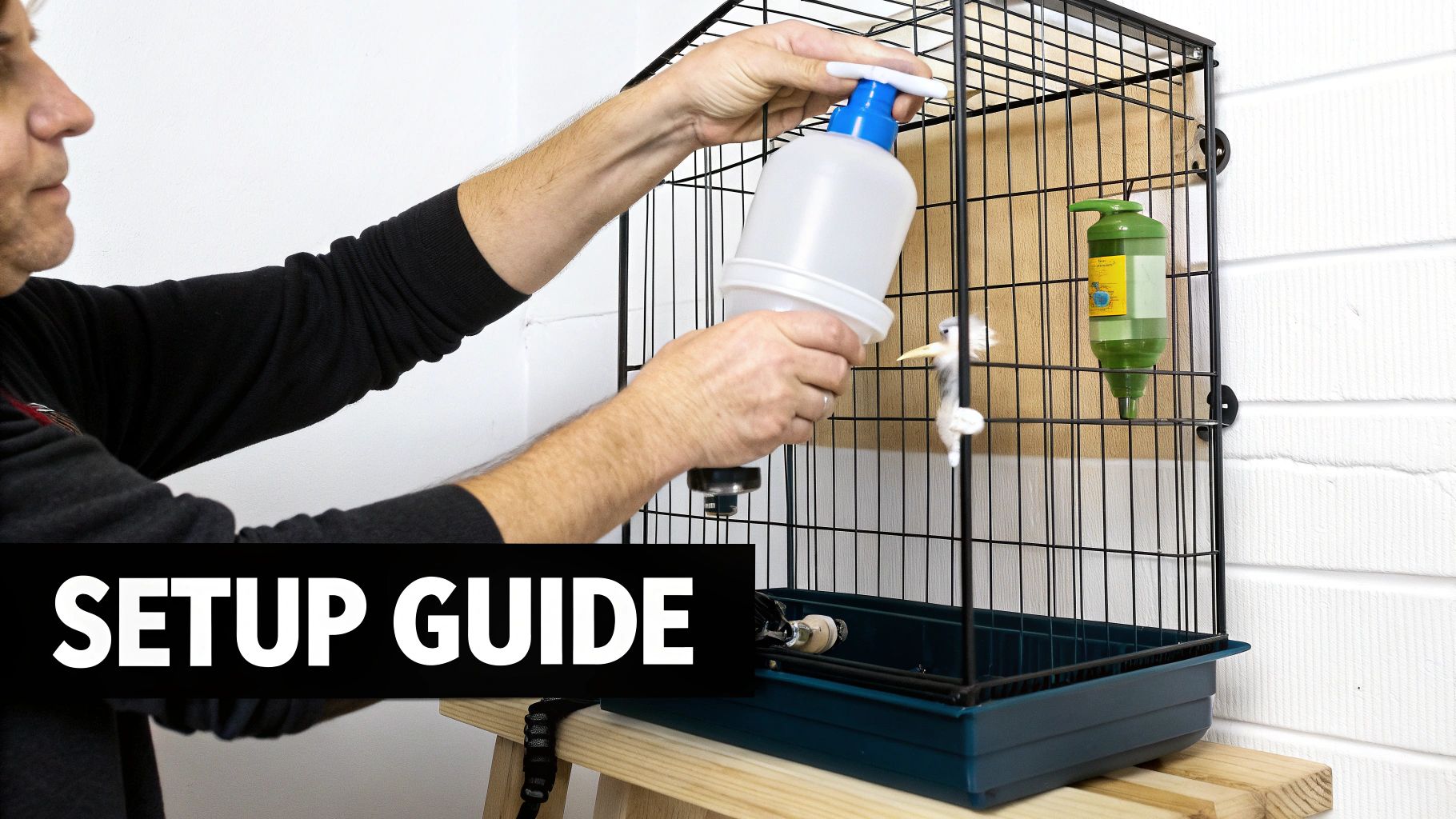
Most of the feeders you’ll find for cages come with simple clips or screw-on brackets. The trick is to make sure it’s attached firmly enough that it won’t wobble or get knocked over by a boisterous bird. Once it's on, give it a gentle tug to check it’s solid.
For bigger aviary systems, it really pays to follow the manufacturer's instructions to the letter. This will save you a world of headaches with leaks and flow problems down the track. If you're planning a larger enclosure, our guide on designing outdoor bird aviaries has some brilliant tips.
Solving Common Water Feeder Headaches
Even with the best gear, you can run into little snags. Luckily, most of the common issues have pretty simple fixes that any Aussie bird owner can handle.
1. My Bird Just Won't Use the New Feeder
This is a classic. Birds are creatures of habit, and anything new in their space can be treated with deep suspicion. It's completely normal.
- The Fix: Don't just chuck the old water dish out. Leave their familiar water source in the enclosure for a few days. This gives your bird time to investigate the new feeder on their own terms, without any risk of going thirsty. You can give them a gentle nudge by tapping the new feeder to show them where the water comes from. Once you see them using it confidently, you can take the old one away.
2. Ugh, There's Algae Growing in the Water
In our warm Aussie climate, that dreaded green slime can pop up in no time, especially if the feeder gets a bit of sun.
- The Fix: Your best defence is a good daily clean with hot, soapy water and a bottle brush. For a weekly deep clean, a soak in a diluted white vinegar solution will see off any stubborn spores. It also helps to position the feeder in a shaded part of the cage or aviary to slow down any regrowth.
3. Pesky Ants Have Found the Water Source
Ants are always on the hunt for moisture and can quickly become a real pain, particularly with open bowls or silo-style feeders.
- The Fix: A simple "moat" works wonders. Just place the feeder stand inside a shallow dish of water—the ants won't be able to get across. For any hanging feeders, a dab of non-toxic petroleum jelly on the hanging wire (well away from where birds can touch it) will stop them in their tracks.
Making It Work in Australian Climates
Our weather throws a few unique challenges our way, from scorching summer days to frosty mornings in the southern states.
Expert Tip: On a real scorcher, pop a couple of ice cubes into the water feeder in the morning. It helps keep the water cool and inviting for a few hours, encouraging your birds to drink and stay hydrated when they need it most.
For those of us in colder spots like Tasmania or parts of Victoria, stopping the water from turning into an ice block is the main game.
- Positioning: Try to place the feeder where it will catch the morning sun to help thaw out any ice.
- Insulation: You’d be surprised what a bit of bubble wrap or an old stubby holder wrapped around the reservoir can do. It often provides just enough insulation to stop it from freezing overnight.
- The Swap-Out: On properly frosty nights, it’s a good idea to have a second feeder ready to go. That way, you can just swap it out first thing in the morning, and your birds will have fresh water immediately.
By thinking ahead about these common issues, you can make sure your birds always have the fresh, clean water they need to stay happy and healthy.
Frequently Asked Questions
Got a few questions about bird waterers? It's completely normal. When you're looking after birds, you're always learning, and getting hydration right is one of the most important things you can do. Let’s clear up some of the common queries we hear from Aussie bird owners.
How Often Should I Be Changing My Bird's Water?
The short answer? Every single day. No exceptions. Even if it looks clean, that water can quickly become a breeding ground for bacteria. Think of it as giving them a fresh glass of water, just like you’d want for yourself.
In the middle of a hot Aussie summer, or if you spot bits of food, feathers, or droppings in the bowl, you really should be changing it twice a day. It's a simple habit that goes a long way in preventing illness and keeping your bird healthy and happy.
What Do I Do If My Bird Won't Go Near a New Waterer?
Don't stress – this is classic bird behaviour. Birds are naturally wary of anything new in their space, so a strange new waterer is bound to make them suspicious.
Our Tip: The trick is to introduce it slowly. Never just take their old water source away and expect them to use the new one. Pop the new waterer in the cage right next to the old, familiar one. Leave them both in there for a few days. This gives your bird a chance to get used to the new object on their own terms, without any pressure. Once you’ve seen them happily drinking from the new one, you know it’s safe to remove the old one.
What's the Safest Material for a Water Feeder?
If you ask any avian vet in Australia, they'll almost always point you towards stainless steel. It’s considered the gold standard for good reason:
- Non-porous: Unlike plastic, there are no tiny cracks or scratches for nasty bacteria to hide in.
- Easy to sterilise: You can give it a really good scrub or even pop it in the dishwasher, and it’ll come out perfectly clean and safe.
- Tough as nails: It can stand up to the strongest beaks, from big cockatoos to macaws, so it’s a great long-term investment.
Good quality, BPA-free plastic is a decent budget-friendly option. Just keep in mind that plastic will eventually get tiny scratches from beaks and cleaning. These little grooves can trap germs, making it harder to get truly clean. Because of this, you’ll likely need to replace plastic feeders more often to keep things hygienic.
Your Commitment to a Well-Hydrated Bird
Making sure your bird always has access to fresh, clean water is one of the most fundamental parts of good care. It's a daily promise you make to them, and one that directly fuels their health, energy, and overall zest for life. When you take the time to choose the right waterer for your bird’s species and their setup, you're not just buying a piece of equipment—you're being a proactive, thoughtful bird owner.
Remember, the right water feeder for birds is far more than just another cage accessory. Think of it as a vital tool for their daily wellbeing. A bird that's properly hydrated is a bright, energetic companion, ready to play, interact, and explore their world with you.
The Foundation of Great Care
A strict hygiene routine really is the cornerstone here. Daily scrubbing and a good weekly sanitisation stop nasty bacteria from taking hold, ensuring every single sip your bird takes is a safe one. Opting for safe, tough materials like stainless steel is another smart move, protecting them from toxins and making sure their gear lasts.
You'll see the payoff for your efforts. It’s there in their bright eyes, their vibrant feathers, and the way they happily tackle their favourite toys. A healthy bird is a true joy, and it all starts with these simple, essential habits.
A Final Thought: Try to think of your bird's water station as their personal wellness hub. Keeping it pristine is a simple but incredibly powerful way to show your love and dedication, setting them up to thrive for years to come.
Ultimately, a well-hydrated bird has the energy to really dive into their enrichment activities. They'll have more stamina for shredding up natural bird toys, figuring out their foraging bird toys, and taking on the satisfying challenge of durable stainless steel bird toys. Your commitment to their hydration fuels their very passion for life.
At Lou Lou Bells Bird Toys, we are passionate about every aspect of avian wellness, from playtime to proper hydration. Explore our extensive range of enrichment toys to keep your well-hydrated companion happy and engaged.
Keep Reading
- A Guide to Safe and Unsafe Woods for Birds
- Your Guide to the Best Bird Toys in Australia
- Choosing the Perfect Bird Cage for Your Feathered Friend
Disclaimer Summary: The information in this article is general in nature and may include external links or resources not created by Lou Lou Bells Bird Toys. Every bird is unique, so we encourage you to seek personalised advice from your own veterinarian or avian specialist. For full details, please read our complete disclaimer here.