
Making your own bird toys is one of the most rewarding things you can do for your feathered friend. Sure, it can save you a bit of money, but that’s not the real magic. It’s about creating something that’s perfectly suited to your bird’s personality and needs, helping to keep boredom at bay and making your bond even stronger. You’re not just putting materials together; you’re crafting moments of joy.
Why Homemade Bird Toys Are a Game Changer
When you start making your own toys, you unlock a whole new level of enrichment for your companion. Forget one-size-fits-all solutions. You're designing an experience that’s just right for your bird, whether you’ve got a gentle budgie who loves to preen or a powerful macaw who lives to destroy.
This hands-on approach means you can cater directly to their natural instincts. Got a bird that loves to shred everything in sight? Give them an endless supply of cardboard and paper creations. Have a clever little forager on your hands? Challenge them with puzzle toys you've designed yourself.
This kind of targeted stimulation is a huge part of effective animal enrichment in Australia. It's also one of the best ways to head off common behavioural issues like feather plucking, which so often comes from a simple lack of things to do.
Tailored Fun for Every Beak
Every single bird has its own funny little quirks and preferences. Some go absolutely wild for the sound of crinkly paper, while others are obsessed with chewing on soft balsa wood. Commercial toys are fantastic, but they can’t always hit that sweet spot for your particular bird.
By making your own, you get to play detective. Watch what your bird really loves and then give them more of it.
- For the shredder: Try weaving strips of paper or palm leaves through a simple cardboard tube.
- For the thinker: An old egg carton filled with treats and scrunched-up paper makes a brilliant starter foraging box.
- For the preener: Tie short, bird-safe leather or cotton strips to a central ring for them to fiddle with.
Honestly, there’s nothing quite like the feeling of watching your bird go nuts over something you made just for them. It deepens your connection and keeps their world exciting and new.
Expert Tip: Always start simple. Make a few different basic designs and just watch how your bird reacts. Their behaviour is your best blueprint. If they completely ignore a wooden block but tear a paper roll to shreds in minutes, you know exactly where to focus your creative energy next.
Of course, your DIY masterpieces don't have to be the only toys in the cage. A great strategy is to mix them with high-quality, professionally made toys. Combining your homemade fun with durable, expertly crafted options from specialists like Lou Lou Bells Bird Toys creates a well-rounded and endlessly engaging environment for your companion.
Your Safety Checklist for DIY Bird Toy Materials
Before you get carried away with the fun part of crafting, we need to talk about the most important step: choosing the right materials. Your bird’s safety is everything, and things that seem harmless to us can be genuinely dangerous for them.
Think of this as your go-to guide for picking out bird-safe materials you can find right here in Australia. Let's make sure your homemade toys are all fun and no risk.
Birds, after all, explore their world with their beaks. This means anything and everything you put in their cage will probably be chewed, shredded, or even swallowed. Getting the materials right isn’t just a good idea; it’s the foundation of every safe and successful DIY toy.
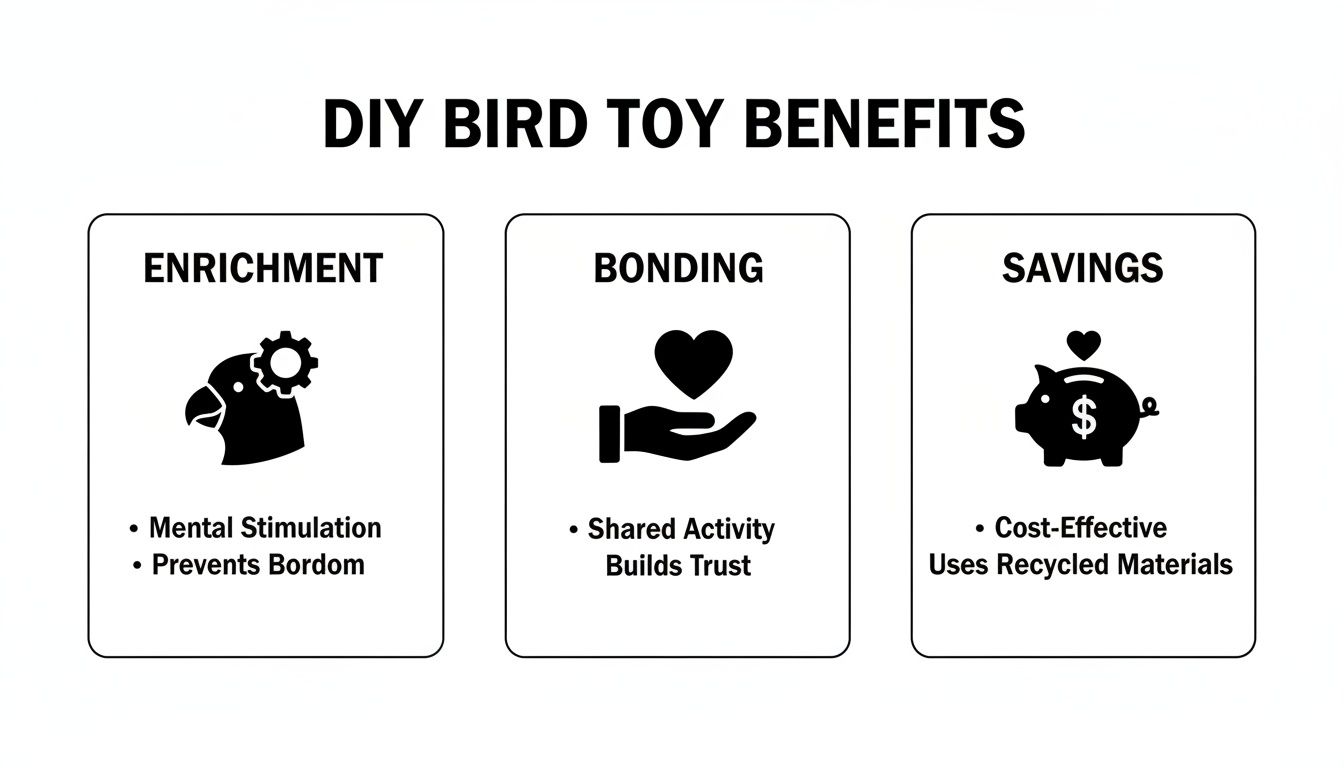
It’s about more than just saving a few dollars. It’s about providing genuine enrichment and strengthening that special bond you share with your feathered mate.
Safe Woods And Natural Materials
Natural wood is the star of most DIY bird toys, but you can't just use any old branch. Luckily, here in Australia, we have some fantastic, bird-safe options right at our fingertips.
- Untreated Pine: This is a brilliant choice. It’s cheap, easy to find at places like Bunnings, and perfect for beaks that love to shred. The key word here is untreated—that means no paint, no varnish, and definitely no pressure-treated pine, which is loaded with nasty chemicals.
- Native Eucalyptus Branches: Gum tree branches make amazing perches and chew toys. But you have to prep them properly. Only take them from areas you know are free from pesticides. Give them a good scrub with a bird-safe cleaner (a simple vinegar and water mix works well), then bake them in the oven at a low heat (around 120°C) for an hour. This kills off any lurking nasties.
- Balsa Wood and Yucca: These are incredibly soft, making them perfect for smaller birds like budgies and cockatiels who might find harder woods a bit much. They offer that satisfying shredding experience without the struggle.
- Cork, Coconut Shells, and Seagrass: These add fantastic textures to the mix. Cork is great for chewing, half a coconut shell can be turned into a brilliant little foraging cup, and natural seagrass or sisal rope is a much safer choice for stringing everything together.
When you're choosing your materials, it can be tough to remember what's okay and what's a definite no-go. This quick-reference table should help clear things up.
Bird Toy Materials Safety Guide
| Material Type | Safe Options (Use Freely) | Use With Caution (Check Sources) | Unsafe Options (Avoid Completely) |
|---|---|---|---|
| Wood | Untreated Pine, Balsa, Poplar, Eucalyptus (prepared), Bamboo, Cork | Fruit tree branches (ensure pesticide-free & properly cleaned) | Cedar, Redwood, Plywood, MDF, Pressure-Treated Wood |
| Rope & Fibre | Sisal, Jute, Seagrass, Paper Rope, Vegetable-Tanned Leather | 100% Natural Cotton (trim frays to prevent entanglement) | Nylon Rope, Polyester, Synthetic Twine, Treated Leather |
| Metal | Stainless Steel | Nickel-Plated (if from a trusted bird toy supplier) | Zinc, Lead, Copper, Brass, Galvanised Wire, most Craft Bells |
| Plastics & Other | Hard, durable plastics (e.g., acrylic), Coconut Shells, Paper, Cardboard | Children's Non-Toxic PVA glue (allow to cure for days) | Soft plastics, PVC, Styrofoam, most Glues & Adhesives |
Always double-check anything you're unsure about. A few minutes of research can prevent a serious accident.
Bird-Safe Hardware And Fasteners
How you actually hold your toy together is just as critical as the chewable parts. Plenty of common metals found around the house are toxic to birds.
The rule of thumb is simple: if you wouldn't trust it for a human baby, don't give it to your bird. Birds are incredibly sensitive, and heavy metal poisoning is a serious, often fatal, risk.
Your best—and really, your only—choice for any metal parts is stainless steel. It won’t rust and doesn't leach harmful metals like zinc or lead. You can find stainless steel quick links, O-rings, and chains from specialist bird toy shops or even some marine hardware suppliers. Never use galvanised metal; that zinc coating is highly toxic.
For non-metal options, look for vegetable-tanned leather strips or natural, undyed cotton or paper rope. Just be sure to supervise your bird with any rope toys and snip off long frays to prevent them from getting tangled.
Materials to Avoid At All Costs
It's just as important to have a clear "do not use" list in your head. So many everyday craft supplies and bits of hardware are definite hazards.
- Toxic Woods: Stay away from cedar, redwood, and any pressure-treated timbers. Many woods that have a strong scent contain aromatic oils that can cause respiratory problems or are just plain toxic.
- Unsafe Metals: Zinc, lead, and copper are poisonous. This means no galvanised wire, no lead sinkers, no pennies, and no cheap craft bells (unless you can confirm they're stainless steel).
- Harmful Plastics: Avoid any soft plastics that your bird could easily chew up and swallow, as they can cause blockages. Only use hard, durable plastics that can withstand a beak without shattering into small, ingestible pieces.
- Glues and Adhesives: Most glues give off toxic fumes. If you absolutely must use an adhesive, make sure it’s a non-toxic one, like certain children's PVA glues. Even then, you need to let it cure completely for several days in a well-ventilated space before the toy goes anywhere near your bird.
The move towards DIY toys shows how dedicated bird owners are. A survey by Animal Medicines Australia found that 9% of Australian households, or around 693,000 homes, keep birds as pets. That’s a lot of us who understand that meeting their need to forage and chew is essential. For example, a South Australian family can put together a fantastic shreddable toy using just untreated pine and paper ropes, potentially saving up to 50% compared to a store-bought equivalent.
Of course, knowing your own parrot's needs is crucial. Our guide on selecting the right toys for different parrot species is a great place to get ideas to perfectly tailor your DIY projects.
Easy DIY Bird Toy Projects for Every Flock
Right, now that you’ve got the safety checklist sorted, it’s time for the fun part. Rolling up your sleeves and making something your bird will truly love is one of the most rewarding parts of being a parrot owner. You get to build a toy perfectly suited to their beak strength, personality, and favourite ways to play.
We’re going to walk through three different projects, starting with a super simple shredder for the little guys and working our way up to a heavy-duty climber for the big parrots.
Every project uses materials that are easy to track down here in Australia, so you can be confident your creations are both fun and completely safe. The main goal here is to spark that natural, destructive joy, so don't be afraid to tweak these ideas based on what you know your own bird goes nuts for.
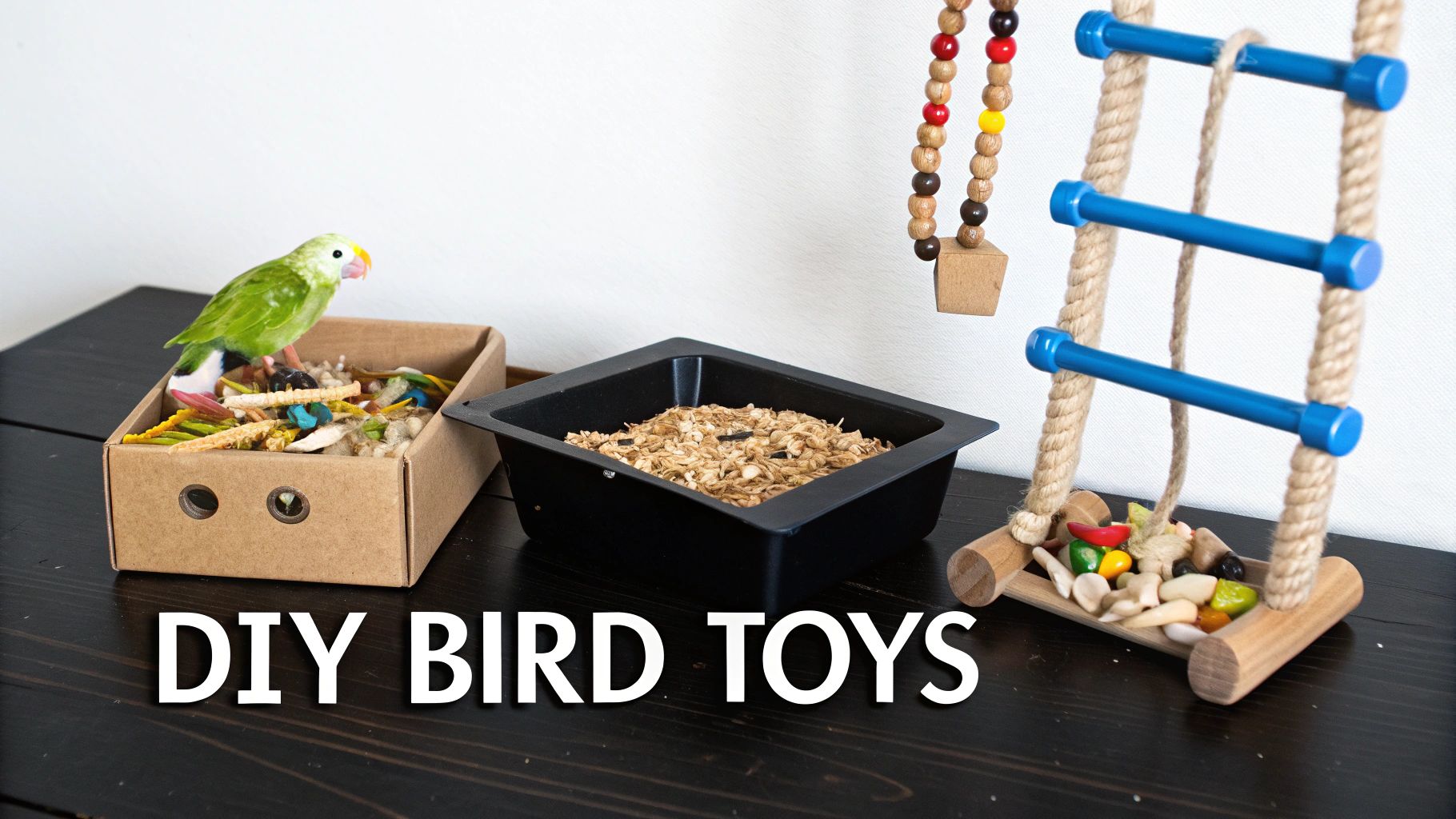
Beginner Shredding Kebab for Small Birds
This is the perfect first project if you're new to making toys for birds diy. It's designed for small beaks like budgies, cockatiels, and lovebirds—birds that live to shred soft things. Best of all, it’s quick, easy, and incredibly satisfying for them to tear to pieces.
What You'll Need:
- Untreated Wooden Skewer: A plain bamboo skewer from the supermarket works a treat. Just make sure to snip the sharp point off first.
- Cardboard: Plain brown cardboard from delivery boxes or the inner rolls from paper towels is ideal. Just peel off any tape or labels.
- Untreated Wooden Beads: You can find these at most craft stores. Just check they're plain, unfinished wood.
- Paper Straws: The colourful ones add a bit of visual flair and a satisfying crunch when chewed.
- Vegetable-Tanned Leather or Paper Rope: This is for making a safe, secure loop to hang the toy.
First up, cut your cardboard into little squares, about 2-3 cm wide. Do the same with the paper straws, chopping them into small, bead-like bits. The beauty of this toy is its simplicity; there’s really no wrong way to put it together.
Start threading the bits and pieces onto your skewer. I like to alternate between cardboard, a wooden bead, and a piece of straw to keep it interesting. Pack them on there quite tightly to create a full, chunky kebab that looks irresistible.
Once the skewer is almost full, leave a little room at the top. Grab your leather strip or paper rope, form a loop, and tie a really secure knot around the top of the skewer. This acts as the hanger and stops all your hard work from sliding right off. And that's it! Your first shredding kebab is ready for demolition.
Intermediate Foraging Box Challenge
This next one is a step up, perfect for medium-sized birds like conures, galahs, and Quakers. It taps directly into their powerful foraging instinct, giving them a much-needed mental workout that's just as important as physical play.
What You'll Need:
- Small Cardboard Box: An empty tissue box (plastic removed!) or a small delivery box is perfect.
- Shredding Material: Crinkle-cut paper, ripped-up paper towels, or natural seagrass are all excellent fillers.
-
Assorted 'Treasures': This is where your creativity comes in. Try a mix of things like:
- Untreated wooden blocks or beads
- Clean bottle caps (check for sharp edges)
- Chunks of cork or balsa wood
- A few of their favourite dry treats, like a sunflower seed or a nut
The setup couldn’t be easier. Just fill the box about halfway with your shredding material. This creates a messy, fun base to hide all the good stuff in.
Next, scatter your treasures—the wooden blocks, bottle caps, and other bits—into the box, giving it a good mix. Finally, sprinkle in a few of those high-value treats to really get them interested. The whole point is to make them dig, rummage, and sort through the filler to find their rewards.
Expert Tip: For particularly clever birds, you can increase the difficulty by loosely closing the box flaps or poking a few holes in the sides and stuffing them with more paper. It just adds another layer to the puzzle they have to solve.
Tough Wood and Rope Climber for Large Parrots
Now for the heavy hitters. When you've got a macaw, cockatoo, or eclectus, you need to build something that can withstand some serious beak power. This climber is designed for exactly that, offering a satisfying chew and a great way for them to get around the cage.
What You'll Need:
- Thick Natural Rope: Bird-safe rope like sisal or jute is what you want. Aim for something at least 1.5 cm thick.
- Untreated Pine Blocks: Pop into a hardware store and ask for chunky offcuts of untreated pine—you can often get them for next to nothing.
- Drill with a Wood Bit: You'll need this to punch holes through your pine blocks. The drill bit should be just a little wider than your rope.
- Stainless Steel Quick Link: For attaching the finished toy to the cage securely.
First, cut your pine blocks into a few different shapes and sizes to keep it visually interesting. Then, using your drill, make a hole right through the centre of each block. This is the most work-intensive step, but it’s crucial for the toy’s structure.
Take your rope and tie a massive, secure knot at one end to act as a stopper. Now, start threading the drilled wooden blocks onto the rope. After each block, tie another knot to hold it in place. Spacing them out a bit gives your bird more room to climb and perch.
Keep going until you've used up all your blocks. At the top of the rope, tie a strong loop and attach your stainless steel quick link. Your robust climber is now ready for a serious workout.
Of course, life gets busy. It's totally fine to mix and match your DIY creations with professionally made toys. For those times, a toy like the Busy Bee offers amazing shredding potential, while the Native Fusion gives them a durable, natural chewing experience. If you’re ever worried about the safety of materials, it’s worth reading up on how to spot hazards, even in something as simple as a ball and string.
Maximising Fun and Engagement with Your Creations
You've made the toy, which is a fantastic start. But the real magic happens when your bird actually wants to play with it. Getting your homemade creations to be genuinely enriching is an art form, and it all comes down to observation. It's about getting inside your bird's head, understanding their unique personality, and presenting the toy in a way that flicks their curiosity switch.
This is where we move beyond just building things and start thinking like a bird. Do that, and you can turn a simple homemade item into their absolute favourite thing, boosting both fun and mental stimulation.
Speak Your Bird's Language
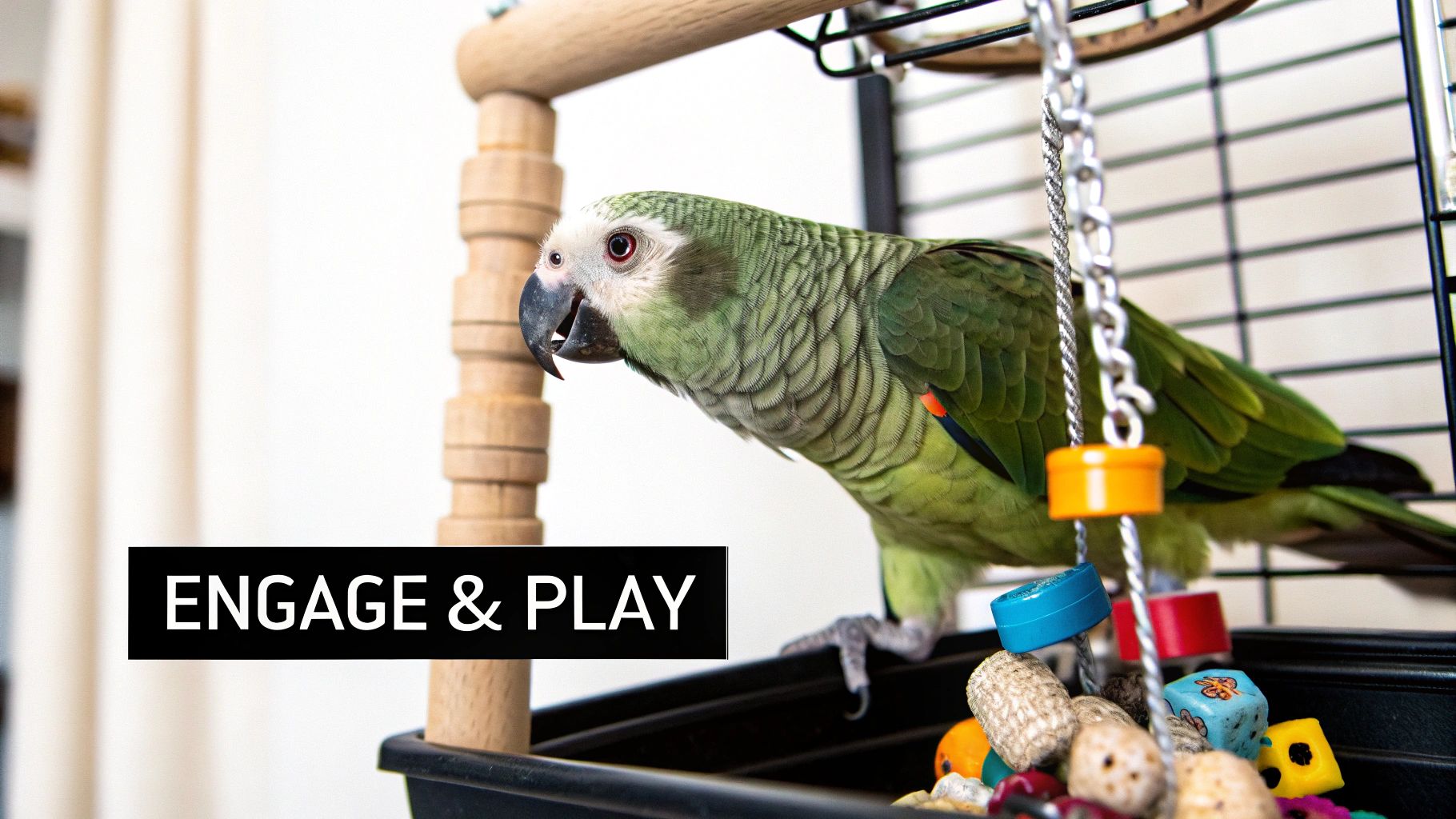
Every bird has a preferred way of interacting with their world—think of it as their "play language." If you can tune into this, you'll be able to create toys they go absolutely bonkers for. Just spend some time watching your bird. You'll soon see which of these styles they gravitate towards.
-
The Shredder: Is your floor constantly covered in paper confetti or tiny bits of cardboard? You've got a shredder. These birds need an endless supply of things they can gleefully destroy. Soft woods, paper, cardboard, and palm leaves should be your go-to materials.
-
The Forager: Is your bird the investigative type, always poking their beak into things and searching for hidden treasures? This is a powerful, natural instinct. Puzzles and foraging toys will give them immense mental satisfaction.
-
The Preener: Some birds, especially the smaller ones, just love to gently nibble and preen. If this is your bird, they'll appreciate toys with fine textures like soft leather strips, paper rope, or natural fibres.
-
The Chewer: For the big-beaked birds, destruction is the name of the game. These guys need durable, chunky pieces of bird-safe wood that they can really sink their beak into and demolish over time.
Once you've figured out their primary play style, you can tailor your DIY projects to give them exactly what they crave. It's the surest way to make your creations an instant hit.
The Power of Toy Rotation
Imagine being stuck in a room with only the same three books to read for the rest of your life. You'd get bored pretty quickly, right? That’s exactly how a bird feels when their toys never change.
This is where toy rotation comes in. It’s one of the most powerful and simple enrichment tools you have. The idea is easy: don't put all your toys in the cage at once. Keep a stash of toys—both homemade and store-bought—and swap a few out every week.
By rotating just two or three toys weekly, you keep their environment fresh and exciting. A toy that's been out of sight for a fortnight can feel brand new again when it reappears, sparking renewed interest and helping prevent the destructive habits that boredom can cause.
This simple strategy makes all your DIY efforts go so much further and keeps your bird constantly engaged.
Introducing New Toys to Nervous Birds
Not every bird will dive beak-first into a new toy. Some are naturally cautious, and a strange new object in their safe space can be genuinely scary. If your bird is a bit timid, a slow and gentle introduction is the way to go.
Start by placing the new toy outside the cage, or even on a nearby table, for a day or two. Let them watch it from a distance and realise it's not a threat. You can even play with the toy yourself to show your bird that it's safe and fun. Once they seem more comfortable, hang it inside the cage, maybe near a favourite perch but not directly in their path. A little positive reinforcement, like praise or a treat when they show interest, can work wonders.
This thoughtful approach is key for bird owners across Australia’s 2.8 million pet-owning households. The latest Pets in Australia survey shows just how significant bird ownership is, with savvy owners blending cost-effective DIY solutions with quality store-bought toys. In fact, many avian behaviourists recommend rotating 2-3 new toys weekly to keep boredom at bay—a goal made much more affordable with homemade creations.
Ultimately, turning your DIY toys into true enrichment powerhouses is all about observation and empathy. By incorporating treats and understanding what makes foraging so rewarding, you can make playtime a fun and engaging challenge. If you want to dive deeper, our guide on foraging toys for birds is packed with more ideas to get you started.
Keeping Your Homemade Bird Toys Safe
Making a fantastic new toy for your bird is a huge win, but your job doesn't stop once it's hanging in the cage. Safety is an ongoing commitment. Think of it this way: regular check-ups and maintenance are just as critical as choosing the right materials in the first place. This is what keeps your creations a source of fun, not a hazard.
One of the best habits you can get into is a quick, daily toy check. It only takes a minute but can genuinely prevent serious accidents. Parrots are masters of destruction, after all. A toy that was perfectly safe yesterday might have a dangerous sharp edge or a badly frayed rope today. This vigilance is the key to a safe and stimulating environment for your companion.
Your Daily Toy Inspection Checklist
Think of this as a quick health check for your bird's playthings. While you're checking their food and water, just cast a critical eye over everything they play with.
- Look for sharp edges: Chewed plastic or splintered wood can create nasty points that could injure your bird’s feet, mouth, or tongue. If you find a rough spot, sand it down. If it’s beyond repair, it’s time for it to go.
- Inspect all ropes and fabrics: Keep an eye out for long, frayed strands. These are a serious entanglement risk for little feet and necks. Trim any frays short to keep them safe.
- Check for loose parts: Are any beads, bells, or small wooden pieces about to come off? These can easily become a choking hazard if swallowed. Tighten them up if you can, or remove the toy if it's falling apart.
- Assess the overall structure: Is the toy hanging on by a thread? A heavy toy that suddenly breaks and falls could startle or even injure your bird.
This routine quickly becomes second nature and gives you incredible peace of mind.
Cleaning and When to Say Goodbye
Keeping toys clean is absolutely vital for your bird’s health. For most of your wooden, plastic, or metal creations, a simple and bird-safe cleaning solution is all you need.
A mixture of one part white vinegar to two parts water in a spray bottle works wonders. Just give the toys a light spray, a good scrub, and then rinse them thoroughly with plain water. Let them dry completely before they go back in the cage.
Knowing when a toy is past its prime is also a crucial safety skill. A toy that has been lovingly destroyed is a success story! It means your bird was happy and engaged.
But some toys just can't be safely repaired. If a toy has too many sharp points to sand down, if a rope is frayed beyond a simple trim, or if it's just impossible to get properly clean, it’s time to toss it.
Remember, the beauty of making your own toys for birds diy is that they are often inexpensive and easy to replace. Never hesitate to throw a toy away if you have any safety concerns. Your bird's well-being is always the top priority.
Your DIY Bird Toy Questions Answered
Diving into the world of making your own bird toys can bring up a few questions. From wondering what’s safe to grab from your own backyard to figuring out why your bird is giving your masterpiece the cold shoulder, we’ve got you covered. Here are the answers to some of the most common queries from Aussie bird owners.
How Do I Know if Wood From My Garden Is Safe?
Using natural branches from your garden is a fantastic, sustainable way to create perches and chew toys. But you have to get it right, because safety is everything. In Australia, we're lucky to have plenty of native woods that are perfect, but you need to know what you’re looking for and how to prepare it.
Safe Native Woods Checklist:
- Eucalyptus (Gum Trees): An excellent choice, widely available and a favourite for most parrots.
- Bottlebrush (Callistemon): Its interesting texture is great for chewing and gives their feet a good workout.
- Grevillea: Another brilliant native option that is perfectly safe for birds.
Before you bring any branch inside, it needs a good clean. Scrub it down with a stiff brush and a bird-safe cleaner (a simple vinegar and water solution works a treat) to get rid of any dirt or nasties.
Then, pop it in the oven at around 120°C for an hour. This will kill off any mites, insects, or bacteria hiding in there. And this is crucial: only ever take wood from trees you know for a fact haven't been sprayed with pesticides or are growing near heavy roadside pollution.
My Bird Is Scared of New Toys. How Can I Introduce Them?
That fear of new things? It has a name: neophobia. It’s a totally natural survival instinct for birds. A strange object suddenly appearing in their safe space can be genuinely frightening, so a gentle, patient introduction is the only way to go.
Don’t just hang the new toy straight in the cage. Start by placing it on a table near the cage for a day or two. This lets your bird watch it from a safe distance and get used to its presence. Next, you need to show them it's not a threat. Play with the toy yourself—tap it, talk to it, and show your bird that it's harmless and even a bit of fun.
When you do finally put it inside the cage, hang it away from their main perches or food bowls. And be ready to reward any sign of curiosity—even a quick glance—with a bit of praise or a favourite treat. That positive reinforcement is what builds the bridge between "scary new thing" and "fun new toy."
How Often Should I Change Out My DIY Toys?
The real secret to keeping your bird’s environment stimulating is toy rotation. A cage full of the same old toys day after day is a recipe for boredom. A great rule of thumb is to swap out two to three toys every week.
Keep a box of toys—both your brilliant DIY creations and some quality store-bought ones—and just rotate them through. You'll be surprised how a toy that's been out of sight for a couple of weeks can feel brand new and exciting when it reappears. This simple habit keeps your bird engaged and curious, and it makes your creative efforts go much, much further.
Is It Bad if My Bird Destroys a New Toy Immediately?
Not at all—in fact, that's a massive success! When your bird tears a new toy to shreds within hours, it means they are fully engaged and satisfying their deep-seated, natural instincts to shred and chew. This is exactly what you want to see.
A destroyed toy is a sign of a happy, stimulated bird. It means the toy has done its job perfectly, giving your bird a healthy outlet for its natural behaviours.
This is precisely why making your own toys for birds diy is so fantastic. You can create a steady supply of cheap and cheerful shreddable toys without breaking the bank. For the really powerful chewers, you can mix these in with more durable creations or professionally made options, like the long-lasting Australian Banksia Pod Toy, the natural Busy Bee toy, or the tough Native Fusion toy.
Keep Reading
- The Ultimate Guide to Australian Native Nuts for Parrots
- What Is Bird Enrichment and Why Is It So Important?
- The Ultimate Guide to Foraging for Birds
Disclaimer Summary:
The information in this article is general in nature and may include external links or resources not created by Lou Lou Bells Bird Toys. Every bird is unique, so we encourage you to seek personalised advice from your own veterinarian or avian specialist. For full details, please read our complete disclaimer here.