
That simple ball and string hanging in your bird's cage is way more than just a basic toy—it's a critical tool for their mental and physical wellbeing. For our Aussie birds, from the zippiest budgie to the most inquisitive cockatoo, this classic setup provides essential stimulation that taps right into their natural instincts.
Why This Simple Toy Is A Powerhouse Of Enrichment
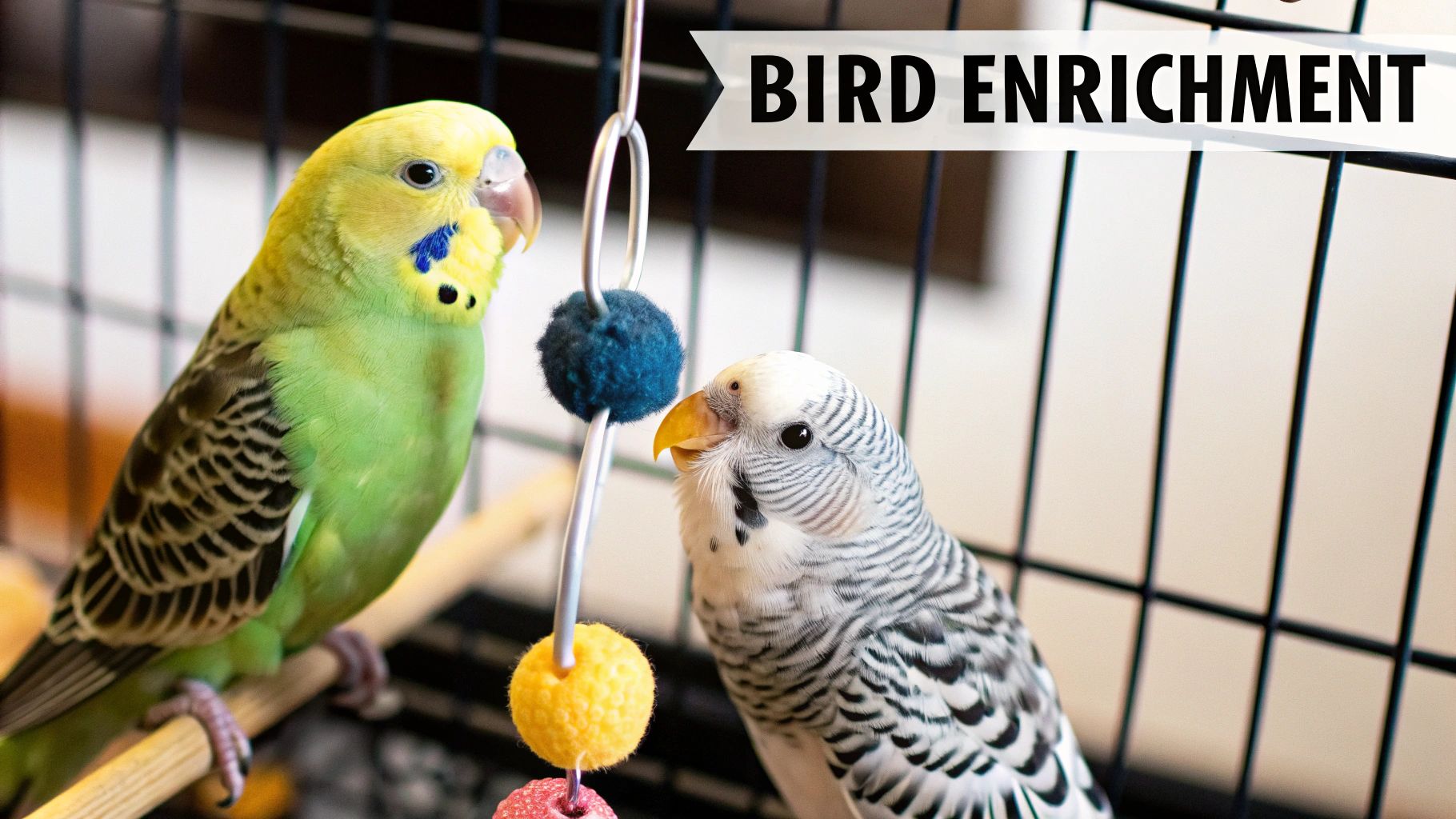
A ball and string might look elementary to us, but for a bird, it’s a world of opportunity. Out in the wild, birds spend a huge chunk of their day foraging, solving problems, and fiddling with objects using their beaks and feet. A good toy replicates these activities, keeping boredom—and the behavioural problems that come with it—at bay.
As an Australian business handcrafting toys right here in South Australia, we've seen firsthand how different species get stuck into their enrichment. The humble ball and string is a consistent favourite because it’s just so versatile.
Tapping Into Natural Instincts
This type of toy directly encourages behaviours that are hardwired into your bird's DNA. It keeps their minds sharp and their bodies active by serving multiple purposes at once.
- Foraging and Problem-Solving: You can encourage your bird to work for treats hidden in or around the toy, which perfectly mimics their natural search for food.
- Shredding and Chewing: The act of destroying parts of the toy is a completely natural and satisfying behaviour. It's also great for helping maintain beak health.
- Physical Dexterity: All that climbing, swinging, and manipulating the toy builds strength, balance, and coordination.
Expert Advice: Don't underestimate the power of simplicity. A basic ball and string can be far more engaging than a complex, static toy because it allows for dynamic play. Your bird can swing from it, chew it, and toss it around, providing a multi-sensory experience that a fixed perch just can't match.
A Growing Need for Quality Enrichment
The importance of providing proper animal enrichment in Australia can't be overstated, especially as more of us welcome feathered friends into our homes. Bird ownership has seen a real surge lately, with data showing that around 9% of Australian households now keep birds as cherished companions. This trend highlights a growing need for safe, stimulating toys that actually work.
This guide is designed to give you the confidence to build a toy that’s not only fun but also perfectly safe for your beloved companion.
Choosing The Right Bird-Safe Materials
When you decide to make a ball and string toy for your bird, you’re stepping into the role of creator, and your number one rule is non-negotiable: every single piece must be 100% bird-safe.
Your bird is going to chew, shred, and get up close and personal with every part of your creation. That means making sure each component is non-toxic isn’t just a step—it’s the entire foundation of the project. This is where a good idea transforms into a truly great, safe enrichment tool.
Luckily, many of the best materials are easy to find right here in Australia. Let's dig into what you should be looking for, breaking it down into the two main parts of your toy: the ball and the string.
The Best Choices for 'The Ball'
The "ball" is the main attraction for most birds. It's the bit they’ll grab with their beak, toss around, and happily destroy. The goal here is to find materials that are natural, completely untreated, and tough enough (or soft enough) for your bird's specific beak.
- Untreated Native Woods: You can't go wrong with Australian native woods. Think bits of eucalyptus (like gumnuts), banksia pods, or even bottle brush pieces. Just be absolutely certain they come from a pesticide-free area and are properly cleaned and dried before you use them.
- Safe Commercial Woods: Untreated pine is fantastic for smaller birds like budgies and cockatiels who love to shred something soft. For the big guns with powerful beaks, tougher woods like kiln-dried Banksia are a much better and longer-lasting choice.
- Natural Plant-Based Materials: Sola, which comes from the shola pith plant, is wonderfully lightweight and offers an incredibly satisfying shredding experience. Other brilliant options include vine balls, palm leaf shapes, and natural loofah sponges.
Expert Advice: Never, ever use wood from an unknown source or any kind of treated timber. Things like MDF, particleboard, or pressure-treated pine are full of toxic glues and chemicals that can be deadly. If you're ever in doubt, just stick to materials sold specifically for parrot toys by a trusted supplier.
The Safest Options for 'The String'
The "string" is what holds your masterpiece together. It adds opportunities for swinging and climbing, but it also carries the biggest safety risks if you choose poorly. Your string material must be natural, and you need to be very mindful of its length and thickness to avoid any chance of entanglement.
- Vegetable-Tanned Leather: This is a tough, durable, and safe option. The tanning process uses natural plant tannins instead of nasty chemicals, making it safe for chewing.
- Natural Fibres: Ropes made from sisal, jute, or 100% pure cotton are common choices. But here’s the catch: you must check them daily for any signs of fraying. Long, loose strands are a serious hazard and can cause entanglement or crop impaction if your bird swallows them.
- Stainless Steel Wire or Links: For the heavy chewers and demolition experts, stainless steel is your safest bet. It's totally non-toxic and gets rid of the fraying risk altogether.
Here’s a quick reference table to help you keep things straight. It's a lifesaver when you're looking at potential materials and want to make a fast, safe choice.
Bird-Safe vs Unsafe Materials Comparison
| Material Type | Safe Options (Recommended) | Unsafe Options (Avoid at All Costs) |
|---|---|---|
| Wood | Untreated native woods (eucalyptus, banksia), kiln-dried pine, sola wood, balsa, birch. | Treated timber (MDF, plywood, particleboard), painted or varnished wood, wood from toxic trees (e.g., cherry, oak). |
| String/Rope | Vegetable-tanned leather, sisal rope, jute twine, 100% natural cotton (checked daily for frays), stainless steel chain/wire. | Nylon rope, polyester cord, fishing line, any synthetic fibres, chains with zinc or lead coating (check for "galvanised"). |
| Plastics | Hard, durable plastics labelled "bird-safe" or "food-grade" (e.g., specific acrylics). | Soft plastics that can be easily ingested, PVC, any plastic containing lead or zinc, toys with small, brittle parts. |
| Metals | Stainless steel (bells, clasps, chains, wire). | Zinc, lead, copper, brass. Avoid "jingle bells" with small clappers that can be removed and swallowed. |
Remember, this isn't about limiting creativity—it's about channelling it in a safe direction. Always double-check your materials before you start building.
Knowing the difference between what's safe and what isn't is essential for anyone making toys for parrots. Always put your bird's health first by making smart, informed choices. An unsafe material, even in a toy made with love, can lead to heartbreak.
How To Craft Your Ball And String Toy
Alright, you've gathered your bird-safe materials. Now for the fun bit – actually putting it all together. Building a classic ball and string toy is a really simple and satisfying job. We’ll go through the assembly step by step, focusing on the little details that make the toy engaging but, most importantly, completely safe for your bird.
The goal here isn't just to jam a string through a ball. It's about creating something that’s perfectly suited to your bird's size, beak strength, and how they like to play. From prepping the parts to tying that final, beak-proof knot, every little thing counts.
Preparing Your Components
First up, give your chosen ball and string a good once-over. If you’re using natural bits and pieces from your Aussie garden, like gumnuts or banksia pods, they need a thorough clean. Scrub them well and then bake them at a low temperature to get rid of any nasties. This is a non-negotiable step for safety.
Next, you'll need to drill a hole through the centre of your "ball" part. The trick is to make the hole just big enough for the string to pass through without a struggle. If it’s too big, your knot might just pull straight through. Too small, and you'll end up fraying the string as you assemble it.
If you want a chewable option that’s good to go, our Natural Ball Bird Toy is a brilliant choice. Birds absolutely love shredding these, and they make a great addition to your homemade collection.
This handy visual breaks down how to choose the right parts for your toy, from picking the ball to the final safety check.
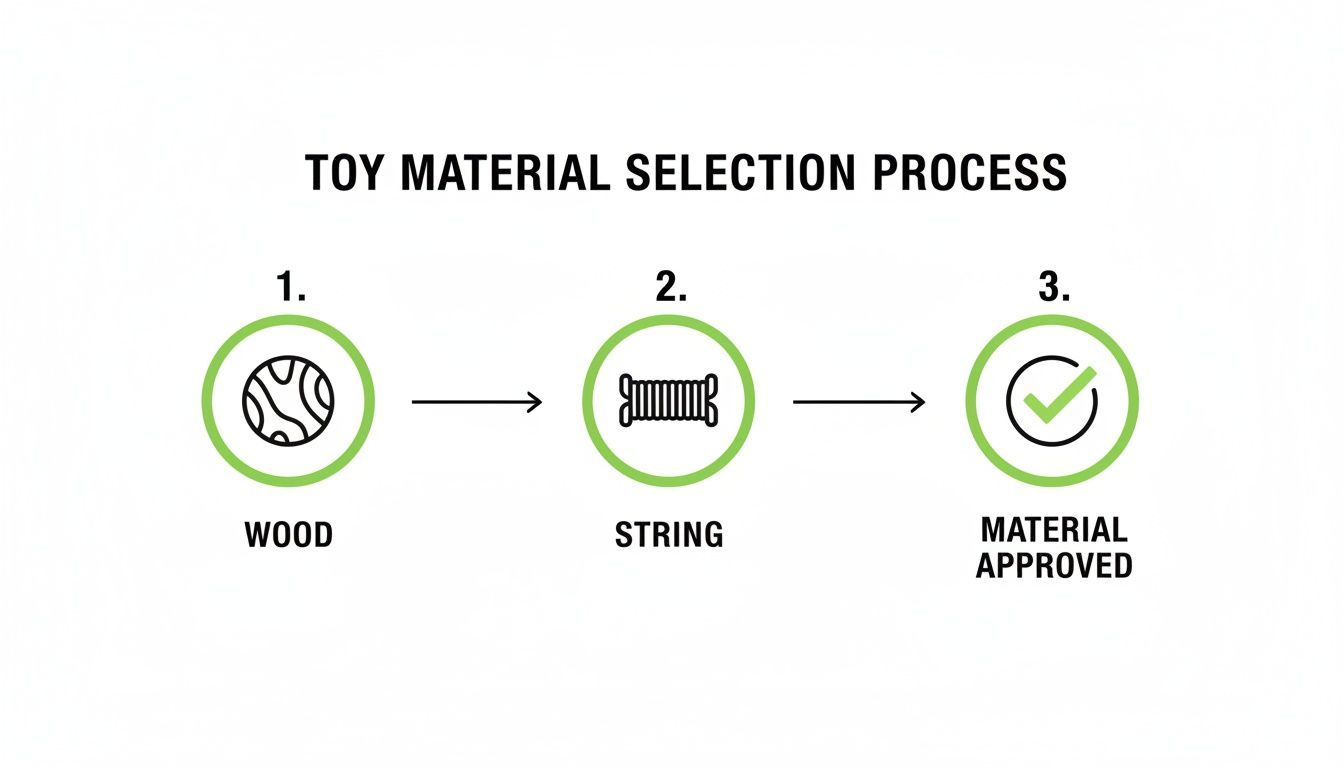
This flowchart just highlights the key stages of picking your materials, making sure every component is checked and approved before you start building.
Assembling The Toy Securely
Start by cutting your string to length. Always keep our safety rule in mind: keep it short enough that there's zero risk of your bird getting tangled. A good rule of thumb is to make sure the total hanging length is no more than half your bird's height.
Thread one end of the string through the hole in your ball. Now for the most important part: the knot. A simple overhand knot just won't cut it – clever birds can undo those in no time. You need something more secure, like a double overhand or a figure-eight knot.
Expert Advice: Once you've tied your knot, give it a really firm pull to make sure it's tight and won't slip back through the hole. For extra peace of mind, you can tie a second knot right on top of the first. You want a knot that's bigger than the hole and too complex for a curious beak to pick apart.
The other end of the string is for hanging it up. Tie a strong loop here so you can attach it to a bird-safe quick link. Always, always use stainless steel hardware to avoid any risk of heavy metal poisoning.
Tailoring The Toy For Different Birds
The best thing about a DIY ball and string toy is how easy it is to change it up. You can tweak the design to suit different birds, which is exactly how you create enrichment that actually works.
- For Large Birds (Macaws, Cockatoos): Go big and tough. Use a large, durable hardwood ball and a thick, heavy-duty rope like sisal. Their powerful beaks will destroy soft pine in minutes, so you need materials that can take a beating.
- For Medium Birds (Galahs, Conures): A medium-sized pine or balsa wood ball is perfect here, paired with a medium-gauge cotton rope or a strip of vegetable-tanned leather. This gives them a satisfying shredding challenge without being too much for them.
- For Small Birds (Budgies, Finches): Think small and delicate. A little sola or vine ball on a thin, pure cotton string is ideal. These birds need something lightweight that they can easily move around with their smaller beaks and feet.
By customising the materials, you’re not just making a toy; you're creating a personal enrichment experience. If you’re after more ideas, we’ve got plenty of inspiration in our guide on DIY bird toys.
Creative Variations For Advanced Enrichment
Once your bird has the hang of their basic ball and string toy, it's time to level up. This is where the real fun begins, because you can start turning a simple toy into a dynamic enrichment tool that keeps your bird’s mind whirring.
It all comes down to watching what your bird really loves to do and customising their playtime to match. A small tweak can make a familiar object feel like a brand-new puzzle, which is fantastic for keeping boredom at bay and making their environment exciting.
The Foraging Puzzle
One of the best ways to ramp up the enrichment is to transform the toy into a foraging puzzle. This taps directly into a bird's deep-seated instinct to work for their food, something that takes up a huge chunk of their day out in the wild.
It's surprisingly easy to do. Just drill a few extra holes in a wooden or sola ball and stuff them with tempting treats like millet spray, small seeds, or finely chopped nuts. This simple change encourages your bird to really work for their reward, giving them a mental and physical workout as they figure out how to get to the goodies inside.
Want to make it even tougher? Try wrapping the treat-filled ball in a bird-safe material like yucca or palm leaf. This adds another layer they have to peel and shred through, which is especially engaging for super inquisitive parrots like Galahs and Conures.
The Shredding Station
Most Australian parrots, particularly Cockatoos and Budgies, have a powerful—and very healthy—drive to shred things to bits. You can lean right into this by adapting the basic ball and string design into a shreddable masterpiece.
Just thread layers of different bird-safe materials onto the string, both above and below the main ball. Some great options you can find here in Australia include:
- Squares of clean, untreated cardboard.
- Pieces of dried corn husk.
- Slices of natural loofah.
- Small, empty paper cups.
Expert Advice: By layering different textures, you create a multi-sensory experience that is incredibly satisfying for your bird to demolish. This is an excellent outlet for their destructive energy and helps maintain beak health.
This kind of variation doesn't just add a fun activity; it also massively extends how long the toy stays interesting. As your bird tears through one layer, another is revealed, keeping the challenge fresh.
The Sensory Climber
If you have a little acrobat on your hands, you can create a sensory climber by stringing multiple balls together. Grab a longer piece of bird-safe rope or vegetable-tanned leather and start threading several balls of varying sizes, shapes, and textures.
For example, you could alternate a smooth pine ball with a rough banksia pod, then a soft sola ball and a textured vine ball. This creates an unstable, multi-textured ladder that challenges their balance and grip strength as they climb and explore. It’s a fantastic full-body workout that engages their feet, beak, and mind all at once.
These advanced twists show just how much you can do with a simple ball and string as your starting point. And if you’re looking for a professionally designed challenge to add to the rotation, our What's The Scoop' Foraging Toy is a fantastic option that will keep your clever bird busy for hours.
Safety Checks And Toy Maintenance Routines
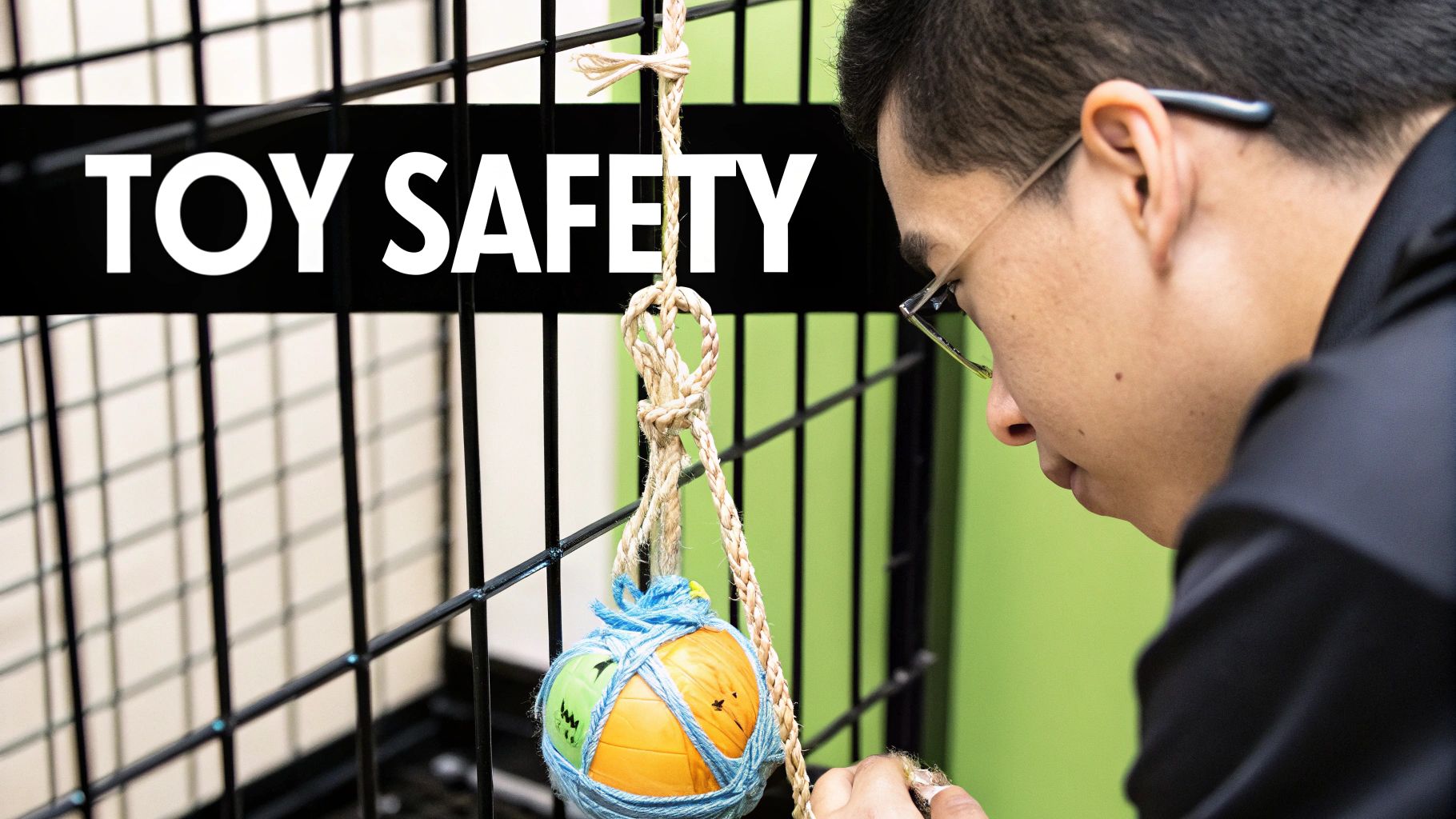
So, you’ve made a fantastic DIY ball and string toy. That’s brilliant, but the job’s only half done. A toy is only ever as safe as its current condition, and when it comes to preventing accidents in your bird’s cage, regular maintenance isn’t optional—it’s essential.
This isn't about being paranoid; it's about being proactive. Birds can be incredibly destructive with their toys. What was perfectly safe yesterday could easily become a hazard today after a solid play session. A quick daily check and a more thorough weekly inspection are your best defences.
Your Daily Safety Scan
Think of this as a quick, two-minute check-in every morning. It's the simplest way to spot immediate dangers that might have popped up overnight.
- Check for Fraying: Get a good look at any rope or string. Are there long, loose threads hanging off? These are a serious risk for entanglement or ingestion. Keep some sharp scissors handy and snip any frays off immediately.
- Look for Loose Parts: Give the toy a gentle jiggle. Are the knots still tight? Is the ball held securely? Anything that’s loose could be swallowed or cause the toy to fall apart.
This quick scan honestly takes less time than making your morning coffee, but it’s one of the most important things you can do for your bird.
Expert Advice From an Avian Specialist: "The most common toy-related injuries we see in Australian clinics involve frayed materials and ingested parts. Daily visual checks are crucial. If a cotton or sisal rope on a ball and string toy is starting to look consistently fuzzy and can't be trimmed back to a safe state, it's time to replace the entire string component."
The Weekly Deep Dive
Once a week, it’s a good idea to take all the toys out of the cage for a proper, hands-on inspection and a good clean. This is your chance to spot wear and tear that a quick glance might miss.
- Inspect for Splinters and Cracks: Run your fingers over any wooden bits. Feel for any sharp edges, splinters, or little cracks where germs could hide. Sand down any rough spots with bird-safe sandpaper.
- Test Structural Integrity: Give everything a good, firm pull. Tug on the knots and attachments. Your bird has a surprisingly strong beak, so test the toy with more force than you think is needed.
- Assess Overall Wear and Tear: Is the toy mostly shredded? A well-loved, destroyed toy is the sign of a happy bird, but there comes a point when it's just not safe anymore. If it's falling apart or has sharp, broken pieces, it's time for it to go.
- Clean and Sanitise: Give the toys a wash with a bird-safe disinfectant like F10SC, or even just a simple vinegar-and-water solution. Rinse them really well and let them dry completely before putting them back in the cage.
If you’re looking for a toy that stands up to this kind of tough love and regular cleaning, adding a Stainless Steel Bell to the mix is a great idea. Its durability makes it a fantastic, low-maintenance option.
Got Questions About Ball And String Toys?
Even with the clearest instructions, it's totally normal to have a few questions pop up when you're making your first ball and string toy. We get asked some great ones by fellow Aussie bird owners, so I've put the most common ones together here to help you feel extra confident.
These are the little details that often come to mind once you've already started building, covering the specifics that make sure your creation is both safe and a whole lot of fun for your feathered mate. Think of this as your go-to guide for those "what if" moments.
How Do I Know If The String Is Safe For My Bird?
This is a big one, and rightly so. The safest strings are always made from 100% natural fibres – think cotton, sisal, or jute. The golden rule here is to always supervise your bird when they're playing with it and keep the string's length short. You want it short enough that there's absolutely zero chance of them getting tangled. A daily check for any fraying is a must.
Now, if you've got a particularly enthusiastic chewer who might actually ingest the fibres, it’s smart to look at other options. Things like vegetable-tanned leather strips or even stainless steel chain links take away that risk entirely. What you absolutely must avoid are nylon, polyester, and any other synthetic materials.
My Bird Is Scared Of The New Toy. What Should I Do?
Don't worry, this happens all the time. Birds are naturally neophobic, which is just a fancy way of saying they're wary of new things in their space. The key is a slow, patient introduction.
- Start by placing the new toy somewhere your bird can see it from inside the cage, but leave it on the outside for a few days. Let them get used to its presence.
- Next, try hanging it on the outside of the cage. This lets them get a bit closer and investigate it through the bars on their own terms.
- Finally, when they seem comfortable, place it inside the cage, but pop it in a spot away from their main perches or food bowls.
Expert Advice: A great way to build their confidence is to play with the toy yourself right in front of them. When your bird sees you interacting with it happily, it sends a clear signal that this new object is a fun thing, not a threat.
Can I Use Coloured Balls Or Strings For The Toy?
Yes, you definitely can, but there's a very important catch: the dyes have to be 100% bird-safe and non-toxic. You should only ever use food-grade colourings, which you can find at specialty Australian bird supply shops.
Better yet, you can even make your own natural dyes using things from your kitchen, like beetroot for a vibrant red or blueberries for a deep purple. Never, ever use craft paints, wood stains, or any dyes with unknown chemicals. These can be incredibly toxic if your bird chews on and swallows them. When it comes to adding a splash of colour, safety is everything.
Keep Reading
- The Ultimate Guide to Foraging for Pet Birds in Australia
- Keeping Your Feathered Friends Safe: A Guide to Bird Toy Safety
- How To Make Bird Toys: A Comprehensive Guide For Australian Bird Owners
Disclaimer Summary:
The information in this article is general in nature and may include external links or resources not created by Lou Lou Bells Bird Toys. Every bird is unique, so we encourage you to seek personalised advice from your own veterinarian or avian specialist. For full details, please read our complete disclaimer here.