
A talking bird toy isn't just a gadget that parrots back what it hears; it’s a brilliant enrichment tool designed to tap into your bird’s natural urge to communicate. These toys offer interactive sound feedback, encouraging your feathered mate to practise everything from chirps and whistles to actual words, making them far more engaging than a simple chew toy.
Why a Talking Bird Toy Is More Than Just a Noisy Distraction
For any parrot owner in Australia, keeping a bird's mind busy is just as critical as keeping its body healthy. A talking bird toy acts as a unique bridge between playtime and cognitive development, turning what looks like a simple plaything into a powerful instrument for your bird’s well-being.
Unlike static, silent toys, these interactive gadgets actually respond. When a curious beak gives a button a nudge or pulls a lever, the toy might play a pre-recorded sound, a simple tune, or even a word you’ve recorded in your own voice. For an intelligent creature like a parrot, this cause-and-effect relationship is absolutely captivating.
A Conversational Partner for Your Parrot
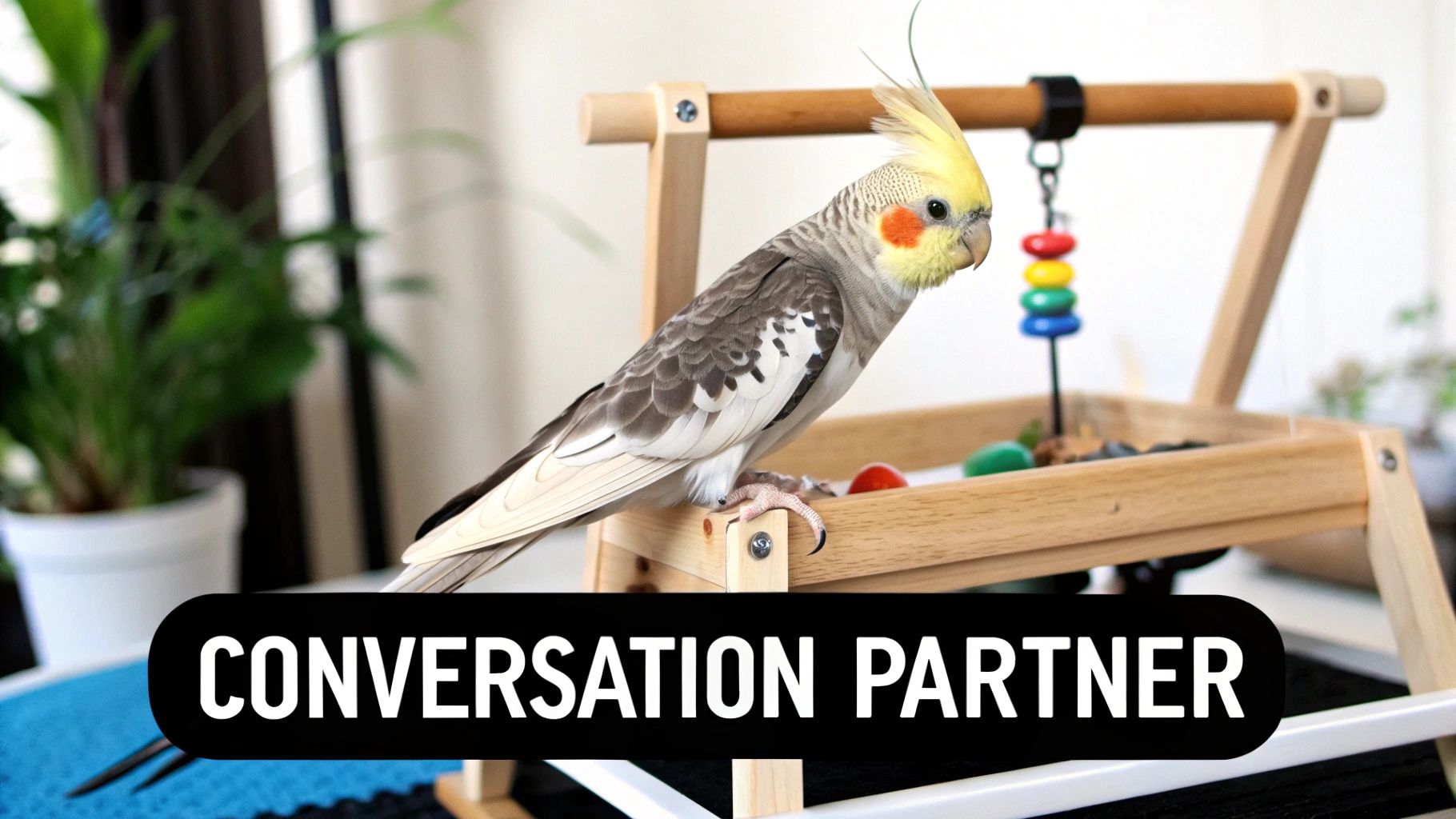
Think of a talking toy as a sort of conversational partner for your bird. It's a tool that hooks directly into your parrot's deep-seated instinct to mimic sounds and communicate. This auditory feedback loop doesn't just keep them occupied; it's a fantastic way to prevent boredom, which is often the root cause of stress-related behaviours like feather plucking or constant screaming. By giving them a novel and interactive outlet, you're helping foster a happier, healthier companion.
This shift towards enrichment is something we're seeing across the entire pet care industry. The Australian pets and pet supplies sector is a clear sign of how much we value our companions' well-being. This sector, which is the main channel for bird enrichment products, is projected to hit an industry revenue of AUD 4.1 billion by 2025. This steady growth really highlights the commitment of Aussie pet owners to invest in quality gear for their animals. You can dive deeper into the pet toy market trends to see how much enrichment is shaping the industry.
Building Bonds and Boosting Brainpower
The benefits go well beyond just keeping your bird busy. Using a talking toy can actively strengthen the bond the two of you share. When you take a moment to record your voice or play with the toy alongside your bird, you’re creating positive, shared experiences that build trust and affection.
On top of that, these interactions provide crucial mental exercise. A bird trying to figure out how to get the toy to make a specific sound is problem-solving on the fly. This kind of cognitive challenge is essential for keeping intelligent species sharp and engaged.
Of course, a talking bird toy is fantastic for auditory stimulation, but it works best as part of a well-rounded enrichment plan. It should be combined with other types of toys, like a variety of shreddable and chewable toys, that let your bird satisfy its natural need to forage, shred, and destroy.
How Interactive Toys Unlock Your Bird's Vocal Potential
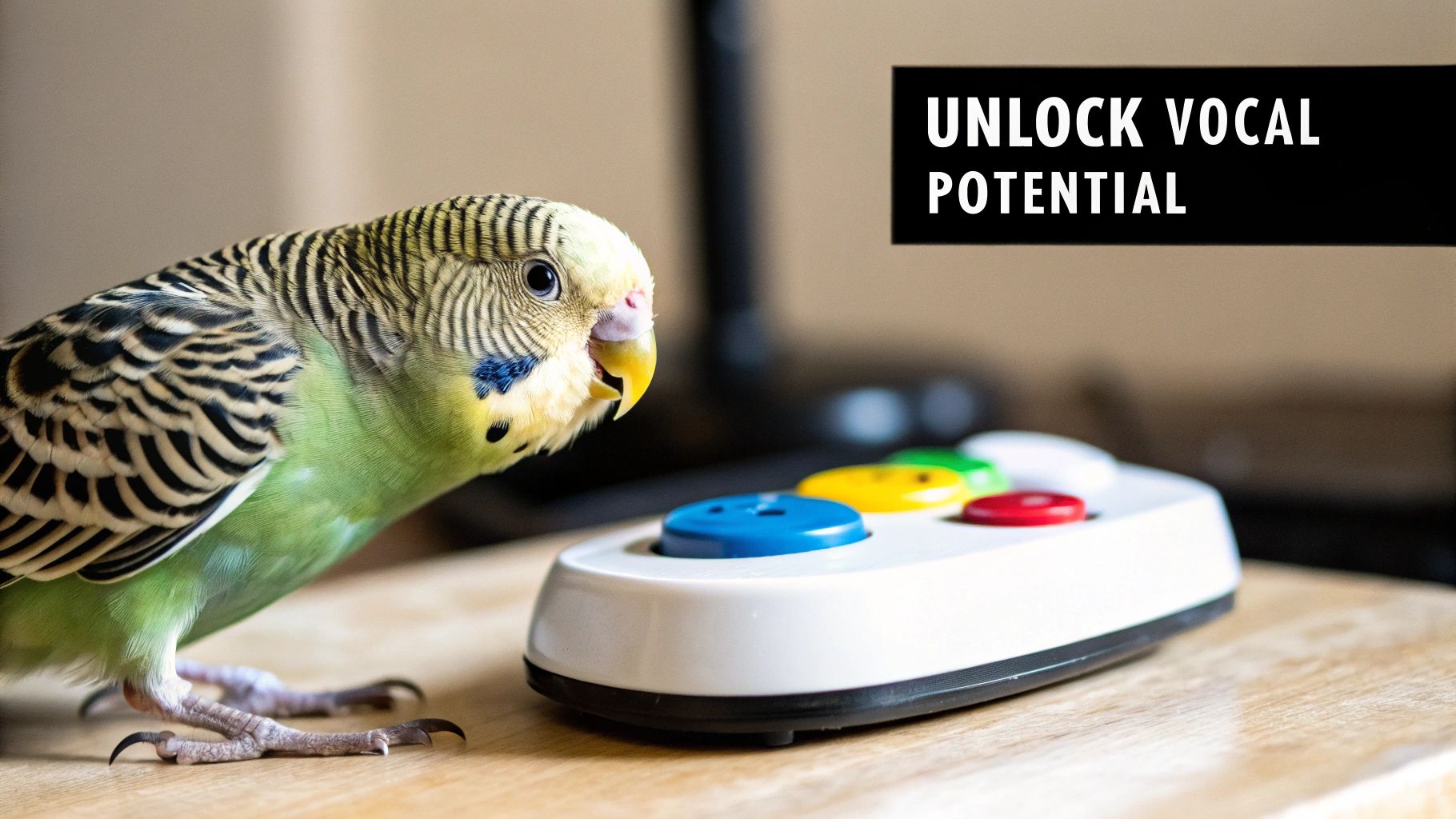
It might seem like a bit of magic when a toy encourages your bird to start talking, but it’s actually all about smart, simple avian psychology. The whole process works on one powerful principle: immediate positive reinforcement.
When your bird fiddles with a toy and is instantly rewarded with a cool sound, their brain makes a connection. This feedback makes them far more likely to do it again, turning what looks like simple playtime into a proper learning session. For curious birds like our native Australian parrots, who are natural mimics, this kind of auditory feedback is incredibly engaging.
Think of it like a toddler learning words by pressing buttons on a noisy picture book. It’s a remarkably similar concept, providing the mental workout your clever bird needs to stay sharp and happy.
Tapping Into Natural Instincts
Parrots are social to their core. They have a deep-seated instinct to copy the sounds they hear around them, which is how they communicate in the flock. A talking toy, especially one with recordable sounds, plugs directly into this natural behaviour. It essentially gives them a "flockmate" to interact with, even when you're busy or out of the room.
This isn't just about fun and games. It’s a fantastic tool for heading off boredom and the destructive habits that often come with it, like feather plucking or relentless screaming. By giving them a positive, rewarding outlet for their energy, you’re supporting their emotional and mental health.
Expert Advice: "Interactive toys are not just about preventing negative behaviours; they're about promoting positive ones. The cause-and-effect nature of a talking toy helps build a bird's confidence as they learn they can influence their environment."
More Than Just Mimicry
Sure, encouraging speech is a big plus, but the perks of a talking bird toy run much deeper. The mental gears that have to turn for your bird to use these toys are a brilliant brain workout, sharpening their problem-solving skills along the way.
- Association Learning: Your bird learns that a specific action (like pecking a button) leads to a specific result (a word or sound).
- Auditory Discrimination: They start to tell the difference between various sounds, a key step toward clear vocalisation.
- Environmental Control: Being able to make things happen gives your bird a sense of control over their world, which is hugely important for their well-being.
At the end of the day, these toys get your bird to switch from just listening to actively participating. This makes them a powerful training aid that elevates playtime into something truly enriching. They work beautifully alongside other brain-boosters, too. You can learn more about keeping your bird’s mind busy in our guide to foraging toys for birds. Combining different types of stimulation is the best way to give your companion a well-rounded and happy life.
Choosing Nontoxic Materials for Your Bird's Safety
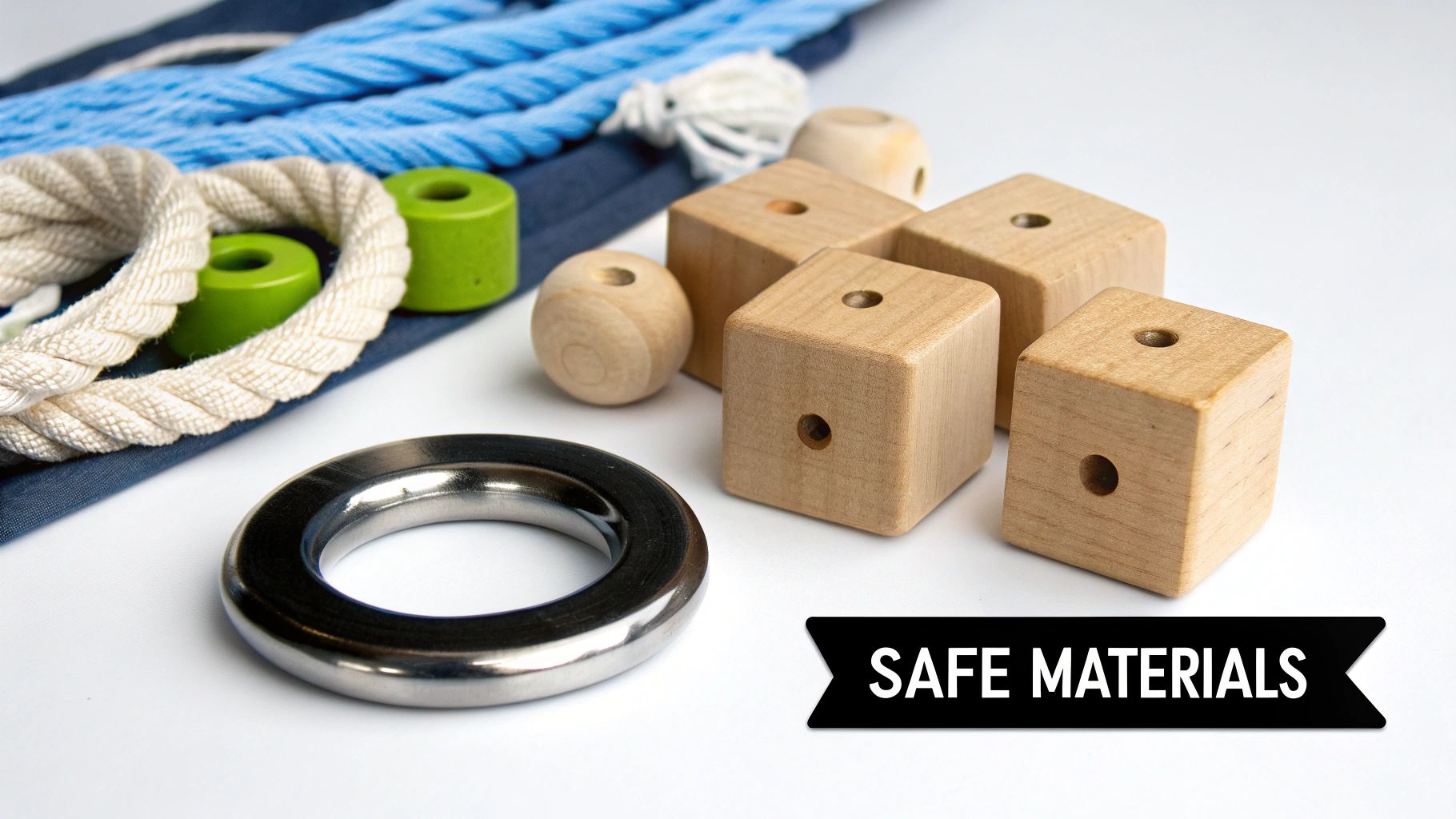
When it comes to picking any toy for your bird, nothing matters more than their safety. Parrots explore the world with their beaks, which means every single part of a new toy is going to get chewed, licked, and pulled apart. As an Aussie bird owner, knowing what’s safe and what’s not is absolutely non-negotiable.
It’s not just about the raw materials, either. How a toy is put together is just as important. A toy that shatters into sharp pieces or has bits that can be easily pulled off can quickly turn into a choking hazard. You have to learn to think like your bird, inspecting every new toy for weak spots before it ever goes near their cage.
Safe Materials to Look For
When you’re on the hunt for a new toy, always put items made from natural, bird-safe materials at the top of your list. These aren’t just safer; they also tap right into your bird’s instinct to chew and shred.
- Untreated Natural Wood: Pine, balsa, and especially Aussie natives like bottlebrush or gumtree branches are fantastic choices. They give your bird a satisfying chew without any risk of toxic chemicals.
- Vegetable-Tanned Leather: This is the safe alternative to chemically treated leathers, which can be seriously harmful if your bird ingests them.
- 100% Natural Fibres: Ropes made from cotton, sisal, or hemp are perfect for climbing and preening. Just be sure to snip off any long, frayed ends so your bird doesn’t get tangled.
- Stainless Steel: For bells, chains, and connectors, stainless steel is the only metal you should trust. It’s tough, won’t rust, and doesn’t contain the toxic heavy metals found in cheaper alternatives.
This focus on durable, natural materials isn’t just a fad; it’s what experienced bird owners demand. In fact, market analysis of the Asia-Pacific pet toy industry shows that wooden and foraging-style toys are leading the way because they align with a bird's natural behaviours. This tells us that owners are actively looking for toys that are both stimulating and built to last.
Dangerous Materials to Avoid
Sadly, a lot of the cheap, mass-produced toys you see are made with materials that are outright dangerous. Being able to spot these hazards is a crucial skill for any bird owner.
Expert Advice: "Always inspect a toy’s construction before buying. Check for weak points, small parts that could be swallowed, and any synthetic materials that could cause crop impaction if ingested. A well-made toy prioritises safety over flashy looks."
Keep a sharp eye out for soft plastics that can be easily broken into sharp, swallowable pieces. You also need to be wary of metals like zinc and lead, which are often used to coat bells and chains on cheap toys and can lead to heavy metal poisoning.
For a deeper dive into picking out safe and engaging options, you might find our guide on choosing the right toys for parrots really helpful. It’s designed to help you make informed decisions that keep your feathered mate safe and happy.
Matching the Right Toy to Your Bird's Species
Not all bird toys are created equal. What delights a tiny Budgie could be demolished in minutes by a powerful Galah, turning from a fun toy into a genuine safety risk. It’s a common mistake to think any toy will do, but matching it to your bird's species is about more than just getting your money's worth—it's about their safety and providing real, meaningful enrichment.
The main things to think about are your bird’s beak strength, their size, and just how clever they are.
A smaller bird like a Cockatiel or a Budgerigar needs lightweight toys made from softer, more delicate materials. Their beaks aren't built for heavy-duty demolition, so things like shreddable papers, thin wooden beads, and plastics that are easy to fiddle with are perfect. For these little guys, a talking bird toy should make gentle sounds that encourage them to interact without giving them a fright.
Considerations for Medium to Large Birds
Once you move up to bigger birds like Galahs, Corellas, or the incredibly smart African Grey Parrot, the game changes completely. These parrots have some serious beak power and intelligence, and they need toys that are both tough and challenging. A flimsy plastic toy simply won’t cut it—it could shatter into sharp, dangerous pieces in no time.
For these powerful parrots, you need to be looking for toys made from:
- Hardwoods: Materials like java wood or tough native Australian timbers can handle a serious chew-a-thon.
- Durable Polymers: Thick, bird-safe acrylics and other tough plastics are brilliant for the interactive parts of a toy.
- Stainless Steel: Any metal bits—bells, chains, or links—absolutely must be stainless steel to prevent heavy metal poisoning and stop them from being bent or broken.
Expert Advice: "Always supervise your bird with a new toy for the first few days. This lets you see how they interact with it and spot any potential weak points or hazards before they become a real problem."
Talking Bird Toy Selector by Species
Choosing the right talking toy isn't just about size; it's about matching materials and features to your bird's natural instincts and physical capabilities. A toy that's perfect for a Lorikeet might be an immediate choking hazard for a Macaw. This table helps break down what to look for based on common Australian species and their size categories.
| Bird Size Category | Example Australian Species | Recommended Materials | Toy Features to Look For | Features to Avoid |
|---|---|---|---|---|
| Small | Budgerigar, Cockatiel, Lovebird | Softwoods (balsa), vine balls, paper, acrylic, plastic beads | Lightweight, easy-to-press buttons, gentle bells, shreddable parts | Heavy hardwood, thick ropes, large metal parts that could trap a beak |
| Medium | Galah, Corella, Eclectus, Indian Ringneck | Hardwoods, tough acrylic, stainless steel, vegetable-tanned leather | Multiple buttons, varied sounds, puzzle elements, sturdy construction | Flimsy plastic, soft metals (zinc), small, easily swallowed components |
| Large | Sulphur-crested Cockatoo, Macaw, Major Mitchell's Cockatoo | Dense hardwoods (java), thick acrylic, stainless steel | Extremely durable build, securely fastened parts, challenging activation | Brittle plastics, thin chains, parts that can be snapped off and ingested |
Ultimately, the goal is to provide a toy that can stand up to your bird's beak while still being engaging enough to hold their interest. Always inspect toys regularly for wear and tear, no matter how tough they seem.
Matching Intelligence and Play Style
Beyond sheer beak strength, a bird’s intelligence really dictates what kind of toy will keep them happy. A super-clever bird like an Eclectus or an African Grey will get bored very quickly with a toy that just makes the same simple sound over and over.
These brainy birds thrive on more complex, puzzle-style toys that give their problem-solving skills a workout. Look for talking toys that have multiple buttons, different sounds, or parts that need to be manipulated to get a reward.
For the naturally energetic and destructive birds, like many Macaw species, durability is absolutely everything. Their toys have to be built to withstand incredible force. If you're looking for a more detailed guide on what works for different personalities and beak strengths, our post on the best toys for parrots is a fantastic place to start.
At the end of the day, the best talking bird toy is one that safely matches your bird's unique physical and mental needs, giving them lasting enrichment rather than just a five-minute distraction.
How to Introduce and Train with Interactive Toys
Bringing a new talking bird toy home is always exciting, but it’s your involvement that really makes it shine. With a bit of patience, you can turn that new toy into a fantastic training tool. It all starts with a slow, positive introduction to make sure your bird sees it as a fun new friend, not a scary intruder.
Most birds are naturally wary of new things in their space. The best way to handle this is to place the toy near their cage—not inside it—for a few days. Just let them get used to seeing it from a distance. Eventually, their curiosity will win out over their initial caution.
Building Positive Associations
Once your bird seems relaxed with the toy nearby, it's time to build a positive connection. The magic ingredient here is positive reinforcement.
Any time your bird shows interest—even if it's just a glance, a step closer, or a tentative touch—reward them. A bit of praise in a happy voice and a high-value treat, like a tiny piece of their favourite fruit or a single sunflower seed, works wonders.
This simple process turns the toy from a strange object into a source of good things. Remember to keep these first interactions short and sweet. Always end on a high note before your bird has a chance to get bored or stressed.
This flowchart is a great little guide for helping you match toys to your bird's specific needs, considering their size, beak strength, and smarts.
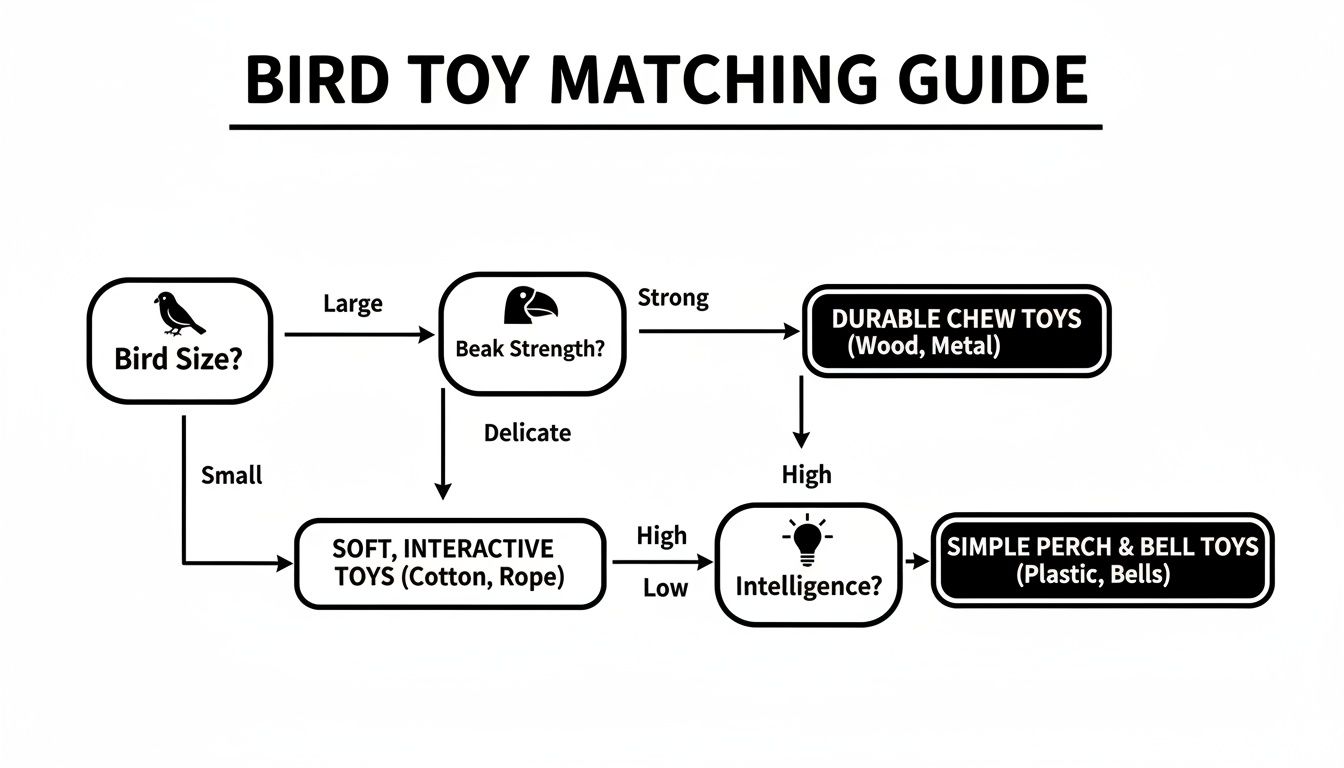
It’s a good reminder that the best training results come from using a toy that’s a perfect fit for your bird’s natural traits.
Encouraging Vocalisation Through Repetition
After your bird is happily playing with the toy, you can start using it to encourage speech. If the toy has a recording feature, begin with simple, clear words like "hello" or your bird's name. Make sure you record it in an upbeat, enthusiastic tone.
Play the recording during your normal training sessions. These are usually most effective in the morning or early evening when birds are naturally at their most chatty and active.
Expert Advice: Consistency is your best friend. Short, daily training sessions of 5-10 minutes are far more effective than one long, infrequent session. Repetition helps solidify the connection between the toy, the sounds, and the positive reinforcement.
Across Australia, there’s a growing demand for well-designed enrichment toys, and it’s all driven by a better understanding of what our birds need to be happy. As industry reports from sources like DataHorizzon Research point out, owners and avian specialists are actively seeking toys that reduce stress and prevent problem behaviours. This shift shows that investing in a quality talking bird toy isn’t just about fun—it’s an investment in your bird’s overall wellbeing.
Keeping Your Bird's Toys Clean and Safe
A talking bird toy can be an incredible source of enrichment, but just like food bowls and perches, it needs a bit of regular attention to make sure it stays a healthy part of your bird’s life. Proper cleaning and routine inspections aren’t just nice-to-haves; they’re essential for preventing illness and making sure the toy lasts.
Dirty toys can quickly become a breeding ground for nasty bacteria and fungi, which is a serious health risk. Here in Australia, with our often humid climates, materials like wood can be especially prone to mould if they aren’t looked after. Setting up a simple, consistent cleaning routine is one of the most important things you can do for your feathered mate.
A Simple Cleaning and Inspection Routine
Keeping toys safe is an ongoing job, not a one-off task. Getting into the habit of a weekly check-in is a fantastic way to catch small issues before they turn into genuine hazards.
Here’s a straightforward checklist to get you started:
- Disinfect Plastics and Acrylics: Give these parts a good wipe-down with a bird-safe disinfectant or a simple mix of white vinegar and water. Always rinse them thoroughly with fresh water and let the toy air dry completely before it goes back in the cage.
- Clean Wooden Parts Carefully: For any wooden bits, it’s best to scrub them with a damp cloth and a mild, bird-safe soap. Try to avoid soaking the wood, as this can make it swell, crack, or even grow mould. A sunny, well-ventilated spot is perfect for letting it dry out fully.
- Inspect for Damage: Give the whole toy a once-over, looking for any signs of wear and tear. Keep an eye out for frayed rope fibres that could tangle little feet, sharp edges from cracked plastic, or splintered wood.
- Check All Fastenings: Make sure any metal bits like bells, clips, or chains are still secure and haven’t been bent or weakened by an enthusiastic beak.
Any good avian specialist will tell you that being proactive about toy safety is key. Don’t wait for a toy to break; regular inspections mean you can spot and remove potential dangers before an accident has a chance to happen.
The Power of Toy Rotation
To keep your bird’s mind sharp and stop boredom from setting in, it’s a great idea to practice ‘toy rotation’. Instead of leaving the same old toys in the cage all the time, simply swap them out every week.
This easy little strategy helps keep their environment feeling fresh and exciting. You’ll often find that when you reintroduce a toy after it’s been away for a week or two, your bird will greet it with a whole new level of interest. For more advice on creating a healthy and engaging home for your bird, have a look at our essential guide to caring for pet birds.
When you combine regular toy rotation with a good cleaning schedule, you’ve got the perfect recipe for keeping playtime both safe and stimulating.
Common Questions About Talking Bird Toys
When you're exploring interactive toys for your feathered friend, it's natural for a few questions to pop up. Here in Australia, we often hear similar queries from bird owners dipping their toes into the world of talking toys. Let's get them answered with some straightforward, practical advice.
How Long Does It Take for a Bird to Start Using a Talking Toy?
Honestly, every bird is a little individual, so there's no single timeline. How quickly they take to it really hinges on your bird’s species, personality, and how consistent you are with gentle encouragement. Some bold, curious parrots might start chatting away with a new toy within a couple of days.
On the other hand, a more cautious bird might take several weeks just to feel comfortable enough to approach it. Patience is your best friend here. The real goal is to make it a fun, no-pressure addition to their environment, not a race to a finish line.
Are Battery-Operated Toys Safe for Birds?
They certainly can be, but only if they've been designed specifically with parrots in mind. A safe talking bird toy will have a battery compartment that’s completely sealed off from a prying beak. We’re talking secured with screws and built from tough material that simply can't be chewed open.
It’s always a good idea to supervise your bird with any new electronic toy, at least at first. Give it a quick check daily for any signs of wear and tear. For the real power-chewers, like a big Cockatoo with a mission, you might find non-electronic interactive toys are a safer bet. Our Gumnut stainless steel toy, for example, offers that same interactive fun without the batteries.
Will a Talking Toy Make My Quiet Bird Too Noisy?
That’s a common worry, but it’s highly unlikely. These toys are designed to give your bird’s natural instinct to vocalise a positive and fun outlet, not just to create random noise. Think of it as channelling their communication skills in a controlled, engaging way.
If you do notice your bird becoming a bit more vocal, it’s often a brilliant sign that they're happy, engaged, and excited. This can easily be managed with consistent training and making sure all their other enrichment needs are met, like having plenty of foraging puzzles to solve and chewable toys to destroy.
Keep Reading
- The Ultimate Guide to Foraging Toys for Birds
- Why Your Bird Needs Shredding Toys
- Bird Cage Setup Australia A Complete Guide
Disclaimer Summary:
The information in this article is general in nature and may include external links or resources not created by Lou Lou Bells Bird Toys. Every bird is unique, so we encourage you to seek personalised advice from your own veterinarian or avian specialist. For full details, please read our complete disclaimer here.