
Bringing a bird into your home is a real joy, but giving them a slice of the great outdoors? That's genuinely life-changing. For bird owners here in Australia, outdoor bird aviary kits are quickly becoming the new gold standard. We're moving beyond traditional indoor cages to give our feathered mates spacious, enriching sanctuaries where they can truly be birds. It’s all about giving them the freedom to fly, forage, and feel the elements in a totally secure space.
Why an Outdoor Aviary Kit Transforms Your Bird's Life
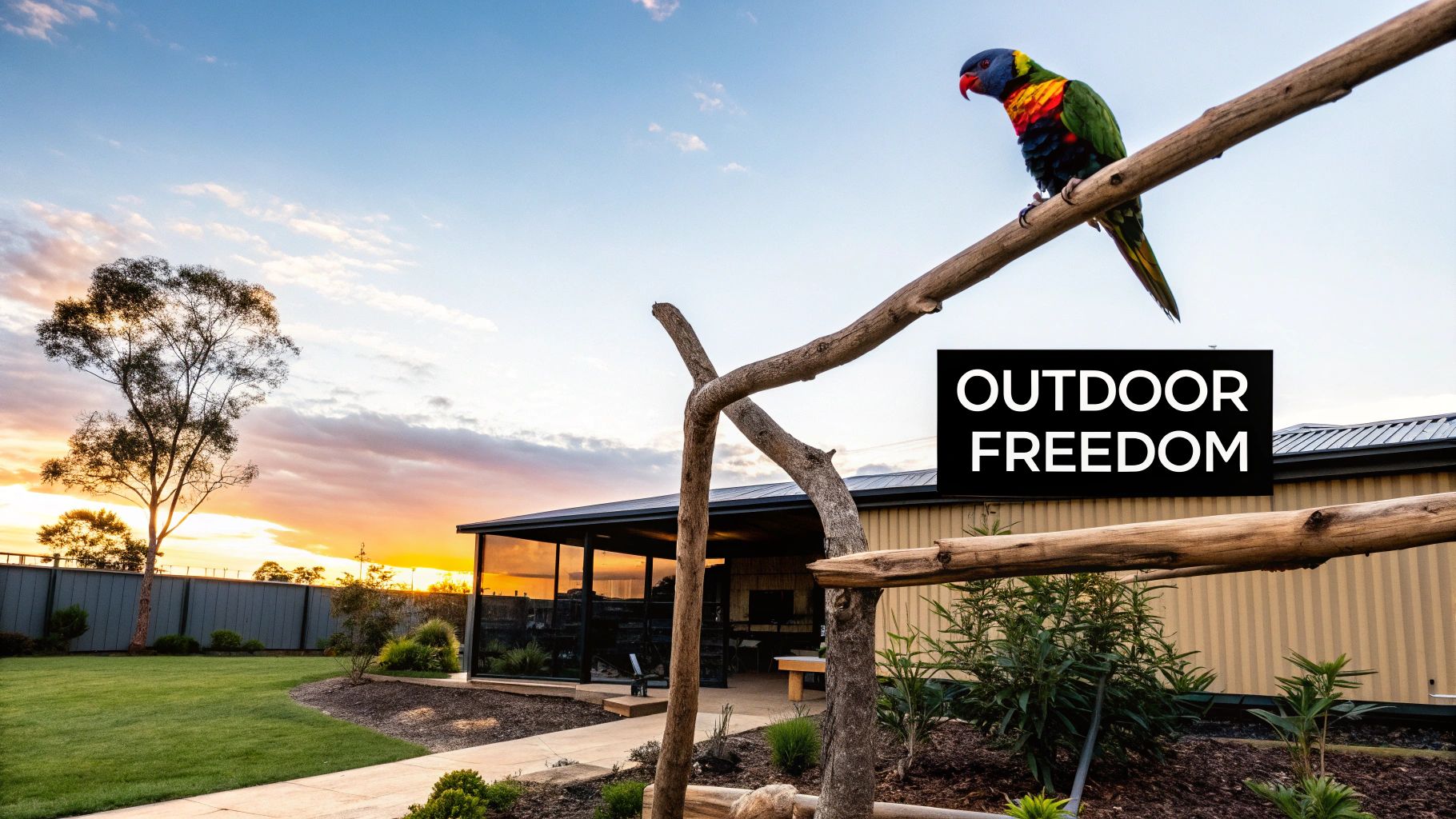
Just imagine your bird's world expanding from the confines of a cage to a private, sunlit habitat of their own. An outdoor aviary isn't just a bigger cage; it's a fundamental upgrade to their quality of life. It allows them to tap into natural behaviours that are often suppressed indoors, leading to huge improvements in their physical and mental wellbeing.
This trend towards better avian housing is really taking off across the country. As Aussie households continue to put pet wellness first, the demand for quality outdoor bird aviary kits—especially those designed for our local climates and native species—is on the rise.
The Power of Natural Sunlight and Fresh Air
One of the biggest wins is exposure to unfiltered sunlight. Life indoors, even right next to a window, blocks the essential UVB rays birds need to synthesise Vitamin D3. This vitamin is absolutely crucial for proper calcium absorption, which supports strong bones, healthy egg-laying, and a robust immune system.
A well-placed aviary gives your bird direct access to the sun's rays, helping to prevent serious health issues like calcium deficiency. Think of it as a daily dose of wellness, straight from nature.
The sensation of a gentle breeze ruffling their feathers and the sounds of the Aussie outdoors—from the chirping of wild birds to the rustle of gum leaves—provide constant, gentle stimulation. This sensory enrichment keeps a bird's mind active and alert, cutting through the monotony that can lead to stress in a static indoor environment.
More Than Just Space—It’s a Behavioural Necessity
A spacious aviary unlocks a bird's most fundamental instinct: flight. The ability to fly, even just short distances, is vital for maintaining muscle tone, cardiovascular health, and a healthy weight.
Beyond the physical workout, an aviary is the perfect stage for other essential activities:
- Foraging: You can scatter food or hide it in different spots to encourage them to search and work for their meals, just like they would in the wild.
- Social Interaction: For multiple birds, an aviary allows for more natural flock dynamics and socialising without the stress of being cooped up.
- Mental Stimulation: The ever-changing environment, the weather, and all the new sights keep a bird's mind engaged, heading off boredom at the pass.
This boost in activity and engagement is key to preventing common behavioural problems like feather plucking, excessive screaming, and aggression. Providing a rich, dynamic space is a core principle of modern Animal Enrichment in Australia, making sure your companion doesn't just survive, but truly thrives.
Choosing the Right Aviary Kit for Your Bird and Backyard
Picking out the perfect outdoor bird aviary kit in Australia can feel like a huge job, but it really doesn’t have to be. If you break it down into a few simple steps, you can find a safe, sturdy, and comfortable home for your feathered family without the stress.
It all boils down to three things: what your specific bird needs, which materials can handle our weather, and what design works best for your garden. Getting these right from day one means you're investing in a secure and happy space for years to come.
Matching the Aviary to Your Bird Species
The golden rule of choosing an aviary is that one size absolutely does not fit all. What a tiny finch needs is a world away from the requirements of a big, powerful macaw, and your aviary kit has to reflect that. The two things you absolutely must get right are the overall size and the spacing of the wire mesh.
A bird needs enough room to do more than just sit there—it needs space to actually live. That means plenty of room for a full flight, even if it's just short hops from one perch to another. A great rule of thumb is to make sure the aviary’s width is at least double your bird's full wingspan. This allows them to move around comfortably without bumping into the sides. If you have multiple birds, you’ll need even more space to prevent squabbles and stress.
Bar spacing is a critical safety feature you can’t compromise on. For little birds like finches, canaries, or budgies, the gap between the bars must be no more than 12.5mm. Any wider, and you risk them squeezing through or getting their head tragically stuck. For bigger parrots, the wire gauge (its thickness) is what matters most, as it needs to be tough enough to stand up to their incredibly strong beaks.
Built to Last: Australian Materials
Let’s be honest, the Aussie climate is tough. Between the scorching summer sun, salty coastal air, and unexpected downpours, your aviary needs to be built like a tank. The material you pick directly affects how long it will last, how safe it is, and how much work it’ll be to maintain.
When you're looking at outdoor bird aviary kits in Australia, you’ll mostly come across three main materials. Each has its own set of pros and cons, especially when you factor in our unique conditions.
Aviary Material Comparison for Australian Conditions
| Material | Pros | Cons | Best Suited For |
|---|---|---|---|
| Galvanised Steel | Super strong, durable, and rust-resistant. It’s a popular and budget-friendly choice that stands up well to Australian weather. | Can contain zinc, which is a heavy metal toxicity risk if your bird chews on it. Look for high-quality galvanising to reduce this risk. | An all-rounder, especially good for large, strong-beaked parrots that need a really robust home. |
| Powder-Coated Steel | Gives fantastic protection against rust and weather. The coating is non-toxic once cured and you can get it in different colours. | A very destructive bird might be able to chip or chew the coating off over time, which could expose the metal underneath. | Small to medium-sized birds where beak strength isn't a huge issue. It's also a great choice if you want the aviary to look good in your backyard. |
| Aluminium | Lightweight, completely rust-proof, and usually easier to put together. It’s the perfect pick for coastal areas with lots of humidity and salt spray. | It’s softer than steel, so it might not be the best for big, destructive parrots who could potentially bend or damage the frame. | Finch aviaries, small parrots, and anyone living in humid or coastal areas who wants to avoid rust and have an easier time with assembly. |
It's clear that the right material depends entirely on your bird and your location. Taking a moment to weigh these options will save you a lot of headaches down the track.
Expert Tip: Always, always check that any coatings or finishes on your aviary kit are certified non-toxic and bird-safe. Some cheaper imports might use paints with lead or zinc, which can be fatal if your bird ingests them. Reputable Australian suppliers will always put safety first.
Aviary Designs for Every Need
Finally, have a think about how you’ll actually use and look after the aviary day-to-day. The design style changes everything, from how you clean it to how you interact with your birds.
-
Walk-In Aviaries: These are the most popular for a reason. You can step right inside, which makes cleaning, feeding, and setting up enrichment like shreddable bird toys or natural wood perches so much easier. Plus, they offer a wonderful chance to sit inside and just hang out with your birds.
-
Suspended Aviaries: These are built on legs, raising them off the ground. This design is brilliant for hygiene because waste falls through the wire floor, keeping the birds well away from their droppings. It also provides top-notch protection from ground predators and pests.
-
Modular Aviary Kits: These are the smart choice for anyone planning to grow their flock. These kits let you add new panels and sections later on, so the aviary can expand as your needs change. That flexibility makes them a great long-term investment.
Navigating Council Rules and Finding the Perfect Spot
Before you get carried away with the excitement of unboxing your outdoor bird aviary kit in Australia, there are a couple of crucial planning steps that will save you a world of trouble down the line. First, checking council regulations, and second, choosing the perfect location.
Getting these fundamentals right from the start is the difference between a smooth project and a stressful one. Think of it as laying the groundwork for your bird's new home—a quick check with your local council and a thoughtful look around your backyard are the best investments you can make.
Understanding Local Council Requirements
Here in Australia, most local councils have specific rules about what you can build in your backyard, and an aviary is no exception. These regulations can cover everything from the maximum size of the structure to how close it can be to your neighbour's fence.
Ignoring these rules can lead to some serious headaches, including fines or even being told to take the whole thing down. A simple phone call or a visit to your local council’s website is usually all it takes to find what you need. Look for sections on "ancillary structures," "outbuildings," or "sheds," as aviaries often fall under these categories.
Key things to check with your council include:
- Size Restrictions: Is there a maximum height or floor area allowed before you need a permit?
- Boundary Setbacks: How far must the aviary be from your property lines and fences?
- Permit Requirements: Does the size of your chosen kit mean you need to lodge a development application?
Being proactive here keeps you on the right side of the law and helps maintain good relationships with your neighbours.
How to Choose the Perfect Site
Once you've got the all-clear from the council, it’s time to scout out the perfect spot in your garden. The right location is all about finding a balance between your bird's needs and the practicalities of your space. You're not just finding a flat bit of ground; you’re choosing their entire world.
A well-chosen spot will protect your birds from environmental stress, predators, and disturbances, creating a calm and secure atmosphere where they can really thrive. For example, a large walk-in flight cage for birds offers incredible enrichment, but its placement is critical to making the most of those benefits.
Expert Advice: Take your time with this step. Watch how the sun, shade, and wind move through your garden at different times of the day. A spot that looks perfect in the morning might be blasted by the harsh afternoon sun or battered by strong evening winds.
Here’s a checklist to help guide your site assessment:
- Sun and Shade: Look for a spot that gets gentle morning sun but offers plenty of shade during the hottest parts of the Aussie day. Dappled light under a deciduous tree is often a fantastic option.
- Wind Protection: Position the aviary where it’s sheltered from strong prevailing winds by a fence, a wall, or some hardy shrubs. A constant draft is stressful for birds and can lead to health problems.
- Good Drainage: Steer clear of low-lying areas that collect water after rain. A soggy aviary floor is a breeding ground for bacteria and parasites, so choose a spot with excellent natural drainage.
- Peace and Quiet: Try to place the aviary away from high-traffic footpaths, noisy air conditioning units, or the neighbour's barking dog. A peaceful location reduces stress and helps your birds feel safe and secure.
Building a Fortress Against Australian Predators
For any Australian bird owner, true peace of mind comes from knowing your aviary is an impenetrable fortress against local wildlife. Our unique environment means we share our backyards with a clever and persistent range of predators, making robust protection an absolute must when you invest in an outdoor aviary.
From cunning goannas and snakes to determined foxes, neighbourhood cats, and even aggressive birds like butcherbirds, the threats are very real. The good news? Building a completely secure habitat is entirely achievable with the right design and materials. It all starts from the ground up.
Securing the Aviary from the Ground Up
Your first line of defence against anything that digs or slithers is the aviary's base and mesh. Predators like foxes, dogs, and goannas are expert diggers, while snakes can squeeze through surprisingly tiny gaps.
A solid concrete slab is the gold standard for aviary flooring. It's impossible to dig under, a breeze to clean, and stops rodents from burrowing in. If a concrete base isn't practical for your setup, the next best thing is a deep wire mesh skirt. This involves burying a quality, heavy-gauge wire mesh at least 30-50cm deep into the ground around the aviary's entire perimeter. Think of it as an underground barrier that stops diggers dead in their tracks.
When it comes to the walls, choosing the right mesh is non-negotiable.
- Snake-Proof Mesh: Settle for nothing less than a mesh with an aperture no larger than 12.5mm x 12.5mm. Anything bigger is an open invitation for juvenile snakes.
- Wire Gauge: The thickness of the wire is just as important. For powerful parrots, a strong welded wire is essential to stop them from chewing through it, while also keeping larger predators out.
This map highlights the key factors to consider when positioning your aviary, which plays a big part in its overall security.
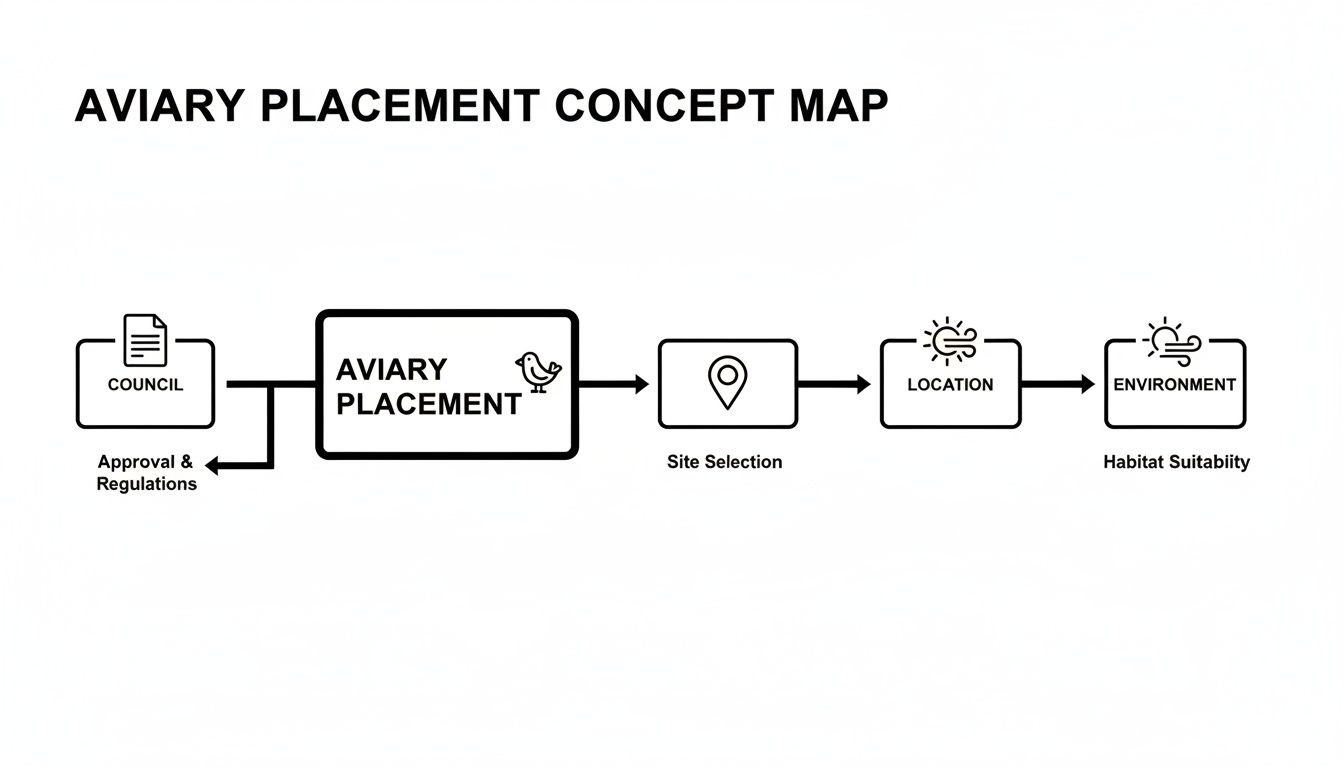
As you can see, thinking about your environment alongside council rules and the specific spot you choose helps create a safer, more stable habitat right from the start.
The Double-Door Safety Porch
One of the most effective features for both predator protection and preventing accidental escapes is a double-door safety porch. It's a small, two-door entryway system that acts like an airlock. You enter the outer door, close it securely behind you, and only then do you open the inner door to the main aviary.
This simple design makes it virtually impossible for a bird to dart out as you enter or for a predator to sneak in behind you. It is one of the single most important safety features you can include in a walk-in aviary design.
Beyond preventing escapes, it gives you a secure space to manage food bowls and enrichment items like a new Gumnut Foraging Bird Toy without juggling doors and birds at the same time.
Locks, Latches and Roof Security
Clever parrots and persistent predators can figure out simple locks, so don't underestimate them. It’s vital to fit your aviary with secure, parrot-proof latches that need more than a simple nudge to open. Padlocks or carabiner clips are excellent, reliable choices.
Finally, never forget about threats from above. Hawks, eagles, and butcherbirds can be a serious danger. Your aviary roof should be made from solid metal sheeting or, at a minimum, be double-wired with a gap between the layers. This ensures that even if a raptor lands on top, it can’t reach through and harm your birds.
By fortifying the base, walls, entry, and roof, you create a complete sanctuary where your birds can enjoy the outdoors in total safety. Placing engaging items like a colourful Plastic Fantastic Shredding Toy or a durable Galah & Cockatoo Swing inside will make their secure world even more enriching.
From Flat Pack to Fully Fledged Habitat
There’s a special kind of excitement when that flat-pack aviary kit finally arrives. Turning a stack of panels and wire into a safe, stimulating home for your bird is a two-part journey. First, you build the structure. Then, the real fun begins: creating an enriching world inside that taps into your bird's natural instincts.
Of course, the first rule is to follow the manufacturer's instructions to the letter. Most Aussie-made kits are designed for a pretty straightforward build, usually needing just a handful of basic tools you probably already have in the shed. A great tip is to lay out all the pieces, give them a quick check against the parts list, and just get a feel for how it all connects before you start tightening screws. Trust me, this little bit of prep can save you a mountain of frustration later.
Putting Your Aviary Kit Together
Think of it as building from the ground up. If you’ve laid a concrete slab, your foundation is sorted. If you're building on level ground, your first job is to put together the base frame. From there, it’s a pretty logical process:
- Get the Walls Up: Attach the wall panels one by one, securing them to the base and then to each other. It really helps to have a second pair of hands for this bit, just to hold the panels steady while you fasten them.
- Hang the Door: Next, fit the door panel. If your kit has a safety porch, get that installed too. Make sure the door swings freely and that the latches line up perfectly—you don't want any sticky locks.
- Put a Lid On It: Finally, lift the roof panels into place and fix them down securely. Before you call it a day, do one last check over all the connections. You want everything tight, with no gaps where a sneaky predator might try to squeeze through.
Designing a Bird-Centred Interior
With the structure built, you can switch from your construction hat to your interior designer hat. This is your chance to create a space that encourages your bird to move, play, and feel comfortable. A bare aviary is just a box; a well-furnished one is a dynamic environment that boosts both physical and mental health.
A well-arranged aviary should have different "stations" for activities like eating, drinking, playing, preening, and resting. This encourages your bird to move around the entire space all day, giving them vital exercise and keeping their mind busy.
Start with the essentials. Food and water bowls should be placed well away from perches to keep them clean from droppings. Popping them at opposite ends of the aviary is a great trick to encourage a bit of flight between meals and drinks.
The Foundations of a Happy Habitat: Perches and Toys
Perches are basically your aviary's furniture, and variety is key. Using natural branches with different diameters, textures, and shapes is brilliant for exercising your bird's feet and preventing issues like pressure sores. A good mix of native Australian branches, like bottlebrush or gumtree, provides fantastic grip and is perfectly safe for them to have a good chew on.
Place the perches strategically to create clear flight paths across the aviary. You’ll want some high perches for resting and keeping an eye on things, and lower ones near food stations or fun toys.
This is also the perfect time to bring in the enrichment. Start with a few durable items that can handle the Aussie weather.
- A sturdy Natural Wood Perch with Gumnuts and Leather is fantastic because it’s not just a perch, but also a chewable, interactive toy.
- Engaging toys like a Foraging Star with Paper turn feeding time into a fun puzzle, satisfying that natural instinct to work for their food.
- For the more active birds, a tough swing like the Talon Tough Galah & Cockatoo Swing adds a whole new dimension of fun to their new home.
By thoughtfully arranging these elements, you’re not just filling an empty space—you’re creating a vibrant habitat. It becomes more than an enclosure; it's a personalised sanctuary filled with opportunities for discovery. And if you're the hands-on type, checking out guides on how to make your own DIY bird toys can add another layer of personal care to your bird's new world.
Creating a Stimulating World Inside Your Aviary
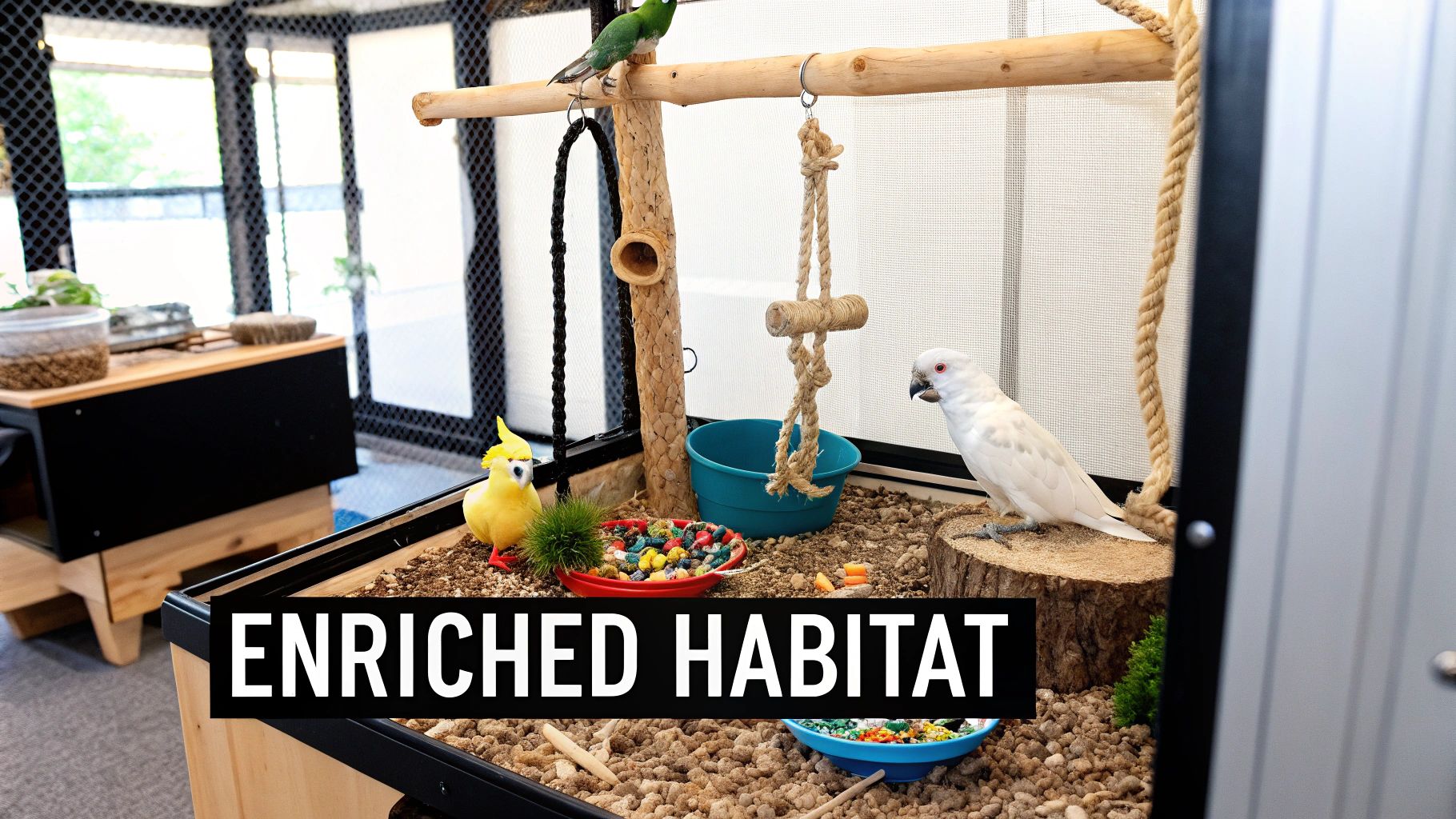
Your brand-new aviary is so much more than just a safe enclosure. Think of it as a blank canvas, waiting for you to create a vibrant, engaging world for your flock. A bare aviary can quickly lead to boredom and stress, but a thoughtfully designed interior is brilliant for their mental health, encouraging all the natural behaviours that help a bird truly thrive.
The trick is to think a bit like an interior designer for birds. By creating distinct ‘zones’ for different activities, you encourage your birds to move, explore, and make choices about their day. It’s a simple strategy that turns a big cage into a dynamic, living habitat.
Designing a Multi-Zone Environment
Take a moment to imagine your bird's day. It’s not just one long activity; it’s a whole series of different behaviours from foraging and playing to preening and napping. A zoned aviary caters to this rhythm by providing specific areas for everything they need to do.
Here’s a simple way to divide the space to create a more stimulating world:
- The Foraging Zone: This is the restaurant and puzzle room all rolled into one. Instead of just putting a food bowl down, this area should be packed with opportunities to work for their meals. It's the perfect spot for complex foraging toys for birds, encouraging them to problem-solve just as they would in the wild.
- The Play and Exercise Zone: Think of this as the local gym and playground. This part of the aviary needs plenty of flight space and should be kitted out with swings, ladders, and a variety of toys to get them moving.
- The Social Hub: This is the living room, a place for flock interaction, preening, and just watching the world go by. It should feature comfortable, natural perches of varying diameters—native Australian branches are fantastic for this.
- The Quiet Retreat: Every creature needs a peaceful corner to rest and feel secure. This zone should be in a sheltered, partially hidden part of the aviary, away from the main action. It offers a calm space to unwind or have a little nap.
Choosing Toys for Different Personalities
Just like people, birds have their own unique personalities and preferences, especially when it comes to playtime. A Galah might be obsessed with shredding anything it can get its beak on, while a clever Cockatoo might prefer a complex puzzle that really makes them think.
Expert Advice: The best enrichment strategy is rotation. Swap toys in and out every week or two. This keeps their world fresh and exciting, preventing boredom and making sure there’s always something new to discover.
For the big chewers like Macaws or Sulphur-crested Cockatoos, durability is everything. You'll want large, robust toys made from bird-safe hardwood and tough vegetable-tanned leather that can stand up to a powerful beak.
For smaller, more delicate birds like Cockatiels or Conures, shreddable toys made from paper, cardboard, and yucca are a huge hit, providing hours of satisfying destruction. When you thoughtfully provide these tools for enrichment, your outdoor bird aviary kit becomes more than a cage—it becomes a true sanctuary.
Your Top Questions About Outdoor Aviaries in Australia
To wrap things up, let's tackle some of the most common questions we hear from bird owners across Australia when they're thinking about an outdoor aviary. Getting these practical details straight will help you feel confident and ready for this exciting project.
How Often Should I Clean an Outdoor Aviary?
When it comes to aviary hygiene, routine is everything. Think of it in layers.
Daily spot-cleaning is non-negotiable. This just means washing out the food and water dishes and giving any soiled perches a quick wipe down before they get crusty.
At least weekly, you’ll want to do a more thorough clean of the floor, substrate, and any high-traffic perches. Then, every one to two months, it’s time for a full deep clean—scrubbing down all surfaces with a good bird-safe disinfectant. How often you do this really depends on how many birds you have and just how messy they are!
What Is the Best Flooring for an Aviary in Australia?
A concrete slab is the gold standard, hands down. It’s tough, a breeze to clean, and offers the best protection against predators. Nothing is digging its way in or out through solid concrete. Pavers are another fantastic and durable choice.
If you’re after a more natural look, a deep litter system with clean sand or bird-safe mulch can work well. The catch? It needs constant, diligent maintenance to keep it dry and clean, especially in Australia's humid climates where mould and bacteria love to grow.
Expert Tip: If you go with a natural substrate, putting a concrete or paver base underneath it gives you the best of both worlds. You get the natural feel for your birds' feet, plus an extra layer of security against any digging predators.
Can I House Different Bird Species Together?
Mixing species is a very tricky business and, honestly, not something we'd recommend for most bird owners. It’s incredibly complex.
While you might see some placid finch or canary species living together peacefully in a huge, well-designed aviary, most parrot species are territorial. Putting them together can lead to bullying, serious injuries, or chronic stress.
Before you even think about it, you need to do exhaustive research into species compatibility and have a chat with your avian vet. If you do decide to go ahead, a very slow, carefully supervised introduction is an absolute must.
Keep Reading
Disclaimer Summary:
The information in this article is general in nature and may include external links or resources not created by Lou Lou Bells Bird Toys. Every bird is unique, so we encourage you to seek personalised advice from your own veterinarian or avian specialist. For full details, please read our complete disclaimer here.