
Let's get one thing straight from the start: when you're choosing a large cage for a parrot, the biggest one you can afford and fit in your home is always the right choice. This isn't just a friendly tip; it's the bedrock of responsible parrot care. A cage is so much more than a place for your bird to sleep—for many hours of the day, it's their entire world.
Why a Bigger Cage Is Always Better for Your Parrot
It's a common mistake to think of a parrot cage as just a 'house'. For your bird, it’s their bedroom, dining room, gym, and playground rolled into one. Try to imagine spending most of your life stuck in a single, small room. That’s the reality for many companion parrots living in cages that are just 'big enough' instead of being truly spacious.
This kind of confinement has a real impact on their physical and mental health. A cramped space stops them from doing the basics, like flapping their wings, stretching out fully, and climbing around. Over time, this lack of exercise can lead to weak muscles and obesity, while the sheer boredom can trigger serious behavioural problems.
The Link Between Space and Well-being
When a parrot doesn't have enough room to move, stress and boredom creep in fast. That frustration often boils over into destructive behaviours that are heartbreaking for any owner to see.
- Feather Plucking: A common stress response where a bird starts compulsively pulling out its own feathers.
- Aggression: Lashing out, biting, or screaming can be a cry for help from a bird that feels trapped and deeply frustrated.
- Repetitive Behaviours: Pacing back and forth, constant head-bobbing, or chewing on the cage bars are all tell-tale signs of psychological distress from a poor environment.
Giving your bird a generous living space is one of the most fundamental acts of love you can show them. It gives them the freedom to be a parrot—to climb, to solve a cleverly placed foraging puzzle, or to happily shred a favourite toy.
Expert Advice: The goal is to provide a habitat, not just a holding cell. A big cage lets you create different 'zones'—an area for sleeping, one for eating, and a few different spots for play with things like shreddable toys or long-lasting stainless steel toys. This setup mimics the complexity of their natural world and makes their daily life so much richer.
For parrot guardians here in Australia, a large cage is absolutely vital for preventing serious welfare issues. Studies have shown that up to 20% of caged birds in cramped setups suffer from feather plucking. Avian vets also report that parrots in cages under one metre wide show much higher stress levels. With many people being new to parrot care, investing in the right environment from day one is crucial for their long-term happiness. You can get more insights into Australia's growing pet population on Global Pet Industry. This guide will walk you through exactly what you need to look for.
Matching The Cage To Your Parrot Species
Choosing a cage for a parrot isn't a simple case of "one-size-fits-all." The perfect home for a tiny Budgerigar would be a dangerous, unsuitable space for a magnificent Macaw. Getting the cage dimensions and bar spacing right for your specific parrot species is one of the most critical decisions you'll make for their safety and happiness. It’s about building a space where your bird can truly thrive, not just survive.
Think of it like being an architect for your bird's wellbeing. The cage needs to be wide enough for them to fully stretch out and flap their wings without smacking the sides—a natural behaviour that keeps their muscles strong and beats boredom. The height has to accommodate their tail and give them room to climb, while the depth lets them move comfortably between perches.
Why Size and Spacing Are Not Negotiable
Getting the measurements wrong can lead to serious, even fatal, consequences. Bar spacing that’s too wide for a small bird is a huge risk; they can get their head stuck, leading to severe injury or strangulation. On the flip side, a large parrot with a powerful beak can easily bend or break bars that are too thin, creating sharp, dangerous edges or an escape route.
Not having enough internal space is just as bad. A cage that’s too narrow stops a bird from doing something as simple and crucial as a full wing flap. This restriction can cause frustration, muscle atrophy, and behavioural problems over time. It's like living in a hallway where you can never fully stretch your arms out.
This is backed by welfare data, which shows a direct link between poor housing and stress behaviours.
As you can see, when you invest in a properly sized cage, common stress indicators like feather plucking drop dramatically.
A Species-Specific Guide to Cage Dimensions
To help take the guesswork out of your decision, here’s a guide to the minimum internal cage dimensions and correct bar spacing for popular Australian parrot species. And remember, these are the absolute minimums—bigger is always better.
When you're sizing up a potential cage, always measure the internal living space, not including any seed guards or fancy decorative tops.
To make things easier, we've put together a quick reference table. This will give you a solid starting point for finding a safe and comfortable home for your feathered friend.
Parrot Species Cage and Bar Spacing Guide (Minimum Recommendations)
| Parrot Species | Minimum Internal Width (cm) | Minimum Internal Depth (cm) | Minimum Internal Height (cm) | Bar Spacing (cm) |
|---|---|---|---|---|
| Small Parrots | ||||
| Budgerigar, Lovebird | 60 | 45 | 45 | 1.0 - 1.2 |
| Cockatiel, Parrotlet | 65 | 50 | 60 | 1.2 - 1.5 |
| Medium Parrots | ||||
| Green-cheeked Conure | 70 | 55 | 65 | 1.5 - 1.8 |
| Sun Conure, Quaker | 75 | 60 | 70 | 1.8 - 2.0 |
| Galah, Corella | 90 | 65 | 80 | 2.0 - 2.5 |
| Large Parrots | ||||
| Amazon, African Grey | 100 | 75 | 120 | 2.0 - 2.5 |
| Eclectus Parrot | 100 | 80 | 120 | 2.5 - 3.0 |
| Cockatoo (Sulphur-crested) | 120 | 90 | 150 | 2.5 - 3.2 |
| Macaw (Blue & Gold) | 120 | 100 | 160 | 2.5 - 3.5 |
Think of this table as your starting point. For birds that spend a lot of their day inside their enclosure, or for especially active species, you should aim to go well beyond these recommendations. If you're keen on maximising horizontal space for exercise, you can learn more about the benefits of a bird flight cage and how it promotes natural movement.
Expert Advice: If you're ever in doubt, always pick the larger cage with the narrower bar spacing. You can't go wrong with giving your bird too much safe space. A bigger cage also gives you more room for enrichment, letting you create different zones for foraging with puzzle toys, shredding natural materials, and just resting peacefully.
By carefully matching the cage to your bird’s needs, you're laying the foundation for a long, healthy, and happy life together. It's the most important investment you can make in their wellbeing.
Choosing Safe and Durable Cage Materials
When you’re picking out a cage for a large parrot, the material it’s made from is so much more than a style choice. It’s one of the most important decisions you’ll make for their health and safety. A parrot’s beak is an incredibly powerful tool that can chip, bend, and even destroy weak materials. And since they use their mouths to explore absolutely everything, any toxic component can easily be ingested, leading to heartbreaking health problems.
Investing in a cage made from safe, high-quality materials is non-negotiable. It’s what protects your bird from harm and ensures the cage will stand up to the sheer force of that beak for years. This is one area where trying to save a few dollars can have devastating consequences down the track.
The Gold Standard: Stainless Steel
Let’s be clear: medical-grade stainless steel is, without a doubt, the safest and most durable material you can get for a parrot cage. It’s non-porous, which means it won’t harbour nasty bacteria, and it’s fantastically resistant to rust and corrosion. Most importantly, it’s completely non-toxic and tough enough to handle the strongest beaks, from a Galah to a Macaw.
Yes, stainless steel cages do come with a much higher price tag, but it’s best to think of them as a lifetime investment. They won’t chip, flake, or rust, which completely removes the risk of your bird swallowing something harmful. If your budget can stretch to it, a stainless steel cage offers unbeatable peace of mind.
Understanding Powder-Coated Cages
Powder-coated cages are a very popular and more budget-friendly option. The catch is that not all coatings are created equal. It is absolutely vital to make sure the cage is finished with a bird-safe, non-toxic, zinc-free powder coat. Any reputable Australian supplier will state this clearly. If you don't see it mentioned, ask them directly or simply walk away.
Expert Advice: A good quality powder coating is heat-bonded to the metal, creating a tough, durable finish that feels a bit like hard plastic. Cheaper cages often just use regular liquid paint, which a parrot can easily chip off. This paint might contain lead or other toxins. Always ask the seller about their manufacturing process.
Dangerous Materials to Avoid at All Costs
Knowing what to look for is half the battle; knowing what to avoid is the other half. Certain materials are genuinely dangerous and can lead to heavy metal toxicity, a serious and often fatal condition for birds.
- Zinc: This is often used as a coating on cheaper cages (think galvanised wire). Zinc is highly toxic if ingested. When parrots chew on zinc-coated bars, they can develop zinc poisoning, which causes severe digestive and neurological problems.
- Lead: You might find lead-based paint in some older, second-hand cages or in very cheaply made imports. Lead poisoning is a major hazard that attacks a bird’s central nervous system and can be deadly.
- Brass: While some brass fittings might look nice, it’s an alloy that often contains both zinc and copper. A clever parrot can often break or twist these fittings, creating a serious ingestion risk.
When you're buying a large cage for your parrot, always put quality first and buy from a trusted source. A well-made cage is your bird's safe haven, protecting your companion from hidden dangers. This initial investment in quality materials will pay you back tenfold in the health and happiness of your bird for their entire life.
What Makes a Great Cage, Anyway? Essential Features to Look For
Once you've sorted out the big questions of size and material, it's time to get into the details that make a real difference in your day-to-day life with a parrot. A well-designed cage is so much more than just a box with bars. The practical features are what separate a good cage from a truly great one, making things like cleaning, feeding, and playtime easier for both of you.
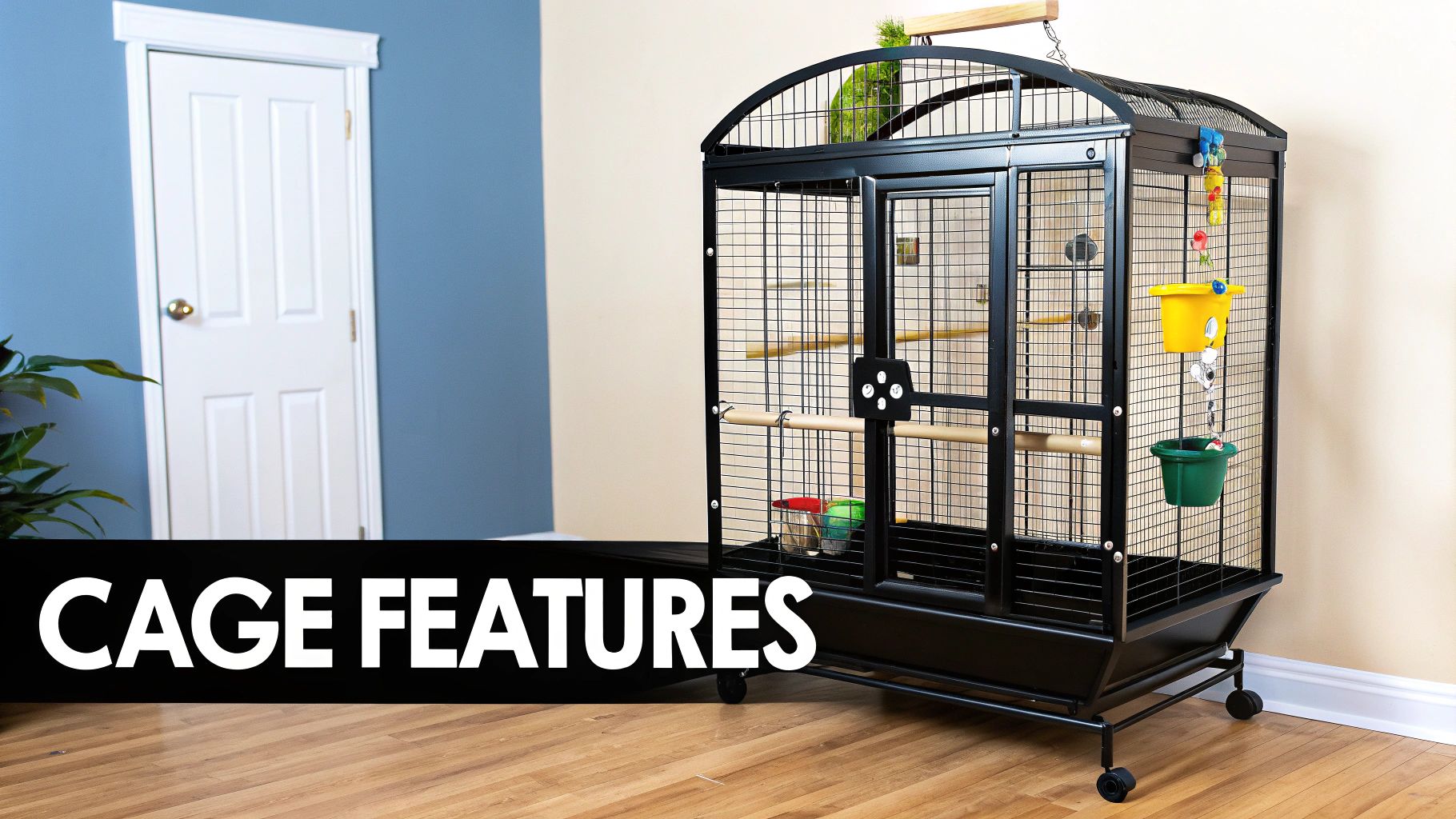
Let’s start with the front door. This might seem like a small thing, but a large, main door that opens outwards is a game-changer for building a bond with your bird. It lets you offer your arm for a "step-up" calmly and without forcing your parrot into a corner. Small or top-opening doors can make a bird feel trapped and defensive.
A big door makes training a relaxed, voluntary interaction instead of a stressful one. It also makes swapping out big toys and perches a whole lot less awkward.
Smart Design for Daily Living
You can tell when a cage manufacturer actually understands what it's like to live with a parrot. The thoughtful little details make all the difference.
- Secure Feeder Doors: Parrots are clever, and some, like Cockatoos and Macaws, are absolute escape artists. Look for individual feeder doors that lock securely from the outside. This lets you top up food and water without giving your bird a chance to make a break for it.
- Horizontal Bars: While vertical bars can look sleek, horizontal bars are far more functional. They essentially turn the cage walls into a built-in ladder, encouraging your bird to climb and exercise, making full use of all that vertical space you’ve provided.
- Seed Guards: A simple skirt or guard around the bottom of the cage is an absolute lifesaver for your floors. It catches a surprising amount of stray seeds, pellet crumbs, and veggie bits, keeping the mess contained.
Expert Tip: The roof style isn't just for looks. A play-top cage gives your bird a built-in activity centre right on top, complete with perches and food bowls. It's a fantastic, safe spot for supervised out-of-cage time. On the other hand, a classic dome-top offers more internal height, which is perfect for hanging long, dangly toys and swings.
Making Life Easier: Convenience and Mobility
Let's be honest, a large parrot cage is a hefty piece of furniture. That's why a sturdy stand with good quality castor wheels is a non-negotiable feature. It means you can easily roll the cage to clean behind it or move it to a different spot for a change of scenery. You could even wheel it onto a secure patio for some safe, supervised sunshine without a major struggle.
Finally, pay close attention to the grate and tray at the bottom. A system where the bottom grate and the waste tray slide out independently makes daily cleaning quick and painless. The grate is crucial—it stops your parrot from walking through their droppings or tearing up the cage liner. Making sure these parts slide smoothly is a small detail that saves you a lot of daily frustration.
As you start to outfit the new home, you'll find a whole world of parrot cage accessories that can enhance these built-in features and make the space even more engaging for your bird.
Setting Up Your Parrot’s Enriched Environment
An empty cage, no matter how large, is just a box. The real magic happens when you transform that space into a thriving, stimulating environment that caters to your parrot's natural instincts. This is where you turn a simple enclosure into a true habitat.
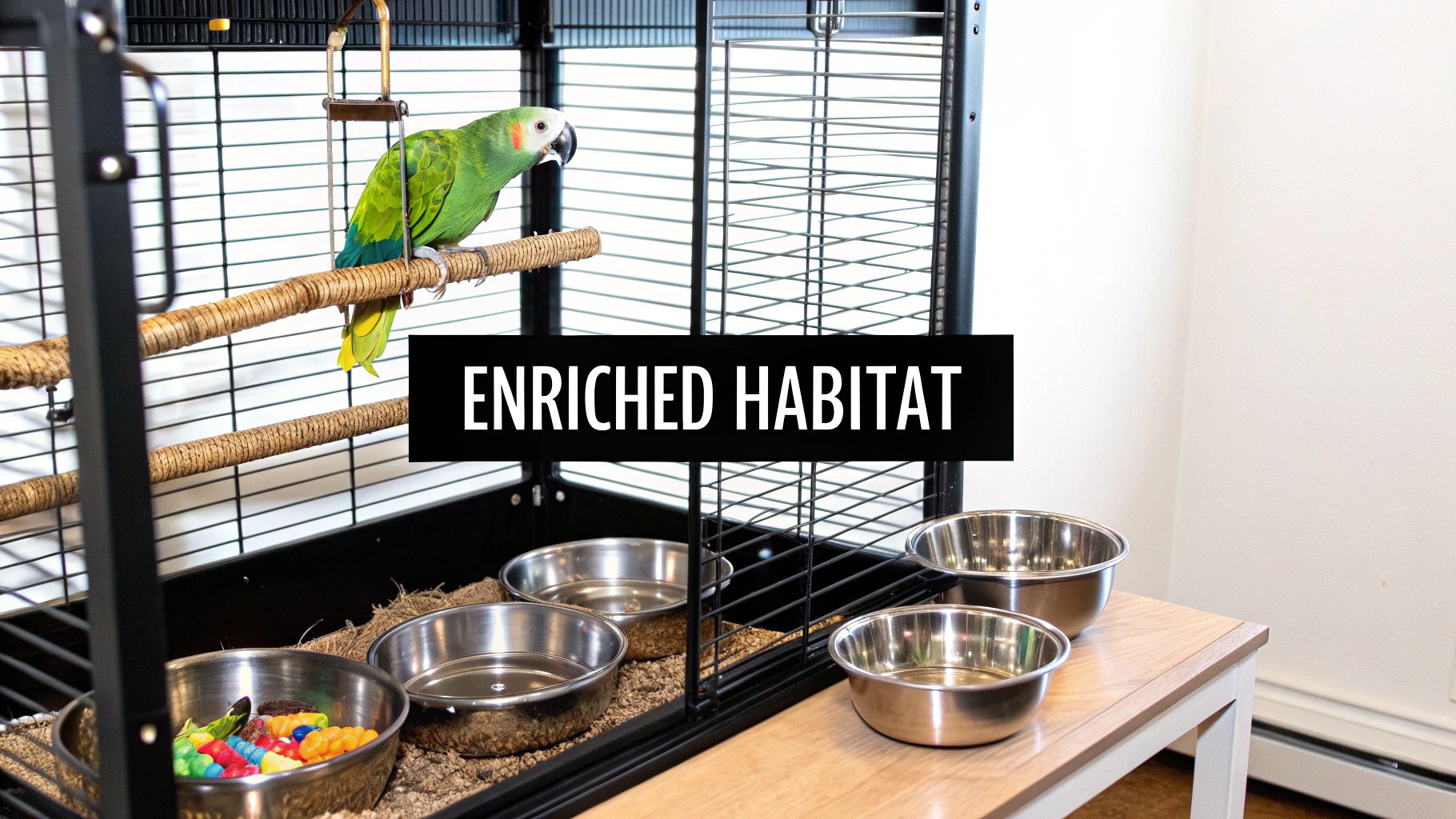
The foundation of any great cage setup is the perching. A bird’s foot health really depends on having a variety of perch textures and diameters to stand on. If you just rely on a single, uniform dowel perch, it can lead to painful pressure sores and arthritis, a condition known as bumblefoot.
To prevent this, aim for a rich mix of surfaces. Natural wood branches, like eucalyptus or bottlebrush from safe, unsprayed trees, are fantastic as their irregular shapes naturally exercise your parrot's feet. It’s a good idea to supplement these with rope perches for softer spots and textured concrete perches to help keep their nails trim.
Creating Zones for Activity and Rest
A well-designed large cage for a parrot should have distinct ‘zones’ for different activities. This mimics their life in the wild, where they travel between areas to eat, play, and sleep. Thoughtful placement of bowls, perches, and toys is the secret to creating this functional living space.
- Dining Zone: Place food and water bowls high up in the cage, and make sure they're not directly under any perches. This simple step is crucial for preventing contamination from droppings, keeping their meals fresh and hygienic.
- Play Zone: This should be the most exciting part of the cage. Hang a variety of toys here to encourage climbing and exploration. Position durable stainless steel toys where they can be reached easily to provide plenty of auditory and physical engagement.
- Resting Zone: Designate a quiet corner, usually at the highest point in the cage, with a comfortable perch. This gives your parrot a secure spot to retreat to when they want to nap or simply observe their surroundings peacefully.
Fostering Natural Behaviours with Toys
Toys aren't just for fun; they are essential tools for mental and physical stimulation. They encourage natural behaviours like chewing, shredding, and problem-solving, which are absolutely vital for a happy and healthy parrot.
Expert Advice: Don't cluster all the enrichment in one spot. Scatter toys throughout the cage to get your bird moving. Hang shreddable toys in different areas to satisfy their chewing instincts, and place challenging foraging puzzles away from the main food bowl. This encourages them to work for their treats, providing excellent mental stimulation and preventing boredom. You can explore a great range of ideas in our detailed guide on foraging toys for birds.
Bird ownership is a huge part of Australian life, with companion birds found in 9% of households. That translates to millions of parrots who need properly sized and enriched homes. Active species like African Greys and Amazons require significant flight space to prevent obesity, a condition that affects an estimated 25% of captive parrots due to lack of exercise. Since 2016, Australia's pet population has grown by 30%, driving a massive A$1.4 billion spend on accessories where quality enclosures really stand out. You can discover more insights from this comprehensive national pet survey from Animal Medicines Australia.
By thoughtfully setting up your parrot’s cage, you're not just decorating; you're building a world designed for their wellbeing. This enriched environment supports their physical health and nurtures their intelligent, curious minds every single day.
Your Essential Cage Purchase and Care Checklist
Bringing home a new cage for your parrot isn't just a purchase; it's a massive investment in their long-term health and happiness. To make sure you get it right from day one, here’s a straightforward checklist. It’ll help you inspect a potential cage like a pro and set up a simple care routine to keep your bird’s home safe and sparkling for years.
Getting this right matters more than you might think. With Australians spending a staggering A$1.4 billion on pet products annually, you want your money to count. Sadly, poor housing is a factor in 15-20% of behavioural surrenders. A well-chosen, spacious cage that encourages natural climbing and play can dramatically cut down on stress, making for a much happier bird. You can get a sense of the scale of Australia's pet industry over at Vet Practice Magazine.
The Purchase Inspection Checklist
Before you hand over your money, give any potential cage a thorough, hands-on inspection. Don't be shy about it—this is all for your bird's safety.
- Check Every Weld: Run your fingers over the joints where the bars meet the frame. You're looking for smooth, solid connections with no gaps, rough spots, or sharp points that could injure a curious beak or foot.
- Inspect the Finish: Look closely for any chips, flakes, or bubbles in the powder coating. A damaged finish isn't just a rust risk; it can also be picked at and ingested by your parrot.
- Test All the Locks: Open and close every single door, from the main entrance to the little feeder doors. The locks need to feel robust and be completely parrot-proof—too tricky for a clever bird to fiddle open.
- Confirm Bar Strength: Grab a few bars and give them a firm squeeze. They should feel solid with no give or flex, especially if you have a larger species with a powerful beak.
The Long-Term Maintenance Routine
A clean cage is the absolute foundation of a healthy bird. Sticking to a consistent routine stops bacteria from building up and keeps their home a pleasant place to be.
Daily Tasks (5 Minutes):
- Wipe down any fresh droppings you see on perches and toys.
- Wash food and water bowls properly with hot, soapy water, and make sure to rinse them well.
- Swap out the liner at the bottom of the cage tray.
Weekly Tasks (15-20 Minutes):
- Slide out the bottom grate and the waste tray for a good scrub with a bird-safe cleaner.
- Wipe down all the cage bars and surfaces.
- Rotate their toys to keep things interesting and prevent boredom. This is also the perfect time to check that other items, like their bird perch stand, are still secure and in good shape.
Monthly Tasks (30-45 Minutes):
- Time for a deep clean. This might mean wheeling the cage outside or into a bathroom where you can hose it down and give it a proper scrub with a bird-safe disinfectant.
- Thoroughly soak and scrub all perches, toys, and other accessories. Make sure everything is bone dry before you put it all back in the cage.
Your Top Questions About Large Parrot Cages
Even after you've found what seems like the perfect cage, a few practical questions always pop up. It's one thing to have the cage, and another to get it set up just right for your feathered mate. Let's run through some of the most common queries we hear from Aussie parrot owners.
Where’s the Best Place in My House for a Large Parrot Cage?
Figuring out where to put the cage is a bit of a balancing act. You're trying to meet their social needs while keeping them safe. Parrots are flock animals, through and through. Sticking their cage in a spare room where no one ever goes is a recipe for a lonely, stressed-out bird. They genuinely want to be part of the family's daily chatter and activity.
The best spot is usually a living or family room – wherever you spend the most time. But there are a few non-negotiable rules for their safety:
- Dodge the Draughts: Never place the cage right in front of an open window, directly under an air-con vent, or next to a door that’s always opening and closing. Big, sudden temperature shifts can make your bird sick in a flash.
- No Direct Sun: That lovely sunbeam streaming through the window might look nice, but it can turn a cage into a dangerous heat trap surprisingly quickly. A spot that gets some gentle, indirect morning light is a much better bet.
- The Kitchen is a No-Go Zone: This is the most critical rule of all. Kitchens are filled with fumes that are completely invisible to us but deadly to a parrot’s incredibly sensitive respiratory system. Fumes from non-stick cookware (Teflon), aerosol sprays, and even self-cleaning ovens can be lethal.
Ideally, you want the cage set against a solid wall. This gives your bird a sense of security, like having their back covered. It should be a spot where they can see the household comings and goings without being right in the middle of a chaotic, high-traffic walkway.
Should I Cover My Parrot’s Cage at Night?
Yes, covering your parrot's cage at night is a great habit to get into. It can make a huge difference to their sleep quality and overall mood. Think about it – in the wild, they’d find a dark, secure spot to roost. A cover mimics that natural signal that it’s time to wind down and rest.
A regular "bedtime" helps get their internal clock sorted, which is vital for their health. Most parrots need a solid 10 to 12 hours of proper, uninterrupted sleep. A cover is brilliant for blocking out light from the telly or lamps and muffling general household noise, so they're less likely to be startled awake. It's especially helpful for preventing "night frights," where a bird panics and thrashes around in the dark.
Our Tip: Use a cover made from a breathable, dark material like cotton. You want it dark, but you still need good ventilation. A proper cage cover is great, but a simple cotton sheet works a treat, too.
How Do I Safely Introduce My Parrot to Its New Large Cage?
Moving house is stressful for us, and it’s no different for a parrot stepping into a new home. The key is a slow, positive introduction to their new, bigger space. Whatever you do, don't just shove your bird into the new cage. That can create a bad vibe with the cage that’s really hard to undo.
Instead, take it step-by-step and make the whole thing a positive experience.
- Side-by-Side Setup: For the first few days, just place the new, empty cage right next to their old, familiar one. Let your bird just look at it and get used to its presence without any pressure at all.
- Make it Look Amazing: Now, start setting up the new cage with some of their absolute favourite things. Put in a familiar, comfy perch, some exciting new shreddable toys, and maybe a shiny stainless steel toy. Pop their favourite treats in the food bowls to make it irresistible.
- Let Them Explore: Open the doors on both cages and simply let your parrot check out the new space on their own terms. Don't force it. With treats and cool toys in there, their curiosity will eventually get the better of them.
- Reward Every Brave Step: The moment they venture into the new cage, give them tons of praise and a really high-value treat, like a sliver of almond. You want them to think, "Wow, great things happen when I go in here!"
- Start with Short Visits: Once they seem comfortable moving in and out, you can try closing the door for just a minute or two while they're busy with a special foraging puzzle. Slowly make these visits longer until they're happy to hang out in there.
This patient approach helps your parrot see their spacious new home as a fantastic upgrade, not some scary new prison.
Keep Reading
Disclaimer Summary:
The information in this article is general in nature and may include external links or resources not created by Lou Lou Bells Bird Toys. Every bird is unique, so we encourage you to seek personalised advice from your own veterinarian or avian specialist. For full details, please read our complete disclaimer here.