
Choosing the right cage for your parrot isn't just about finding something to put them in; it's about creating a safe, stimulating, and spacious sanctuary for a member of your family. For Aussie parrot owners, this decision is the absolute foundation for their companion’s long-term health and happiness.
Why Your Parrot's Cage Is Their Personal Sanctuary
To your parrot, their cage isn’t a box. It’s their bedroom, their playground, and their dining room all rolled into one. As a parrot owner who sees your bird as family, getting your head around this is the first step to providing truly great care. We too often see a cage as just a container, but for your bird, it’s their entire world.
Imagine if you had to live your whole life in a single, small room. A cramped or poorly designed cage creates that same reality for an intelligent and active parrot. This is why picking the right enclosure is one of the most important decisions you’ll ever make for your bird's wellbeing.
More Than Just a Home
A well-chosen cage gives your parrot so much more than just shelter; it's a critical part of their physical and mental health. It has several key jobs:
- Security: It’s a safe den where your parrot can retreat, rest, and feel protected from anything they see as a threat in the household.
- Enrichment Hub: A spacious cage is a blank canvas for enrichment. It lets you build a stimulating environment with toys, perches, and foraging spots that keep boredom and destructive behaviours at bay.
- Health and Hygiene: The right design makes cleaning much easier, which is vital for preventing bacteria build-up and keeping your bird's living space healthy.
For many companion birds, their cage is their safe space. It’s where they can decompress, play with their favourite toys, and enjoy their meals without being disturbed. A quality cage is an investment in their comfort and security.
Making the right choice from the get-go helps your parrot feel safe, engaged, and happy. This single decision affects everything from their stress levels to how much they can move around. For a deeper dive into all aspects of avian care, our essential guide to caring for pet birds offers more detailed insights to help you on your journey. By making a large, well-designed cage a priority, you're setting the stage for a thriving, happy life together.
Matching Cage Size to Your Parrot Species
When it comes to choosing a large bird cage, simply picking the biggest one off the shelf isn't the way to go. It’s all about finding a space that’s genuinely usable and shaped for your specific parrot's needs. Think of it less like buying a house based on square metres and more like designing a home where every room actually fits your lifestyle.
Your parrot’s wingspan, tail length, and natural behaviours are the real architects here. A cage that’s super tall but narrow is pretty useless for a bird needing to stretch its wings out fully. Likewise, a stunning long-tailed Macaw needs plenty of height so its beautiful feathers don’t get frayed and damaged on the floor or perches.
A cage isn't just a box; it's a multi-purpose sanctuary. It has to serve as your parrot’s bedroom, playground, and dining room all in one.
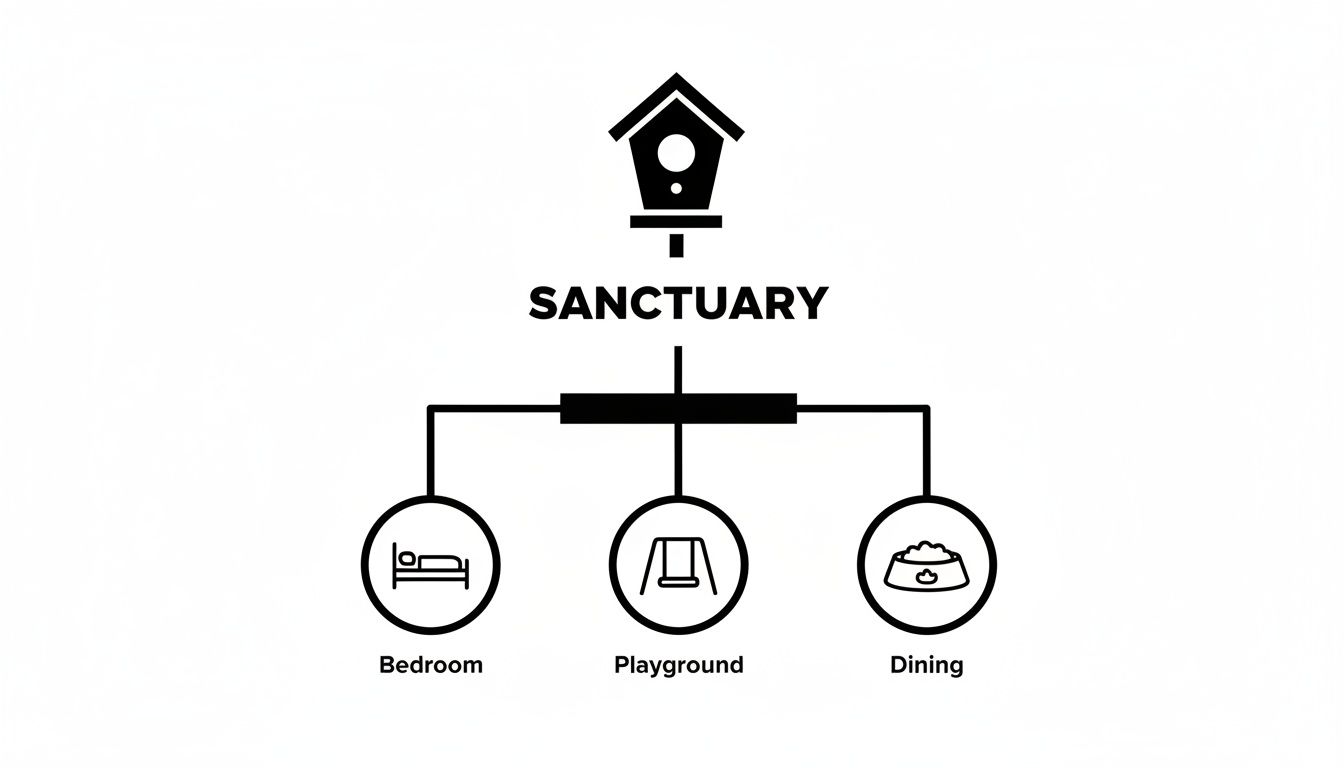
This simple idea highlights why size and layout are so critical. The cage must support your parrot's core needs for rest, play, and food to ensure their overall wellbeing.
Why Size and Bar Spacing Are Non-Negotiable
The right dimensions directly impact your bird’s physical and mental health. For owners of medium to large parrots like Conures, Amazons, African Greys, and Macaws, providing a spacious home is a serious responsibility. These intelligent birds need room to move and even get in a few wing flaps to stay happy.
It’s not just a nice-to-have. Some avian vets have observed that parrots in cages under 1.2m wide can show more stress behaviours like feather plucking. It’s a stark reminder of how confinement can affect them.
Bar spacing is just as crucial—this isn’t a minor detail, it’s a life-or-death safety feature.
- Too wide: A bird can easily get its head stuck, which can lead to horrific injuries or even strangulation. This is a tragic accident that is completely preventable with the right cage.
- Too narrow: For bigger parrots, bars that are too close together make it hard to climb comfortably. They can even get their toes or beaks caught, causing painful injuries.
The goal is finding that sweet spot: narrow enough to be safe, but wide enough for a good grip and a clear view of their surroundings.
Minimum Cage Size and Bar Spacing by Parrot Species
To help you get it right, we've put together this quick-reference table for popular parrot species found in Australia. This is a great starting point to make sure the cage you're looking at meets the basic requirements for safety and comfort.
Remember, these are the absolute minimums. When it comes to your bird’s home, bigger is always better, especially if they spend a good chunk of their day inside.
| Parrot Species | Minimum Internal Dimensions (H x W x D) | Maximum Bar Spacing | Recommended Bar Orientation |
|---|---|---|---|
| Galah & Corella | 90cm x 75cm x 60cm | 2 cm | Mixed or Horizontal |
| Sulphur-Crested Cockatoo | 150cm x 120cm x 90cm | 2.5 cm | Horizontal |
| Eclectus Parrot | 120cm x 90cm x 75cm | 2.5 cm | Horizontal |
| Amazon Parrot | 120cm x 90cm x 75cm | 2.5 cm | Horizontal |
| African Grey Parrot | 120cm x 90cm x 75cm | 2.5 cm | Horizontal |
| Macaw (Blue & Gold, Green-winged) | 180cm x 150cm x 100cm | 3 cm | Horizontal |
A quality flight cage can be a fantastic choice for giving your bird more horizontal space, which is really important for active species. If you want to learn more, check out our guide on what makes a good bird flight cage.
Expert Tip: When you’re measuring a cage, always focus on the internal living space. Ignore the stand, seed guards, or any fancy roof decorations. What truly matters to your parrot is the usable area from their highest perch down to the grate.
By taking the time to understand what your parrot’s species truly needs, you can move past generic advice and choose a cage that's not just a container, but a safe, comfortable, and enriching home. This approach empowers you to look at any cage and know instantly if it’s the right sanctuary for your feathered family member.
Choosing Safe Cage Materials and Finishes
Beyond its size, the very material of a large bird cage is critical to your parrot's health and safety. The materials and finishes don't just determine how long the cage will last against a powerful beak; they decide whether it's a safe haven or a potential health hazard. Getting this right is one of the most important investments you can make in your bird’s long-term wellbeing.
Imagine giving a toddler a toy painted with lead-based paint; you simply wouldn't. The same logic applies to your parrot, who will inevitably chew, lick, and climb on every single surface of their home. This is why understanding the difference between materials is non-negotiable for any responsible parrot owner.
The Great Debate: Powder-Coated vs. Stainless Steel
When you start shopping, you’ll find two main options dominate the Australian market for quality large bird cages: powder-coated steel and stainless steel. While both can be safe, they offer different levels of durability and longevity.
-
Powder-Coated Steel: This is the most common material you'll see. A layer of dry powder is applied to the steel and then baked to form a hard, durable finish. When done correctly with non-toxic, bird-safe powder, this creates a resilient surface that's easy to clean and safe for most parrots. The key is making sure the coating is thick and expertly applied to resist chipping.
-
Stainless Steel: Widely considered the gold standard, stainless steel is the ultimate choice for durability and safety. It's a non-porous material, which means it’s incredibly easy to disinfect and won’t harbour bacteria. More importantly, there’s no coating that can be chipped off and ingested by a destructive parrot, and it will never rust.
For large parrots with exceptionally strong beaks, like Macaws and large Cockatoos, a high-quality stainless steel cage is a lifetime investment. While the upfront cost is much higher, it often proves more economical over time as you'll never need to replace it due to damage or rust.
Hidden Dangers Lurking in Cheaper Cages
The biggest risk with poorly made cages comes from toxic metals. Heavy metal poisoning is a serious and often fatal condition in parrots, frequently caused by exposure to zinc and lead found in cheap materials.
Expert Advice: Never, ever buy a cage if you cannot confirm the materials are 100% bird-safe and free from zinc and lead. Reputable Australian suppliers will always provide this information. If they can't, walk away.
Here’s what to look out for:
- Galvanised Metal: Avoid cages made from galvanised wire or steel, full stop. The galvanisation process involves coating the metal in zinc to prevent rust, which is highly toxic to birds if they chew on it and ingest it.
- Chipping or Flaking Finishes: On a powder-coated cage, run your hand along the bars. If the finish feels thin, rough, or flakes easily, it's a dead giveaway of poor quality. Your parrot will make short work of it, potentially swallowing harmful chips.
- Weak Welds: Check the points where the bars are joined to the frame. They should be smooth and solid. Poorly welded joints, often called "spot welds," can have sharp edges or contain toxic metals used in the soldering process.
Choosing from a reliable source is your best defence. When looking for high-quality parrot supplies in Australia, always prioritise suppliers who are transparent about their manufacturing standards and safety checks. Investing confidently in a cage made from proven, bird-safe components means you're providing a true sanctuary, not just a place of containment.
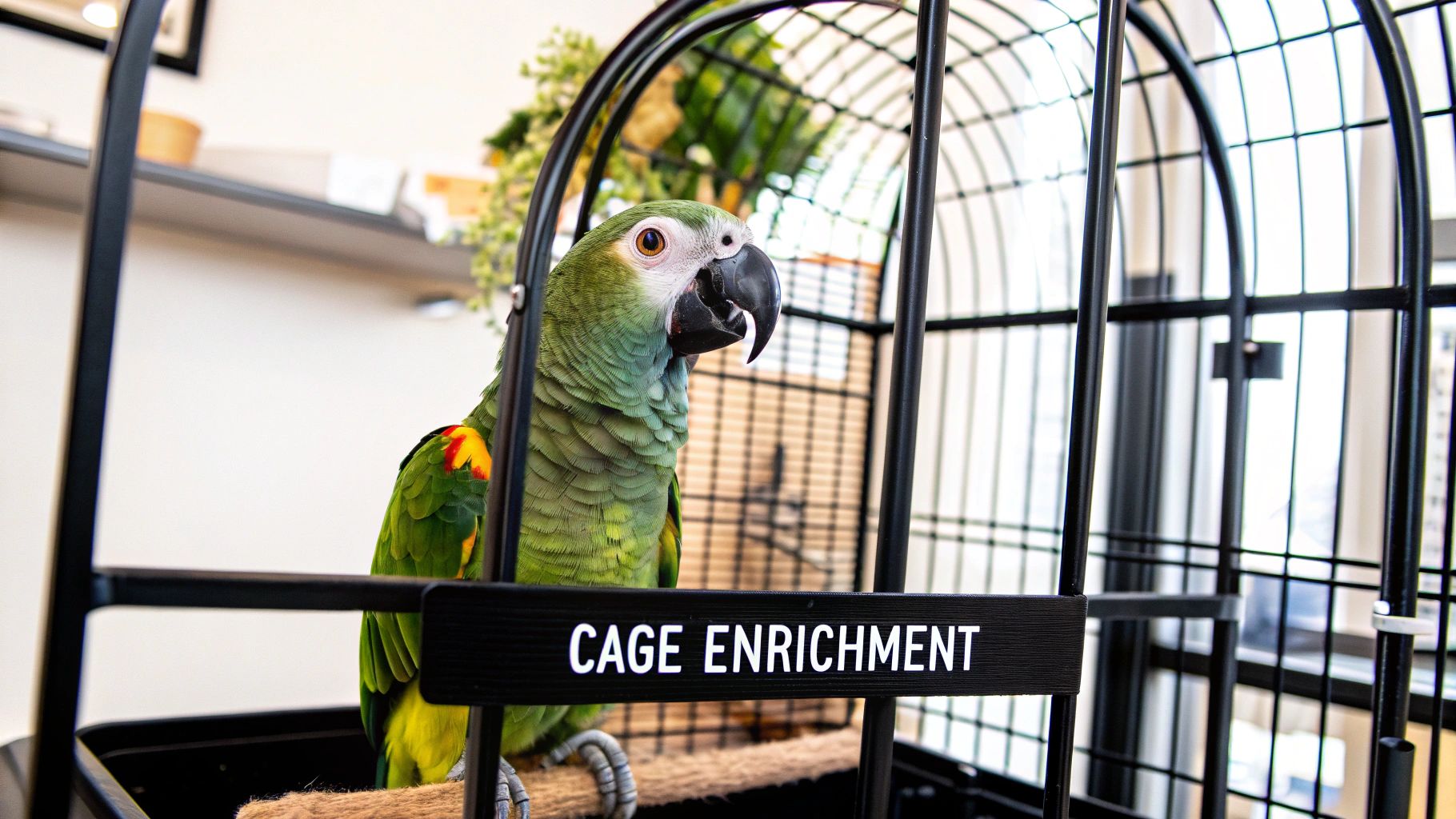
Creating an Enriching Interior Environment
So you've chosen a spacious, safe, and well-constructed cage. That's a huge step, but the work isn't done. An empty cage, no matter how large, is just a box. The real magic happens when you transform that space into a stimulating, enriching habitat that keeps your parrot’s clever mind whirring.
We like to call this process 'cagescaping' – it’s the art of interior design for intelligent birds.
A thoughtfully laid-out cage encourages movement, problem-solving, and play. It keeps your parrot mentally sharp and physically active, which is your best defence against boredom-related behaviours like feather plucking or excessive screaming. It's your chance to turn their personal space into an engaging playground.
Strategic Perch Placement for Foot Health
The foundation of any good cage interior is its perches. In the wild, parrots land on branches of all different shapes, textures, and diameters. This variety naturally exercises the muscles in their feet, preventing painful conditions like arthritis and bumblefoot. Your goal is to replicate this inside the cage.
Ditch the classic dowel perches that often come standard. Their uniform smoothness can cause pressure sores and foot fatigue over time. Instead, think like a curator and build a collection.
- Natural Wood Perches: Native Australian woods like eucalyptus (gum) or bottle brush are fantastic. Their irregular shapes and textures provide brilliant foot exercise and a satisfying surface for a bit of a chew.
- Rope Perches: These are softer on the feet and can be bent into interesting shapes, offering a different kind of grip challenge. Just be sure to check them regularly for fraying threads that could snare your bird’s toes.
- Platform Perches: A flat perch gives your parrot a chance to rest their feet completely, just like a ledge in the wild. They’re perfect for placing near food bowls or as a comfy sleeping spot.
Expert Tip: Place perches strategically to create different "zones." A comfortable sleeping perch goes high up in a corner, foraging toys in a central "activity zone," and food and water bowls in an easily accessible "dining area." This encourages your bird to move around the entire space, using every centimetre.
The Power of Play and Foraging
Once your perches are sorted, it’s time for the fun stuff. Toys aren't just accessories; they are essential tools that tap into a parrot's deep-seated instincts to chew, shred, and solve puzzles. A boring, unenriched environment is a primary cause of behavioural issues, so a good toy rotation is key to a happy bird.
Start with a mix of toy types to see what your parrot enjoys. For larger birds with powerful beaks, durability is paramount. Lou Lou Bells Bird Toys has a fantastic range designed specifically for this.
-
Foraging Toys: These are the absolute gold standard. They make your bird work for their food, mimicking their natural behaviour and giving their brain a workout. Start with simple foraging puzzles and gradually increase the difficulty as they get the hang of it. This problem-solving is one of the best ways to beat boredom.
-
Destructible Toys: Parrots have an instinctual need to chew and shred. Providing plenty of safe, chewable toys made from materials like yucca, mahogany pod, or bird-safe woods gives them a healthy outlet for this behaviour. It also saves your perches (and furniture!) from destruction.
-
Swings and Acrobatic Toys: Movement is life! Adding fun and engaging swings encourages physical activity, helping to strengthen muscles and improve balance. A well-placed swing can quickly become a parrot's favourite spot for a nap or for surveying their domain.
Creating a Safe and Clutter-Free Layout
While enrichment is vital, it’s possible to have too much of a good thing. An overstuffed cage can restrict movement and make it hard for your parrot to even stretch their wings. Aim for a balanced layout that offers plenty of stimulation without creating clutter.
Here’s a quick checklist for a safe, functional interior:
- Clear Flight Paths: Make sure there are clear paths between key perches so your bird can move freely without bumping into things.
- No Overhead Dangers: Never hang toys or perches directly over food and water bowls. This prevents contamination from droppings.
- Rotate Toys Weekly: Keep things fresh and exciting. Have a collection of toys on hand and swap 3-5 of them into the cage each week. This stops your parrot from getting bored with the same old items.
- Secure All Attachments: Double-check that all toys, perches, and bowls are securely fastened. A large parrot can easily dismantle weak attachments, which could be a serious safety risk.
By thoughtfully designing the inside of the cage, you’re doing more than just decorating a space. You’re creating a functional, stimulating world that nurtures their intelligence, supports their physical health, and lets their vibrant personality shine. If you need more ideas, our guide to essential parrot cage accessories can provide plenty of inspiration.
Key Features for Effortless Cleaning and Maintenance
A well-designed parrot cage isn't just a win for your bird; it's a win for you, too. While your parrot gets a spacious, safe home, you get an environment that’s actually easy to keep clean. For busy Aussie pet owners, choosing a cage with clever, time-saving features means less time scrubbing and more time enjoying your feathered mate.
Think of it like this: a cage without easy-clean features is like a kitchen with no dishwasher. Sure, you can get the job done, but it’s going to be a much bigger, more tedious chore. Investing in a cage designed for simple upkeep is really an investment in your own sanity.
Non-Negotiable Features for Easy Upkeep
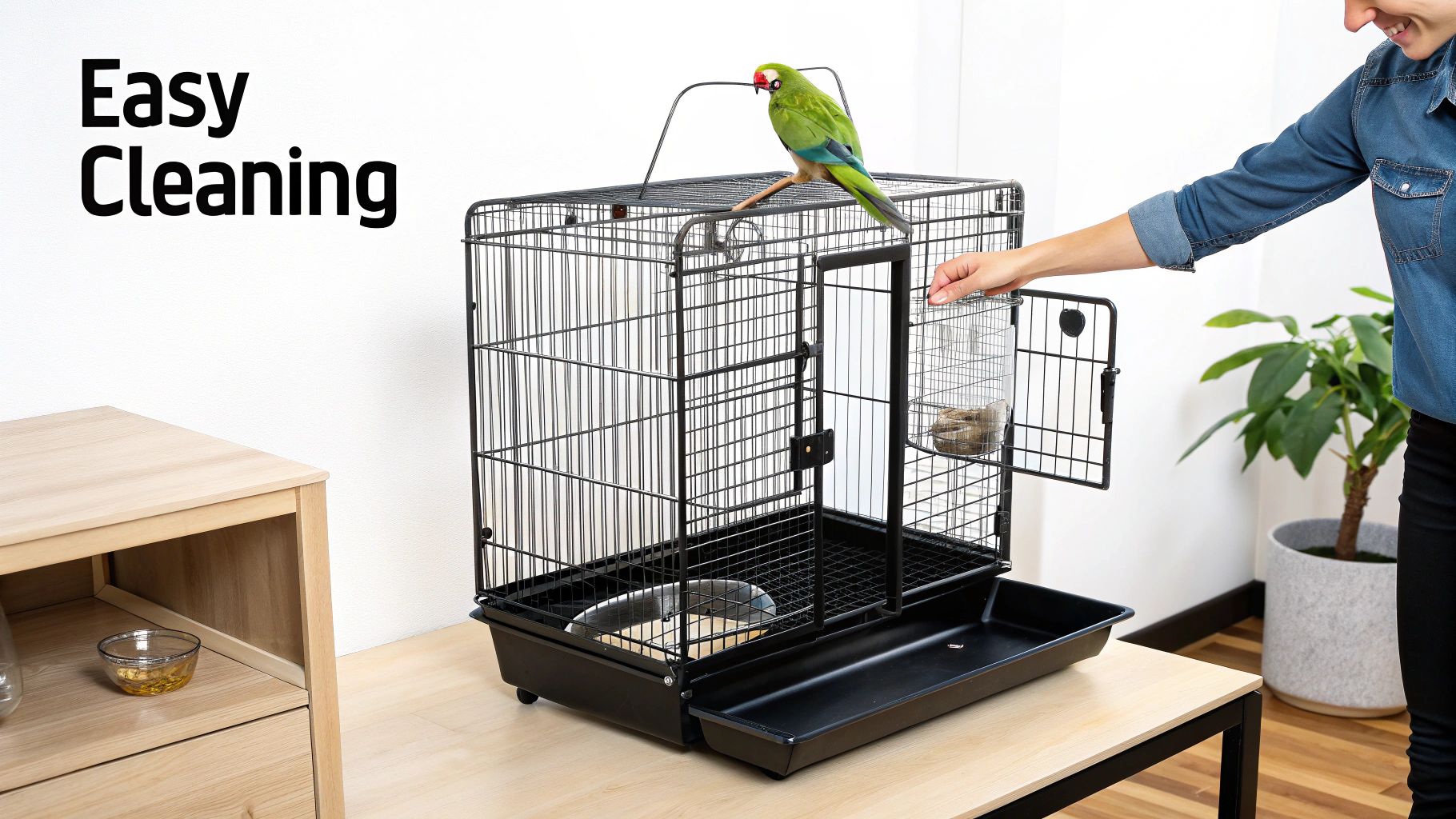
When you’re looking at large bird cages for parrots, some features are simply non-negotiable. These are the thoughtful design elements that separate a great cage from a frustrating one. Keep an eye out for these key components to make sure maintenance is a breeze, not a burden.
- Slide-Out Grate and Tray: This is the big one. A grate keeps your parrot from walking through their own mess, while a tray underneath catches droppings and tossed food. Being able to slide both out independently makes daily spot-cleaning incredibly fast and simple, without having to disturb your bird.
- Wrap-Around Seed Guards: Parrots are gloriously messy eaters. Seed guards, sometimes called ‘skirts’, are panels that attach to the outside of the cage base to catch all those flung seeds, husks, and veggie bits. This one addition can drastically cut down on the mess you have to sweep up from your floors.
- Swing-Out Feeder Doors: Constantly reaching into a massive cage to swap out food and water bowls can be awkward for you and stressful for your bird. Cages with small, dedicated doors that let the feeder bowls swing out make daily refills quick, safe, and calm for everyone involved.
A Simple Cleaning Schedule
Keeping your parrot’s home hygienic doesn't have to be some overwhelming task. If you break it down into a simple routine, you can maintain a clean and healthy space without feeling like you’re constantly doing a deep-clean.
Daily Tasks (5-10 minutes):
- Wipe any fresh droppings off perches and toys.
- Swap out the liner in the bottom tray.
- Wash and refill the food and water bowls.
Weekly Tasks (20-30 minutes):
- Slide out the bottom grate and tray for a proper scrub with a bird-safe cleaner.
- Give the cage bars and surfaces a good wipe-down.
- Rotate the toys. Wipe down the ones you take out and add in some fresh, clean ones like these stimulating foraging puzzles to keep things interesting.
Monthly Tasks (45-60 minutes):
- If you can, take the whole cage outside for a thorough wash-down.
- Disinfect the entire cage, perches, and any non-porous toys.
- Rinse everything extremely well and let it dry completely in the sun before putting it all back together.
Expert Advice: Consistency is everything. A little bit of cleaning each day stops bacteria and ammonia from building up, which is much healthier for your parrot's delicate respiratory system. Sticking to a routine also makes that big monthly clean a far easier job.
By prioritising these features and sticking to a simple schedule, you’re not just making your life easier. You’re ensuring your parrot has a safe, sanitary home where they can thrive.
Placing and Assembling Your Parrot's New Home
So, you’ve found the perfect large bird cage. Now for the exciting bit: bringing it home and setting up a safe, welcoming space for your feathered mate. These final steps—assembly and placement—are just as critical as choosing the right size and materials in the first place. Get this part right, and you'll set the stage for a smooth, stress-free transition into their new sanctuary.
Putting a large cage together can feel like a major project, but taking a methodical approach is the key. Always follow the manufacturer's instructions to the letter. Once it’s built, it's time for a thorough safety check before your parrot even lays eyes on it.
- Tighten Everything: Go back and double-check every single screw and bolt. A big parrot has a surprising amount of strength and can easily work loose any fittings that aren't properly tightened.
- Check for Gaps: Make sure all the panels fit together snugly. You're looking for any unexpected gaps where a curious toe or beak could get trapped.
- Smooth Surfaces: Run your hands over every single weld and joint. There should be no sharp edges or rough spots that could cause a nasty injury.
Finding the Perfect Spot
Where you put the cage has a massive impact on your parrot's sense of security and social wellbeing. Parrots are flock animals, after all. They’re happiest when they feel like part of the family's daily life. The ideal location is a careful balance between social inclusion and a feeling of safety.
Try to place the cage in a social hub of your home, like the living room or family room, where your bird can see and interact with you. At the same time, avoid high-traffic spots where they might feel constantly startled or overwhelmed by people walking past.
Expert Advice: One of the best things you can do for your parrot's mental comfort is to place their cage with at least one side against a solid wall. This gives them a real sense of security, getting rid of that feeling of being exposed from all directions and providing a safe corner to retreat to.
No-Go Zones and Safety Considerations
Just as important is knowing where not to place the cage. Certain areas in a typical Australian home can pose serious risks to a bird’s delicate respiratory system.
The kitchen is strictly a no-go zone. Fumes from non-stick cookware (like Teflon), cleaning products, and even aerosol sprays can be toxic and fatal to birds. It’s also crucial to keep the cage away from draughty areas like open windows or doors, as sudden changes in temperature can make your parrot sick.
By carefully choosing the location, you ensure their new home is a true haven.
Got Questions About Large Parrot Cages? We’ve Got Answers.
Choosing the right home for your parrot is a big decision, and it’s natural to have a few questions rattling around. To help you feel completely confident, we’ve put together some of the most common queries we hear from Aussie parrot owners, along with some straightforward advice.
Should I Buy a Used Large Bird Cage?
While a second-hand cage might look like a great way to save a few dollars, it’s a gamble that comes with some serious risks. You just don’t know its history. It could have hidden rust, weak joints, or even toxic residues from harsh chemicals used by a previous owner.
For your parrot’s safety and your own peace of mind, it’s always better to invest in a brand new, high-quality cage from a trusted Australian supplier. That way, you know for sure that the materials are bird-safe and the construction is solid right from the start.
How Do I Introduce My Parrot to a New Cage?
Patience is your best friend here. The goal is to make this a positive, low-stress experience for your bird.
Start by setting up the new cage near their old one for a few days. Let them just get used to seeing it. Then, kit it out with familiar perches, some of their favourite treats, and well-loved toys.
Leave the door wide open and let your parrot explore on their own terms. Don’t ever force them inside. Just use praise and treats to build a happy connection with the new space.
Think of it as an exciting home upgrade, not a scary move. If you let their curiosity lead the way, they’ll soon see it as their new favourite spot.
How Many Toys Should Be in a Large Cage?
Enrichment is absolutely vital, but a cluttered cage can actually be stressful. It restricts your parrot’s movement and can feel overwhelming. A good rule of thumb is to have 3-5 different types of toys in the cage at any one time.
The best approach? Build up a collection of toys and rotate them every week or so. Swapping out a couple of items keeps their environment feeling fresh and interesting, which is brilliant for preventing boredom. It encourages them to keep engaging with a variety of stimulating toys.
Keep Reading
- Choosing The Right Size Bird Toy
- Are Plastic Toys Bad For Parrots?
- Safe Woods For Parrots
Disclaimer Summary:
The information in this article is general in nature and may include external links or resources not created by Lou Lou Bells Bird Toys. Every bird is unique, so we encourage you to seek personalised advice from your own veterinarian or avian specialist. For full details, please read our complete disclaimer here.