
Ever wondered how you could give your birds a home that adapts as their friendship grows? That’s exactly what a double bird cage does. It’s a single, roomy enclosure with a clever removable divider down the middle, letting you create two separate, safe spaces or one big habitat whenever you need to.
The Versatile Double Bird Cage: A Solution for Harmony
For anyone in Australia with a multi-bird household, you know the challenges. Little squabbles over toys, hormonal tiffs—keeping the peace isn’t always easy. A double bird cage isn't just another bit of kit; it's a dynamic setup that gets the complex social lives of our feathered friends just right.
Think of it as a duplex for your flock. It strikes that perfect balance between togetherness and having their own personal space, which is absolutely vital for their well-being.
Why Is It a Smarter Choice?
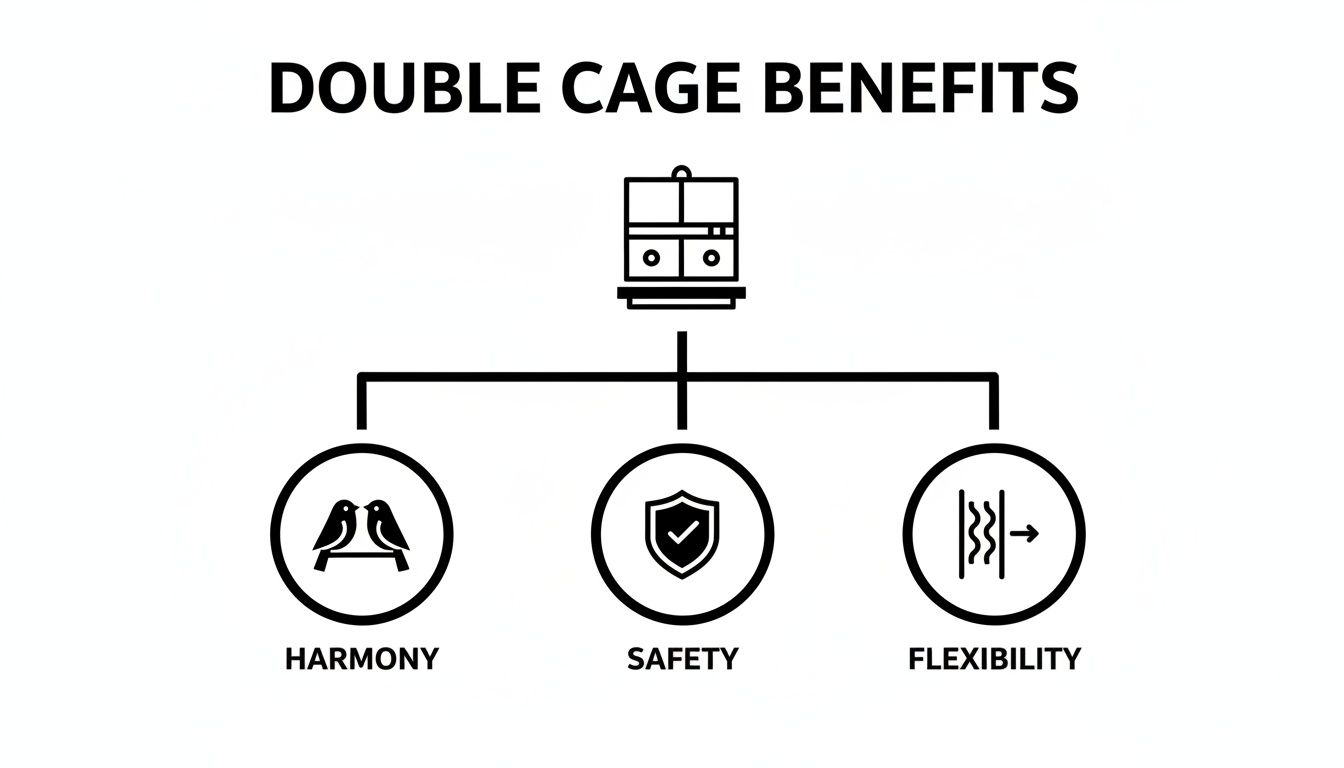
A double bird cage brings some serious benefits to the table, especially for popular Aussie pets like Budgies, Cockatiels, and Conures. It’s an incredibly practical tool for anyone serious about good bird ownership.
- Safe Introductions: Bringing a new bird home is a big deal for everyone involved. The divider lets them see and hear each other without any physical contact, which makes the whole quarantine and introduction phase much safer and far less stressful.
- Managing Disagreements: Let's be honest, even the most bonded pairs have their moments. The divider acts as a 'cool-down' zone, letting you separate them for a bit without the drama of complete isolation. It’s a great way to stop minor tiffs from turning into proper fights.
- Hormonal Control: When breeding season hits, hormones can run high and lead to a bit of aggression. Separating birds with the divider can help manage these natural urges while still letting them enjoy each other's company from a safe distance.
- Specialised Care: If one of your birds is unwell and needs a special diet or just a quiet place to recover, the divider makes it happen. They get the specific care they need without being totally cut off from their companion.
Here in Australia, where a whopping 9% of households now have pet birds, finding smart housing solutions has never been more important. A well-designed double cage is a direct answer to this. In fact, avian vets have noticed that paired housing in a good double cage can slash stress-related behaviours by up to 40% in social birds like lovebirds and cockatiels. You can dig into more of these trends in the latest pet ownership survey in Australia.
Expert Tip: When you've got the divider in, make sure each bird has a full set of everything—food, water, perches, and toys—on their side. This stops any competition for resources and makes sure both birds feel totally secure in their own space. Popping a stimulating foraging toy on both sides is a brilliant way to keep them happily occupied.
At the end of the day, this cage design is all about providing a flexible, supportive home that changes with your birds' lives. It understands that their social needs can shift, and it gives you the tools to build a happy, harmonious environment for years to come. By encouraging both interaction and independence, it’s one of the best investments you can make for the long-term health of your flock. Throw in a few shreddable toys and some fun natural toys, and their setup will be complete.
How to Select the Perfect Double Bird Cage for Your Flock
Choosing the right cage is one of the biggest decisions you'll make for your birds' long-term happiness and health. It's so much more than just a place for them to live; it's their safe space, their playground, and their dining room all in one. Let's walk through how to pick the right one, so you can feel confident you're making a great choice for your flock.
The most critical factor, right out of the gate, is getting the size right for your specific birds. A cage that’s too small is a recipe for stress and health problems, while the wrong bar spacing is a serious safety hazard. Your birds need enough room to fully stretch their wings, climb around, and have separate spots for eating and playing without feeling on top of each other.
Matching Cage Size to Your Bird
Getting the dimensions and bar spacing right is absolutely non-negotiable. It’s the difference between a safe home and a dangerous one. Correct spacing stops birds from escaping and, more importantly, prevents heads or wings from getting trapped, which can lead to horrific injuries.
To help you find the perfect fit, here’s a quick-reference table matching popular Australian bird species with our recommended cage dimensions and bar spacing.
Double Bird Cage Sizing and Bar Spacing Guide
| Bird Species (Examples) | Recommended Minimum Dimensions (per side, L x W x H) | Maximum Bar Spacing |
|---|---|---|
| Small Birds (Budgies, Finches, Parrotlets) | 46cm x 46cm x 46cm | 1.3cm |
| Medium Birds (Cockatiels, Conures, Ringnecks) | 61cm x 61cm x 61cm | 1.3cm to 1.9cm |
| Large Birds (Amazons, African Greys, smaller Macaws) | 91cm x 61cm x 122cm | 1.9cm to 3.2cm |
Getting this right ensures your birds can move comfortably without any risk of injury or escape. Remember, these are minimums—bigger is always better!
For those with larger parrots, the stakes are even higher. You can find more detailed advice in our article on selecting large bird cages for parrots to make sure your gentle giant has the perfect palace.
Choosing the Right Cage Materials
The material your double bird cage is made from directly affects how long it will last and, most importantly, how safe it is for your birds. Parrots use their beaks to explore everything, so a non-toxic and tough material is a must.
Powder-coated steel is a really popular and budget-friendly option. It’s made by applying a dry powder to the steel and then baking it to create a hard, durable finish. It's generally safe and holds up well, but you’ll want to keep an eye out for any chips or flakes over time, especially if you have a bird that loves to chew.
Stainless steel is the gold standard for bird cages. Yes, it comes with a higher price tag, but it’s incredibly durable, non-porous, completely rust-proof, and a breeze to clean. If you have a large parrot with a powerful beak, a stainless steel double cage is hands-down the best long-term investment you can make for their safety.
Layouts and Essential Safety Features
Double bird cages generally come in two main styles: side-by-side or stacked.
A side-by-side layout is fantastic for encouraging social interaction through the divider and usually offers more horizontal space for flying or hopping. On the other hand, a stacked model is a brilliant space-saver, making it a great choice for smaller Australian homes or apartments.
No matter which layout you go for, there are a few safety features that are completely non-negotiable.
Expert Advice: Always, always check for bird-proof locks. Parrots are ridiculously smart and can figure out simple latches in no time. A secure locking mechanism is absolutely vital to prevent escapes and keep your birds safe when you can't supervise them.
Also, make sure the finish is non-toxic, particularly on powder-coated cages. The waste trays should slide out easily for cleaning without creating a gap your bird could slip through. In fact, for medium to large parrots like Amazons, double bird cages are fantastic for housing compatible pairs without sparking territorial fights. Avian vets often recommend them to better mimic wild flock dynamics, which research has shown can reduce feather-plucking incidents by 30-50% in species like Conures and African Greys.
Creating a Healthy and Stimulating Cage Environment
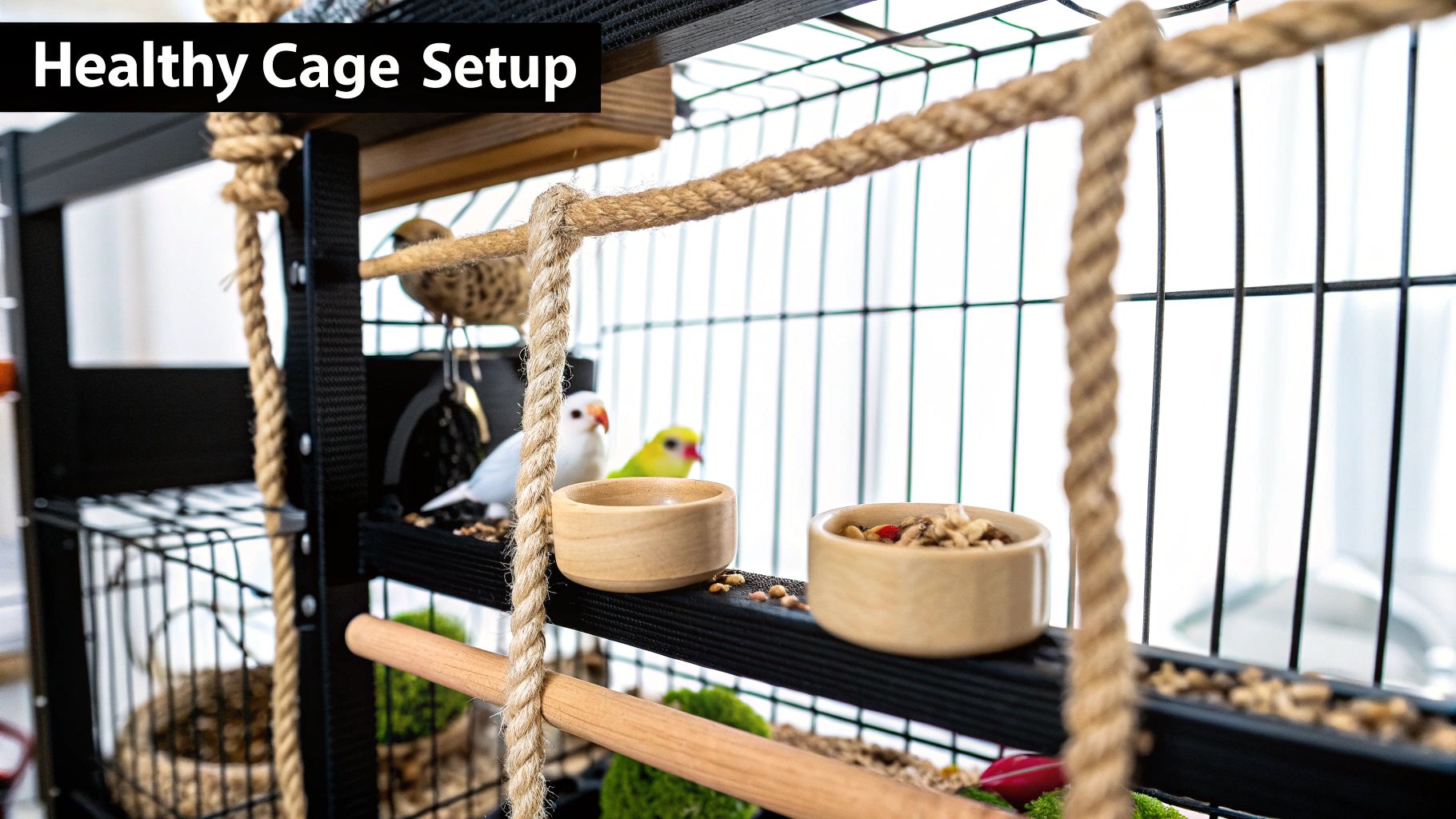
Getting a fantastic double bird cage is a brilliant start, but it's what you do next that really counts. How you set it up inside and where you place it in your home will shape your birds' daily quality of life. Think of this next step as lovingly 'feathering the nest'—turning a simple enclosure into a genuine sanctuary where your birds can thrive. This is where their new house becomes a home.
Finding the Perfect Spot in Your Home
The location of the cage is just as important as the cage itself. Birds are incredibly social creatures and they feel happiest when they’re part of the family's daily rhythm. Popping the cage in a living area or family room is usually a great choice.
That said, safety has to come first. You need a spot that’s free from constant loud noises, drafts from windows or doors, and direct, intense sunlight that could cause them to overheat. A corner of the room often works perfectly, as the solid walls on two sides help your birds feel more secure and less exposed.
Expert Advice: The kitchen is one of the most hazardous places for a bird. Fumes from non-stick cookware (like Teflon) can be toxic and even fatal to birds. A kitchen also exposes them to steam, smoke, and other potential dangers. Always keep your bird's cage well away from this area.
Interior Design for Avian Wellness
Once you’ve nailed the location, it’s time to deck out the interior. A thoughtfully arranged cage encourages natural behaviours, promotes physical health, and provides that all-important mental stimulation.
The foundation of any great cage setup is a variety of perches. Using perches of different materials, textures, and diameters is essential for exercising your birds' feet and preventing problems like arthritis or pressure sores.
- Natural Wood Perches: Native Australian woods like eucalyptus or bottlebrush are perfect. Their irregular shapes and textures mimic branches in the wild, providing brilliant foot exercise.
- Rope Perches: These are softer on the feet and can be shaped into different configurations, adding variety and fun climbing opportunities.
- Platform Perches: Flat surfaces give your birds a place to rest their feet completely, which is a nice break from constant gripping.
Arranging these perches at different heights encourages movement, effectively turning the cage into a fun, multi-level gym. To get some more ideas, you can check out our comprehensive guide on essential bird cage accessories.
Strategic Placement of Food and Water
How you position food and water bowls can have a big impact on both hygiene and enrichment. It’s always best practice to place them high up in the cage, away from perches directly above them. This simple step prevents droppings from contaminating their food and water, which is a big win for their health.
You could also consider using multiple food stations to encourage foraging. Placing a small bowl of fresh veggies in one corner and their main seed or pellet mix in another mimics their natural behaviour of searching for food. It’s a small change that can make mealtimes much more engaging.
With pet ownership in Australia on the rise, creating an enriched environment is more important than ever. For the 2.8 million estimated pet birds in the country, a well-planned double cage can dramatically boost their activity levels. In fact, equipping it with items like ladders, swings, and clever foraging puzzles can increase a bird's activity by up to 60%. This focus on stimulation is absolutely key to a happy and healthy life for your feathered companions.
Enrichment Strategies for a Double Cage Setup
Mental stimulation isn't just a nice-to-have for parrots; it's an absolute necessity. A bored bird can quickly spiral into behavioural issues like excessive screaming or feather plucking. A double bird cage, with its clever divided layout, is a fantastic canvas for creating an interactive playground that keeps your flock happy and healthy.
The real trick is using that dual-space design to its full potential. This means thinking about enrichment for two distinct territories, especially when the divider is in. It’s your chance to cater to individual personalities while heading off common squabbles over the "best" toys.
Promoting Harmony Through Play
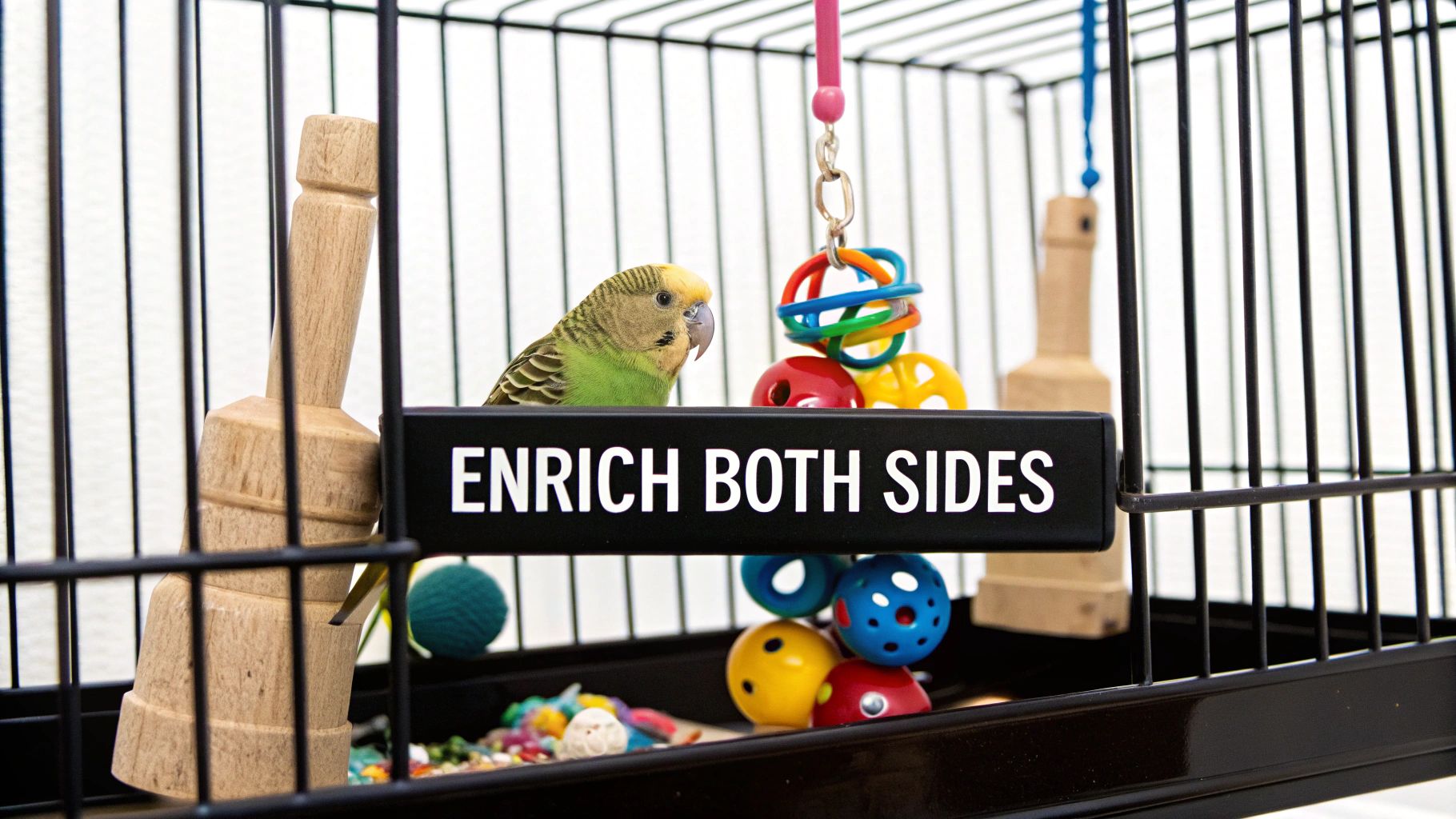
One of the smartest things you can do in a double cage is duplicate. Got a particularly coveted toy or treat holder? Pop an identical one on each side of the divider. This simple move instantly kills any competition and lowers the risk of cage aggression or turf wars.
But duplication doesn't have to be boring. You can also offer different types of enrichment on each side to encourage them to play and problem-solve on their own. For instance, one side might have a puzzle-based foraging toy while the other gets a brand new shreddable toy to tear into.
This approach gives your birds choice and a sense of control, which is incredibly important for their psychological well-being. It lets them pick an activity that suits their mood, without feeling pressured by their neighbour.
Essential Toys for a Double Cage
A well-rounded setup should include a variety of toys that tap into a bird's natural instincts. Swapping these out weekly keeps their environment fresh and stops that dreaded boredom from creeping in. Here are three must-have categories for any double bird cage.
- Foraging Toys: These are absolutely critical for mental stimulation. In the wild, parrots spend a huge chunk of their day looking for food. Foraging toys for birds make mealtime a fun and rewarding challenge, satisfying that deep-seated instinct.
- Shreddable Toys: The urge to chew and destroy is powerful—and perfectly natural! Providing plenty of Shreddable Toys gives your birds a safe and appropriate outlet for this behaviour, saving your perches (and maybe your furniture!) from a similar fate.
- Natural Perches and Swings: Mimicking their wild habitat is key. A variety of Natural Wood Perches with different textures and diameters helps keep their feet healthy and strong. Swings and ladders add a dynamic element of fun and exercise.
By mixing these toys on both sides of the cage, you create a rich environment that satisfies both their physical and mental needs.
Creating a Multi-Level Activity Centre
Don't just toss toys on the cage floor. You've got all that vertical space—use it! A great double cage setup should feel less like a box and more like a multi-level jungle gym.
Expert Tip: Use stainless steel quick links to hang toys, ladders, and swings from the top and sides of the cage. Arrange them at different heights to encourage climbing, stretching, and exploring. This promotes great exercise and makes sure every inch of the cage is valuable, usable real estate.
Think about placing a swing near the top for a great vantage point, a shreddable kabob in the middle for easy access, and a foraging puzzle near the bottom to encourage them to move around. By strategically placing these items, you turn the entire cage into a dynamic activity centre.
This thoughtful approach to enrichment does so much more than just prevent boredom. It builds confidence, reduces stress, and strengthens the positive bond between your birds, whether they're interacting through the divider or enjoying shared space. A well-stocked and cleverly arranged double cage is one of the best investments you can make in their long-term happiness.
Efficient Cleaning and Maintenance for Your Double Cage
Keeping a big double cage clean might look like a mammoth task, but it really doesn't have to take over your life. The secret is to get into a smart, consistent routine. By breaking the job down into daily, weekly, and monthly chunks, you can keep your birds' home spotless and hygienic without losing your entire weekend.
That divider in the middle of the cage? It’s your best friend when it comes to cleaning. You can move your birds safely and comfortably to one side while you give the other a thorough scrub. It’s a simple trick that makes the whole process so much less stressful for everyone.
Your Practical Cleaning Schedule
A little bit of cleaning every day is far more effective than a massive scrub-down once in a blue moon. Staying on top of the mess prevents buildup and makes the bigger weekly and monthly jobs fly by. Here’s a simple schedule that works.
Daily Tasks (5-10 Minutes)
- Fresh Food and Water: This one’s a non-negotiable. Swap out old food and water for fresh supplies every day. Give the bowls a good wash with hot, soapy water and rinse them well before you refill them.
- Spot Clean: Got a messy perch or a splattered toy? Give it a quick wipe with a damp cloth.
- Change the Liner: Pull out the old paper liner at the bottom of the cage to get rid of fresh droppings and tossed food.
Weekly Tasks (20-30 Minutes)
- Scrub the Grate: That bottom grate catches everything. Pull it out and give it a proper scrub with a bird-safe cleaner to get rid of any caked-on mess.
- Wash Perches and Toys: Take everything out—perches, toys, the lot. Wash them well, rinse thoroughly, and make sure they’re completely dry before putting them back. This is also the perfect time to rotate their toys to keep things fresh. Why not swap in a new foraging toy or a tempting shreddable toy?
- Clean the Trays: Slide out the waste trays, bin the dirty lining, and wash the trays themselves with soap and water.
Expert Tip: Using a quality bird cage seed catcher can seriously cut down on the amount of seed and mess that ends up on your floor, saving you a heap of time on sweeping and vacuuming.
The Monthly Deep Clean
About once a month, it's time to roll up your sleeves for a proper deep clean. This is where your double cage design really proves its worth. Just shift your birds to one side, pop the divider in, and you can get to work on the empty half without any feathered "supervisors" getting in the way.
It is absolutely vital that you only use safe cleaning products for pets. Here in Australia, a simple mix of diluted white vinegar and water (one part vinegar to two parts water) works wonders. For any really tough grime, a specialised avian-safe disinfectant like F10SC is a great option, and you can find it at most vets or pet supply stores.
Once you’ve scrubbed, rinsed, and dried the first side until it sparkles, you can move your birds over to their clean new digs. Then, just repeat the whole process on the other side. This step-by-step method makes a big job feel manageable and keeps your birds feeling secure in their own home the whole time. Popping in a new natural wood perch after the deep clean is a lovely way to reward them for their patience.
Common Questions About Double Bird Cages
Thinking about a double bird cage is a big step. It’s a serious investment in your flock’s happiness, so it’s only natural to have a few questions buzzing around. Let's tackle some of the most common queries we hear from Aussie bird owners, with real-world advice to help you get it right.
Can I House Different Species in a Double Cage?
The short answer is yes, but only with the divider firmly in place. While the cage allows you to safely keep different species in the same unit, you should almost never remove the divider for shared playtime. Different birds have their own unique body language, dietary needs, and temperaments, and mixing them can easily lead to stress, fights, or even serious injury.
Think of the divider as a safety screen. It's perfect for letting them be socially close while staying physically separate and safe. If you’re ever tempted to try a supervised get-together, always chat with an experienced avian vet or behaviourist first.
How Should I Introduce a New Bird Using the Divider?
A double cage is the perfect tool for a slow, safe, and stress-free introduction. Once the new bird has finished its essential vet-recommended quarantine period in another room, you can move them into one side of the double cage with the divider locked in.
This gives your birds a chance to see and hear each other without any physical risk. You’re looking for good signs—calm chirping, preening near each other, or just showing gentle curiosity. After a few days of calm, positive signs through the barrier, you can try very short, fully supervised sessions together in a neutral space, like a play stand. Always let them set the pace and never rush it.
Is a Double Cage Better Than Two Separate Cages?
This really depends on your birds, your space, and what you’re trying to achieve. A double bird cage is a fantastic space-saver and makes the daily clean-up routine a whole lot simpler. For bonded pairs or birds that genuinely enjoy each other’s company (from a safe distance), it's an excellent choice.
However, if you have birds that are highly territorial, get easily stressed by another bird being so close, or just plain don't get along, two completely separate cages on opposite sides of the room might be the better way to go. For most compatible pairs, a double cage offers the best of both worlds: constant companionship and their own personal space.
Expert Advice: Unsure which is best for your flock? Watch how they act now. If they call to each other and seem interested when their cages are near, a double cage is probably a great fit. If being close causes stress or aggression, separate cages are the safer option.
What Should I Do If My Birds Fight After Removing the Divider?
If a squabble breaks out, your first and only move is to reinsert the divider immediately. Get them separated safely before you do anything else. Once they’re secure, take a breath and try to figure out what might have kicked it off. Was it a fight over a favourite toy, a specific perch, or a food bowl?
To avoid future squabbles, make sure you have double the resources. That means two water bowls, two food dishes, and high-value toys for each bird, placed on their respective sides. Giving them each their own shreddable toy is a great way to give them a healthy outlet for pent-up energy. If the aggression continues, you may need to go back a step and give them more time with the divider in place. If problems persist, getting personalised advice from a certified avian behaviourist is always the wisest move.
Keep Reading
Disclaimer Summary: The information in this article is general in nature and may include external links or resources not created by Lou Lou Bells Bird Toys. Every bird is unique, so we encourage you to seek personalised advice from your own veterinarian or avian specialist. For full details, please read our complete disclaimer here.