
A large parrot cage isn't just a piece of furniture; it's your bird's entire world. It's their sanctuary, their playground, and their home. Getting the size right is probably the single most important decision you'll make for their long-term physical and mental health. It's the very foundation of responsible parrot ownership here in Australia.
Why a Big Parrot Cage Is a Non-Negotiable Necessity
Imagine spending your entire life cooped up in a tiny studio apartment. Sure, you could eat and sleep, but you couldn't really stretch out, run, play, or just live. For a clever, active, and large bird like a Macaw or a Sulphur-Crested Cockatoo, a small cage is exactly that—a lifetime of confinement that smothers their natural instincts.
If you start thinking of a cage not as a box, but as your bird's personal aviary, it completely changes your perspective.
A generously sized home isn't a luxury; it's a critical tool for preventing some really serious behavioural problems. When parrots don't have the space to do what comes naturally, their boredom and frustration can bubble over in destructive ways.
- Feather Plucking: This is often a heartbreaking sign of psychological distress. A large cage gives you more room for enrichment and activity, helping to redirect that anxious energy away from self-harm.
- Stress-Related Aggression: Feeling trapped and cornered can lead to biting and screaming. Having enough room to move, climb, and retreat to a safe corner lowers a bird's stress levels, which helps foster a much calmer, more social companion.
- Physical Health: A big parrot cage is a gym. It gives your bird enough space to fully stretch its wings, climb, swing, and forage. This isn't just play—it's essential for maintaining muscle tone and overall fitness.
The Foundation of a Thriving Bird
A large living space is the first, most crucial step in building a stimulating and healthy environment. It’s the canvas you get to paint on with engaging perches and toys. Without that basic room to move, even the best toys in the world lose their value. The freedom to flutter short distances, clamber from one side to the other, and explore different levels is absolutely vital for them.
A parrot's cage is their bedroom, playground, gym, and dining room all rolled into one. Giving them enough space for all these activities isn't just kind; it's essential for their well-being.
Ultimately, investing in the largest, safest cage you can possibly accommodate is a direct investment in your bird's happiness. It's a way of acknowledging their intelligence and respecting their needs as complex, feeling creatures.
This commitment to space is where a truly enriching life begins, something we explore more in our guide to animal enrichment in Australia. By getting their environment right from the start, you set the stage for a healthy, happy, and long-lasting friendship with your feathered mate.
Decoding Cage Sizing for Australian Parrots
When you start looking for a "big parrot cage," it's easy to get lost in a sea of numbers and models. So, what does ‘big’ actually mean? A few key ideas will help you cut through the confusion and find the perfect home for your Australian parrot.
The most important rule? Always prioritise width and depth over sheer height.
Parrots don’t live like people in high-rise buildings; they move horizontally. They climb, flutter, and swing from side to side, so a cage that’s wide and deep gives them the space to stretch their wings fully without bumping into the bars. A tall, skinny cage might look impressive, but it's like living in a narrow townhouse with only a spiral staircase—it's mostly unusable space for a large bird. They need a ranch-style home, not a skyscraper.
The Critical Role of Bar Spacing
Beyond the cage's overall size, bar spacing is the single most crucial safety feature. It’s not just a guideline; it's a non-negotiable measurement that protects your bird from getting seriously hurt.
If the bars are too wide, a curious parrot can easily get its head stuck, which can lead to panic and even fatal injuries. On the other hand, if the bars are too narrow for a big bird, it can make climbing difficult and might even cause foot problems. Getting this right is absolutely fundamental.
As this graphic shows, there's a direct link between a parrot's environment and its well-being.
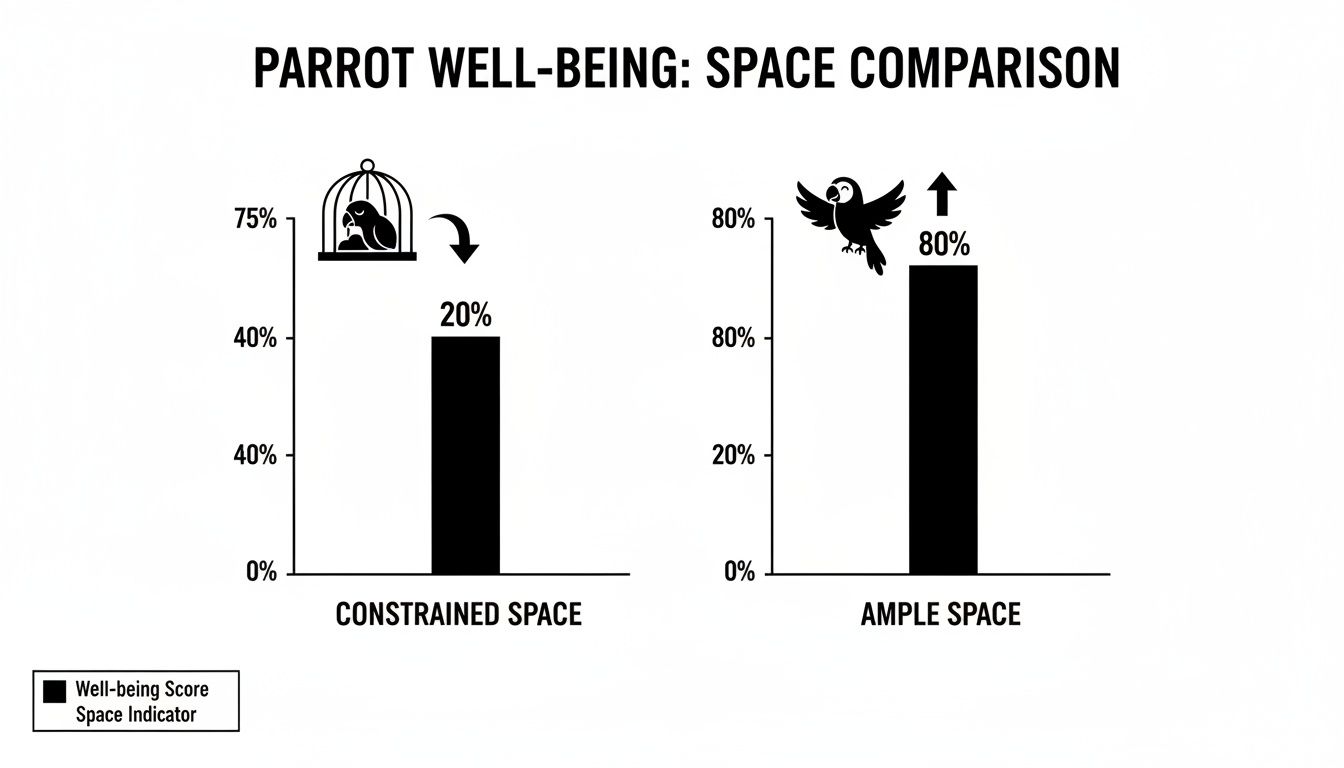
It’s a stark reminder of just how much a properly sized cage contributes to a thriving, happy bird, compared to the stress caused by a cramped one. A large, well-designed cage isn't a luxury; it's the foundation of responsible bird care.
Sizing Guide for Common Australian Parrots
To help you out, we’ve put together a quick-reference guide for some of the most popular large parrot species kept in Australia. These are the absolute minimum internal dimensions recommended by avian experts. If your space and budget allow, always go bigger!
Minimum Cage and Bar Spacing Guide for Large Parrots
This table gives you a starting point, covering the essential internal measurements and the all-important bar spacing for a safe and comfortable home.
| Parrot Species | Minimum Internal Dimensions (cm) | Recommended Bar Spacing (mm) | Best Cage Orientation |
|---|---|---|---|
| Galah | 90W x 70D x 120H | 15 - 20 | Wide |
| Major Mitchell's Cockatoo | 100W x 80D x 150H | 20 - 25 | Wide |
| Sulphur-Crested Cockatoo | 120W x 90D x 180H | 25 - 35 | Wide |
| Eclectus Parrot | 90W x 70D x 120H | 20 - 25 | Wide |
| Amazon Parrot | 90W x 70D x 150H | 20 - 25 | Wide |
| African Grey Parrot | 100W x 80D x 150H | 20 - 25 | Wide |
| Macaw (Blue & Gold, Green-winged) | 150W x 100D x 180H | 25 - 40 | Wide |
A quick tip from the experts: always measure the internal living space. Don't be fooled by external dimensions that include things like seed guards or fancy roofs. What truly matters is the room your bird has to actually move around inside.
Remember, this is about providing a home, not just a holding pen. For active flyers like Galahs and Eclectus parrots, it's worth exploring different types of enclosures that give them more room to move. You can find out more about what these energetic birds need in our guide to choosing the right bird flight cage.
By understanding what your particular parrot needs, you can choose a big parrot cage that truly sets them up for a long, healthy, and happy life with you.
Choosing Cage Materials Built for a Powerful Beak
When you’re investing in a cage for a large parrot, you’re not just buying a piece of equipment; you're building their home. The quality of the materials is everything. It dictates how safe the cage is, how secure it will be, and frankly, how long it will last. For big birds like Macaws and Cockatoos—whose beaks can crunch down with hundreds of pounds of pressure—the right material isn't just a nice-to-have, it's a non-negotiable safety feature.
When you’re up against that kind of power, one material stands head and shoulders above the rest.
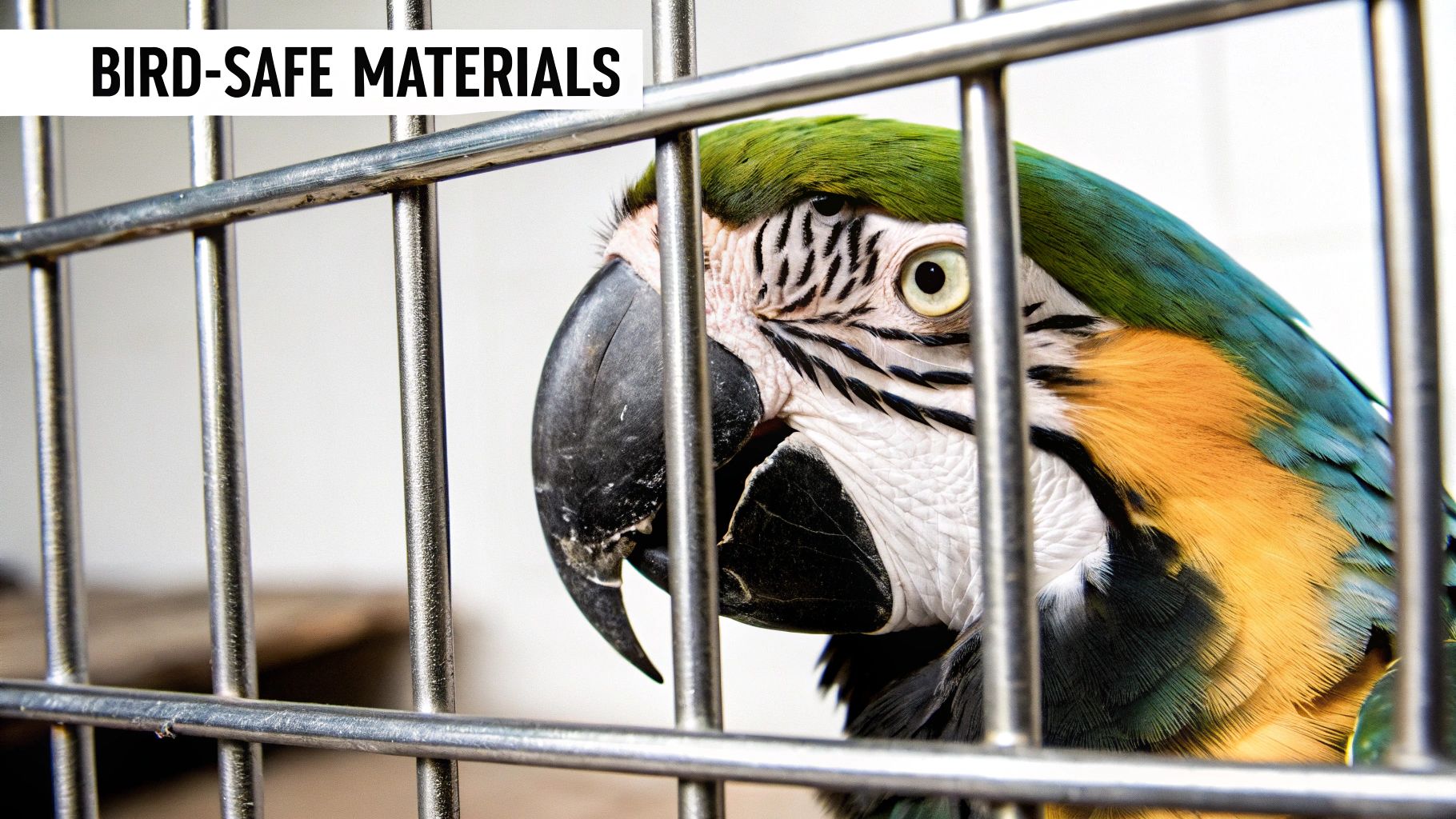
The Gold Standard: Stainless Steel
For a large bird, stainless steel is the undisputed champion of cage materials. It’s incredibly strong, totally non-porous, and won't rust. This makes it a dream to clean and properly disinfect. Most importantly, it's completely non-toxic, so you never have to lose sleep worrying about your bird chewing on the bars and ingesting something harmful.
Yes, the upfront cost of a stainless steel cage is higher. Think of it as a long-term investment in your parrot's health and your own peace of mind. A well-made stainless steel cage can easily last a lifetime, outliving cheaper options that a powerful beak might damage or destroy in just a few years. It's the same reason you'll find tough, non-toxic stainless steel bird toys — they're built to last and provide safe fun.
Understanding Powder-Coated Cages
Powder-coated cages are a far more common and affordable choice. This process involves applying a dry powder to the metal, which is then heat-cured to form a hard, smooth finish. A high-quality powder-coated cage can be a perfectly safe option, but you absolutely have to know what you’re looking for.
The number one priority is making sure the coating is 100% free from zinc and lead. Reputable Australian suppliers will always use bird-safe, non-toxic coatings, but cheaply made imports can be a massive gamble. Some use paints containing heavy metals, and if a large parrot chips off and swallows flakes of that toxic coating, the consequences can be devastating.
Here’s what a quality finish looks like:
- A smooth, even surface: You shouldn’t see any drips, bubbles, or rough spots.
- Durability: The coating should feel tough. It shouldn't chip or scratch if you press it gently with a fingernail.
- Clear product information: The manufacturer or retailer should be able to state clearly that the coating is zinc-free and lead-free.
An experienced Australian avian veterinarian warns, "Heavy metal toxicity, particularly from zinc and lead, is a serious and preventable tragedy. Symptoms can be subtle at first but can lead to severe neurological damage and organ failure. Always choose cages and toys from trusted sources that guarantee their materials are non-toxic."
Red Flags to Watch Out For
When you're inspecting a potential cage for your big parrot, you need to be eagle-eyed for any signs of poor quality. Your bird’s life could literally depend on your diligence here.
- Rust or corrosion: Any visible rust is an immediate deal-breaker. It weakens the cage and is dangerous if your bird ingests it.
- Chipping or peeling paint: This is a clear sign of a cheap finish that your bird can easily flake off and swallow.
- Welded joints: Check every single weld. They should be smooth and solid, not sharp, sloppy, or showing any signs of cracking.
- Flimsy construction: Give the cage a gentle shake. If it feels wobbly or the bars bend easily under pressure, it simply won't hold up against a determined Macaw or Cockatoo.
Ultimately, choosing the right cage material is all about prioritising your parrot's health. By investing in either high-grade stainless steel or a properly verified bird-safe powder-coated cage, you're creating a secure and healthy environment where your feathered friend can thrive for years to come.
Must-Have Features for Safety and Convenience
Once you've figured out the right size and best materials for your parrot's new home, it's the little details in the design that will make or break your day-to-day life. These aren't just minor add-ons; they're the practical features that make cleaning less of a chore, feeding safer, and life more secure for both you and your incredibly clever bird.
Think of this as your checklist for a cage that isn't just big and strong, but also smart. A well-designed parrot cage is a partnership—it has to work just as well for you as it does for your bird.
Secure Doors and Intelligent Locks
First up, the main door. It absolutely needs to be large enough for you to comfortably reach every corner of the cage without turning into a contortionist. More importantly, it has to be big enough to get your bird in and out on your arm without a fuss, especially if they're ever stressed or feeling unwell. A tiny door on a massive cage is a recipe for frustration.
Just as critical is the lock. Parrots, especially the likes of Cockatoos and Macaws, are little mechanical geniuses who see a simple latch as a fun puzzle. It won't hold them for long.
Look for cages with parrot-proof locks. These usually need a two-step action, like turning and squeezing at the same time. This is non-negotiable for preventing a great escape while you're out, which could lead to all sorts of dangerous situations.
Hassle-Free Feeding Systems
Constantly reaching inside a large parrot's space to change out food and water bowls can be stressful for your bird and pretty awkward for you. This is where swing-out feeder doors are an absolute game-changer. These are small, separate doors that hold the bowls, letting you access them from outside the main cage.
This simple design offers a few key benefits:
- Reduced Stress: You’re not invading your bird's personal territory every time you top up their food.
- Safety: It seriously minimises the chance of your bird making a dash for it through the main door at feeding time.
- Convenience: It makes the daily job of refreshing food and water quick, clean, and simple.
Clever Cleaning and Maintenance Features
Keeping a big cage clean is a huge part of good parrot care, and the right features make this job so much easier. A removable bottom grate and tray system is a must-have, plain and simple. The grate keeps your bird from walking through their droppings, and the pull-out tray makes daily liner changes a breeze. Make sure the tray slides out smoothly and the grate is solid enough to hold your bird's weight without sagging.
Another fantastic feature is a seed guard or skirt. This is a panel of metal that wraps around the bottom of the cage to catch stray seeds, bits of food, and feathers. It won't stop every last bit of mess, but it drastically cuts down on what ends up on your floor, saving you a lot of sweeping.
Finally, for a piece of equipment this heavy, sturdy castors (wheels) are non-negotiable. A large parrot cage is incredibly heavy and a nightmare to move without them. Good quality wheels let you easily roll the cage aside for a proper clean underneath and around it, or to simply shift its position in the room without breaking your back. Check that the wheels are robust and lock securely in place so the cage stays put.
Transforming the Cage into an Enriching Habitat
An empty cage is just a box. But with a bit of thought, you can transform that space into a dynamic, living world for your parrot. Once you've picked the perfect big cage, the real fun begins: outfitting it to become a stimulating habitat that encourages natural behaviours, beats boredom, and helps your parrot thrive.
It’s not about just filling the space with random items. The goal is to create a thoughtful environment that caters to your bird's physical and psychological needs. Think of it as setting up different 'zones' for different activities, just as they'd find in the wild.
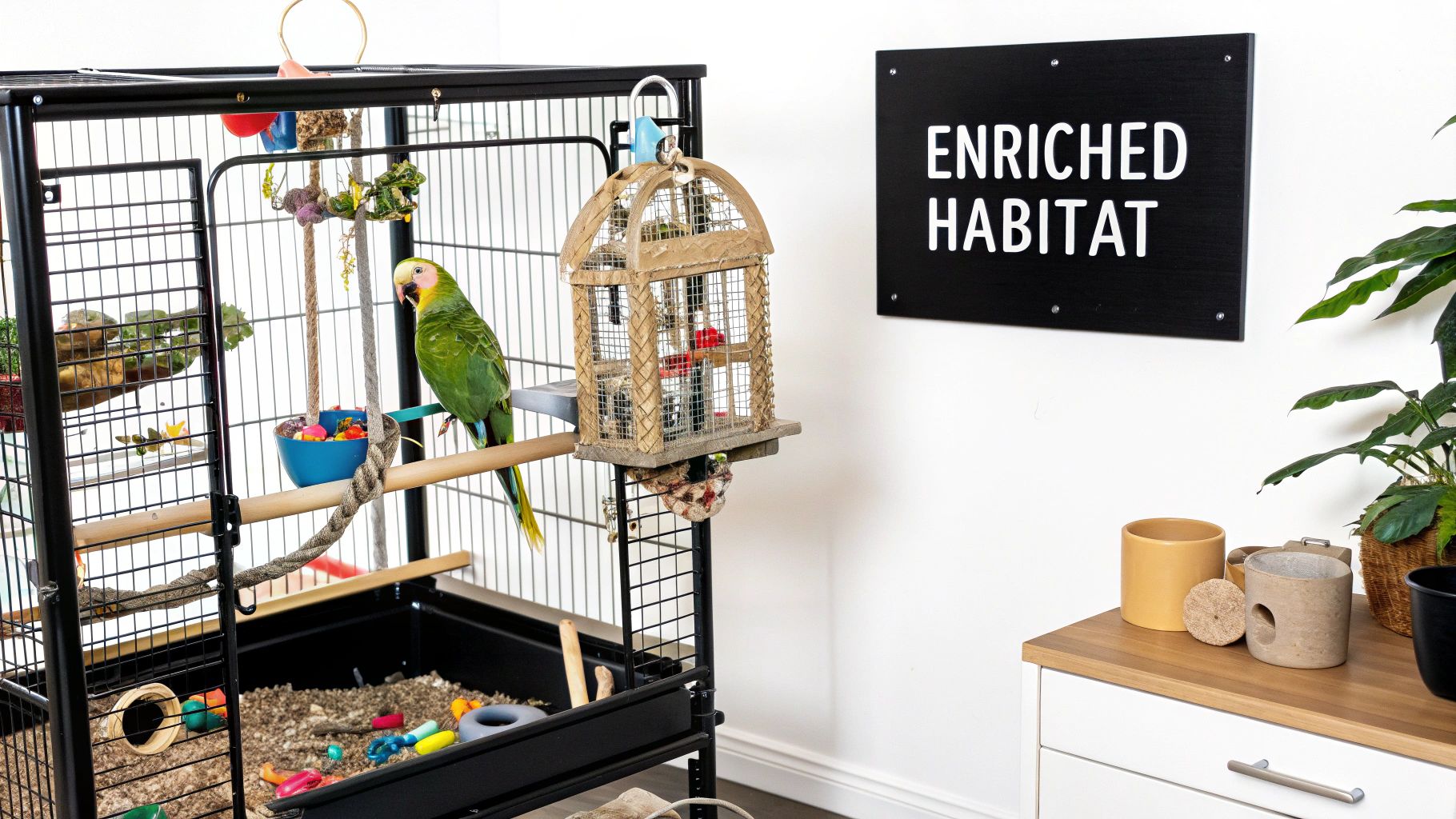
Creating Zones for Natural Behaviours
Think of your large cage as a multi-room apartment for your bird. Different areas should serve different purposes, giving your parrot choices and encouraging them to move around and explore their entire space.
- Foraging Zone: The floor is perfect for this. Scatter some bird-safe substrate like shredded paper and hide a few treats or foot toys in it. This taps right into their natural instinct to search for food on the ground.
- Shredding and Preening Station: Designate a corner or a side of the cage for some destructive fun. This is where you can hang durable, shreddable toys made from materials like yucca, cardboard, and natural fibres.
- High-Energy Activity Zone: Use the upper parts of the cage for swings and ladders. This creates a dedicated space for energetic play, helping your parrot burn off energy and keep their muscles strong.
By setting up these zones, you turn a simple container into an interactive environment. This encourages movement, problem-solving, and a sense of purpose—all vital for such an intelligent creature.
The Importance of Perch Variety
One of the most common mistakes new parrot owners make is using only one type of perch. Imagine wearing the same pair of shoes every single day—your feet would get sore and strained pretty quickly. It's exactly the same for your parrot's feet.
Using perches of a uniform diameter can lead to pressure sores and a painful condition called bumblefoot. The key to preventing this is offering a variety of perch types, textures, and diameters throughout the cage.
Expert Advice: Your cage should contain multiple perches made from natural, untreated Australian woods like eucalyptus or bottle brush. The irregular shapes and varied thicknesses force your bird's feet to constantly adjust their grip, exercising the muscles and tendons and promoting excellent foot health.
Include a mix of perches to create a complete foot-fitness centre for your bird:
- Natural Wood Perches: These are absolutely essential for foot exercise and are also great for keeping their beak in good shape.
- Rope Perches: Softer on the feet, these can be shaped into different configurations to add interest.
- Platform Perches: These give your bird a flat surface to completely rest their feet, offering a welcome break from gripping.
Outfitting the Cage with Purposeful Toys
Toys aren't just for fun; they are essential tools for your parrot's mental health. An under-stimulated parrot is a bored parrot, and boredom can quickly lead to destructive behaviours like screaming and feather plucking. The trick is to provide a rotation of toys that cater to their different instincts. You can learn more about how to set up the perfect playground in our detailed guide on parrot cage accessories.
Here’s how to build a well-rounded toy collection for your big parrot cage:
- Durable Shredding Toys: Parrots have a powerful, natural urge to chew and destroy. Providing safe, shreddable toys directs this behaviour away from your furniture (and the cage bars!). Our range of durable shreddable toys is made from bird-safe materials designed to satisfy even the most determined beaks.
- Challenging Foraging Puzzles: In the wild, parrots spend a huge chunk of their day looking for food. Foraging puzzles replicate this challenge, making your bird work for their treats. This engages their mind and provides a rewarding sense of accomplishment.
- Large Activity Swings: Big birds love to move! Swings are fantastic for encouraging balance and exercise. A large, sturdy swing like our activity swings can easily become your parrot's favourite spot for surveying their kingdom and getting some exercise in.
When you thoughtfully design the interior of the cage with varied perches and a rotation of purposeful toys, you create a vibrant, engaging home that truly supports your parrot's overall wellbeing.
Strategic Cage Placement in Your Home
You've finally got the perfect big cage home. Great! But your next job is just as important: figuring out where to put it. This isn't just about finding a space big enough; the location of your parrot's home is every bit as vital as its size and design.
Parrots are social to their core. They're flock animals, and where you place their cage directly affects how safe and happy they feel.
Your parrot wants to be where the action is, right in the thick of the family 'flock'. Putting their cage in a moderately busy spot, like the corner of the living room, lets them feel included in daily life. This social connection is non-negotiable for their mental health and helps head off the loneliness and boredom that lead to problem behaviours.
The Ideal Indoor Location
The trick is to find that sweet spot between social inclusion and a sense of security. You want them to be part of the family's comings and goings, but not somewhere that's completely chaotic or overwhelming.
Here’s a quick checklist for finding that perfect spot:
- Against a Wall: Always place at least one side of the cage against a solid wall. This simple move gives your bird a secure 'back' to their territory, so they don't have to worry about anything sneaking up on them.
- Away from Drafts: Keep the cage well clear of doorways, open windows, and air conditioning vents. Sudden chills and constant drafts are stressful and a fast track to respiratory problems.
- Not in Direct Sunlight: A bit of natural light is fantastic, but plonking a cage right in front of a window can cause overheating and serious anxiety. Your bird has no way to escape the intense sun or the sight of potential threats (like a passing hawk) outside.
Expert Safety Warning: Never, ever put a parrot's cage in or near the kitchen. Fumes from non-stick cookware (like Teflon) are extremely toxic and can be fatal to birds, even from another room. It’s an invisible danger that you must avoid at all costs.
Special Considerations for Outdoor Aviaries in Australia
If you’re thinking about a permanent outdoor aviary, the stakes are even higher. Australia’s unique environment throws some serious challenges into the mix, and you have to get it right to keep your parrot safe from predators and our harsh climate.
An aviary needs to be a fortress. A two-stage entry (a safety porch) is essential to prevent escapes, and it must be built with strong, predator-proof wire mesh. Don't forget, threats can come from above and below.
Your aviary must offer solid protection from:
- Predators: Snakes, goannas, birds of prey, and even determined neighbourhood cats are all real dangers. The aviary needs a solid roof and either a concrete floor or buried wire skirting to stop anything from digging its way in.
- The Elements: It absolutely must have a fully sheltered, weatherproof section that offers complete protection from blistering sun, torrential rain, and howling winds. This is where your bird will retreat to rest and feel safe.
At the end of the day, whether it's indoors or out, the right placement turns a cage into a true sanctuary. It’s what makes your parrot feel like a secure, cherished member of your flock—and that’s the foundation for a long, happy life together.
Got a Question About Big Parrot Cages?
Choosing a big cage for your parrot can feel like a massive decision, and it’s natural to have a few questions pop up. Here are some of the most common things we get asked by Aussie parrot owners, with straightforward answers to help you get it right for your feathered mate.
Should I Just Buy a Second-Hand Cage?
It's tempting to save a few dollars on a used cage, but honestly, it’s a gamble. A second-hand cage has a past you know nothing about. Was it home to a sick bird? Is there rust hiding under a perch? Are the bars coated in something toxic?
For your bird’s safety and your own peace of mind, buying a new, high-quality cage from a trusted Australian supplier is always the smarter move. That way, you know exactly what you’re getting from day one – no hidden nasties.
How Often Does a Big Cage Need a Full Clean-Out?
Keeping the cage clean is one of the most important jobs you have as a bird owner. A quick spot-clean should be part of your daily routine. That means swapping out the tray liner and giving the food and water bowls a proper wash every single day to keep bacteria at bay.
As for a full, top-to-bottom deep clean, you should plan on doing that at least once a month. This is where you take everything out – perches, toys, the lot – and give all the surfaces a good scrub with a bird-safe disinfectant. If you've got a particularly messy bird, like a big Cockatoo who loves to redecorate with their dinner, you might need to do it more often.
A clean cage is the foundation of good preventative health care for a parrot. It massively cuts down the risk of bacterial and fungal infections, making their home a true sanctuary where they can thrive.
Is It Possible for a Cage to Be Too Big?
This is a worry we hear a lot, but the simple answer is no. A cage can't really be too big, but it can be poorly set up. An enormous, empty cage can feel a bit scary and exposed for a parrot. But the fix isn't a smaller cage; it’s better interior decorating!
As long as the bar spacing is safe for your parrot's species, more space is always a bonus. It gives them more room to stretch their wings, climb, and play. The trick is to fill that generous space with a rich, stimulating environment. Add perches of different textures and thicknesses, swings, ladders, and a fun rotation of toys to turn that big space into their own private, secure playground.
At Lou Lou Bells Bird Toys, we believe an enriched environment is the key to a happy bird. Our handcrafted toys are designed in South Australia to provide the mental stimulation and physical activity your parrot needs.
Explore our full range of bird toys today!
Keep Reading
- What Are the Best Bird Toys in Australia?
- What Is Animal Enrichment?
- Choosing the Right Bird Flight Cage
Disclaimer Summary: The information in this article is general in nature and may include external links or resources not created by Lou Lou Bells Bird Toys. Every bird is unique, so we encourage you to seek personalised advice from your own veterinarian or avian specialist. For full details, please read our complete disclaimer here.