
Choosing the best bird toys for lorikeets isn't just about keeping them busy; it’s a massive part of their overall health and happiness. For these incredibly bright and energetic Australian birds, the right toys are an absolute necessity, not a luxury.
Why The Right Toys Are Essential For Your Lorikeet
For a lorikeet, a toy is so much more than a simple plaything. Think of it as a tool that keeps them healthy, happy, and mentally switched on. Out in the wild, lorikeets spend their entire day on the move—foraging for nectar, chattering with their flock, and covering huge distances. That active, curious lifestyle is hardwired into their DNA.
When we bring these colourful characters into our homes, it's up to us to create an environment that satisfies these deep-seated instincts.
Without enough to do, a lorikeet can get bored and stressed, fast. This is often where problem behaviours pop up, like relentless screaming, cage aggression, or even feather plucking. Giving them a good variety of toys is one of the best ways to head these issues off at the pass. It’s like giving your lorikeet a meaningful "job" to do each day.
To help you get started, this table breaks down the main toy types and what they do for your bird.
Lorikeet Toy Types and Their Benefits
| Toy Type | Primary Benefit | Best For |
|---|---|---|
| Foraging & Puzzle Toys | Mental Stimulation | Challenging their clever minds and mimicking natural food-finding behaviours. |
| Shreddable & Chew Toys | Beak Maintenance | Satisfying the natural urge to chew, keeping beaks in good shape. |
| Swings & Climbing Toys | Physical Exercise | Building strength, improving balance, and burning off excess energy. |
| Foot Toys | Dexterity & Coordination | Encouraging them to use their feet to grab, hold, and manipulate objects. |
A well-chosen set of toys taps directly into your lorikeet's natural instincts, keeping them balanced and content.
Core Needs Fulfilled By Toys
A well-rounded toy collection will hit all the right notes for your lorikeet's nature:
- Busy Beaks: Toys made for shredding and chewing are perfect for satisfying their natural urge to explore textures and work things over with their beaks.
- Foraging Instincts: Puzzle and foraging toys are fantastic. They replicate the challenge of finding food in the wild, providing crucial mental exercise that keeps their clever minds ticking.
- Physical Activity: Things like swings, ladders, and boings get them moving. This helps build strength, improve balance, and prevents the health problems that come with a sedentary life.
This isn't just guesswork. Veterinary studies show that lorikeets with access to high-quality shredders and swings have fewer behavioural issues like feather plucking. A recent Aussie survey of bird owners found that a significant majority buy toys specifically for mental stimulation. Many bird owners in states like South Australia and Queensland also show a strong preference for locally made toys, valuing their safety and quality.
At the end of the day, the goal is to create a dynamic, engaging world that nurtures your bird's body and mind. Getting your head around the principles of animal enrichment in Australia is the key to giving your feathered mate a truly fulfilling life. The right toys aren't just cage decorations; they're a fundamental part of responsible, compassionate bird care.
The Must-Have Toy Categories For Every Lorikeet
Putting together the right toy collection for your lorikeet isn't about just grabbing a bunch of random items off a shelf. It’s more like curating a personal playground, designed specifically to satisfy all their busy, brilliant, and sometimes destructive instincts. Just like a kid needs more than just one type of toy to stay engaged, your lory needs a mix to truly flourish.
A good toy box will keep them busy, challenged, and moving. Each category of toy taps into a natural behaviour they’d be doing all day long out in the Aussie bush. When you provide safe outlets for these instincts, you're setting the foundation for a happy, well-adjusted bird who is a joy to live with.
Shredding And Chewing Toys
Lorikeets have a deep, powerful instinct to chew things up. Out in the wild, this is how they’d hollow out a nest, get into seed pods, or just keep their beaks in top condition. Shredding and chewing toys give them the perfect, safe way to satisfy this urge at home.
These are the toys that are meant to be destroyed—that’s their whole job! Giving your lory materials like soft balsa wood, yucca, palm leaves, or even plain cardboard provides a deeply satisfying task. It’s also one of the best ways to stop a bored beak from turning its attention to your door frames or furniture.
When a lorikeet tears a toy to bits, they aren't just making a fun mess. They're engaging their brain and getting a physical workout. Think of it as their version of a stress ball and a gym session all rolled into one.
Foraging Toys For Clever Minds
In nature, a lorikeet’s life revolves around foraging. They spend a huge chunk of their day hunting for nectar, pollen, and fruit. Foraging toys bring this challenge into their cage, making them work for their food in a way that’s fantastic for their mental health.
Expert Advice: Foraging is so much more than a simple game. It's a vital mental workout that crushes boredom and builds problem-solving skills. A mentally stimulated bird is a happy bird.
You can start them off with something simple, like a treat hidden inside a scrunched-up piece of paper, and slowly work up to more complex acrylic puzzles. This kind of activity is crucial for keeping their minds sharp and heading off the kind of listlessness that can spiral into behavioural issues. If you want to learn more about introducing these puzzles, check out our comprehensive guide on foraging toys for birds.
The perks go beyond just mental stimulation. A BirdLife Australia study involving lorikeet owners revealed that those who used foraging puzzles and chew toys significantly cut down their vet visits. The research also highlighted that offering a small variety of toys each week helped prevent obesity, a serious condition affecting many captive lorikeets. You can dig deeper into the Australian toy market to see how enrichment is making a positive impact.
Swings And Acrobatic Toys
Anyone who’s watched a lorikeet play knows they are feathered acrobats, full of boundless energy. Swings, boings, and climbing toys are absolutely essential for letting them embrace their inner gymnast. They’re a brilliant outlet for burning off that classic lory hyperactivity.
These toys are great for improving balance, strengthening leg and core muscles, and just giving them a fun way to get around their space. Hanging a swing in an open part of the cage practically begs your bird to get on, start pumping its legs, and have a good old-fashioned play.
Look for toys like:
- Natural wood swings: Perfect for perching and a bit of chewing.
- Rope boings: Let them bounce, climb, and hang upside down.
- Ladders and climbing nets: Encourage them to travel and explore their cage from different angles.
All this physical activity is vital for their cardiovascular health and is a huge help in maintaining a healthy weight.
Foot Toys For Dexterity
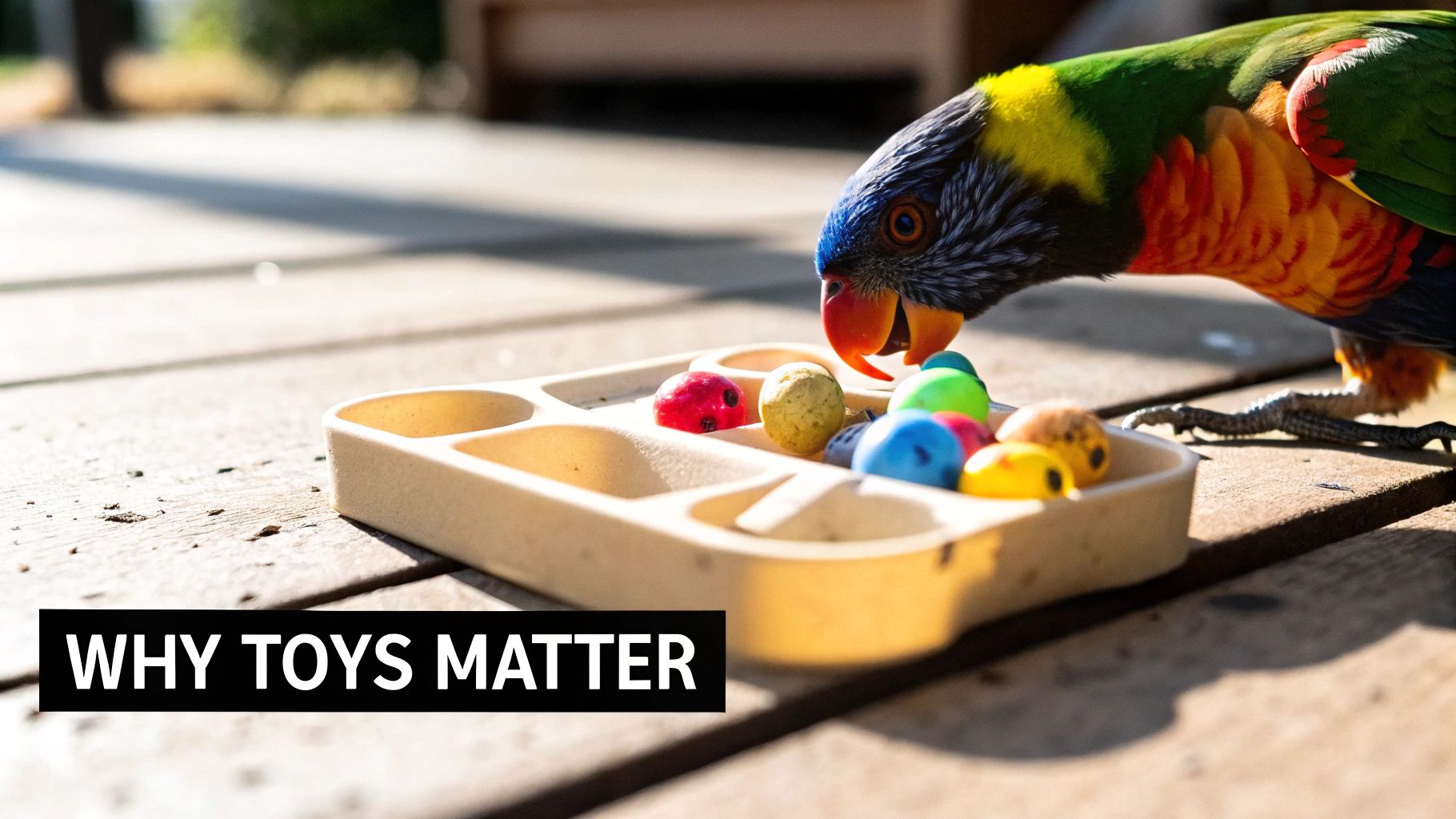
Foot toys are those small, lightweight items a lorikeet can pick up, turn over, and toss around with their feet. They might seem simple, but they play a massive role in developing your bird's coordination and dexterity. They’re perfect for out-of-cage playtime on a flat surface or a dedicated play stand.
Using their feet to explore and manipulate objects is a completely natural parrot behaviour. Foot toys—things like little woven balls, plastic links, or bird-safe wooden blocks—encourage them to practice these fine motor skills. It’s an easy and incredibly effective way to keep them occupied and out of mischief while they're spending time with you.
How To Choose Safe Materials For Your Lorikeet
When you bring a lorikeet into your home, you quickly learn their beak is their primary tool for exploring the world. Everything—and I mean everything—goes in for a nibble, a lick, or a full-on chew. That’s why toy safety isn't just a recommendation; it's the most critical part of being a responsible lory owner.
Your job is to become a detective, spotting the good from the bad. Getting a feel for what makes a toy safe is the best skill you can develop. It gives you the confidence to know that whether you're buying a new toy or making one yourself, playtime will always be a safe time.
Green Flags: Safe Materials to Look For
Think of these materials as the "green flags" you want to see when shopping. They're tried, tested, and trusted by avian experts, so you can choose them with peace of mind.
- Untreated, Natural Australian Woods: Lories love to get their beaks into woods like pine, balsa, banksia, gum nuts, and bottlebrush. The key here is that they must be 100% natural—no paints, varnishes, stains, or chemical treatments whatsoever.
- Stainless Steel Hardware: For any metal bits on a toy, like clips, chains, or bell clappers, stainless steel is the only truly safe option. It won't rust and, most importantly, won't leach toxic heavy metals.
- Vegetable-Tanned Leather: If a toy has leather strips or shapes, double-check that it’s vegetable-tanned. The chrome-tanned leather used in many everyday goods is treated with chemicals that are toxic to birds.
- 100% Natural Fibres: Ropes made from sisal, jute, or hemp are great for preening and chewing. Just be sure to check them daily for any long, frayed strands that could tangle up a curious foot or toe.
- Bird-Safe Plastics and Acrylics: High-quality, durable acrylics are fantastic for foraging toys. They’re tough enough to handle a lory’s enthusiastic beak without shattering into sharp, dangerous pieces.
This little map gives you a great visual on how different toy types work together to keep your lorikeet happy and busy.
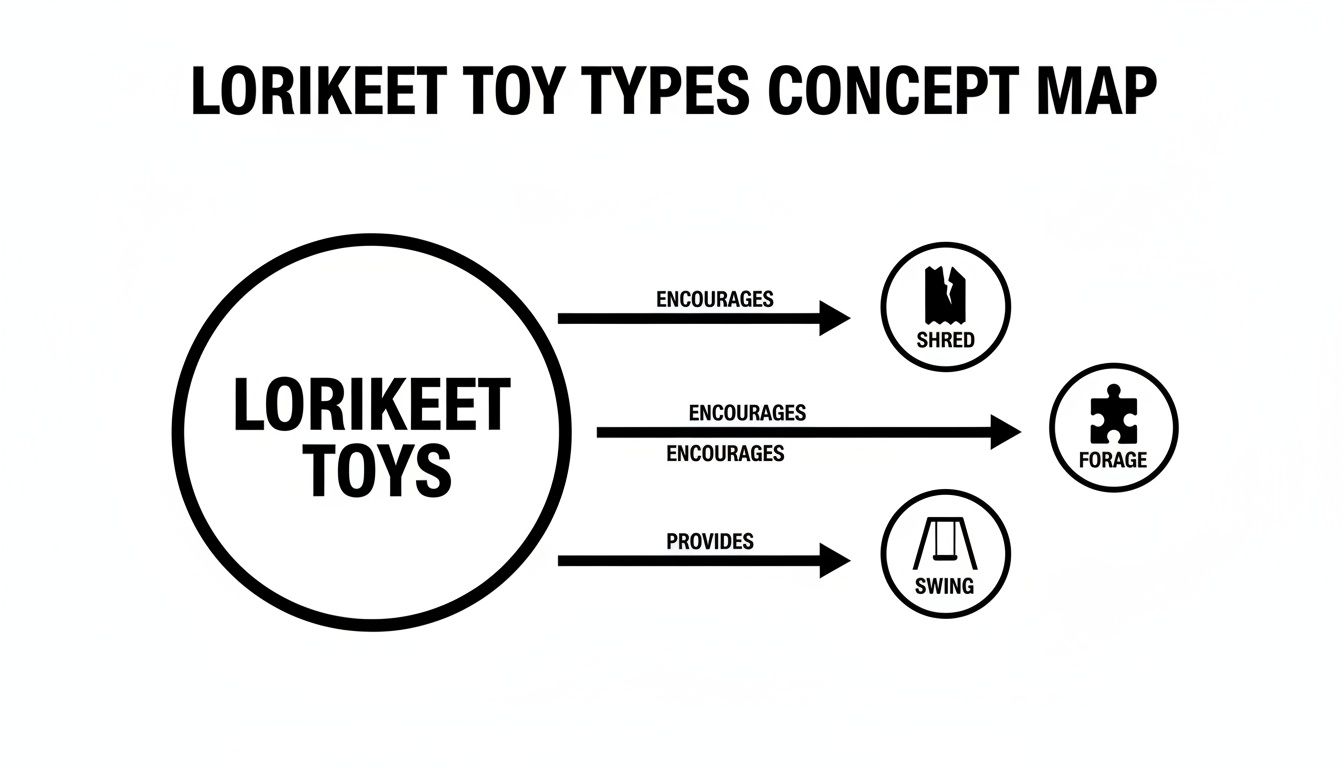
As you can see, a good mix of shreddable, foraging, and active toys provides the well-rounded enrichment your bird needs to thrive both mentally and physically.
Red Flags: Unsafe Materials to Avoid
Knowing what to avoid is just as important as knowing what's safe. A lot of common household items and cheap toy parts can pose a huge risk to your bird.
Expert Advice: If you have even the slightest doubt about whether a material is safe, just don't use it. It is never worth risking your bird's health for a new toy.
Toxic Metals: Zinc, lead, and copper are extremely toxic to birds. Be wary of any galvanised hardware or cheap, shiny metal parts on imported toys, as they often contain zinc.
Unsafe Plastics: Soft, brittle plastics are a major no-go. They can be chewed into small pieces and swallowed, potentially causing a crop impaction or internal injuries. If a plastic part looks like it could snap off easily, steer clear.
Dangerous Dyes: Only toys coloured with non-toxic, food-grade dyes are safe for your lory. A huge red flag is a toy that bleeds colour when it gets wet—this is a sure sign that unsafe dyes were used.
To make it easier, here's a quick reference table to help you spot the good from the bad while you're shopping or making your own toys.
Safe vs Unsafe Lorikeet Toy Materials Checklist
| Safe Materials (Green Flags) | Unsafe Materials (Red Flags) |
|---|---|
| Untreated Australian native woods (Pine, Balsa, Banksia, Gum Nuts) | Treated, painted, stained, or pressure-treated wood |
| Stainless steel hardware (chains, clips, bells) | Zinc, lead, or copper hardware (galvanised metal) |
| Vegetable-tanned leather | Chrome-tanned leather (used in shoes, belts, etc.) |
| 100% natural fibres (sisal, jute, hemp, seagrass) | Synthetic fibres like nylon, polyester, or cotton rope (can cause impaction and entanglement) |
| Hard, durable, bird-safe acrylics and plastics | Soft, brittle plastics that can be easily ingested |
| Food-grade, non-toxic dyes | Dyes that run or bleed when wet |
Keep this list in mind, and you'll be well on your way to building a safe and fun toy collection for your feathered friend.
Demystifying Common Toy Components
Even a toy made from seemingly safe materials can hide dangers in its smaller parts. It’s the little details that often matter most.
Bells: The classic "jingle bell" with a little slit is a serious hazard. A lorikeet can easily get its beak or a toe caught in the opening, and the clapper inside is often made of toxic metal. The only safe options are cow bells or liberty bells with a solid, single clapper made of stainless steel.
Chains: Chains must have welded links, meaning each loop is fully sealed shut. Open-loop chains are a trap waiting to happen for a bird's beak or foot. The links also need to be the right size—too small, and a toe can get stuck.
Rings and Clips: Stay away from split-key rings and spring-loaded clips (like the ones on dog leads). A lorikeet's powerful beak can get trapped in the split or spring. Your safest bets are quick-links that screw shut or sturdy stainless steel pear links.
For a deeper dive into parrot-safe toy design, feel free to explore our comprehensive guide about toys for parrots for even more detailed tips.
Creating an Enriching Environment with a Toy Strategy
Just filling your lorikeet’s cage with toys is a good first step, but it’s not the whole story. Real enrichment comes from a bit of smart strategy to keep their world fresh, engaging, and just the right amount of challenging.
An unchanged cage, no matter how full of goodies, quickly becomes boring wallpaper to a clever bird. The goal is to move beyond just having toys to using them in a way that creates a dynamic habitat. This turns their cage from a simple house into a stimulating world of discovery that keeps your lorikeet on its toes—in the best way possible!
The Power of Toy Rotation
The single most effective trick up your sleeve for beating toy boredom is toy rotation. It’s a simple habit, but incredibly powerful: you just regularly swap out the toys in the cage to keep things new and exciting. A toy that’s been tucked away for a week can feel brand new all over again when you reintroduce it.
Think of it as creating a "toy library." Instead of piling every toy into the cage at once, you keep a collection on hand and cycle through them on a schedule.
- Build Your Library: Aim to have at least twice as many toys as you keep in the cage at any one time. This gives you plenty of options to cycle through. Make sure you have a good mix of shreddable, foraging, and active toys like the Gumnut Shredder Delight to keep the selection interesting.
- Create a Schedule: Once a week, swap out a few of the existing toys for "new" ones from your library. You don't have to change everything all at once; rotating just two or three is usually enough to spark fresh interest.
- Clean and Store: Before you put a toy away, give it a thorough clean and check for any wear and tear. This way, you know it's safe and ready for its next appearance.
This simple routine ensures your lorikeet always has something novel to investigate, which is fantastic for preventing the disinterest that can sometimes lead to behavioural problems.
Strategic Cage Setup for Maximum Engagement
Where you place toys in the cage is just as important as the toys themselves. A thoughtful layout can encourage specific behaviours, boosting both their physical and mental health. The idea is to create different "zones" within their space that serve different purposes.
For instance, putting an active toy like the Wattle Wonder Acrobat Swing in an open area encourages big movements and exercise. On the other hand, positioning a complex puzzle like a foraging toy near a quiet perch gives them a comfortable spot to settle in and problem-solve.
This strategic placement makes a huge difference. Studies on lorikeet welfare in Australian aviaries have shown just how impactful a good toy strategy can be, with reports showing significant improvement in bird engagement scores after introducing species-specific toys. Lorikeets specifically show much higher interaction times with a well-planned environment. You can explore more about the growth of the enrichment toy market in Australia and see how these practices are becoming standard.
Expert Advice: A thoughtfully arranged cage is more than just a home—it's an interactive playground. By guiding your lorikeet to climb, swing, and think, you are actively enriching their daily life and supporting their natural instincts.
Consider a layout like this for a really balanced setup:
- High-Energy Zone: Place swings and boings in the upper, more open parts of the cage to encourage climbing and acrobatics.
- Foraging Corner: Position puzzle toys like the Banksia Pod Forager near a main perch where your lory feels secure enough to spend time thinking.
- Shredding Station: Hang shreddable and preening toys near perches at different levels to give them something to do wherever they decide to rest.
By rotating toys and placing them with purpose, you create an environment that continually sparks your lorikeet's curiosity and supports a full range of healthy, natural behaviours.
Safe DIY Lorikeet Toys From Household Items
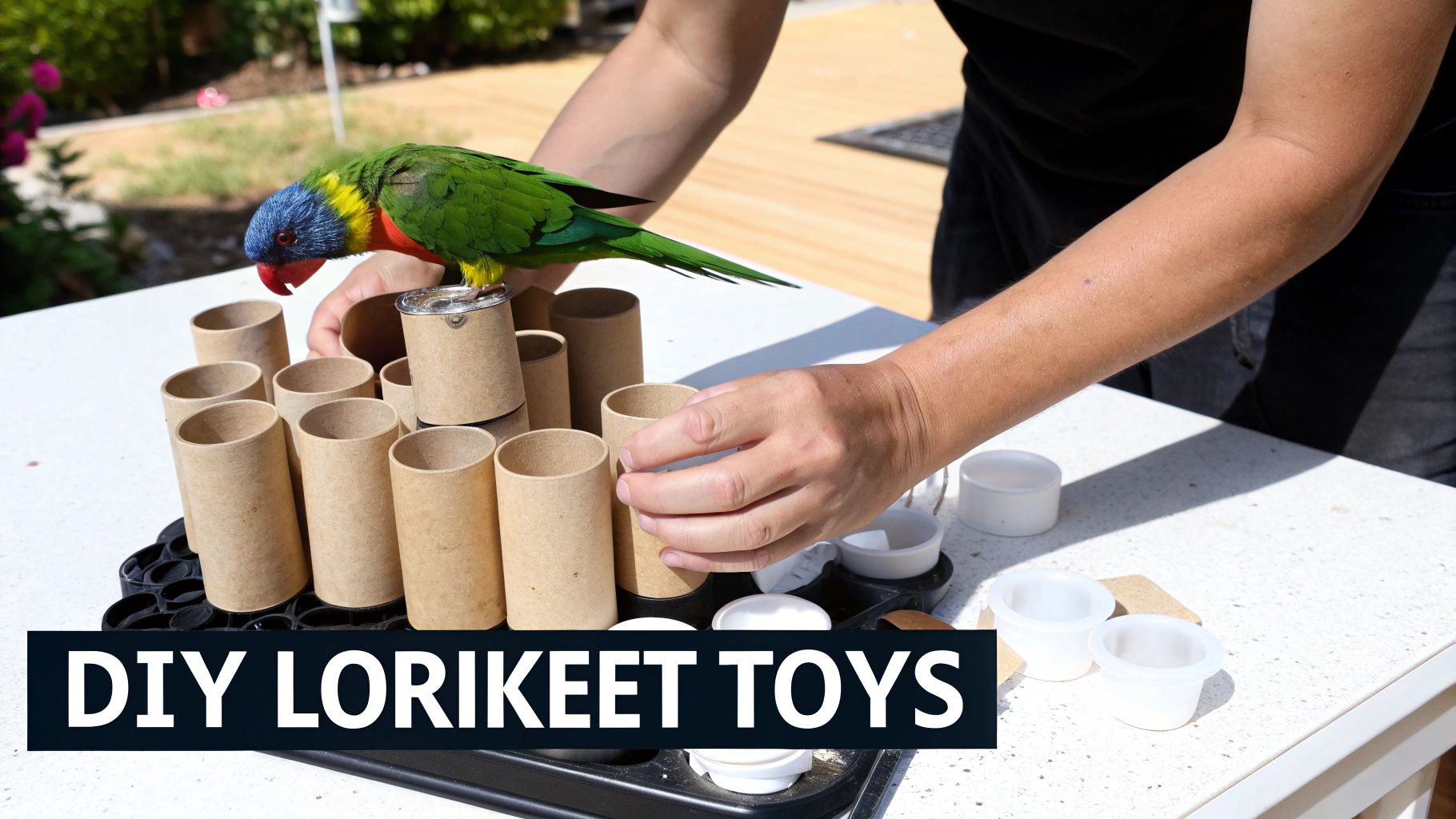
For those of us who enjoy a bit of craft, making your own bird toys is a brilliant, budget-friendly way to add some extra fun to your lorikeet's toy collection. With a little imagination, you can turn everyday household items into fantastic shreddable toys and simple foraging puzzles that will keep that busy beak and sharp mind happily occupied.
Safety, however, is always the number one priority. Before you start raiding the recycling bin, remember this golden rule: only use materials that are 100% natural, untreated, and completely free from glues, inks, plastics, and staples. A lory explores the world with its beak, so it's absolutely vital that every single part of your creation is safe to chew on.
Easy Shredding Toys From Cardboard
Some of the very best shredding toys can be made from things you'd normally just throw away. For a lorikeet that loves to rip and tear, these simple ideas offer immense satisfaction.
- Paper Towel Roll Piñata: Grab an empty cardboard paper towel or toilet paper roll. Gently fold the ends inwards to create a sealed tube. Just before you close the second end, pop a few dry treats or bits of paper inside. Your lorikeet will have a blast shredding the cardboard to get to the goodies.
- Egg Carton Forager: A clean, plain cardboard egg carton is an excellent first foraging toy. Simply place a treat in a few of the cups and shut the lid. Your bird will have to chew right through the carton to claim its prize.
Simple Foraging Puzzles
You can also whip up fun foraging challenges that tap into your lorikeet’s natural instincts, no special tools or materials required.
A great place to start is by wrapping a favourite treat—like a piece of dried fruit or a Banksia nut—inside a small piece of plain, ink-free paper. Scrunch it into a ball and hand it over. This simple task encourages them to manipulate the object and work for their food, providing fantastic mental stimulation.
Expert Advice: Creating your own toys isn't just about saving money; it's a way to understand your bird's unique preferences. Watching them figure out a puzzle you made is an incredibly rewarding part of the human-animal bond.
For anyone keen to take their homemade creations to the next level, our guide to DIY bird toys is packed with more ideas and safety tips to get you started.
Household Items: The Safe List
While DIY is a lot of fun, you have to be vigilant. Here’s a quick guide to what’s generally safe for a bit of fun and what you must avoid at all costs.
Generally Safe for Supervised Play:
- Plain cardboard rolls (toilet paper, paper towel)
- Cardboard egg cartons (no plastic or foam ones)
- Plain, unwaxed paper cups or plates
- Natural twine like sisal or jute for hanging (always check for frays)
- Untreated wooden skewers (with the sharp points snipped off) for stringing paper pieces
Strictly Avoid:
- Anything with glue, tape, or staples
- Printed or glossy cardboard and paper (toxic inks are a no-go)
- Plastics that are soft or brittle enough to be swallowed
- Treated wood or MDF
- Cotton rope, yarn, or fabric (these can cause deadly crop impaction and entanglement)
DIY toys are a wonderful form of enrichment, but they should always be offered under supervision and checked daily for any potential hazards that might pop up as they get chewed.
Common Questions About Lorikeet Toys
When it comes to picking the best toys for lorikeets, it's natural to have questions. You want to get it right, and making confident choices for your feathered mate’s safety and happiness is what it's all about. Here, we'll tackle some of the most common queries we hear from Aussie lorikeet owners.
How Often Should I Replace Lorikeet Toys?
There's no single timetable for this – it really comes down to the toy's material and your lory’s personal brand of destruction. A serious chewer might turn a shreddable toy like the Gumnut Shredder Delight into confetti in just a few days. On the other hand, a sturdy acrylic forager could last for years.
The most important rule is to give every toy a quick once-over, every single day. You’ll want to replace a toy immediately if you spot:
- Sharp, broken edges that could cause injury.
- Ropes that are getting long and frayed, which are a serious entanglement risk.
- It's so soiled that a proper clean just isn't cutting it anymore.
- Your lorikeet has completely lost interest in it.
Think of toy replacement less as a chore and more as a crucial part of your daily safety check.
My Lorikeet Is Scared Of New Toys How Do I Introduce Them?
This is an incredibly common reaction, so don't worry! Lorikeets are naturally cautious birds, and a strange new object suddenly appearing in their safe space can be pretty intimidating. The trick is a slow, positive introduction.
Start by just placing the new toy on the floor outside the cage for a day or two. This lets your lory watch it from a safe distance and figure out that it’s not a threat. You can also help things along by picking it up and playing with it yourself, talking excitedly to show your bird that it's a fun and safe thing to have around.
Expert Advice: Creating a positive association is the key to winning them over. Try attaching a tiny piece of your lorikeet’s favourite fruit to the new toy. This little bribe often provides the perfect incentive for a brave bird to take that first curious step and investigate.
Are Mirrors Safe For Lorikeets?
While it might seem like a bit of fun, mirrors are generally not a great idea for lorikeets. Birds don't recognise their own reflection; they just see another lorikeet that mysteriously never interacts back. This can lead to a whole host of behavioural and health issues.
Many lories develop an unhealthy obsession with their "friend" in the mirror. This can trigger hormonal behaviour, aggression towards you, and a lot of stress when they get no social feedback from their reflection. It’s far healthier to offer interactive toys like the Banksia Pod Forager or the Wattle Wonder Acrobat Swing. These encourage natural activities like problem-solving, chewing, and exercise, which do so much more for their overall wellbeing.
Wrapping It Up: Your Lorikeet Toy Checklist
We've covered a lot of ground, but it all comes down to this: choosing the right toys for your lorikeet gets a whole lot easier once you know what you’re looking for. Think of it as a mental checklist you run through every time you see a toy that catches your eye.
This isn't just about shopping. It’s about being an active part of your bird’s happiness. There's nothing more rewarding than watching them figure out a new puzzle or gleefully tear into a shreddable toy you picked just for them.
The Ultimate Lorikeet Toy Checklist
Before you click "add to cart" or pop a new toy into your basket, take a moment. Run it through these four essential questions. If you can't say a firm "yes" to all of them, it's best to leave it on the shelf.
- Is the material 100% non-toxic? Stick with what you know is safe: untreated woods, stainless steel hardware, and natural fibres. If you have even a tiny bit of doubt about a material, it’s a no-go. Safety first, always.
- Is it the right size for a lori? The toy needs to be big enough that it can't be accidentally swallowed, but small and light enough for them to actually play with using their beak and feet.
- Is it built safely? Look closely for hidden dangers. Are there open-link chains they could get a toe caught in? Jingle-style bells with clappers that can be ripped out? Long, loose ropes that could fray and cause a tangle?
- Does it spark a natural behaviour? The best toys connect with your lory's instincts. Does it encourage them to forage, chew, shred, or swing like a little acrobat? A toy with a purpose is a toy that truly enriches.
Expert Advice: Giving your lorikeet a safe, stimulating world full of great toys is one of the most direct and meaningful ways you can show them you care. It’s a genuine investment in their long-term health, happiness, and vibrant spirit.
At the end of the day, a happy lorikeet is a busy lorikeet. Your effort to provide them with fantastic enrichment is the foundation of your life together—one filled with playful chaos and endless energy.
Here at Lou Lou Bells Bird Toys, we pour our hearts into creating safe, engaging, and handcrafted toys that are perfect for Australian birds. Come and explore our full collection today.
Keep Reading
Disclaimer Summary: The information in this article is general in nature and may include external links or resources not created by Lou Lou Bells Bird Toys. Every bird is unique, so we encourage you to seek personalised advice from your own veterinarian or avian specialist. For full details, please read our complete disclaimer here.