
The best toys for parrots are the ones that tap into their natural instincts to chew, shred, and forage. Think of them as essential tools for your bird's mental and physical health, not just cage decorations. A great toy collection brings the challenges of the wild right into your home, helping to keep your feathered friend happy, stimulated, and out of trouble.
Why Parrot Toys Are More Than Just Playthings
It’s easy to look at a cage full of colourful toys and see them as simple accessories. But for your parrot, these items are fundamental to their wellbeing, just as important as a healthy diet and a clean cage.
Out in the wild, Australian parrots like Galahs and Cockatoos spend most of their day exploring, solving problems, and tracking down their next meal. All that activity keeps their minds sharp and their bodies strong. When we bring these incredibly intelligent creatures into our homes, it's our responsibility to provide that same kind of stimulation.
This is where the idea of enrichment comes in. Simply put, enrichment means creating an environment that encourages your parrot to act like a parrot.
The Role of Enrichment in Parrot Care
Without things to do, a parrot's brilliant mind quickly gets bored, and that's when problem behaviours can start. These issues aren't your bird being "naughty"—they're often a desperate cry for something to do.
- Prevents Feather Plucking: A busy beak is a happy beak. When a parrot has plenty of appropriate things to shred and destroy, it's far less likely to turn that destructive urge on its own feathers.
- Reduces Excessive Screaming: A lot of screaming is just a bid for attention from a bird with nothing better to do. Giving them a "job," like a tricky foraging toy, gives their mind something productive to focus on.
- Encourages Physical Activity: Toys like swings, ladders, and complex foragers get your bird moving. This is crucial for maintaining a healthy weight and strong muscles, preventing the health issues that come with a sedentary life.
Expert Advice: A destroyed toy isn’t a waste of money—it's a sign of success! It means your parrot has been mentally and physically engaged, fulfilling a deep-seated need to chew, shred, and explore.
This focus on avian wellness is something we're seeing more and more among Aussie pet owners. The local market for pet toys is growing fast, which tells us people are getting serious about their animals' needs. The Australian Pet Toys Market was valued at USD 36.53 million and is projected to climb to USD 65.4 million by 2033. This growth shows that providing quality enrichment is now seen as a core part of responsible pet ownership.
By investing in the right toys for parrots, you’re not just buying things—you’re investing in a longer, happier, and healthier life for your companion.
A Guide to the Different Types of Parrot Toys
Walking into a pet store or scrolling through bird toys online can be a bit overwhelming. With so many colours, shapes, and materials screaming for your attention, how do you even start to choose? The trick is to stop thinking about single items and start thinking about building a well-rounded collection that taps into your bird's natural instincts.
Think about it like this: we need a mix of things to stay healthy and happy – exercise, work, puzzles, and a bit of downtime. Your parrot is no different. They need a range of toys that let them do different things. Getting this variety right is the absolute foundation of good enrichment. Let's break down the essential toy types every Aussie parrot owner should have on their radar.
To help you get a quick overview, this table outlines the main categories of parrot toys and what they're designed to do for your bird.
Parrot Toy Categories and Their Primary Benefits
| Toy Type | Primary Purpose | Best For |
|---|---|---|
| Foraging | Mental stimulation, problem-solving, and mimicking natural feeding behaviours. | All parrots, especially intelligent and boredom-prone species. |
| Shredding | Satisfying the destructive instinct and providing an outlet for nesting urges. | Birds that love to tear things apart, like Galahs and Cockatoos. |
| Chewing | Beak conditioning, jaw muscle exercise, and long-lasting engagement. | Parrots with powerful beaks, such as Macaws and large Cockatoos. |
| Foot Toys | Improving dexterity, coordination, and providing out-of-cage entertainment. | Smaller parrots like Budgies and Cockatiels, but enjoyed by all sizes. |
| Preening | Redirecting over-preening or plucking behaviours onto a safe object. | Birds prone to feather-destructive habits, particularly Cockatoos. |
| Swings/Perches | Physical exercise, balance, and environmental enrichment. | All species to encourage movement and an active lifestyle. |
Each category serves a unique purpose, contributing to a holistic and stimulating environment for your parrot.
Foraging Toys: Puzzles for a Busy Beak
Out in the Aussie bush, a parrot's day is a constant search for food. Foraging toys bring that challenge home, making your bird work for its dinner. This can be as simple as stuffing some shredded paper and seeds into a paper cup, or as tricky as a puzzle box with sliding drawers.
These toys are absolute powerhouses for mental stimulation. They turn mealtime from a boring, passive activity into a problem-solving game, which is brilliant for stopping boredom and the behavioural issues that come with it.
Shredding Toys: Safe, Destructive Fun
Parrots are wired to chew and destroy things. It's a deep-seated instinct. In the wild, they'd be chewing on branches to make a nest or breaking open tough seed pods. If you don't give them a safe way to do this at home, your furniture, remote controls, and door frames will quickly become fair game.
Toys made from things like palm leaves, cardboard, or yucca are meant to be destroyed. Giving your Corella or Galah something they are actually allowed to rip to shreds is incredibly satisfying for them. It’s a huge part of their emotional wellbeing. You can find a fantastic range of safe and satisfying shreddable toys that are perfect for even the most enthusiastic demolition expert.
This diagram highlights just how vital toys are for satisfying these natural drives and supporting your parrot's mental health.
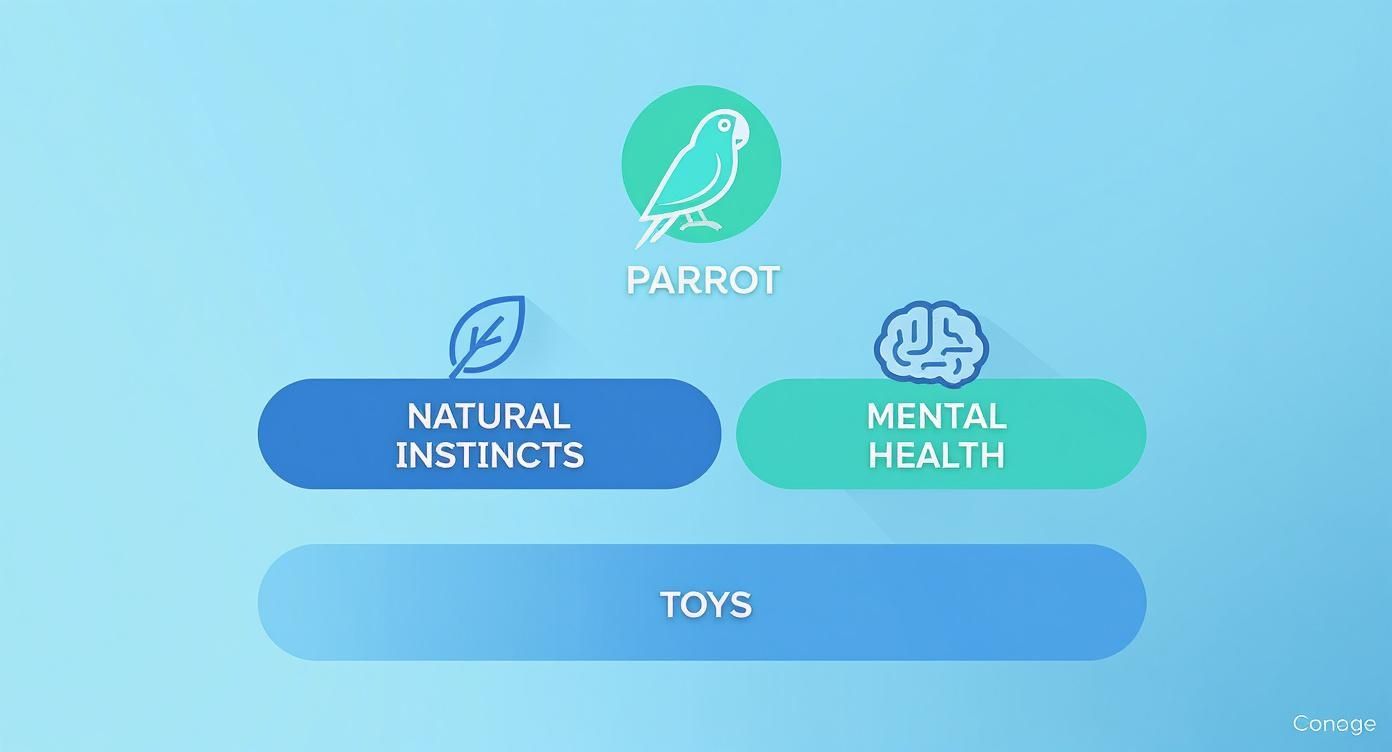
As you can see, it's not just about "play." The right toys directly meet your bird’s innate needs, which leads to a happier, healthier companion all around.
Chew Toys: Tools for Beak Maintenance
While they sound a lot like shreddables, chew toys have a totally different job. They’re made from tougher stuff like untreated native woods or dense, bird-safe plastics, and they're built to last. Their main role? Helping your parrot keep its beak in top condition.
Gnawing on these harder surfaces helps condition the beak, preventing it from getting overgrown, and keeps their jaw muscles strong. For big chewers like Macaws or Sulphur-crested Cockatoos, tough chew toys are simply non-negotiable.
Foot Toys: For Dexterity and Coordination
Foot toys are small, lightweight items a parrot can pick up with its foot to chew on, toss around, and explore. Think of them as little fidget toys for birds. They can be anything from simple wooden blocks and woven vine balls to little plastic rings.
These are excellent for sharpening your bird's dexterity and coordination. For smaller birds like Budgies and Cockatiels, foot toys offer the perfect chance for hands-on (or rather, foot-on) play, both inside and outside the cage.
Preening Toys: Keeping Feathers Healthy
Some parrots, especially species like Cockatoos, can get a bit obsessive with their feathers, leading to over-preening or even plucking. Preening toys give them a safe alternative to focus on. They usually have soft materials like cotton rope, leather strips, or sisal that feel good to pull and fuss with.
These can be a lifesaver for redirecting a potentially harmful habit into something safe and soothing.
Swings and Perches: For an Active Life
Finally, don't forget toys that get your bird moving. Swings, boings, and ladders are fantastic because they encourage climbing and balancing, which is great exercise. They help strengthen your parrot’s legs and core muscles while giving them a different view of their world, keeping things interesting.
The Essential Rules of Parrot Toy Safety
Creating a vibrant, stimulating home for your parrot is one of the best parts of being a bird owner. But before we get to the fun, we have to talk about safety. An engaging play area has to be a secure one first, which is why getting the basics of toy safety right is a non-negotiable part of responsible parrot care.
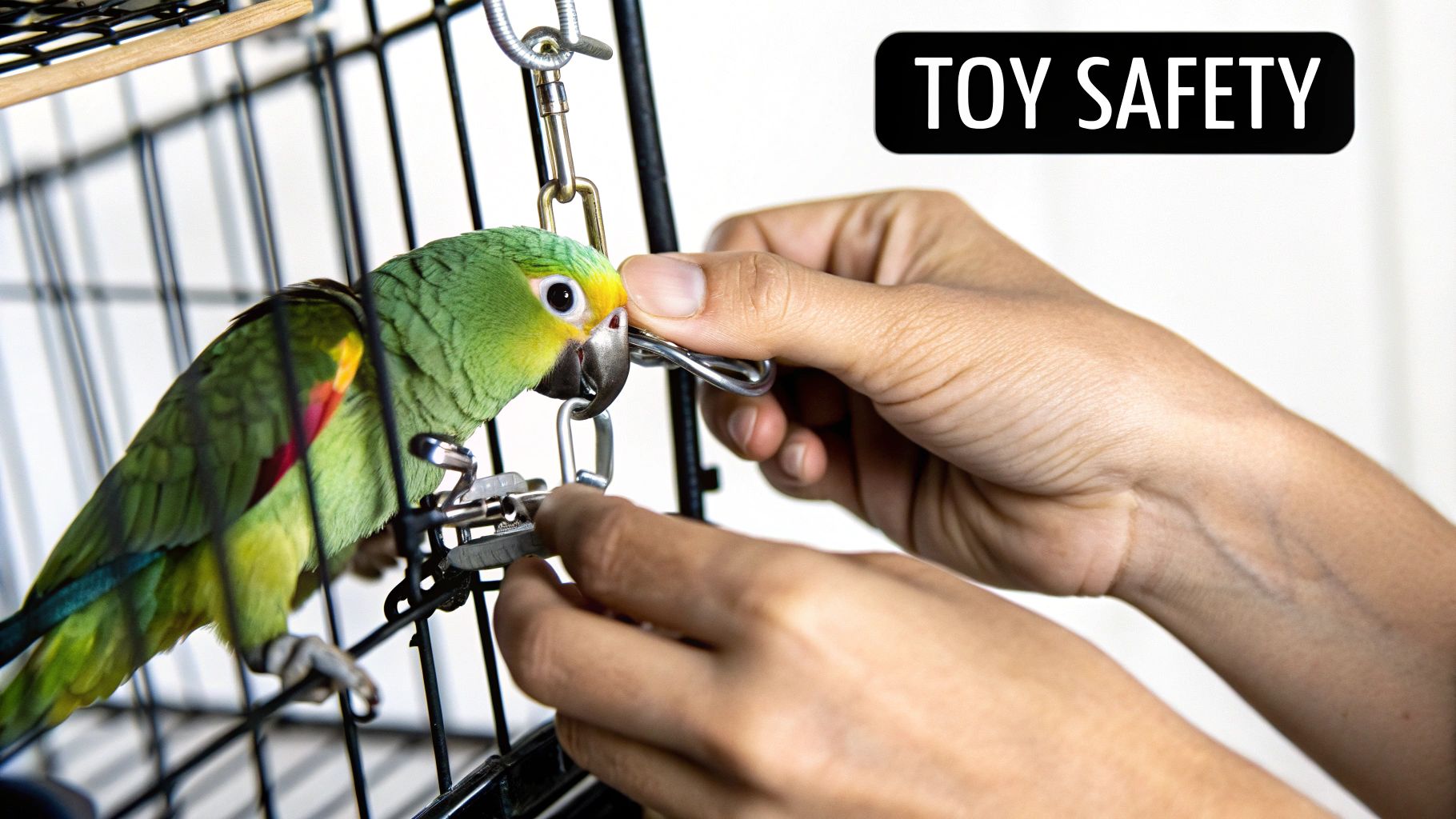
This isn't about being fearful; it's about being informed. When you know what makes a toy safe, you can make confident choices and protect your feathered mate from hidden dangers. This knowledge turns you from a simple provider into a proactive guardian of their wellbeing.
Materials Matter Most
The single most important factor in toy safety is what it’s made of. Parrots explore their world with their beaks, so they’re going to chew, shred, and sometimes even swallow bits of every toy you give them. Choosing the wrong material can have devastating consequences.
Australian avian vets constantly warn against certain materials that are either toxic or pose a physical risk. Your first line of defence is a vigilant eye for safe construction.
Bird-Safe Materials to Look For:
- Stainless Steel: This is the absolute gold standard for metal parts like chains, links, and bells. It’s tough, non-toxic, and won’t rust.
- Natural, Untreated Wood: Woods from Aussie natives like eucalyptus (gum trees), bottle brush, and banksia are fantastic choices. Just make sure they're free from pesticides or chemicals.
- Vegetable-Tanned Leather: If a toy uses leather, it must be vegetable-tanned. Chrome-tanned leather contains chemicals that are toxic if your bird ingests them.
- Bird-Safe Plastics: Look for hard, durable plastics that are less likely to shatter into sharp, swallowable pieces when a strong beak gets to work.
Expert Advice: If you're ever unsure about a material, the safest bet is to avoid it. Your parrot’s health depends on your diligence, so always err on the side of caution when selecting toys for parrots.
Common Hazards Hiding in Plain Sight
Beyond dodgy materials, many toys can pose physical risks. These dangers often crop up as a toy gets worn down, which is why checking them regularly is just as crucial as choosing well in the first place.
One of the biggest culprits is entanglement. Loose threads, long ropes, or chains with wide links can easily trap a toe, a leg, or even a wing, leading to serious injury. Another huge risk is ingestion. Small parts that can be chewed off and swallowed—like the clapper inside a jingle-style bell or a piece of soft plastic—can cause life-threatening internal blockages.
Your Pre-Purchase Safety Checklist:
- Check All Hardware: Squeeze any quick links. Can you open them easily? If so, your bird can, too. All metal parts should be stainless steel to prevent heavy metal poisoning from zinc or lead.
- Inspect Ropes and Fibres: Are the ropes made from natural fibres like sisal or jute? Steer clear of nylon or synthetics, which can fray into fine strands that are easy to ingest and cause crop impaction. Make sure any knots are tight and the ends are trimmed.
- Assess for Small Parts: Look at the toy from your parrot's point of view. Are there small, brittle plastic charms, beads, or bell clappers that a strong beak could snap off and swallow?
- Evaluate the Dyes: If a toy is coloured, is the dye specified as bird-safe or food-grade? Non-toxic vegetable dyes are the only acceptable option.
Navigating these details might feel a bit full-on at first, but it quickly becomes second nature. To help you build that confidence, we've put together a detailed guide on how to choose the right bird toys for your bird, covering everything from material safety to your bird's specific needs.
Ongoing Inspection Is Not Optional
A toy that was perfectly safe on day one can become a hazard over time. A happy parrot is a destructive parrot, and their handiwork can create new dangers.
Make toy inspection a daily habit. Look for frayed ropes that need a trim, sharp edges on chewed wood, or cracked plastic bits. Think of it as routine maintenance for your bird's playground. By removing or repairing toys before they become a risk, you make sure that playtime stays a positive and safe experience, day after day.
Matching Toys to Your Parrot's Species and Size
When it comes to parrot toys, there’s simply no such thing as a "one-size-fits-all" solution. A delicate vine ball that a Budgie could happily toss around for hours might be swallowed in a single gulp by a Sulphur-crested Cockatoo, turning a fun toy into a serious choking hazard. That’s why the single most important thing you can do is tailor every toy choice to your specific bird.
To get it right, you need to think like a parrot. Consider their size, the incredible power of their beak, and the behaviours that come naturally to their species. The aim isn't just to find something engaging; it's to provide a toy that is, above all, safe and appropriately sized for your feathered mate.
Beak Strength The Deciding Factor
A parrot's beak is a seriously powerful and versatile tool, and its strength differs hugely from one species to another. A Macaw’s beak is built to crack hard nuts, while a Cockatiel's is designed for much smaller seeds and softer materials. Give a toy that's too soft to a big chewer, and it’ll be confetti in minutes, offering very little value for money.
Even more dangerously, a toy that’s too tough for a smaller bird can lead to beak damage or frustration. Likewise, little parts that are perfectly safe for a Lorikeet could be easily broken off and ingested by a Galah. Beak strength, more than anything else, should be your primary guide when choosing what a toy is made from.
Expert Advice: Always look at a toy’s weakest point. If a large, tough wooden toy has a small plastic charm dangling off it, a powerful bird like a Macaw could snap that charm off and swallow it in an instant. Every single component of the toy must be tough enough for your bird's beak.
Sizing Up Your Parrot's Needs
Let’s break down how to pick toys based on the size of common Aussie parrots. This isn't just about avoiding accidents—it's about giving them the right level of challenge to keep them properly engaged.
- Small Parrots (Budgies, Cockatiels, Lovebirds): These little guys need lightweight toys they can actually move and manipulate. Think balsa wood, shredded paper, yucca, vine balls, and small plastic bits they can't possibly swallow. Foot toys are a massive hit with this crowd, as they help them practise their dexterity.
- Medium Parrots (Galahs, Corellas, Conures): This group needs something a bit more durable. They love shredding softer woods like pine, but they also need tougher materials to really get their chew on. They're often clever little problem-solvers, so foraging and puzzle toys are perfect for keeping their minds busy.
- Large Parrots (Macaws, Large Cockatoos, Eclectus): For these birds, durability is absolutely everything. Hardwoods, java wood, tough ropes, and stainless-steel parts are non-negotiable. Many of these parrots are incredibly intelligent and require complex foraging toys to stop them from getting bored. For some great ideas suited to these avian powerhouses, check out this curated collection of Macaw bird toys that are built to last.
To make things a bit easier, this table provides a quick guide to help you make safer, more effective choices when you're shopping for toys for parrots.
Toy Selection Guide by Parrot Size
It can feel overwhelming at first, but this simple chart breaks down the basics for common parrot sizes found in Australia.
| Parrot Size Category (e.g., Budgie, Galah) | Recommended Toy Types | Safe Materials | Potential Hazards to Avoid |
|---|---|---|---|
| Small (Budgie, Cockatiel) | Shredding, Foot Toys, Swings | Balsa wood, yucca, paper, vine balls, plastic beads | Small, swallowable parts; heavy wood blocks; thick ropes |
| Medium (Galah, Corella) | Foraging, Shredding, Chew Toys | Softer woods (pine), leather, acrylic, sturdy ropes | Brittle plastics, easily dismantled parts, weak hardware |
| Large (Macaw, Cockatoo) | Chew Toys, Complex Foragers | Hardwoods, java wood, coconut shell, stainless steel | Soft woods, weak chains or links, small components |
By matching toys to what your parrot actually needs, you’re not just buying cage decorations. You're investing in safe, enriching tools that support their physical and mental health for years to come.
How to Keep Your Parrot Engaged with Toy Rotation
Ever splashed out on a fantastic new toy, only to see your parrot give it the cold shoulder after a week? It’s a classic story for Aussie bird owners, but don’t take it personally. Your bird isn’t being fussy – they’re just smart. Parrots are hardwired to look for new things, just like they would in the wild where their environment is always changing.
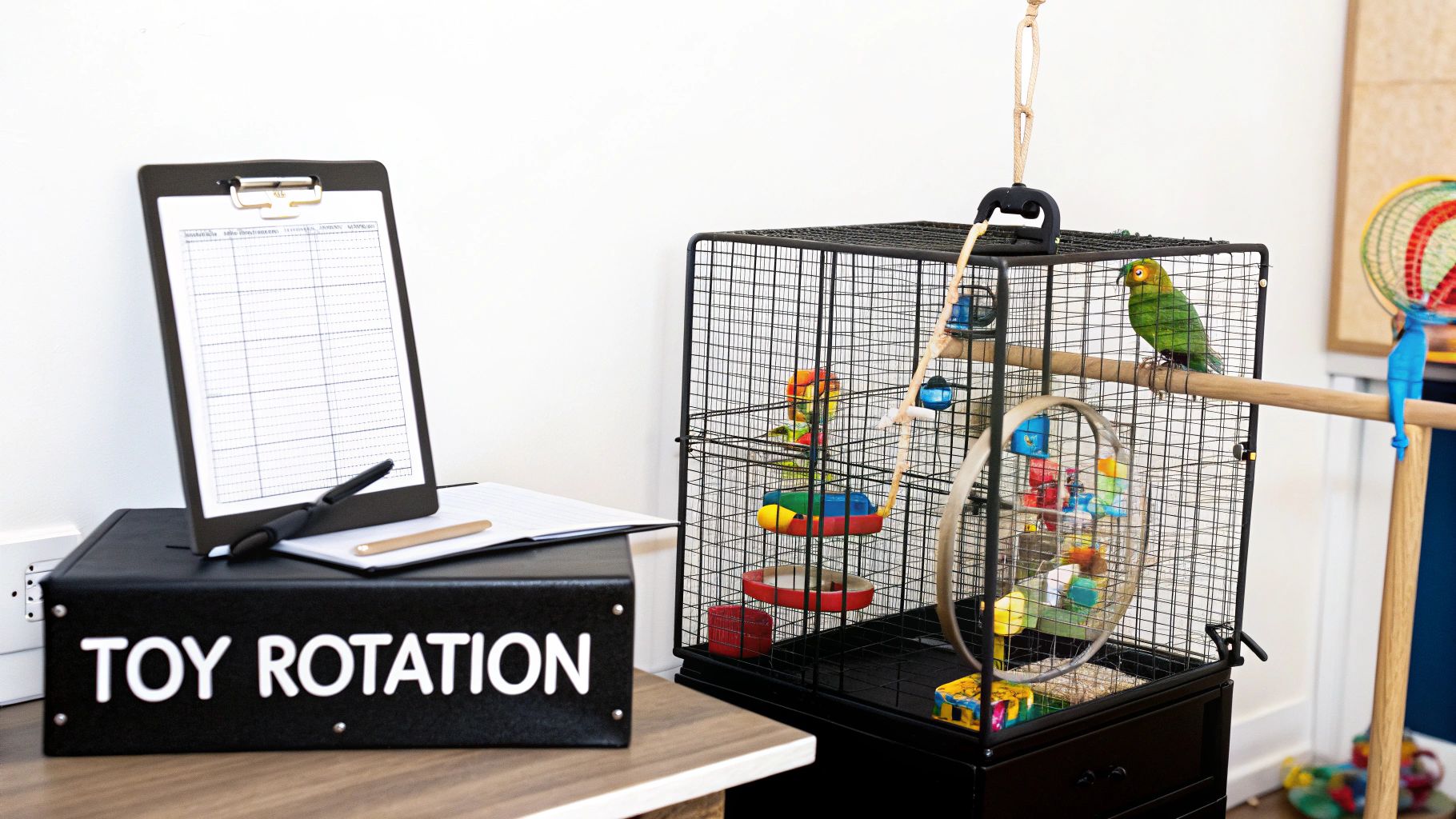
This is where a simple but brilliant strategy called toy rotation comes in. Instead of having the same old toys hanging in the cage day after day, you create a dynamic, ever-changing playground. By regularly swapping toys in and out, you sidestep "toy burnout" and make old favourites feel exciting all over again. It saves you money in the long run and, more importantly, keeps your feathered mate constantly stimulated and happy.
Building Your Toy Library
The first step is having more toys on hand than you need in the cage at any one time. Think of it as creating a "toy library" for your bird. You don't have to go out and buy dozens of expensive things at once; the real goal here is variety.
A great place to start is with three sets of toys.
- Set A: The toys currently in your parrot's cage.
- Set B: A collection of clean, stored toys ready for action.
- Set C: A "maybe" pile for toys that are getting a bit worn or that your bird hasn't been fussed about lately.
Having this system means you've always got a fresh batch of toys for parrots ready to go, making the swap-out process a breeze. A sturdy chew toy one week can be swapped for a shreddable one the next. That little break gives your bird a chance to miss it and get excited when it reappears.
Creating a Practical Rotation Schedule
Consistency is what makes this whole thing work. A random, 'when-I-remember' approach just won't cut it. Most bird experts suggest rotating a few toys every one to two weeks.
Here’s a simple schedule you can make your own:
- Choose a "Toy Day": Pick one day of the week that works for you, like a Sunday afternoon, to do the swap.
- Remove Old Toys: Take out 2-3 of the toys currently in the cage. This is also the perfect time to give them a good clean and a safety check for things like frayed ropes or sharp, chewed edges.
- Introduce "New" Toys: Grab 2-3 different toys from your "Set B" library and hang them in different spots around the cage. Just changing the location adds another layer of novelty.
- Re-evaluate and Store: Once the old toys are clean and dry, pop them into your stored collection, ready for their next turn.
Expert Advice: Keep an eye on your parrot’s reaction. If they seem genuinely scared of a "new" toy, don't force it. Introduce it slowly. Let them see it outside the cage first, or even have a little play with it yourself to show them it’s a fun, safe object.
The Joy of DIY Parrot Toys
Rotation isn’t just about the toys you buy. Throwing some safe, homemade items into the mix is a fantastic way to add variety without emptying your wallet. Heaps of common household items can be turned into brilliant shreddable toys.
Here are a few safe and simple DIY ideas that Aussie parrots love:
- Cardboard Creations: Empty paper towel rolls, egg cartons, or clean cardboard boxes can be stuffed with shredded paper and a few hidden treats.
- Paper Pleasures: Weave strips of plain, unprinted paper through the bars of the cage for your bird to pull apart and shred to their heart's content.
- Native Branch Perches: A fresh, pesticide-free branch from a native Aussie tree like a gum or bottlebrush is an amazing chew toy and perch all in one.
When you combine a smart rotation strategy with a healthy mix of store-bought and homemade toys for parrots, you turn your bird's cage from a simple home into a world of endless discovery. For some fresh ideas, check out our range of engaging foot toys for birds—they're perfect for adding a bit more variety to any rotation schedule.
Toy Maintenance and Knowing When to Say Goodbye
Let’s be honest: a parrot toy's glorious purpose in life is to be utterly and completely destroyed. A dismantled, shredded toy isn't a failure or a waste of money; it's the sign of a happy, engaged, and well-cared-for parrot. But this practical side of toy ownership means knowing how to clean what’s salvageable and, more importantly, when to retire a beloved toy for safety's sake.
Keeping toys clean is a simple but vital step in keeping your bird's environment healthy. Regular cleaning stops bacteria and mould from building up, especially on toys that get dunked in the water bowl or covered in food.
Keeping Your Bird's Toys Clean
For a quick daily wipe-down of non-porous toys, a simple solution of water and vinegar works a treat. When a deeper clean is needed, you can use a bird-safe disinfectant. Just follow the manufacturer's instructions carefully, ensuring you rinse every last trace of the cleaner off and let the toy dry completely before it goes back in the cage.
- Porous Toys (Wood, Rope, Paper): These are the trickier ones. If they get heavily soiled with droppings, it's often best to just discard them to avoid bacteria growth. Lightly soiled wooden toys can be scrubbed with hot water and a brush, then left to dry fully in the Australian sun—it’s a great natural disinfectant.
- Non-Porous Toys (Acrylic, Stainless Steel): These are the easiest to look after. They can be washed thoroughly in hot, soapy water (using a gentle, bird-safe soap), rinsed well, and dried. Many can even go through the dishwasher on a hot cycle for simple, effective sterilisation.
Knowing When a Toy Is Past Its Prime
Regular inspection is your most powerful safety tool. A toy that was perfectly safe on day one can easily become a hazard after a bit of enthusiastic wear and tear. Make it a daily habit to give every toy a quick once-over, looking for potential dangers that have popped up during playtime.
A destroyed toy is a success story. It represents hours of enrichment, mental exercise, and pure instinctual satisfaction for your parrot. The cost of replacing it is just a necessary investment in your bird's ongoing happiness and wellbeing.
Expert Advice: Never look at a worn-out toy as a loss. Think of it as a 'trophy' of your parrot's happiness. Reinvesting in new, safe toys for parrots is a fundamental part of responsible and compassionate bird ownership here in Australia.
Keep an eye out for these clear signs that a toy needs to go:
- Frayed Ropes or Long Strands: Loose threads longer than a few centimetres can pose a serious entanglement risk for toes, legs, or even wings. Trim them short, or it's time to say goodbye.
- Cracked or Sharp Edges: Wood and hard plastics can splinter or crack after heavy chewing. This creates sharp points that could easily injure your bird’s mouth or feet.
- Broken or Detachable Small Parts: If a part of a toy has become loose or looks like it could be snapped off and swallowed, it needs to be retired immediately.
By staying on top of toy hygiene and safety, you make sure the playground you’ve created remains a place of pure joy and safe enrichment.
Your Parrot Toy Questions, Answered
Over the years, we've heard just about every question you can imagine from parrot people across Australia. Here are some of the most common ones we get, with straight-to-the-point answers from our experience.
How Many Toys Should My Parrot Have At Once?
We’ve found a great starting point is having 4-6 different types of toys in the cage at any one time. The key isn't just piling them in; it's about providing a variety of experiences. Think of it like a little activity centre – maybe have a shreddable toy for ripping into, a foraging puzzle for a brain workout, a tough chew toy for that busy beak, and a swing to hang out on.
But the real secret isn't the number inside the cage, it's consistent rotation. Keeping a bigger collection on hand and swapping a few out every week or so is the best way to stop your bird from getting bored. It keeps their world fresh and interesting.
Are Toys With Mirrors Or Bells Actually Safe?
It’s smart to be cautious with these, as quality and design make all the difference. Mirrors are something we generally suggest avoiding. They can sometimes trigger hormonal or aggressive behaviour when a parrot sees their reflection as either a rival or a potential mate, which can lead to a lot of stress.
When it comes to bells, the design is everything.
- Safe Bells: Look for the cowbell or liberty bell styles. Their clapper is a single, solid piece of metal that can't be easily broken off.
- Unsafe Bells: Never use jingle-style bells. A determined beak can pry them open and get to the little ball inside, which is a serious risk for heavy metal poisoning if swallowed.
My Parrot Is Scared Of New Toys How Do I Introduce Them?
Ah, yes – the new toy side-eye. This is a totally normal and natural instinct called neophobia, which is just a fancy word for being scared of new things. The trick is to be patient and show them it's not a threat.
Expert Advice: Whatever you do, never force a new toy on your bird. The goal is to let them check it out on their own terms. Your calm, positive interaction with the toy is the best signal you can send that it’s safe and fun.
Start by just placing the toy somewhere across the room where they can see it. Leave it there for a day or two, then slowly move it a bit closer. The next step is to play with the toy yourself in front of your parrot, showing them how much fun it is. Finally, try hanging it on the outside of the cage for a while before you move it inside, well away from their favourite perch.
At Lou Lou Bells Bird Toys, we're all about creating safe, engaging, and enriching toys that genuinely make your parrot's life better. Feel free to explore our full collection of expertly designed toys for parrots of all shapes and sizes.
Disclaimer Summary:
The information in this article is general in nature and may include external links or resources not created by Lou Lou Bells Bird Toys. Every bird is unique, so we encourage you to seek personalised advice from your own veterinarian or avian specialist. For full details, please read our complete disclaimer here.