
When you bring a parrot into your home, providing the right parrot bird toys isn't a luxury—it's an absolute necessity for their mental and physical health. These aren't just cage decorations; they're essential tools for avian enrichment, keeping boredom at bay and promoting a real sense of well-being. A stimulated bird is a happy, healthy companion.
Why Your Parrot Needs More Than Just a Pretty Cage
Welcome to the ultimate guide for Australian parrot owners. It's time we moved past thinking of toys as just colourful objects to fill space in a cage. Out in the wild, parrots spend a huge chunk of their day foraging for food, solving complex navigation problems, and chattering with their flock. All that mental and physical activity is hardwired right into their DNA.
A companion parrot living in our homes, whether it's a tiny Budgie in Perth or a boisterous Galah in rural New South Wales, still has all those powerful, wild instincts. Without a proper outlet for that energy, they can quickly slide into boredom, stress, and anxiety.
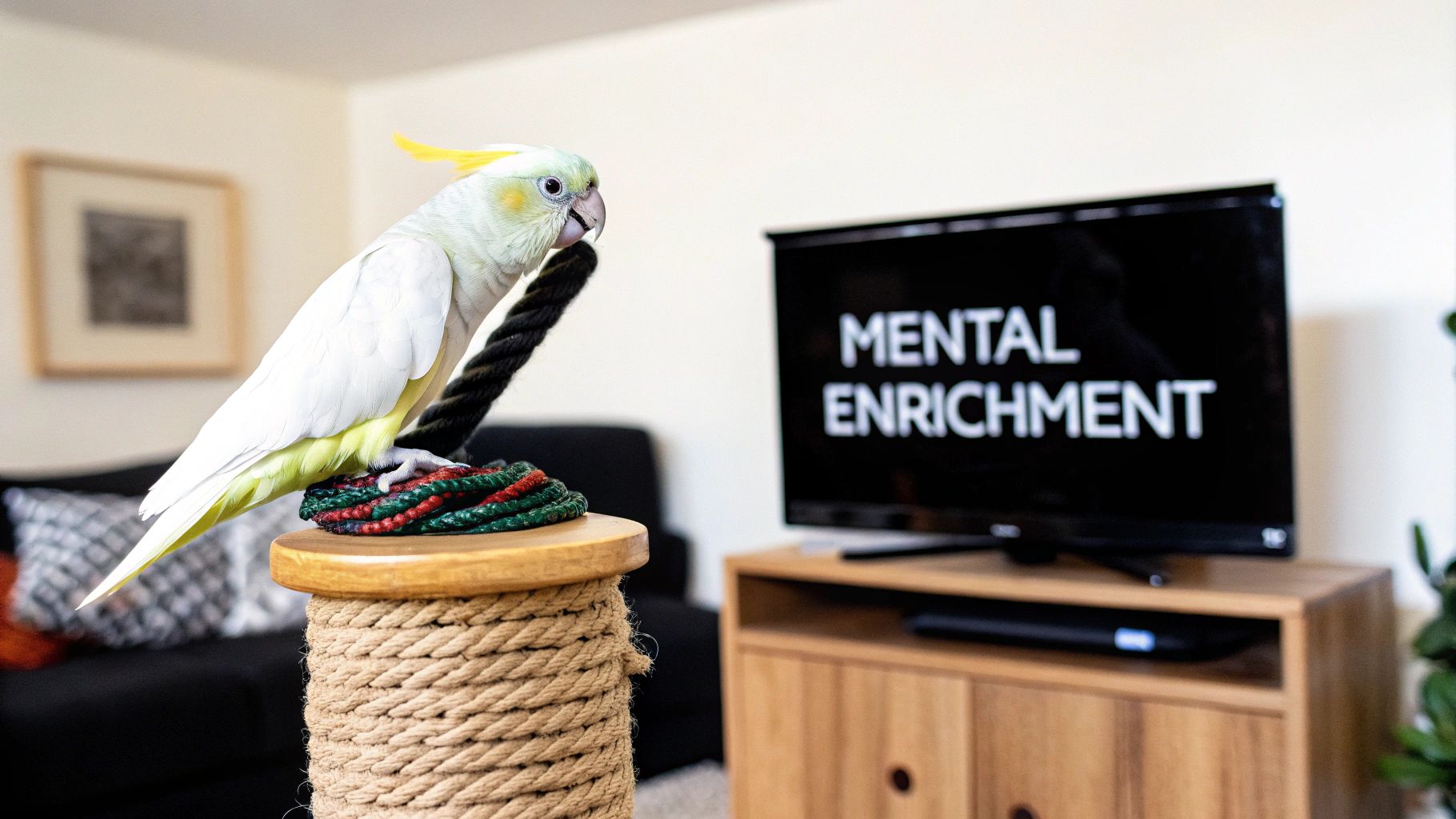
Understanding Avian Enrichment
Avian enrichment is what experts call the practice of creating a stimulating environment that lets a bird be a bird. It’s all about keeping their incredibly active brain busy and engaged. In fact, proper enrichment is one of the best ways to head off serious behavioural problems before they start, including:
- Feather Plucking: This is often a sign of deep-seated boredom or stress, where a bird starts pulling out its own feathers.
- Excessive Screaming: A bored parrot quickly learns that screaming gets attention, which can make for a very difficult living situation.
- Destructive Behaviour: Chewing on cage bars, furniture, or anything else they can get their beak on often stems from not having enough appropriate things to chew.
- Aggression: Nipping and biting can be a parrot's way of showing frustration from a lack of mental stimulation.
Expert Advice from an Avian Specialist: "A cage full of appropriate, interactive toys isn't spoiling your bird; it's providing for its fundamental psychological needs. Think of toys as your parrot's job. Without a job to do, they can develop anxiety and other behavioural issues, much like a person would without purpose."
The Role of Different Toy Types
Consider this guide your roadmap to building a truly enriching world for your feathered friend. We’ll dive into how a well-rounded selection of toys can completely turn a bored bird into a happy, thriving companion.
Foraging toys, for example, tap directly into their natural instinct to work for their food, challenging their problem-solving skills along the way. You can learn more about how foraging toys for birds get their minds working.
In the same way, shreddable toys give them a safe outlet for their powerful need to chew and destroy, which is absolutely vital for keeping their beak in good shape. This guide is your one-stop resource for everything you need to know about parrot toys, from picking safe materials to matching the right toy with your specific type of parrot.
Decoding the Different Types of Parrot Toys
Stepping into the world of parrot toys can feel a bit like walking into a lolly shop—so many colours, shapes, and textures! It’s easy to feel overwhelmed. But just like a balanced diet is vital for your bird's physical health, a balanced "toy diet" is absolutely essential for their mental well-being. Each type of toy serves a completely different purpose, tapping into another one of your parrot’s hardwired instincts.
Think of it as putting together a toolkit for your parrot's brain. You wouldn't use a hammer to turn a screw, right? In the same way, a climbing toy isn't going to satisfy that deep-seated, instinctual need to shred and destroy. Giving them a good variety ensures every part of your parrot's natural behaviour is nurtured, which leads to a much happier, more well-adjusted companion in your home.
Chewing and Shredding Toys for Beak Health
Parrots in the wild spend hours and hours manipulating things with their beaks. This isn't just for fun; it's critical maintenance. A parrot’s beak grows continuously, and chewing on wood, bark, and seed pods is nature’s way of wearing it down. This prevents overgrowth and a whole host of other health problems.
Chewing and shredding toys are designed to replicate this exact activity. They are meant to be utterly destroyed, and seeing a pile of wood splinters or shredded paper at the bottom of the cage is the sign of a job well done! These toys give your bird a safe, productive outlet for their destructive urges, which might just save your furniture from a similar fate. Look for toys made from bird-safe materials like balsa, pine, and native Australian botanicals like gum nuts or bottlebrush.
Foraging Toys to Challenge Their Intellect
A parrot's brain is a powerful problem-solving machine. Out in their natural habitat, whether it’s the Aussie bush or a dense rainforest, they don't get a bowl of pellets handed to them. A huge part of their day is spent actively foraging—searching for, finding, and processing their food. This hunt is incredibly stimulating for them.
Foraging toys bring this natural challenge into your home. At their core, they are puzzles that make your bird think, manipulate, and work to get a treat. This can be as simple as a seed wrapped in paper or as complex as a multi-stage acrylic puzzle. Foraging is a fantastic way to bust boredom, build their confidence, and provide an amazing mental workout.
Foot Toys to Improve Dexterity
Parrots use their feet like a second pair of hands. They’re incredibly dextrous, using their zygodactyl feet (two toes forward, two back) to hold food, climb, and investigate objects with amazing precision. Foot toys are simply small, lightweight items your bird can easily hold, toss around, and manipulate.
These toys are brilliant for developing coordination and strengthening the muscles in their feet. Here in Australia, the market for parrot toys is growing, and foot toys are especially popular because they tap right into this natural gripping and exploratory behaviour. In fact, foot toys account for about 14.1% of the global bird toy market's revenue, and the availability of budget-friendly options makes them accessible for all bird owners. You can read more about global trends in the bird toy market.
Expert Advice: Foot toys aren't just for play. They provide critical enrichment for birds that might have foot or leg disabilities, helping them maintain strength and dexterity in a low-impact way. Always supervise your bird with new toys to make sure they're interacting with them safely.
To help you get a clear picture of how these toy types fit together, here’s a quick comparison:
Parrot Toy Types and Their Primary Benefits
| Toy Type | Primary Purpose | Key Benefits | Example Materials |
|---|---|---|---|
| Chewing & Shredding | Satisfies destructive instincts and maintains beaks | Prevents beak overgrowth, reduces boredom, redirects chewing from furniture | Balsa wood, pine, paper, cardboard, yucca |
| Foraging | Stimulates the mind and mimics natural feeding | Builds confidence, prevents boredom, encourages problem-solving skills | Acrylic puzzles, woven palm leaf, vine balls |
| Foot Toys | Encourages dexterity and foot strength | Improves coordination, provides mental stimulation, easy to manipulate | Wiffle balls, plastic links, small wood blocks |
| Climbing & Swinging | Promotes physical exercise and builds strength | Improves balance, strengthens muscles, prevents obesity, burns energy | Sisal rope, cotton rope, wooden ladders, swings |
| Comfort & Preening | Provides emotional security and grooming outlets | Reduces stress and anxiety, helps prevent feather-plucking, soothes | Soft fleece, shredded paper, untreated leather |
Having a mix of these toys ensures you're looking after your bird's physical, mental, and emotional needs all at once.
Climbing and Swinging Toys for Daily Exercise
A bird in a cage needs every chance it can get to move its body. Climbing and swinging toys basically act as your parrot’s personal gym, encouraging physical activity that strengthens their muscles, improves their balance, and keeps them fit. Things like ladders, ropes, swings, and boings turn the cage into a three-dimensional playground.
This physical exertion is crucial for preventing obesity and promoting good cardiovascular health. It also gives them a much-needed outlet for all that boundless energy. By mixing these toys both inside the cage and on an external play stand, you create a dynamic environment that encourages them to keep moving. If you're looking for ideas, check out our guide on how to set up a great bird play gym to really maximise their exercise time.
Comfort and Preening Toys for Emotional Wellbeing
Finally, some toys are designed simply to soothe and comfort. Preening toys, which are often made from soft materials like paper, cotton rope, or leather strips, give your bird a safe place to direct their grooming instincts. This can be especially helpful for preventing feather-plucking by redirecting that preening drive onto a more appropriate object.
Comfort toys, or "snugglies," can provide a real sense of security, mimicking the feeling of being huddled up in a flock. These are particularly great for single birds or those who get a bit anxious, offering a soft spot to cuddle up against. They help create a secure, calming space within their environment, which is a huge contributor to their overall emotional health.
Choosing Safe Toys: Your Parrot's Health Depends On It
When you bring a new toy home for your parrot, you're doing more than just giving them a fun distraction. You're placing their health and safety in the hands of that object. Parrots explore their entire world with their beaks, which means every single thing they play with gets chewed, licked, and thoroughly pulled apart. This makes toy safety the absolute bedrock of good parrot ownership.
You have to learn to think like an avian vet, scrutinising every part of a toy before it ever goes near your bird's cage. A seemingly innocent-looking toy can hide all sorts of dangers, from toxic materials and dyes to design flaws that pose a serious entanglement or choking risk. Your vigilance is their only real protection.
This diagram gives a simple overview of the main toy categories designed to keep your parrot engaged and healthy.
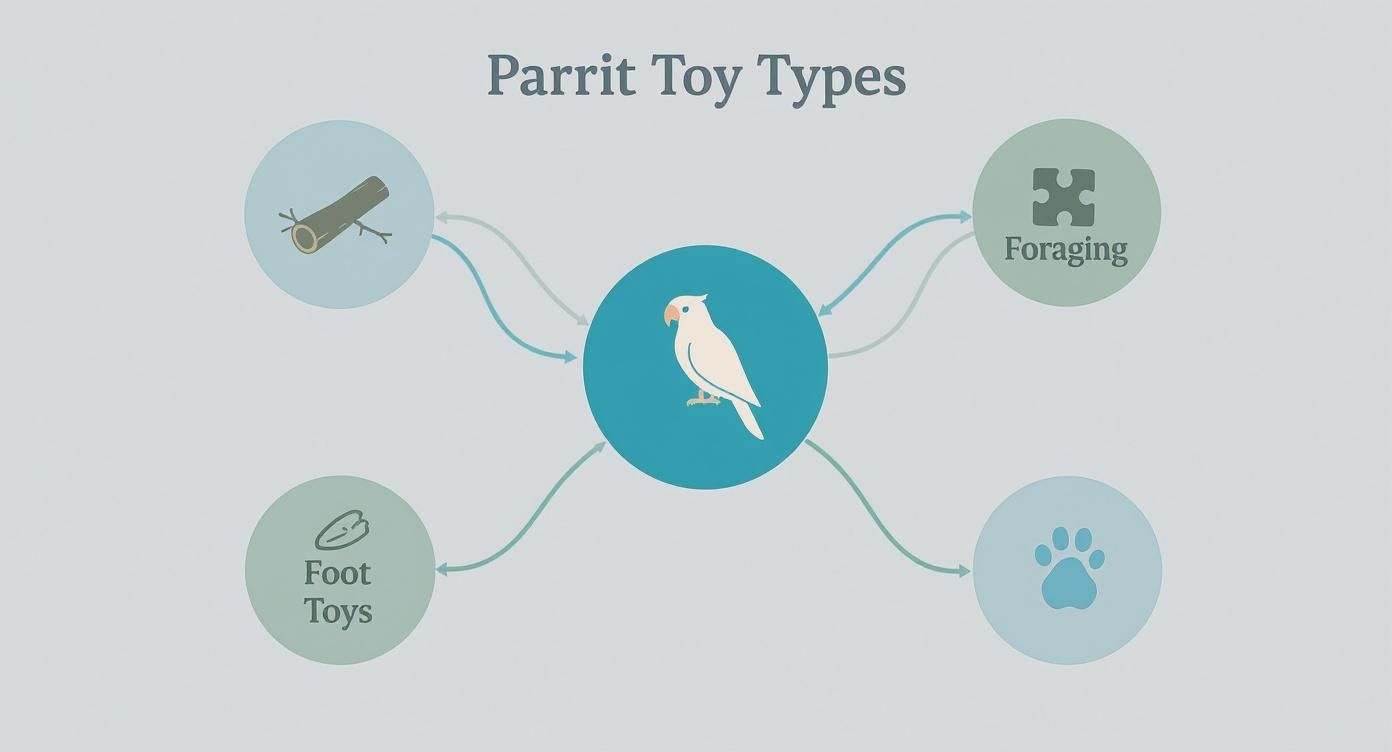
As you can see, different types of toys—like chewing, foraging, and foot toys—are designed to satisfy different natural instincts your parrot has.
Safe Materials: A Vet-Approved Checklist
The materials a toy is made from are easily the most important safety factor. Since parrots will inevitably ingest tiny pieces of whatever they chew on, everything must be non-toxic.
Bird-Safe Materials to Look For:
- Untreated Wood: Woods like pine, balsa, and birch are fantastic. Native Australian woods like banksia, bottlebrush, and eucalyptus are also excellent choices. They're soft enough for a satisfying chew but are completely safe.
- Natural Fibres: Sisal, hemp, and certain paper ropes are generally safe for climbing and hanging toys. The key here is to always monitor them for excessive fraying.
- Stainless Steel: This is the only 100% bird-safe metal. Period. Any hardware on a toy, from quick links to bell clappers, must be stainless steel to prevent heavy metal poisoning.
- Hard Plastics: High-quality, durable plastics that don't shatter into sharp shards—like those used in good foraging toys—are perfectly fine.
- Vegetable-Tanned Leather: Untreated, veg-tanned leather is safe for parrots to chew on in moderation. Just make sure to avoid any leather that has been treated with chemicals or dyes.
- Natural Botanicals: Things like gum nuts, pandan, mahogany pods, and even some nut shells make for great, enriching toy parts. For instance, almond shells are a popular and safe choice. You can read more about using them in parrot enrichment toys.
An avian specialist would tell you that "if you wouldn't let a human toddler put it in their mouth, don't give it to your parrot." This simple rule of thumb can prevent countless accidents and health emergencies.
Hazardous Materials and Designs to Avoid
Knowing what's safe is only half the battle; you also need to know what's outright dangerous. Some materials are toxic, while others pose physical risks that can lead to horrific injuries or even death.
The 'Do Not Buy' List for Parrot Bird Toys:
- Toxic Metals: Zinc and lead are extremely poisonous to birds. Steer clear of any toys with galvanised wire, cheap metal bells (the clappers often contain lead), or any hardware that isn't confirmed to be stainless steel.
- Soft Plastics: These are easily ingested and can cause a crop impaction, which is a veterinary emergency.
- Cotton Rope: Although it's commonly sold, cotton rope is a significant hazard. The fine fibres can be swallowed and cause blockages, or they can wrap around a bird's toe, leg, or neck, cutting off circulation with devastating results.
- Small, Loose Parts: Any toy with little bells, beads, or other bits that can be easily broken off and swallowed is a serious choking hazard. Always choose toys that are appropriate for your bird’s beak strength.
- Treated or Toxic Woods: Never give your bird wood that has been painted, stained, varnished, or pressure-treated. Also, avoid woods from toxic trees like cherry or cedar.
Performing Regular Safety Inspections
Your job isn't done once you've bought the toy. Regular maintenance checks are absolutely essential to keep your bird's playground secure.
Before introducing any new toy, give it a thorough once-over. Feel for sharp edges, check for small gaps where a toe could get stuck, and test the quality of the hardware.
Once it's in the cage, inspect all toys daily for signs of dangerous wear and tear. A frayed rope needs to be trimmed or removed entirely. A wooden toy chewed down to a sharp point should be tossed out. This simple daily habit takes only a minute but can prevent a tragedy.
Matching Toys to Your Parrot's Species
You'd never buy a chihuahua a chew toy meant for a Great Dane, would you? The same logic applies to our feathered friends. There's simply no such thing as a "one-size-fits-all" parrot toy.
A delicate shreddable toy that keeps a Cockatiel happily occupied for a week might be turned into confetti in under five minutes by a determined Galah. To get real value and enrichment from your toy choices, you need to match the toy to your bird's unique species, beak strength, and, of course, their personality.
This isn't just about preventing instant destruction; it's about providing the right kind of challenge. An overly tough toy can frustrate a smaller bird and even lead to beak strain. On the other hand, a toy that's too simple won't offer any mental stimulation for a clever bird like a Major Mitchell's Cockatoo. The secret is to watch how your bird naturally plays—that’s the key to making smarter choices.
To help you get started, here's a quick guide to some of our most common Aussie companions.
Toy Recommendations by Parrot Size and Species
Selecting the right toy often comes down to understanding your bird's size and natural instincts. This table breaks down toy recommendations for common Australian parrots, from the smallest budgie to the most powerful cockatoo.
| Parrot Size Category | Common Australian Species | Recommended Toy Types | Ideal Materials |
|---|---|---|---|
| Small | Budgies, Cockatiels, Lovebirds, Parrotlets | Shredding, preening, simple foraging, lightweight foot toys | Balsa, yucca, vine balls, paper, cardboard, seagrass |
| Medium | Galahs, Conures, Ringnecks, Quakers, Lorikeets | Destructible wood blocks, more complex foraging, swings | Pine, leather strips, tough plastics, coconut shells |
| Large | Sulphur-crested Cockatoos, Macaws, Eclectus, Galahs | Heavy-duty chew toys, advanced puzzles, sturdy climbing gear | Hardwoods (e.g., gum nuts), thick ropes, stainless steel, dense acrylics |
Remember, this is a starting point. Your bird will always have the final say! Pay attention to what they interact with and what they ignore to fine-tune your selection.
Small Parrots: Budgies, Cockatiels, and Lovebirds
For the smaller members of the parrot family, play is often about delicate work and shredding softer materials. Their beaks aren't built for demolishing hardwood blocks, so their toys need to reflect that.
Think lightweight and easy to destroy. Small parrots get immense satisfaction from tearing things apart—it's a massive part of their natural behaviour.
Excellent choices for this group include:
- Shreddable Toys: Anything made from balsa wood, yucca, paper, vine balls, and shredded cardboard is perfect. These give them the destructive satisfaction they crave without being too tough.
- Foraging Puzzles: Start with simple foraging toys where treats are easy to find. This builds their confidence and introduces them to the rewarding concept of working for their food.
- Small Foot Toys: Lightweight plastic balls, small wooden beads, and woven grass items are fantastic for them to hold, toss, and manipulate with their feet.
For a deeper dive into what works best for this popular Australian companion, check out our guide on what type of toys Cockatiels like, which has plenty of tailored advice.
Medium Parrots: Galahs, Conures, and Ringnecks
This group is where beak strength really starts to kick in. They all share a high level of intelligence and a love for a good challenge. Medium-sized parrots are often energetic acrobats and powerful chewers who need toys that can stand up to some serious play.
You'll want to offer a healthy mix of destructible toys and more durable options. A Galah, for instance, can make short work of soft pine, so introducing tougher woods and more complex puzzles is essential to keep them engaged.
Expert Advice: Medium parrots often adore toys that combine multiple elements, like a wooden block with leather strips and a bell at the bottom. These multi-textured toys keep them busy for longer by offering different sensations and challenges in one spot.
Toys like our Coconut & Vine Ball Hanging Toy offer a brilliant chewing experience, while puzzles like our Foraging Wheel require a bit more brainpower.
Large Parrots: Cockatoos, Macaws, and Eclectus
When you have a large parrot, you're dealing with a feathered powerhouse. The beak of a Sulphur-crested Cockatoo or a Macaw is an incredibly powerful tool, designed by nature to crack open the toughest nuts. Their toys need to be built to last.
Durability is the name of the game here. While they still need shreddable items to satisfy their destructive instincts (just on a much larger scale!), their everyday toys should be made from tough hardwoods, dense acrylic, and strong stainless steel parts.
For these avian giants, look for:
- Hardwood Blocks: Toys made from tough, bird-safe hardwoods that can withstand a truly powerful beak.
- Advanced Foraging Puzzles: Complex acrylic or metal foraging toys that require multiple steps to solve are perfect for their big brains.
- Sturdy Swings and Ropes: You'll need large-diameter ropes and heavy-duty swings to support their weight and energetic acrobatics safely.
The growing demand for species-specific enrichment is a great sign. The Australian parrot toys market is a key part of our pet industry, with owners increasingly looking for specialised toys to support their birds' mental health. A toy like the Gumnuts and Wood Blocks Parrot Toy, for example, is designed specifically to challenge these highly intelligent birds.
By carefully selecting parrot bird toys based on your bird's size and species, you ensure they get the maximum possible benefit, keeping them happy, healthy, and engaged every single day.
Mastering Toy Rotation to Beat Boredom
Buying a bunch of fantastic parrot bird toys is a brilliant start, but the real secret to keeping your bird happy lies in how you use them. A parrot can get just as bored with the same ten toys in its cage day after day as it would with only one. This is where toy rotation comes in—it’s a simple but incredibly powerful trick to keep your bird's world fresh, exciting, and always engaging.
Think of it like this: if you had the same three books on your bedside table for a year, you’d eventually stop even seeing them. But what if every week, someone swapped them for three different ones? You'd always have something new to dive into. That’s exactly what toy rotation does for your parrot, turning their cage from a static room into a dynamic playground. This little habit prevents "toy blindness" and makes sure they get the most out of every single toy you give them.
Building Your Toy Rotation System
Getting a rotation schedule going doesn't need to be a massive chore. The main idea is to have more toys out of the cage than in it. This lets you cycle items through, making old toys feel brand new again every time they reappear.
A great way to start is with the "Rule of Three Stashes":
- The 'In-Cage' Stash: This is what’s currently in your bird's cage, usually 3-5 toys. Try to have a good mix—maybe a shreddable one, a foraging puzzle, and a good foot toy.
- The 'Ready' Stash: This is your collection of clean, safe toys that are ready to go. When it’s time for a swap, you’ll grab new items from here.
- The 'Dirty/Resting' Stash: These are the toys you’ve just taken out of the cage. They need a good clean and a safety check before being put away to "rest" for a few weeks.
By keeping these three groups separate, you create a smooth, hygienic system that guarantees your bird always has something interesting to tackle.
Expert Advice from an Avian Behaviourist: "Novelty is a key driver of intelligence and curiosity in parrots. A rotated toy isn't just an object; it's a new problem to solve, a new texture to explore, and a new challenge to conquer. This regular introduction of 'newness' is one of the most effective ways to combat boredom-related behaviours."
Strategic Placement for Maximum Engagement
How you place the toys in the cage is just as important as which toys you choose. Don't just cram them all into one corner. Instead, think about creating different 'activity zones' that encourage your bird to move around.
- Put a tricky foraging toy on the opposite side of the cage from the food bowl. This simple move makes your parrot travel and work for special treats, just like they would in the wild.
- Hang a climbing or swinging toy to create a 'path' between two favourite perches. It turns a simple trip across the cage into a fun bit of exercise.
- Position a shreddable toy near a comfy resting perch. This gives them something satisfying and destructive to do during their downtime.
By arranging toys thoughtfully, you’re not just decorating—you’re guiding your parrot's daily life. You're promoting exercise, problem-solving, and natural instincts. It transforms their cage from a simple box into an enriching habitat that keeps them physically and mentally happy, day after day.
DIY Parrot Toys and Smart Shopping in Australia
For those of us who love a bit of creativity (and saving a few dollars), making your own parrot toys is a fantastic way to keep the enrichment flowing. Some of the most loved parrot bird toys don't come from a store at all—they come from simple, bird-safe bits and pieces you have at home. Tapping into that DIY spirit gives your bird endless variety and keeps their clever mind busy.
Of course, safety is everything. Never, ever use materials with glue, staples, toxic inks, or plastics that might shatter into sharp pieces. If you stick to the basics, you can create a whole treasure trove of disposable fun that perfectly satisfies that deep-seated need to shred and forage.
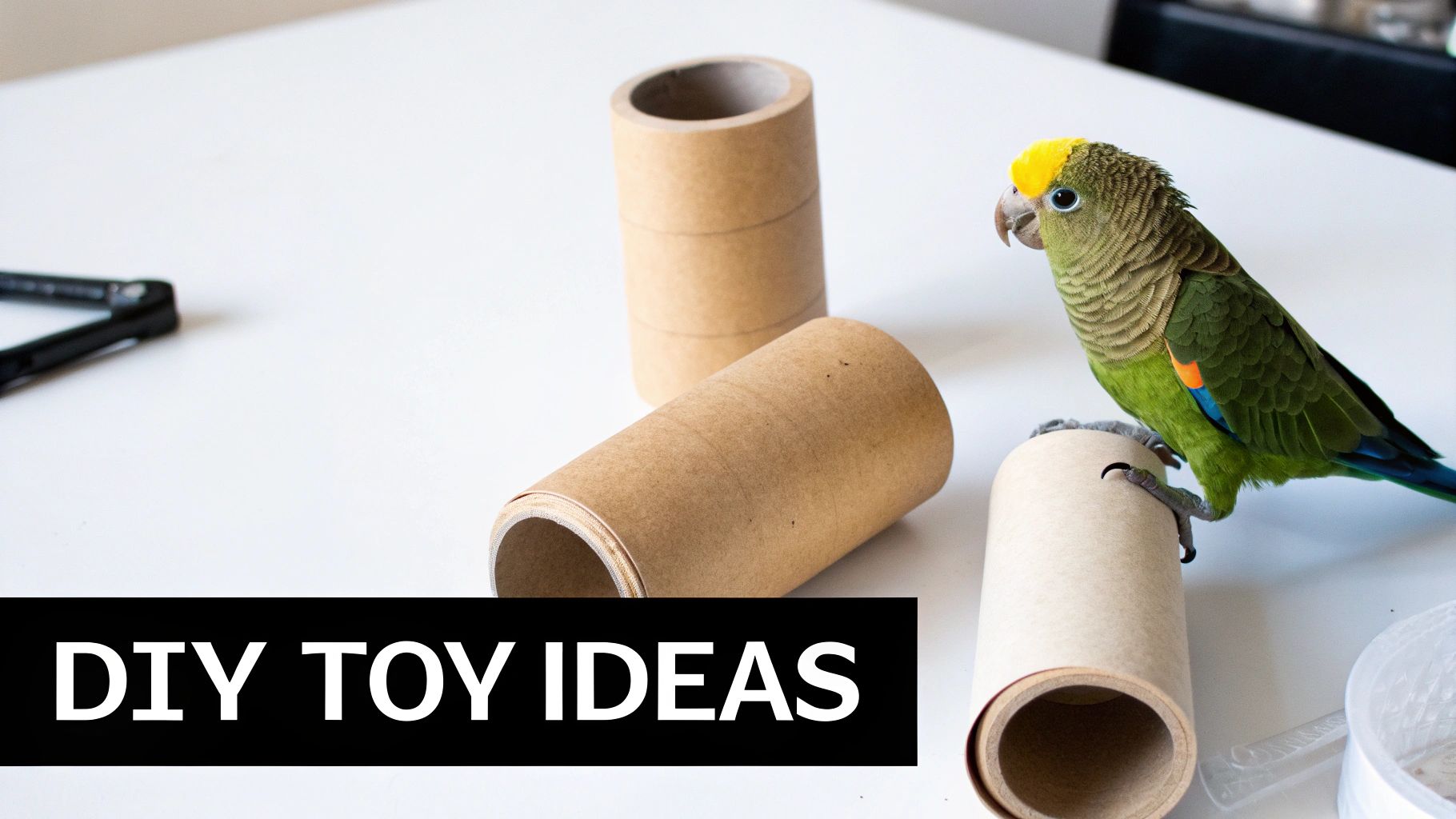
Simple and Safe DIY Toy Ideas
You don’t need to be a crafting guru to make a toy your parrot will adore. Here are a few dead-simple ideas using things you probably already have lying around:
- Cardboard Creations: Empty toilet paper rolls and paper towel tubes are basically DIY gold for bird owners. Just stuff them with shredded paper, hay, or a few seeds, pinch the ends closed, and you've made a brilliant little foraging puzzle.
- Paper Pleasures: Take some plain, ink-free paper and weave strips of it through the bars of your bird’s cage. They will have an absolute ball pulling, ripping, and shredding it to bits.
- Natural Treasures: With a bit of care, you can bring the outdoors in. Bird-safe branches from native Australian trees like eucalyptus or bottlebrush make fantastic chew perches, just be sure to clean and disinfect them properly first.
How to Be a Smart Toy Shopper in Australia
While DIY is brilliant, you can't beat the durability and clever designs of professionally made toys for a well-rounded play routine. When it comes to buying pre-made parrot toys, it really pays to be a savvy shopper. The online market here in Australia is massive, but let's be honest—not all toys are created equal.
The demand for quality pet toys is growing, and it's now easier than ever for Aussie bird owners to find everything from interactive puzzles to natural wood products online. The trend is definitely leaning towards safe, tough, and sustainable materials. For a deeper look at these market trends, you can check out the insights on the parrot toys market.
When you're shopping, always read the product descriptions with a critical eye. Look for details on the materials. Is the metal actually confirmed as stainless steel? Is the wood untreated and bird-safe? Vague descriptions should set off alarm bells.
Expert Shopping Tip: Look closely at how the toy is built. A well-made toy has secure knots and high-quality hardware. Steer clear of toys with flimsy attachments or small, glued-on bits that a determined beak could easily snap off and swallow.
There are real perks to supporting a specialised Australian retailer like Lou Lou Bells Bird Toys. We design and handcraft many of our own toys right here in South Australia, so we have a deep understanding of what our local parrot species need. That means you get faster shipping across the country, local customer support you can count on, and a hand-picked selection of safe, top-quality products. When you choose a dedicated local supplier, you’re making a confident, informed choice for your bird’s happiness and health.
Got Questions About Parrot Toys? We've Got Answers
Even with the best intentions, looking after our feathered friends brings up plenty of questions. Here are some straightforward answers to the things we hear most often from Australian parrot owners about choosing and using the best parrot bird toys.
How Many Toys Should a Parrot Have in Its Cage?
A good rule of thumb is to have between three to five toys in the cage at any one time. This gives your bird enough variety to stay interested without making their space feel cluttered or difficult to move around in.
It’s less about the total number of toys you own and more about the variety you offer. Having a chewing toy, a foraging puzzle, and a foot toy in the cage together means you're covering all the bases. The real trick is rotating them out weekly to keep your bird’s environment feeling fresh and new.
Is It Normal for My Parrot to Destroy Toys Instantly?
Absolutely! For most parrots, especially big chewers like Galahs and Cockatoos, total destruction is the whole point. Finding a toy shredded to bits at the bottom of the cage isn't a sign of a bad product; it's the sign of a very happy, stimulated bird.
This destructive urge comes from a deep natural instinct to chew, explore, and shape their surroundings. A demolished toy has done its job perfectly by keeping your bird's beak in good shape and their mind busy.
If toys are being annihilated a bit too quickly, it might just mean you need to level up. Try offering larger or tougher options made from more durable materials designed for powerful beaks.
Are Mirrors Safe Toys for Parrots?
Most avian vets and behaviour experts will give you a firm "no" on this one. While it might look like fun watching your parrot chat to its reflection, mirrors can cause some serious behavioural problems down the track.
Parrots often form an unhealthy attachment to the "other bird" in the mirror, treating it like a mate or a rival. This can lead to all sorts of issues, including:
- Aggression towards you or other birds in your home.
- Regurgitating food for their "mate," which is a sign of hormonal stress.
- Obsessive behaviour and a whole lot of frustration.
It's much healthier for them to have interactive parrot bird toys that encourage them to play on their own, solve problems, and get some exercise.
At Lou Lou Bells Bird Toys, we're all about providing the safest, most engaging enrichment for your feathered family. Have a look through our huge range of handcrafted and curated toys to find the perfect fit for your bird's unique personality.
Shop Our Full Range of Parrot Toys Today
Keep Reading
- Foraging Toys for Birds: A Guide to Mental Stimulation
- Building the Ultimate Bird Play Gym for Your Feathered Friend
- Are Almond Nut Shells Safe for Parrot Enrichment Toys?
Disclaimer Summary:
The information in this article is general in nature and may include external links or resources not created by Lou Lou Bells Bird Toys. Every bird is unique, so we encourage you to seek personalised advice from your own veterinarian or avian specialist. For full details, please read our complete disclaimer here.