
Choosing a large parrot cage isn't like picking out a piece of furniture. It's more like designing a custom home for a very clever, very demanding, and very loved member of your family. For big-brained birds like Macaws, Cockatoos, and African Greys, their cage is their safe space—a place to chill out, play, and feel secure. As an avian expert, I can tell you that the right enclosure is the cornerstone of your parrot's well-being.
If you're an Aussie bird owner, you already know that getting the environment right is everything. A good cage is the foundation of a happy, healthy parrot, and it's great to see more people realising this. In fact, the global market for parrot cages was valued at a whopping USD 1.2 billion in 2024 and is expected to hit USD 2.1 billion by 2033. This growth is driven by a growing awareness of what our birds actually need to thrive. You can dig into the numbers in the latest market insights if you're curious.
In this guide, we’ll explore the nitty-gritty of how the right size, materials, and layout all work together to keep your bird physically healthy and mentally sharp. By the time you're done reading, you’ll know exactly what to look for, so you can pick a cage that’s not just a box with bars, but a proper home for your feathered mate.
Decoding Cage Size, Bar Spacing and Materials
When you're choosing a home for your parrot, it's easy to get focused on the overall size. But the real secrets to a safe and happy bird lie in the details. Think of a cage as more than just a box; its technical specifications are what make it a true sanctuary.
Things like bar spacing and non-toxic materials aren't just nice-to-haves—they're non-negotiable safety features. And getting the size right is absolutely vital for their mental and physical health. A bird as intelligent as a parrot needs room to stretch, climb, and play, or boredom and stress can quickly set in.
It's clear that Aussie parrot owners are catching on. The growing awareness around avian welfare has seen a huge jump in the market for high-quality, spacious cages. Just look at the forecast.
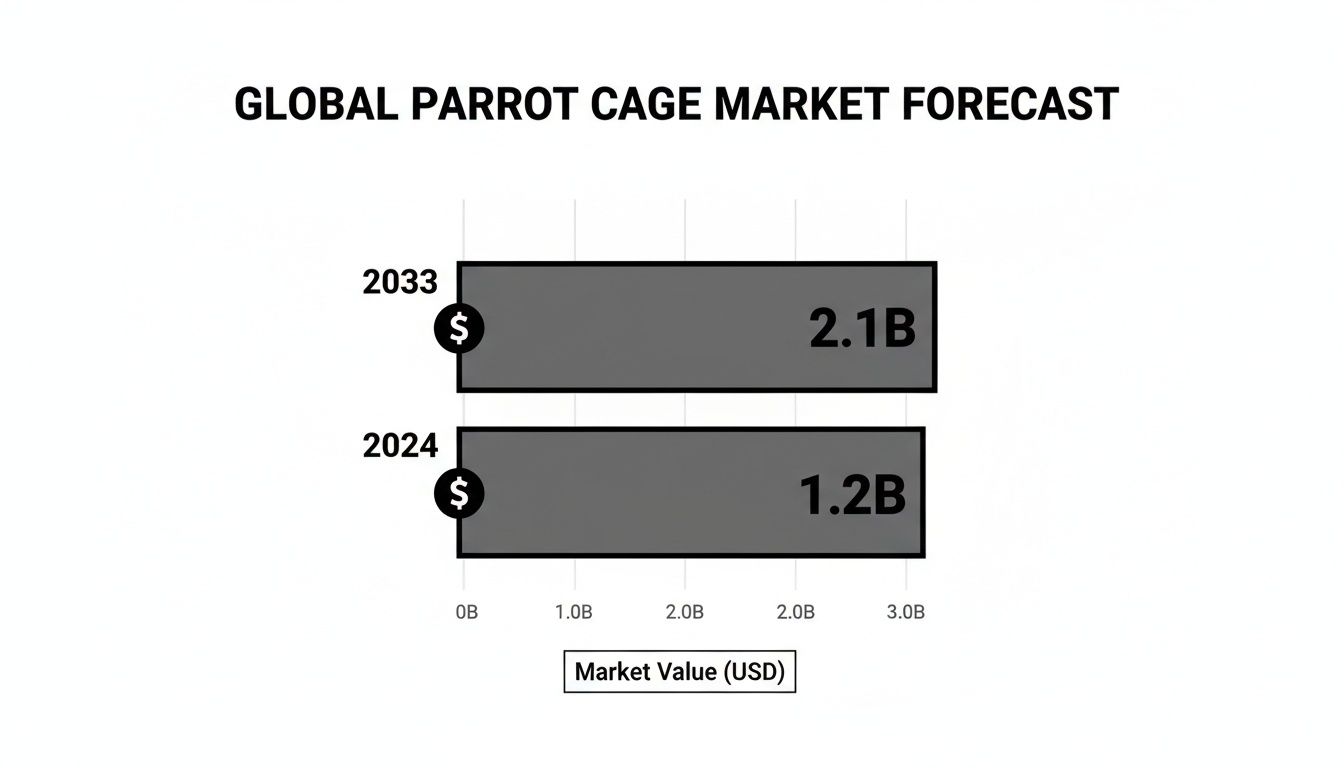
This trend is fantastic to see, as it shows more and more of us are investing in creating the best possible habitats for our feathered companions.
What to Look For in a Safe and Practical Cage
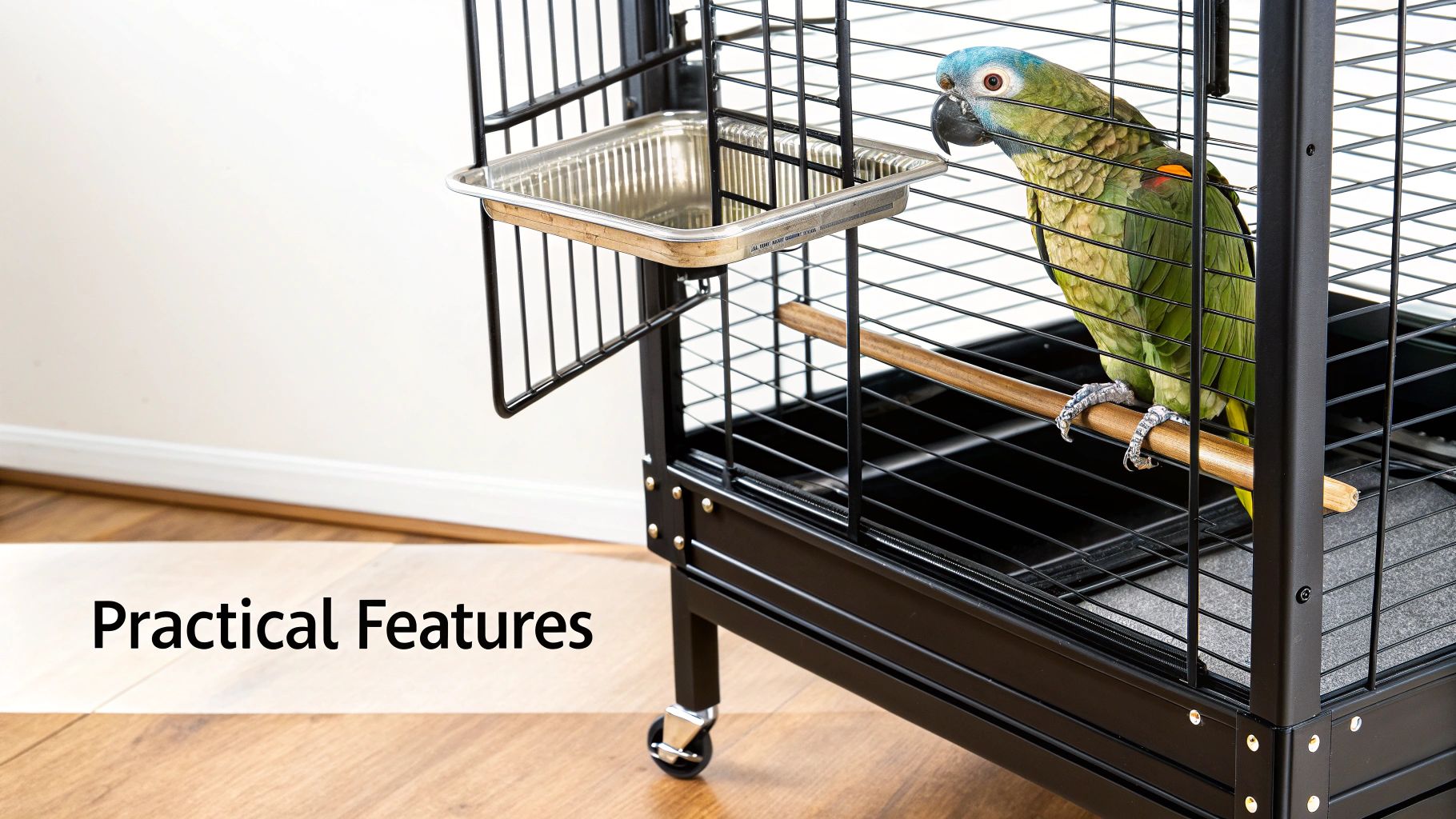
Once you’ve settled on the right size, it's the smaller, practical details that really make a difference day-to-day. You’ll quickly learn that parrot-proof locks are non-negotiable, especially with crafty birds like Macaws and Greys who seem to treat a simple latch as a personal challenge.
For your own sanity, look for features that make cleaning less of a chore. Things like pull-out cleaning trays, seed skirts to catch the mess, and smooth-rolling castors for moving the cage around are absolute lifesavers.
This shift towards smarter, more user-friendly designs isn't just a trend; it's a huge driver of industry growth. The global market for bird cages and accessories was valued at USD 2.86 billion in 2024 and is expected to climb to USD 4.48 billion by 2034. It’s clear that parrot owners are demanding better habitats for their feathered family members. You can dig deeper into these pet industry trends if you're curious.
Some modern cages even come with built-in play tops or clever foraging doors, turning a simple home into an interactive environment. To get the inside of the cage just right, our guide to the essential bird cage accessories will help you pick out the perfect additions.
From Cage to Kingdom: Making It a Home
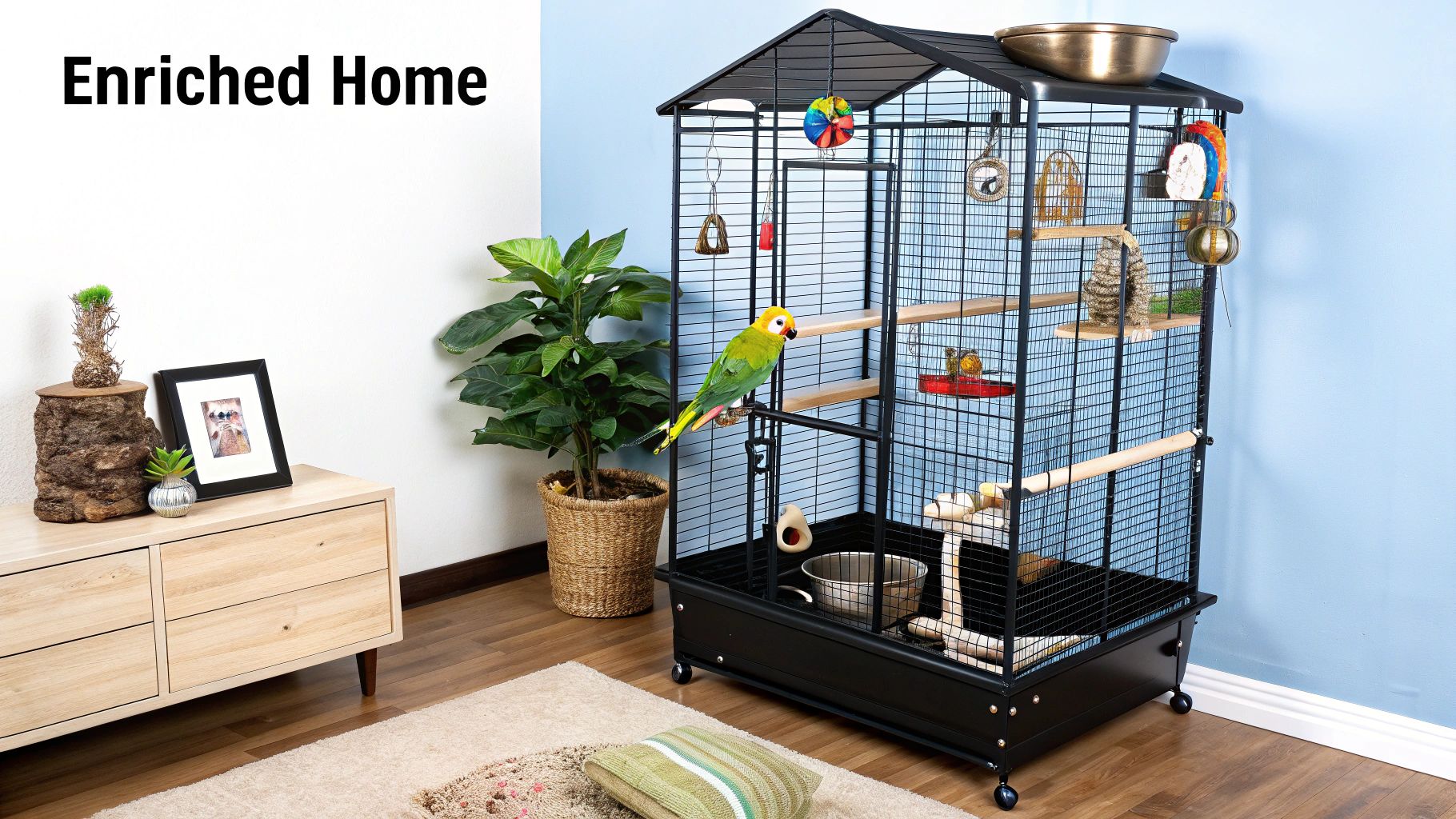
Let's be honest, an empty cage is just a box with bars. It’s the stuff you put inside—the enrichment—that turns it from a simple enclosure into a stimulating, vibrant home for your parrot. The real magic happens when you outfit the space to encourage all those natural behaviours they’d be doing in the wild, like climbing, chewing, and exploring.
It’s about creating a dynamic environment. Think about placing perches of different textures and thicknesses at various heights to promote good foot health and give them a workout. You can even set up little ‘zones’ inside the cage—a quiet corner for snoozing, a dedicated spot for eating, and a full-blown playground for, well, playing. This helps build a routine your bird can rely on, making them feel secure.
A brilliant way to get started is with puzzles and activities that get their clever minds working. Digging into the world of foraging toys for birds is one of the best things you can do to beat boredom and keep your feathered friend happy. Remember to swap out their toys every week or so to keep things fresh and exciting, making sure there’s always something new to figure out.
Outdoor Aviaries and Australian Regulations
Taking your parrot's world outdoors with an aviary is an incredible way to provide enrichment, but for those of us in Australia, it comes with a unique set of responsibilities. It’s not as simple as just putting a big cage in the backyard.
Unlike indoor setups, aviaries need to be seriously predator-proofed. We’re talking about protection from snakes, goannas, and birds of prey. They also need to offer proper shelter from our harsh sun and unpredictable storms, which means solid roofing and protected areas are a must.
Before you even start building, it's crucial to check with your local council. Regulations for outdoor structures, especially for keeping animals, can vary wildly between states and even neighbouring suburbs. This isn’t just red tape; it's part of a growing focus on bird welfare right across the Asia-Pacific region, which now makes up over 23% of the global bird cage market revenue. You can read a bit more about these regional market dynamics if you're curious.
If you're serious about creating a safe and stimulating outdoor space, we've put together a deeper guide on planning outdoor bird aviaries. It’s packed with essential, Australia-specific advice to make sure your aviary is both a paradise for your parrot and fully compliant with local laws.
Common Questions About Big Parrot Cages
Once you've picked out the perfect cage, the day-to-day questions start popping up. We’ve pulled together some of the most common queries from Aussie parrot owners to give you clear, straightforward answers.
How Often Should I Clean a Large Parrot Cage?
Keeping a consistent cleaning routine is non-negotiable for your bird's health. Think of it in three layers.
Daily jobs are quick: wipe down any messy surfaces and, of course, change the food and water bowls. A weekly clean is more thorough – time to change the substrate on the bottom and give the grates a good scrub. Then, about once a month, you'll want to do a deep clean, disinfecting the whole cage and all its accessories with a bird-safe cleaner.
How Do I Help My Parrot Adjust to Its New Cage?
The key here is to make the move a positive experience, not a stressful one. Start by placing the new cage next to the old one for a few days, letting your bird get used to seeing it.
Then, slowly start moving familiar things across—their favourite shreddable toys, a comfy perch, their food bowl. Use plenty of treats and praise along the way to build a happy, safe association with their new home. It's all about patience.
What Are the Signs My Parrot's Cage Is Too Small?
Your parrot will give you clues, both physical and behavioural. The most obvious sign is damaged or bent tail feathers; it’s a dead giveaway that they’re constantly rubbing up against the bars.
Also, watch their movement. If your bird can't fully stretch its wings out without hitting something, the cage is definitely too small. Frustrated behaviours like obsessively biting the bars can also be a sign they’ve outgrown their space and are feeling cramped.
Is It Safe to Buy a Second-Hand Parrot Cage?
You can definitely save a bit of money this way, but you need to be extremely careful. Give the cage a thorough inspection, checking for any rust, weak spots, or flaking paint, which could contain toxic lead or zinc.
Before you even think about putting your bird in it, the cage must be sanitised from top to bottom. You need to eliminate any risk of contamination or disease left behind by its previous resident.
Your Commitment to a Happy, Healthy Parrot
Choosing the right large parrot cage is a massive step, and probably one of the biggest investments you'll make for your bird's future. When you get the size right and tick all the boxes for safety—like proper bar spacing and non-toxic materials—you’re not just buying a cage. You’re building the foundation for a thriving companion.
But remember, a fantastic cage is just the starting line. The real magic happens when you fill that space with love, positive interaction, and high-quality enrichment. Think of it as moving into a great house—it only becomes a home when you fill it with life. Durable stainless steel toys that stand up to tough beaks or clever foraging puzzles that get their minds working are what turn a safe space into a stimulating one. That's the key to a wonderful life together, and we're here to help you every step of the way.
At Lou Lou Bells Bird Toys, we're completely obsessed with providing safe, engaging, and enriching toys to keep your parrot happy and healthy. You can explore our full range of handcrafted and curated toys at louloubellsbirdtoys.com.au.
Keep Reading
- What Are The Best Parrot Toys in Australia?
- How To Get Your Parrot To Play With Toys
- Are Parrot Toys With Bells Safe?
Disclaimer Summary:
The information in this article is general in nature and may include external links or resources not created by Lou Lou Bells Bird Toys. Every bird is unique, so we encourage you to seek personalised advice from your own veterinarian or avian specialist. For full details, please read our complete disclaimer here.