
A bird play stand is so much more than a piece of furniture for your parrot. Think of it as their personal playground, classroom, and gym, all rolled into one. It’s an essential out-of-cage destination that encourages physical exercise, mental challenges, and crucial social time with your family.
Why a Play Stand Is More Than Just a Perch
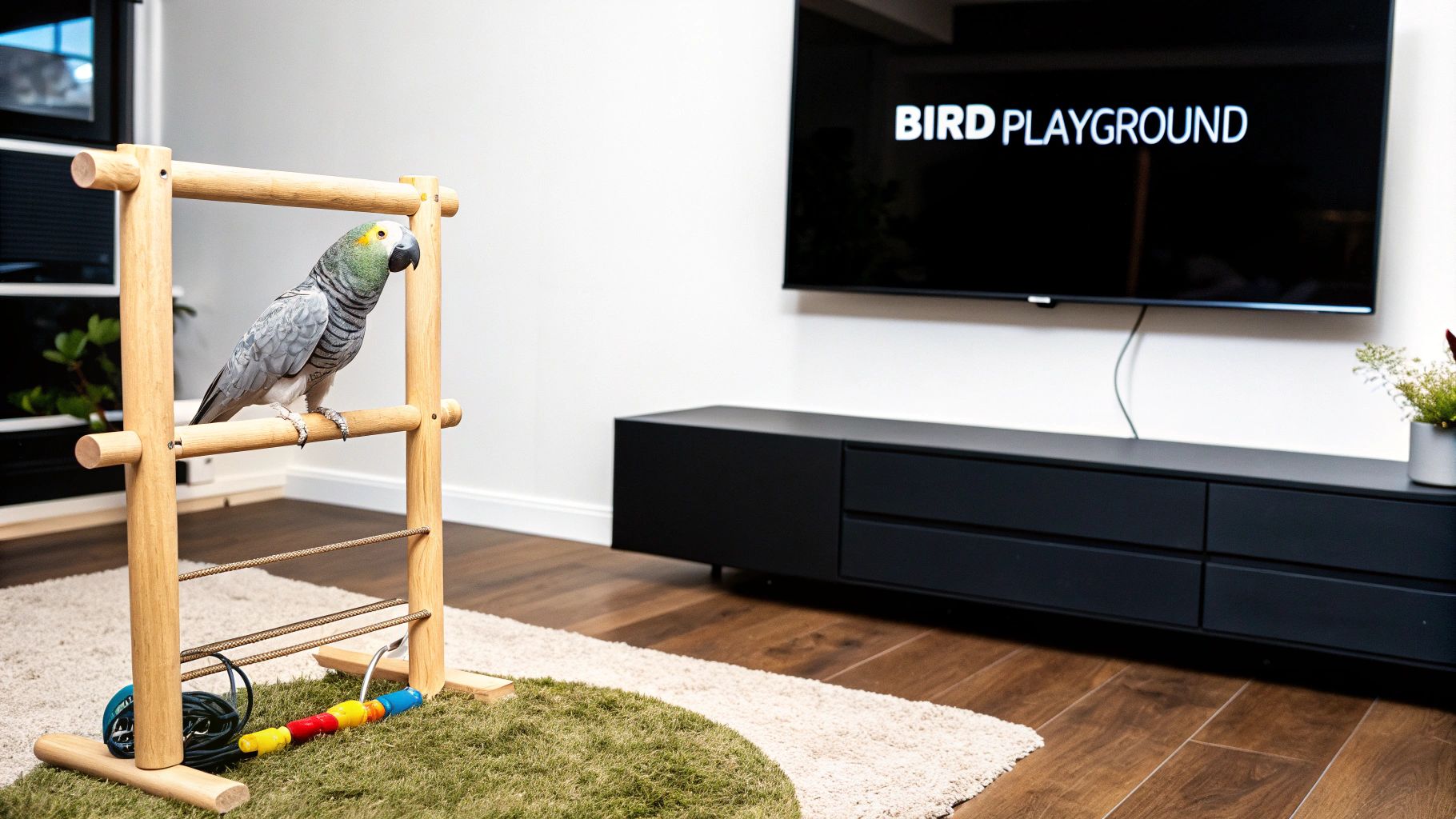
Imagine if your whole life was confined to a single room. Even the most amazing room would start to feel restrictive after a while. For a parrot, their cage can feel exactly the same. A bird play stand is their personal rumpus room or backyard—a vital space to stretch their wings, engage their incredible minds, and just be a bird.
This dedicated area is critical for encouraging the natural behaviours that often get stifled inside a cage. It provides a safe and structured environment for activities that are absolutely fundamental to their wellbeing.
Encouraging Natural Instincts
Out in the wild landscapes of Australia, parrots spend their days exploring, climbing branches, and foraging for food. A well-designed play stand brings these instincts into your home, offering a positive outlet for all that energy and intelligence. Instead of chewing on your furniture, they can focus their beaks on appropriate toys and textures.
A good play stand should have a variety of features to stimulate these behaviours:
- Climbing Opportunities: Ladders, ropes, and multi-level perches are fantastic for physical activity, helping to strengthen their leg and wing muscles.
- Foraging Stations: Designated spots to hide treats or place puzzle toys will challenge their problem-solving skills and keep their minds sharp.
- Exploration Zones: Different textures and materials give them new things to investigate, which is a brilliant way to prevent boredom from setting in.
A Foundation for Wellbeing
Ultimately, a bird play stand is a fundamental tool for preventing boredom-related issues like stress, feather plucking, and excessive noise. It creates a special zone away from their "bedroom" (the cage) where they can interact with you and be part of the household buzz.
This interaction strengthens the bond you share, making your feathered companion feel like a true member of the family. By understanding the importance of a good perch for birds, you can make sure their play stand supports both their physical health and their overall happiness.
The Real Benefits of a Dedicated Play Area
A bird play stand brings some very real, tangible improvements to your pet’s life, and it’s a brilliant solution for some of the most common headaches Aussie bird owners face. This isn't just another perch; think of it as a dedicated hub for your parrot's boundless energy and sharp mind, leading to some serious wins for their behaviour and health.
So many of those frustrating behaviours—like chewing the furniture to bits, screaming the house down for attention, or even feather plucking—are often just signs of a bored and frustrated bird. When a parrot doesn't have enough to do, it'll invent its own jobs, and trust us, those jobs rarely line up with what we'd prefer. A play stand gives them a positive and totally appropriate place to channel all those natural instincts.
Boosting Physical and Mental Wellbeing
Just like us, birds need regular physical activity to stay healthy. A play stand is basically a jungle gym that encourages climbing, stretching, and just moving around. All that activity strengthens their muscles, keeps their joints in good working order, and helps them stay at a healthy weight. It’s a fantastic way to head off the health problems that come with a sedentary lifestyle.
At the same time, the mental workout a play stand provides is absolutely critical for a parrot’s happiness. Getting to interact with different textures, colours, and little puzzles keeps their clever minds whirring.
An under-stimulated bird can quickly become lethargic, anxious, or even genuinely depressed. A well-designed play stand is one of the best preventative tools you can have, fostering the kind of curious, active mind that makes for a truly happy companion.
The lack of proper enrichment is a bigger issue than many people realise. In fact, research from Animal Welfare Victoria found a significant welfare gap, noting that 41% of Australian companion birds show aggression, 21% display anxious behaviours, and another 21% are destructive. The study pointed out that many of these birds simply didn't have enough enrichment, directly linking these behaviours back to their environment.
A Hub for Positive Behaviour
A play stand gives your parrot’s energy a constructive purpose. By setting up an approved area loaded with fun things to do, you’re naturally redirecting their focus away from your curtains or the TV remote. This is one of the foundations of positive reinforcement and building a good daily routine.
This one piece of equipment can genuinely transform your bird’s day-to-day life by meeting their core needs. You're not just buying an object; you're investing in a happier, healthier, and more engaged friend. For a deeper dive into why this is so important, check out our complete guide to animal enrichment in Australia. It's a fantastic resource for really getting to grips with your bird's needs.
How to Select the Right Play Stand for Your Bird
Choosing a bird play stand isn't a simple one-size-fits-all decision. It’s about finding the perfect match for your specific feathered friend, whether that's a tiny budgie or a mighty macaw. Getting this right means looking at your bird's species, size, and personality to create a space they will actually use and love.
The first and most critical factor is size. A stand that’s too small for a large parrot will be wobbly and unengaging, while one that’s too big for a small bird can be intimidating. Even worse, the perches might be too wide for their little feet to grip comfortably. It’s all about creating an environment that’s safe, comfortable, and just the right amount of challenging.
Matching the Stand to Your Bird
A bird's species gives you a lot of clues about what they need. A Galah's powerful beak, for instance, requires durable, chew-resistant materials, while a delicate cockatiel will be perfectly happy with lighter woods. Perch diameter is another non-negotiable for good foot health. Perches that are all the same size or just plain wrong for your bird can lead to serious foot problems like bumblefoot over time.
Think about these key aspects:
- Species-Specific Needs: Does your bird love to climb, chew, or forage? Look for a play stand that caters to these natural instincts. A stand with lots of ladders is great for climbers, while one with spots to hang foraging toys is ideal for curious minds.
- Perch Variety: A good bird play stand will offer multiple perch diameters and textures. This variation exercises your bird’s feet, mimicking the natural branches they would encounter in the Australian bush and helping to prevent foot strain.
- Material Strength: Match the material to your bird's beak. Stronger woods like bottlebrush or gum are essential for large, destructive parrots, whereas softer woods are fine for smaller birds with less powerful bites.
The right play stand does so much more than just give your bird a place to sit. It’s a vital piece of equipment for their overall wellbeing.
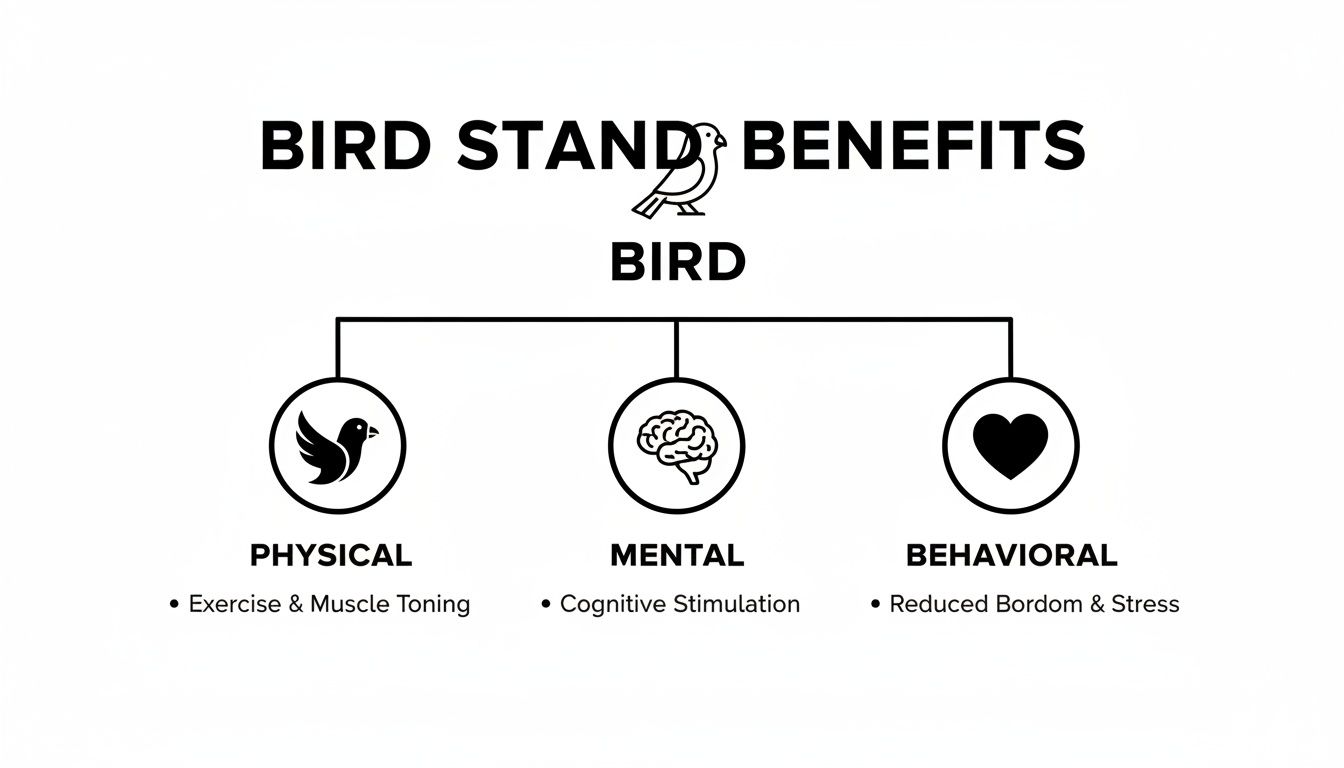
As you can see, a single piece of equipment supports everything from muscle tone and cognitive function to stress reduction, making it a holistic investment in your bird's health.
To make it easier, we've broken down the key features you should look for based on the size of your bird.
Bird Play Stand Features by Bird Size
| Bird Size Category | Example Species | Recommended Materials | Ideal Perch Diameter | Key Features to Look For |
|---|---|---|---|---|
| Small | Budgies, Cockatiels, Lovebirds | Balsa, Pine, Natural branches (e.g., Bottlebrush), Ropes | 10-15 mm | Lightweight design, varied perch textures, small bells, places to hang shreddable toys. |
| Medium | Galahs, Corellas, Ringnecks, Conures | Hardwoods (e.g., Gum), Java wood, durable plastics | 20-35 mm | Sturdy base, multiple levels for climbing, integrated ladders, space for foraging toys. |
| Large | Macaws, Cockatoos, Eclectus Parrots | Dense Australian hardwoods, metal (stainless steel), Java wood | 40-60 mm+ | Very wide and heavy base, thick and bolt-on perches, strong hooks for heavy-duty toys. |
This table serves as a great starting point, but always observe your own bird. Some medium birds are surprisingly destructive, while some large ones can be quite gentle!
Stability and Design Essentials
Beyond size and materials, stability is paramount. A wobbly or easily tipped stand is a serious safety hazard. You need to look for a bird play stand with a wide, heavy base that can’t be knocked over, even by an energetic, flapping parrot having a moment.
Expert Tip: Before you buy, give the stand a good shake. If it feels even slightly unsteady in the store, it's definitely not going to be safe for your bird at home. Stability should always be your top priority over aesthetics.
Finally, think about the different styles available to Australian bird owners. A compact tabletop model can be perfect for smaller homes or apartments, while a large, freestanding floor gym offers the ultimate playground for active parrots.
For a deeper look into the various options and features out there, explore our detailed guide to choosing the right bird play gym. This will help you make a confident choice that perfectly suits your bird, your home, and your budget.
Safe Materials and Smart Design Features
When you're picking out a bird play stand, nothing matters more than safety. Think of it like a safety check before you bring any new equipment into your bird's life. The materials and the design itself are your first and best defence against accidents, making sure your feathered mate has a secure place to explore.
The heart of a safe play stand is what it's made from. For anything wooden, it's vital to stick with bird-safe, untreated timbers. Heaps of great Australian native woods like eucalyptus, bottlebrush, and various gums are perfect choices because they’re tough, hard-wearing, and non-toxic. These woods can stand up to even the most determined beaks.
Just as important is knowing what to stay away from. Give soft woods a wide berth, as they can splinter easily and create nasty, sharp hazards. When it comes to the hardware—things like screws, washers, and hooks—always, always insist on stainless steel. Cheaper metals can hide toxic substances like zinc or lead, which can cause serious illness or even death if your parrot ingests them.
Spotting Potential Design Dangers
Beyond the raw materials, the way the bird play stand is put together needs a close look. A smart, safe design anticipates a parrot’s curious and often destructive nature, getting rid of risks before they can become a problem. It’s all about looking at the stand from a bird’s-eye view.
Go over the stand and hunt for any potential traps. Pay close attention to how the different bits are joined.
- Check for Small Gaps: Tiny openings between perches, toys, or other parts can easily trap a curious toe or even a whole foot, leading to panic and serious injury.
- Inspect for Sharp Edges: Run your hands along every surface. Any sharp corners, splintered wood, or poorly finished metal bits are an absolute no-go.
- Test the Joints: A quality stand will have strong, secure joints. Weak connections or flimsy attachments can give way under the weight and activity of a playful parrot.
Expert Tip: A well-built bird play stand should feel solid and robust, with no wobble or give when you push on it. Perches should be firmly attached—ideally bolted on rather than just glued—to handle the powerful leverage a big bird can exert with its beak.
The overall design should encourage healthy activity, not get in the way of it. For instance, having a good variety of textures and diameters on the perches is a critical design feature. Our guide to selecting the right perches for your bird explains how this variety helps exercise their feet and prevent health issues like arthritis down the track.
At the end of the day, a safe play stand is one where every little detail has been thought through. By prioritising non-toxic materials and carefully checking the design for hidden dangers, you can provide a playground that gives you complete peace of mind while your bird has hours of safe, enriching fun.
Creating the Ultimate Enrichment Station
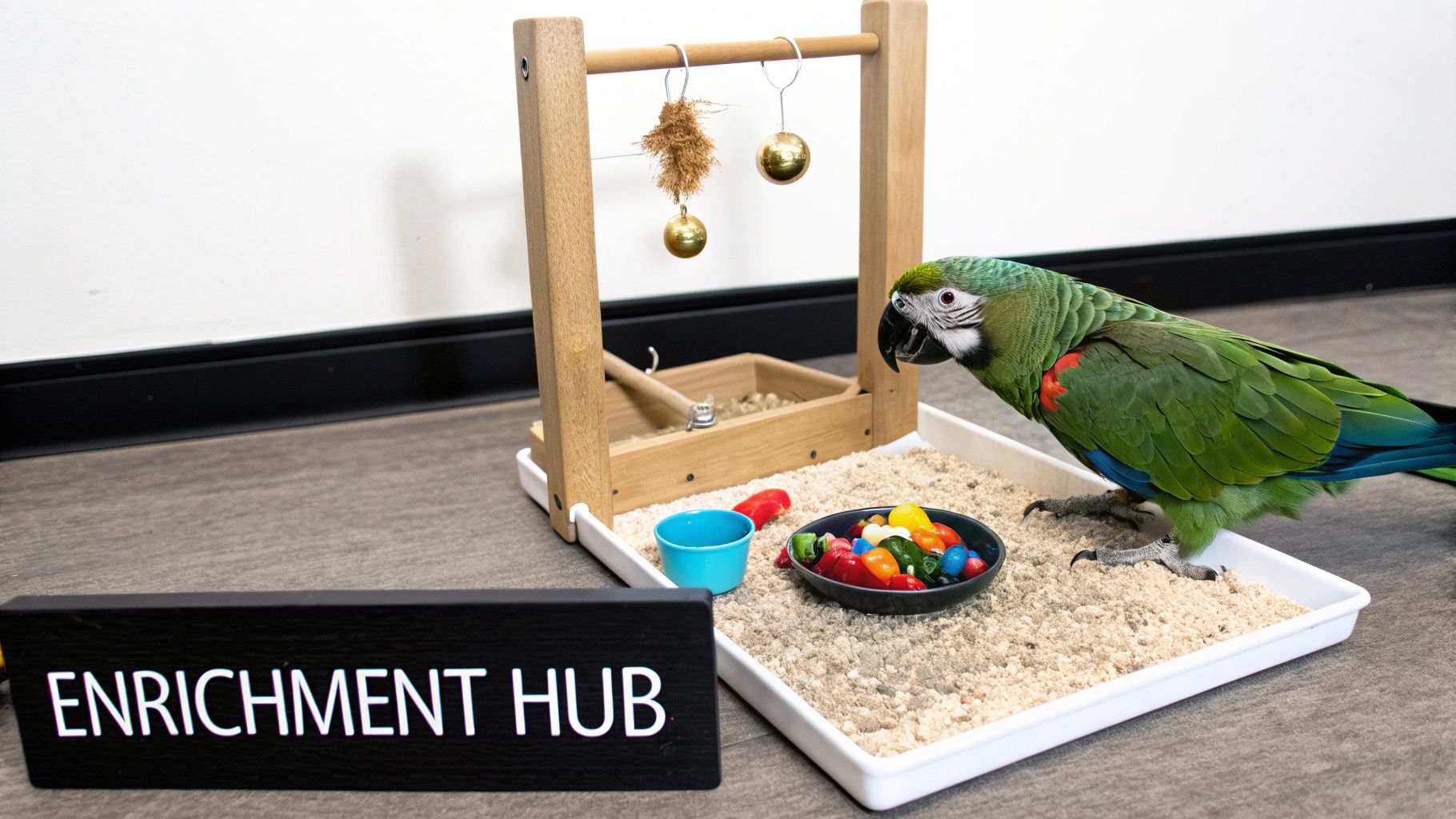
An empty bird play stand is a bit like a blank canvas; the real magic happens when you turn it into a bustling hub of activity. Transforming that simple frame into an engaging enrichment station is how you’ll capture your bird's attention and get them exploring, playing, and thriving.
The key is thinking strategically about where you put things. What behaviour do you want to encourage? Hang colourful, shreddable toys like the Gumnut Banksia Bird Toy to satisfy those natural destructive urges in a good way. Place clever foraging toys near different perches to get their minds working for their favourite treats.
A Dynamic and Engaging Setup
For an intelligent animal like a parrot, a static environment gets boring, fast. The secret to keeping them interested long-term is simple: variety and rotation.
- Weekly Toy Rotation: Just swapping out two or three toys every week makes a world of difference. This simple act keeps the play stand feeling fresh and exciting, always offering a new puzzle to solve or a new texture to investigate.
- Encourage Different Behaviours: Make sure you have a good mix of toys. Include things for chewing, like the durable Acacia Pods Bird Toy, alongside preening toys for comfort and foot toys for dexterity.
- Vary the Difficulty: A good setup mixes easy-to-destroy toys with more challenging puzzles. This avoids frustration while still giving their brain a solid workout.
This approach ensures the play stand remains a source of endless fascination, not just another piece of furniture.
Finding the Perfect Spot
Where you put the stand is just as important as what’s on it. Your bird is a flock animal at heart, so they'll want to be where the action is. The best spot is usually a social hub like the living room, where they can feel like part of the family’s daily rhythm.
Of course, safety has to come first. Position the stand away from direct drafts from windows or doors, and keep it well clear of the kitchen. Cooking fumes can be toxic to a bird's sensitive respiratory system.
In Australia, where around 770,000 households keep birds, companionship is a huge part of why we have them. According to insights from Animal Medicines Australia, that bond is everything. A well-placed, thoughtfully kitted-out play stand is a brilliant investment in their mental and social needs, and it will only strengthen that special connection you share. Adding irresistible items like the Spinning Pinecone Bird Toy will make their station the best spot in the house.
Your Guide to Cleaning and Maintenance
A clean bird play stand isn’t just about looking good—it’s a non-negotiable part of keeping your feathered friend healthy. Regular upkeep makes sure their favourite hangout spot stays a safe, hygienic space, free from the nasty bacteria that can build up from droppings and food scraps.
The easiest way to stay on top of it is to set up a simple routine. Think of it in three simple stages: daily, weekly, and monthly jobs. This approach keeps the whole process manageable and seriously effective.
Simple Cleaning Routines
Daily Checks (Less than 5 minutes):
- Spot Clean: Quickly wipe away any fresh droppings with a damp cloth or a bird-safe wipe. It only takes a second.
- Food Debris: Get rid of any bits of fresh food left behind. Old fruit and veggies are a breeding ground for bacteria.
- Water Check: If your stand has a water bowl, make sure it’s clean and filled with fresh water.
Weekly Clean (15-20 minutes):
This is when you do a more thorough job. Scrub the entire stand—every perch, the base, and all the toys—with a bird-safe cleaner. For a great DIY option, a solution of one part white vinegar to two parts water works a treat and is completely non-toxic.
Expert Advice: After cleaning with your vinegar solution, make sure you rinse every surface thoroughly with plain water. Let the stand air-dry completely before your bird is allowed back on it. This simple step ensures there’s no residue left for a curious beak to nibble on.
Monthly Safety Inspections
Once a month, it’s time for a full safety audit. This is about more than just cleanliness; it's about checking the stand’s structural integrity.
Go over every part of the play stand carefully. Look for any wood that’s been heavily chewed or has started to splinter, as this could be a hazard. Replace those bits immediately. Give the perches a good wiggle and tighten any nuts and bolts that have worked loose from all your bird’s climbing and playing.
This simple check protects your investment and, more importantly, keeps the stand a secure and inviting playground for your bird.
Frequently Asked Questions
Bringing a new piece of gear into your bird's life always comes with a few questions. Let's tackle some of the most common ones that Aussie bird owners have about play stands.
How Do I Encourage My Bird to Use Its New Play Stand?
Patience and making it fun are your two best tools here. First up, pop the new stand in a room where your bird already spends a lot of time and feels secure. You want it to become just another normal, non-scary part of the furniture.
Next, make it the most tempting spot in the house. Place their absolute favourite treats or a much-loved toy, like the Spinning Pinecone Bird Toy, on one of the perches. When they so much as glance at it, give them some quiet praise. If they hop on? That's cause for a treat and some happy chatter. Your calm, encouraging presence is what will really sell them on the idea.
Is It Safe to Build My Own DIY Play Stand?
While it might seem like a great weekend project, going the DIY route requires some serious homework to make sure every single piece is 100% bird-safe. You’ll need to source specific untreated Australian timbers like gum or bottlebrush, and be absolutely certain to avoid any toxic glues, finishes, or metals that contain zinc or lead.
Expert Advice: The risk of accidentally picking up an unsafe material is higher than you'd think. For total peace of mind, a professionally made stand from a trusted Australian supplier is your best bet. They’re designed by people who live and breathe avian safety.
How Many Play Stands Does One Bird Need?
For most homes, one really good, well-placed stand is plenty. It becomes the central hub for all their out-of-cage fun and time with you.
That said, if your family splits time between different rooms, like the living room and a home office, a second smaller tabletop stand can be a game-changer. It gives your bird more chances to be part of the action wherever you are, cutting down on boredom and making your bond even stronger.
Keep Reading
- Foraging Toys for Parrots The Ultimate Guide
- The Ultimate Guide to Choosing Safe Parrot Toys
- The Best Toys for Budgies A Comprehensive Guide
Disclaimer Summary: The information in this article is general in nature and may include external links or resources not created by Lou Lou Bells Bird Toys. Every bird is unique, so we encourage you to seek personalised advice from your own veterinarian or avian specialist. For full details, please read our complete disclaimer here.