
When you're trying to find the 'best' toy for a cockatiel, you'll quickly realise it isn't just one single item. It's about building a thoughtful collection that taps into their natural instincts to chew, forage, and play. For these much-loved Australian companions, the best bird toys for cockatiel wellbeing are a mix of shreddable, foraging, and foot toys that keep their minds sharp and their bodies healthy.
Why The Right Toys Are Essential For Your Cockatiel
As one of Australia's most cherished companion birds, the cockatiel is a little whirlwind of curiosity, intelligence, and playful energy. Out in the Aussie bush, their wild cousins spend their days looking for food, chewing on branches, and chattering with their flock. Giving your cockatiel a variety of toys isn't just a fun extra; it's a fundamental need. It lets them express these natural behaviours, which is the best way to prevent boredom and the stress that comes with it.
Think of your cockatiel's toy collection as their personal toolkit for happiness. Each toy has a specific job to do.
To help you get started, here's a quick look at the essential toy categories every cockatiel needs for a happy, healthy life.
Essential Toy Categories for Your Cockatiel's Wellbeing
| Toy Category | Primary Benefit | Example Toy Types |
|---|---|---|
| Chewable Toys | Satisfies the natural instinct to shred and destroy, keeping their beak in top condition. | Untreated wood blocks, palm leaf, sola, yucca, cardboard. |
| Foraging Toys | Turns mealtime into a stimulating puzzle, engaging their clever minds. | Puzzle boxes, shreddable treat holders, foraging wheels. |
| Foot Toys | Promotes dexterity and coordination by encouraging them to use their feet and beak. | Small woven balls, plastic beads, lightweight wooden shapes. |
| Swings & Perches | Encourages physical activity, improves balance, and provides safe spots for rest. | Natural wood swings, rope perches, multi-textured perches. |
By offering a mix from each of these categories, you’re creating a well-rounded environment that caters to all of your bird's needs, not just some of them.
A Surge in Cockatiel Companionship
There's no denying how popular these charismatic birds are. Here in Australia, cockatiel ownership has jumped by 28% in the last five years, with more than 450,000 households now enjoying their company. This boom has really put a spotlight on just how critical proper enrichment is.
In fact, research shows that cockatiels with a good range of interactive toys get 40% more physical activity every day. This simple change can make a huge difference, potentially boosting their lifespan from an average of 12-15 years to nearly 20 years in a stimulating home.
A bored cockatiel is often a stressed cockatiel. This can lead to problem behaviours like excessive screaming or feather plucking. When you provide a stimulating environment filled with the right kinds of toys, you're directly investing in their long-term health and happiness.
Choosing the best bird toys for a cockatiel is all about creating a dynamic and engaging world inside their cage. It’s about so much more than just stopping them from getting bored; it’s about nurturing their intelligence and giving them a chance to truly thrive. By understanding the 'why' behind each type of toy, you can make smarter choices that will enrich your feathered friend's life.
For a deeper dive, you can learn more about how to choose the right bird toys for your bird in our detailed guide.
Unpacking The Must-Have Cockatiel Toy Categories
To give your cockatiel a truly happy life, you need to get inside their head and understand the ‘why’ behind their play. It’s not about just keeping them busy; it’s about satisfying the deep-seated, natural instincts their wild cousins follow every single day out in the Australian bush. A happy cockatiel has a variety of 'jobs' to do, and each type of toy gives them a different, crucial role to play.
Let's dive into the core toy types that are the foundation for a healthy, stimulated cockatiel. We’ll go beyond just listing them and get into why each one is a non-negotiable, with a bit of advice from Aussie avian experts.
Shredding and Chewing Toys For Beak Health
A cockatiel’s beak is an incredible tool, and it never stops growing. In the wild, they keep it in perfect shape by chewing on branches, stripping bark, and cracking open seed pods. Chewable and shreddable toys bring that essential activity right into their cage.
Honestly, providing toys they are meant to destroy is one of the kindest things you can do. This behaviour, often called 'destructible enrichment', scratches a powerful itch. Without a proper outlet for this instinct, a bored cockatiel might start chewing on cage bars, your furniture, or even their own feathers.
The best bird toys for cockatiel beak care are made from soft, natural materials. Think about things they can easily shred, rip, and pull to pieces. Not only does this keep their beak trimmed and in top condition, but it's also a fantastic way for them to relieve stress and stay mentally sharp.
- Soft Woods: Materials like balsa wood, yucca, and sola are perfectly suited to a cockatiel's beak strength.
- Natural Fibres: Dried palm leaf, seagrass, and coconut husk give them different textures to explore and shred.
- Paper and Cardboard: Simple, untreated paper and cardboard pieces are brilliant for satisfying that tearing instinct.
Here at Lou Lou Bells, our South Australian-made "Busy Bee" Natural Shredder is a prime example, combining a bunch of different shreddable textures to keep your little mate engaged for hours.
Foraging Toys For Mental Stimulation
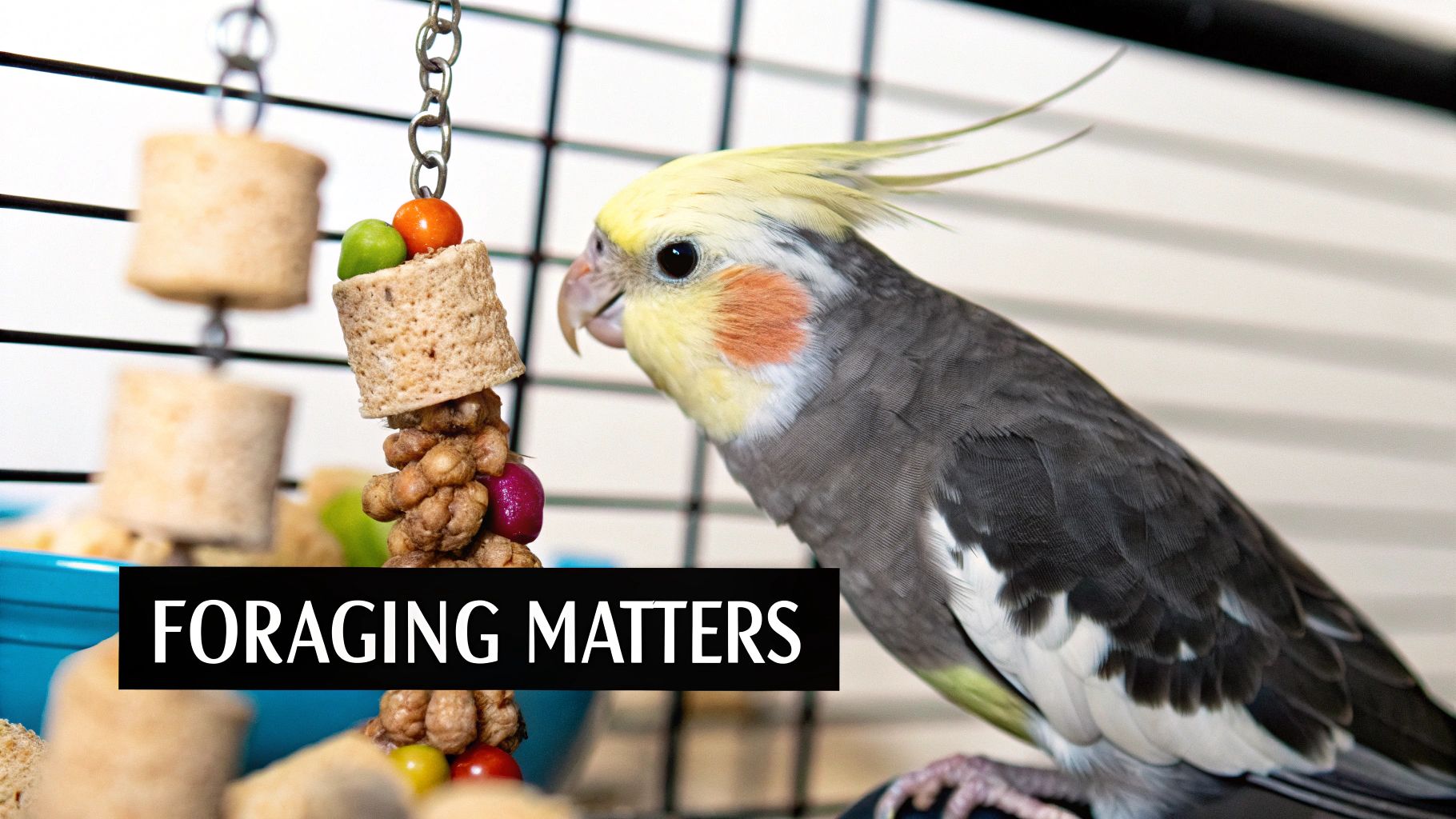
If you could only provide one type of toy, most Australian avian specialists would point you towards a foraging toy. In their natural habitat, cockatiels spend a huge part of their day just looking for food. Simply dropping a bowl of seeds in their cage takes away this fundamental 'job', leaving a void that can quickly lead to boredom and anxiety.
Foraging toys turn mealtime from a two-minute snack into an engaging puzzle. They make your bird think, problem-solve, and work for their food, which is incredibly rewarding for their sharp little minds. This mental workout is every bit as important as physical exercise.
Introducing foraging is a game-changer for a cockatiel's wellbeing. It provides a sense of purpose and can dramatically reduce unwanted behaviours like excessive screaming, as it channels their energy into a productive and instinctual activity.
The best way to start is with simple foraging toys and slowly increase the difficulty. You can begin with easy-to-solve puzzles and move on to more complex designs as your bird gets the hang of it. Our "Foraging Box" Shredder is designed as a great first step, letting you hide treats inside a fun-to-destroy box.
This simple diagram shows how a bird's wellbeing is built on the core pillars of chewing, foraging, and playing.
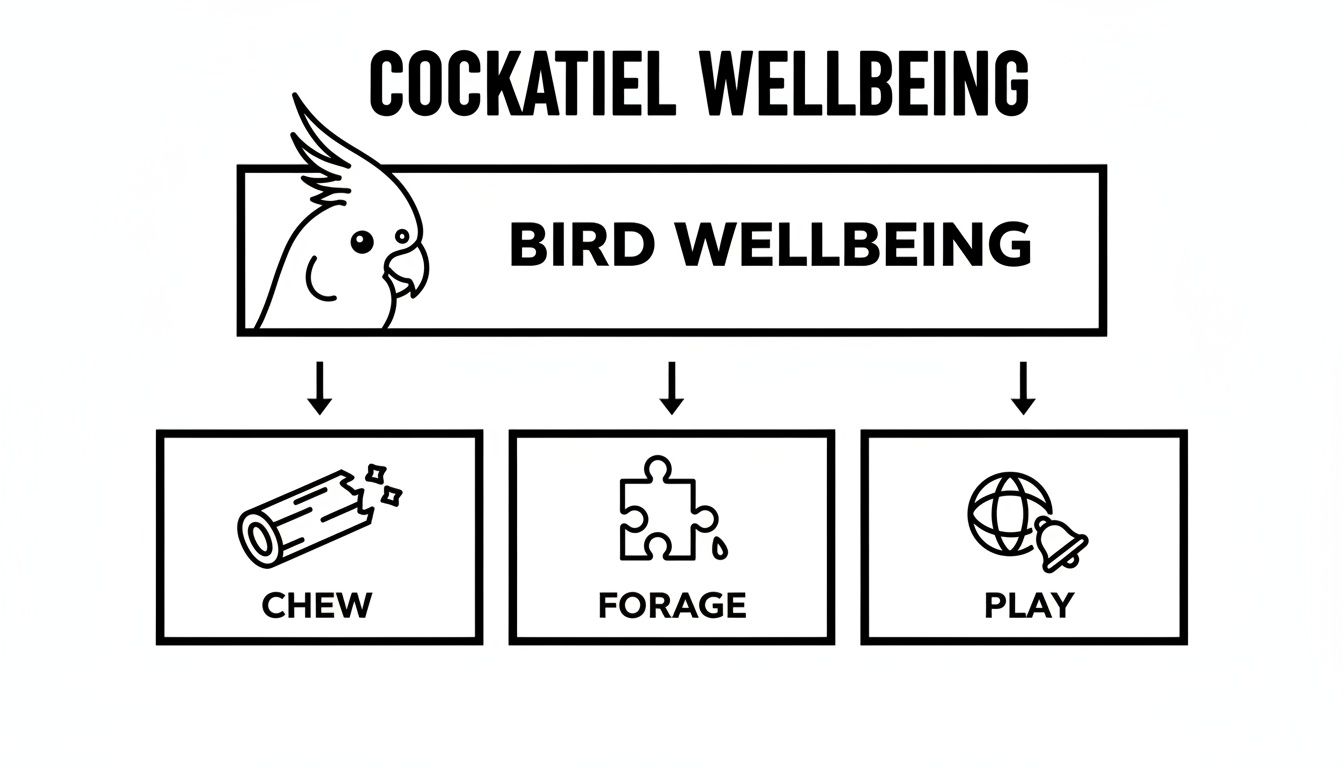
It really highlights that a balanced approach, with toys from each key category, is what you need for a truly happy and healthy bird.
Foot Toys For Dexterity And Play
Cockatiels are surprisingly nimble and love to handle things with both their beaks and their feet. Foot toys are just small, lightweight items they can pick up, toss around, and hold. These little toys are brilliant for improving coordination, strengthening their feet, and encouraging them to play on their own.
In the wild, cockatiels often forage on the ground, picking through grasses and soil. Foot toys mimic this, especially when you place them on a flat surface or at the bottom of the cage. A fun trick is to create a foraging tray by scattering some foot toys with a few seeds, encouraging your bird to explore and 'hunt'.
Look for foot toys made from a few different safe materials to keep things interesting.
- Woven Balls: Items made from vine or seagrass are great for them to grip and chew.
- Lightweight Wood: Small, untreated wooden blocks or beads are perfect for tossing.
- Plastic Shapes: Bird-safe plastic rings and links can add a splash of colour and a different texture.
Our "Wicker Rattle Foot Toys" are a fantastic choice, combining natural textures with a gentle rattling sound that really captures a cockatiel's curious side. For a deeper look at how to arrange these and other items, check out our guide on selecting the right bird toys for a cage.
Swings and Perches For Exercise and Comfort
Finally, no cockatiel home is complete without a good range of swings and perches. These are more than just a spot for your bird to sit; they are vital for exercise and foot health. Standing on a single-diameter perch all day can lead to serious foot problems like arthritis or bumblefoot.
Offering perches of different materials and thicknesses forces their feet to constantly adjust, which exercises all the tiny muscles and tendons. Natural wood branches, rope perches, and platform perches all create a healthier environment. Swings add another layer of fun, improving balance and giving them a great way to move about. Many cockatiels absolutely love the gentle rocking motion, and you'll often hear them chirping happily as they swing away.
Introducing The Joy Of Foraging
The trick to getting your 'tiel hooked on foraging is to start easy. You want to build their confidence and show them how fun the "game" can be, especially if they've never seen a foraging toy before. A complex puzzle will just be confusing.
Here’s a simple way to get your bird started:
- Start with the Obvious: Begin with an 'open' style foraging toy, like a small tray or a shallow box. Sprinkle their absolute favourite treats, like millet seeds, right on top in plain sight. This first step teaches them that this new object is a source of yummy things.
- Add a Simple Challenge: Once they’re happily eating from the toy, lightly cover the treats with something easy to move, like a bit of shredded paper or a soft balsa block. They’ll have to nudge it aside to get their reward, which introduces the basic idea of 'working' for food.
- Increase the Difficulty Gradually: As they get the hang of it and become little foraging pros, you can introduce toys that require a bit more brainpower. Think puzzles with little drawers to pull or shreddable toys where they have to chew through a layer to get to the treasure inside.
This slow and steady approach ensures even a hesitant or seemingly 'lazy' bird can learn to love the challenge. It taps right into their natural curiosity and can turn mealtime into the most exciting part of their day.
The payoffs from foraging go way beyond just beating boredom. It's a powerful investment in your bird's long-term health and happiness.
You can see this shift in the market, too. The bird toy scene in Australia is booming, and foraging toys alone are valued at USD $98 million in our region. Cockatiels absolutely thrive on these puzzles. In fact, a University of Sydney study found that 82% of owners reported happier birds after bringing in foraging toys, which also slashed destructive behaviours by over 50%.
Here at Lou Lou Bells Bird Toys, our South Australian-made foraging range has sold over 3,000 units, each one designed to be a perfect match for a cockatiel's clever mind.
If you're looking for more detailed tips, you can explore our guide on introducing foraging toys for birds. It’s such a small change to their daily routine, but it delivers enormous rewards.
A Guide To Choosing Safe Bird Toys In Australia
As a bird owner, nothing matters more than keeping your feathered friend safe. The Australian market is flooded with toys, but let's be honest—not all of them are created equal. Knowing what to look for, and more importantly, what to run from, is the single most critical skill you can develop to protect your cockatiel from hidden dangers.
Your cockatiel explores everything with its beak, which means every single toy you offer has to be made from non-toxic, bird-safe materials. This isn't just a suggestion; it's your number one priority. A pretty toy is useless if it puts your bird at risk.
Think of this as your personal safety checklist. We’ll walk through the essential checks to help you become an expert at spotting a potential hazard before it ever gets near your bird's cage.
The Safe Materials Checklist
When you’re hunting for the best bird toys for cockatiel safety, the materials list is everything. Always, always go for natural, untreated, and non-toxic components.
Here’s what you want to see:
- Natural, Untreated Woods: Safe options like pine, balsa, birch, and eucalyptus are perfect for a cockatiel’s beak to get busy with. The key word here is untreated—no pesticides, preservatives, or varnishes.
- Vegetable-Tanned Leather: If a toy has leather strips, they must be vegetable-tanned. Chrome-tanned leather is a huge no-go, as it contains heavy metals that are highly toxic to birds.
- Bird-Safe Plastics: Hard, durable plastics like acrylic are generally fine because they're tough for a cockatiel to break into small, swallowable bits. Soft, brittle plastics are a recipe for disaster.
- Stainless Steel Hardware: Any metal on a toy—quick links, bells, chains—must be stainless steel. It’s non-toxic and won't rust. No exceptions.
- Natural Fibres: Materials like sisal, hemp, and seagrass are fantastic for preening and shredding, as long as the strands are kept short to prevent any chance of entanglement.
Hidden Dangers To Avoid At All Costs
Unfortunately, plenty of toys sold in mainstream stores contain materials that are downright dangerous for parrots. Learning to spot them is crucial, especially since some retailers who don't specialise in birds might stock unsafe products without even realising it.
Expert Advice: One of the sneakiest dangers is metal toxicity from zinc or lead. This is often found in galvanised cage wire, cheap metal clasps, and even some painted toys. These metals build up slowly in a bird’s system, causing neurological damage and illness over time. Sticking exclusively to stainless steel is the simplest and safest rule to follow.
Be on high alert and steer clear of these things:
- Zinc-Coated Hardware: Avoid anything galvanised. This includes some chains, bells, and quick links you might find on cheap toys. Zinc poisoning is a serious threat, and it's entirely preventable.
- Lead-Based Paints: Never, ever give your bird painted toys unless the manufacturer can guarantee the dyes are non-toxic and food-grade. Lead is incredibly poisonous.
- Soft Plastics and Rubber: These materials are too easy for a bird to chew into small pieces and swallow, which can lead to crop impaction or internal blockages.
- Long Ropes or Loose Threads: Long cotton fibres or frayed ropes are a major strangulation risk. They can easily get wrapped around a bird's neck, wings, or toes, causing devastating injuries. If you have rope toys, keep the strands trimmed short.
- Unsafe Bells: Ditch the jingle-style bells with open clappers. A curious beak or toe can get trapped inside. The only safe bells are solid, closed-clapper designs made from stainless steel.
Giving every new toy a thorough inspection is non-negotiable before it enters the cage. Tug on all the parts, check the clasps, and look for any weak points that could break off. You can find more specific advice on choosing appropriate and secure toys for parrots on our blog. Just as important is checking existing toys for wear and tear—a once-safe toy can become a hazard as it gets loved and chewed to pieces.
How To Rotate Toys To Keep Your Cockatiel Engaged
Have you ever bought a brilliant new toy, watched your cockatiel play with it nonstop for a week, and then seen it gather dust? It’s a classic story for bird owners, but it doesn't mean your bird is fussy or the toy is a failure.
The truth is, cockatiels, just like us, get bored with the same old things day in and day out. This is where a simple but brilliant strategy comes into play: toy rotation.
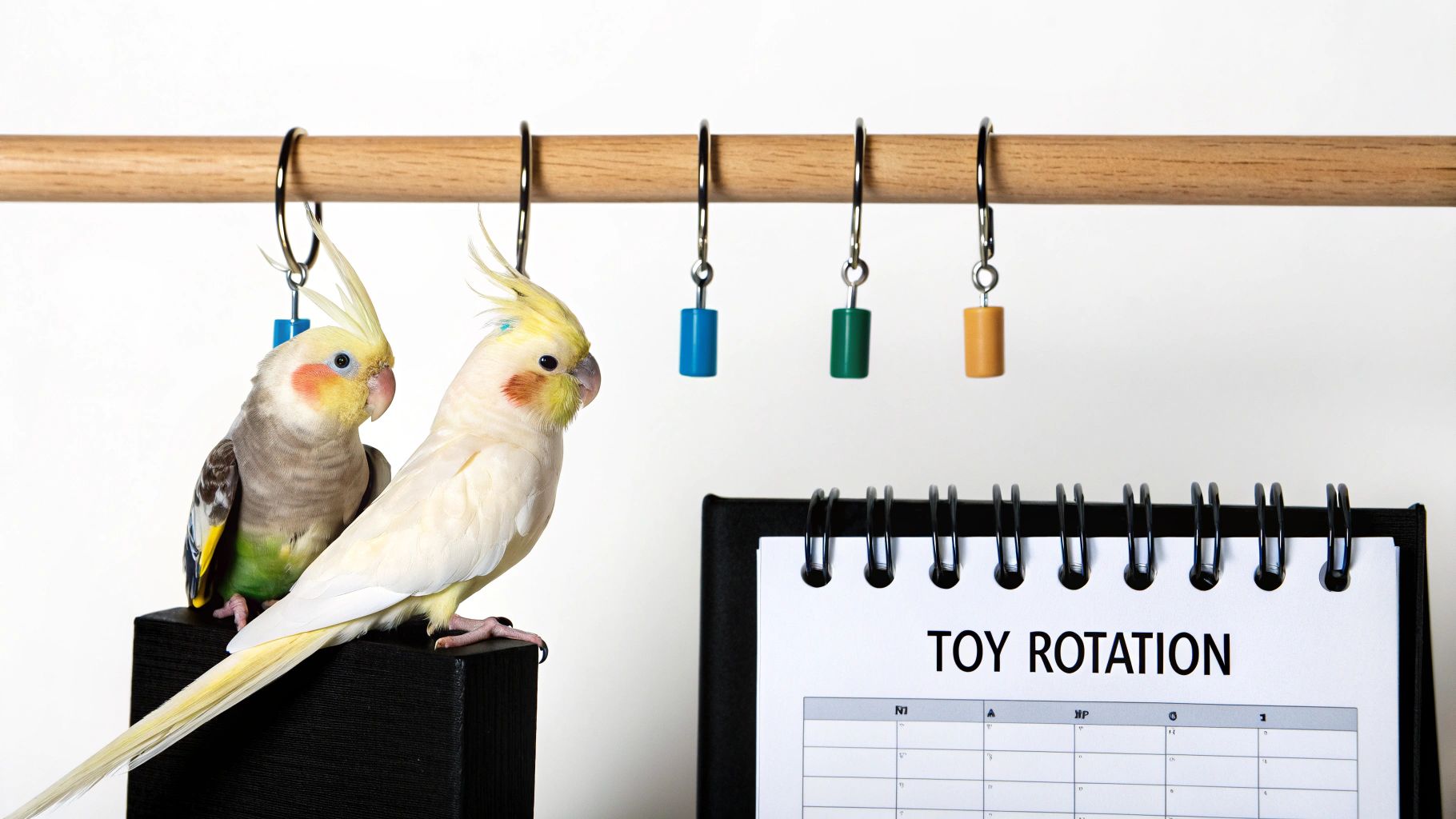
Toy rotation is an incredibly powerful technique for keeping your bird’s environment fresh and exciting. Think of it like a subscription box for your 'tiel—every week, something new and interesting appears! This novelty reignites their natural curiosity and encourages them to explore, chew, and play, just as they would in the wild where their surroundings are always changing.
Creating A Simple Toy Rotation Schedule
Getting started is easier than you think. You don't need a massive collection of toys; you just need to be a little strategic. The goal is to create a cycle that ensures your cockatiel always has something engaging without feeling overwhelmed.
A weekly or bi-weekly swap is a great starting point. Here’s a sample schedule to give you an idea:
-
Week 1 (Engage & Destroy):
- One shreddable toy, like our "Paper Party" Natural Shredder.
- One simple foraging toy to get their mind working.
- One swing or active perch.
-
Week 2 (Puzzle & Play):
- One chewable wooden toy.
- A slightly more complex foraging toy.
- A set of fun foot toys, like our "Wicker Rattle Foot Toys".
This approach ensures there’s always a good mix of activities. By swapping them out, that "old" shredder from two weeks ago suddenly becomes new and exciting again when you bring it back.
Rotating toys does more than just combat boredom. It also gives you the perfect opportunity to thoroughly inspect each toy for any potential safety hazards, like frayed ropes or broken parts. This way, you're making sure their environment is always secure.
How To Clean and Store Your Toys
Proper cleaning is a crucial part of your rotation routine. Before you store a toy, it needs to be cleaned properly to prevent any bacteria from growing while it’s packed away.
- Scrub It Down: Use a bird-safe disinfectant or a simple mix of white vinegar and water to scrub off any grime. For wooden toys, try not to soak them completely.
- Rinse Thoroughly: This is key. Make sure you rinse every last bit of the cleaning solution off the toy.
- Dry Completely: This is the most important step. Toys must be 100% dry before you store them, otherwise mould and mildew can grow. Popping them in a sunny spot in your Aussie backyard for a few hours is perfect.
- Store Smart: Keep the clean, dry toys in something that can breathe, like a cardboard box or a fabric bag, in a cool, dry place. Steer clear of airtight plastic tubs, which can trap moisture.
By adopting a simple toy rotation system, you’re not just keeping your cockatiel mentally stimulated—you’re also extending the life of your toys and keeping their environment clean and safe.
Got Questions About Cockatiel Toys?
Stepping into the world of cockatiel toys can feel a bit overwhelming, especially if you're a new bird owner here in Australia. To help you out, we’ve put together answers to some of the most common questions we hear from fellow cockatiel lovers.
How Many Toys Should a Cockatiel Have in Its Cage?
A good starting point is to have three to five different types of toys in the cage at any one time. The real goal here is variety, not clutter. Jamming too many toys in there can actually make it hard for your little mate to move around and have a good wing stretch.
Think about offering a mix of activities. For example, a great setup might include:
- One toy they can shred to bits for beak health, like our "Busy Bee" Natural Shredder.
- A foraging toy to get their clever little brain working.
- A comfy swing or a multi-textured perch for exercise.
The secret weapon for happy cockatiels is toy rotation. Swapping them out weekly keeps their space feeling fresh and interesting, and it’s the best way to stop boredom from creeping in.
What Should I Do If My Cockatiel Is Scared of New Toys?
Don't worry, this is one of the most common things we see—and it's completely normal. As prey animals, a cockatiel’s first instinct is to be suspicious of anything new popping up in their territory. The trick is a slow, patient introduction that builds a bit of trust.
Whatever you do, don't just hang a new toy right beside their favourite perch. Instead, try placing it on the floor just outside the cage for a day or two so they can eyeball it from a safe distance. Then, move it a bit closer to the side of the cage. Finally, pop it inside, but well away from where they eat or sleep. Using a few treats and some happy praise whenever they show the slightest bit of curiosity works wonders.
Patience is your best friend here. If you rush it, you risk creating a fear of that object for good. Let your bird call the shots, and they’ll eventually see the new toy as a fun thing, not a scary monster.
Are Mirror Toys Safe For Cockatiels?
Most avian vets across Australia will tell you to steer clear of mirrors. It might seem like a bit of harmless fun, but cockatiels can get seriously obsessed with their reflection, thinking it’s a real-life mate.
This can spiral into some pretty serious behavioural issues, such as:
- Aggression towards you or other birds as they try to "protect" their reflection buddy.
- Chronic regurgitation in an attempt to feed the reflection, which isn't good for their health.
- Intense frustration and stress when their "mate" never responds.
It's much healthier for them to have toys that encourage them to play on their own, forage for treats, or interact directly with you. Stick with enriching puzzles and shreddable toys instead of mirrors—it’s the best way to support your bird’s mental wellbeing.
Keep Reading
- Discover The Best Bird Toys For Budgies
- Ultimate Guide To Eclectus Parrot Toys
- Choosing Safe Bird Toys A Guide For Australian Bird Owners
Disclaimer Summary:
The information in this article is general in nature and may include external links or resources not created by Lou Lou Bells Bird Toys. Every bird is unique, so we encourage you to seek personalised advice from your own veterinarian or avian specialist. For full details, please read our complete disclaimer here.