
When you think about setting up a home for a new budgie, the obvious things come to mind: a good cage, quality seed, and fresh water. But if you stop there, you're missing one of the most vital ingredients for a happy bird—enrichment. It’s a bit like asking a person to live in a completely empty room. Sure, they can survive, but they certainly won't thrive.
Toys are so much more than just colourful cage decorations; they're essential tools that let your clever, energetic little companion flourish.
Why Your Budgie Needs More Than Just a Perch
Without enough to do, a budgie's world shrinks fast. Boredom and stress can creep in, and that’s when you start seeing problems like obsessive screaming, feather plucking, or chewing on cage bars. Giving them a good mix of engaging toys is the best way to head off these issues before they even start.
A well-thought-out cage setup is a playground, a gym, and a puzzle room all rolled into one. It’s an environment that encourages a budgie to think, move, and feel secure.
Bringing the Wild Indoors
Out in the wild, budgies are busy little birds. They spend their days flying, finding food, chewing on branches, and chattering away in huge flocks. The right toys help us bring those natural, instinctual behaviours into the safety of our homes.
- Foraging Toys: These turn feeding time from a boring meal into an exciting challenge. They encourage your budgie to hunt and work for their food, just as they would in the Australian bush.
- Shredding Toys: Budgies have a deep-seated need to chew and destroy things. Tearing up safe materials like paper, yucca, or mahogany pods keeps their beak trim and their minds busy.
- Foot and Preening Toys: These are great for improving dexterity and coordination. They also tap into the social grooming instincts that are so important for flock birds, offering a source of comfort.
A Feathered Friendship Through Time
Did you know that budgerigars have been one of Australia's most loved companion birds since they were first documented in the outback way back in the 1840s? These little 35-gram parrots, with their iconic green and yellow feathers, quickly won people over. By the early 1900s, they were being exported from Australia and were well on their way to becoming cherished pets around the world. If you're curious about their journey from wild flocks to our living rooms, you can learn more about the history of the Australian budgie.
This long history with us comes with a responsibility to give them the best life we can.
Ultimately, choosing the right toys isn’t a luxury—it’s a core part of good budgie care. It’s a direct investment in your bird's mental and physical health, ensuring your little friend leads a full, happy, and enriched life.
A Guide to Essential Budgie Toy Types
Walking into a pet store or browsing online for budgie toys can feel a bit overwhelming. There are so many colours, shapes, and materials to choose from—how do you know which ones your little friend will actually like, let alone what’s good for them?
The secret is understanding that different toys serve different purposes. Just like we need a mix of work, exercise, and fun to feel balanced, a budgie needs a variety of toys to satisfy all their natural instincts. Building a diverse ‘toy library’ is one of the best things you can do for their wellbeing. It turns their cage from just a house into a stimulating, enriching home.
This diagram breaks down the core needs of a thriving budgie: stimulation, exercise, and the instinct to forage.
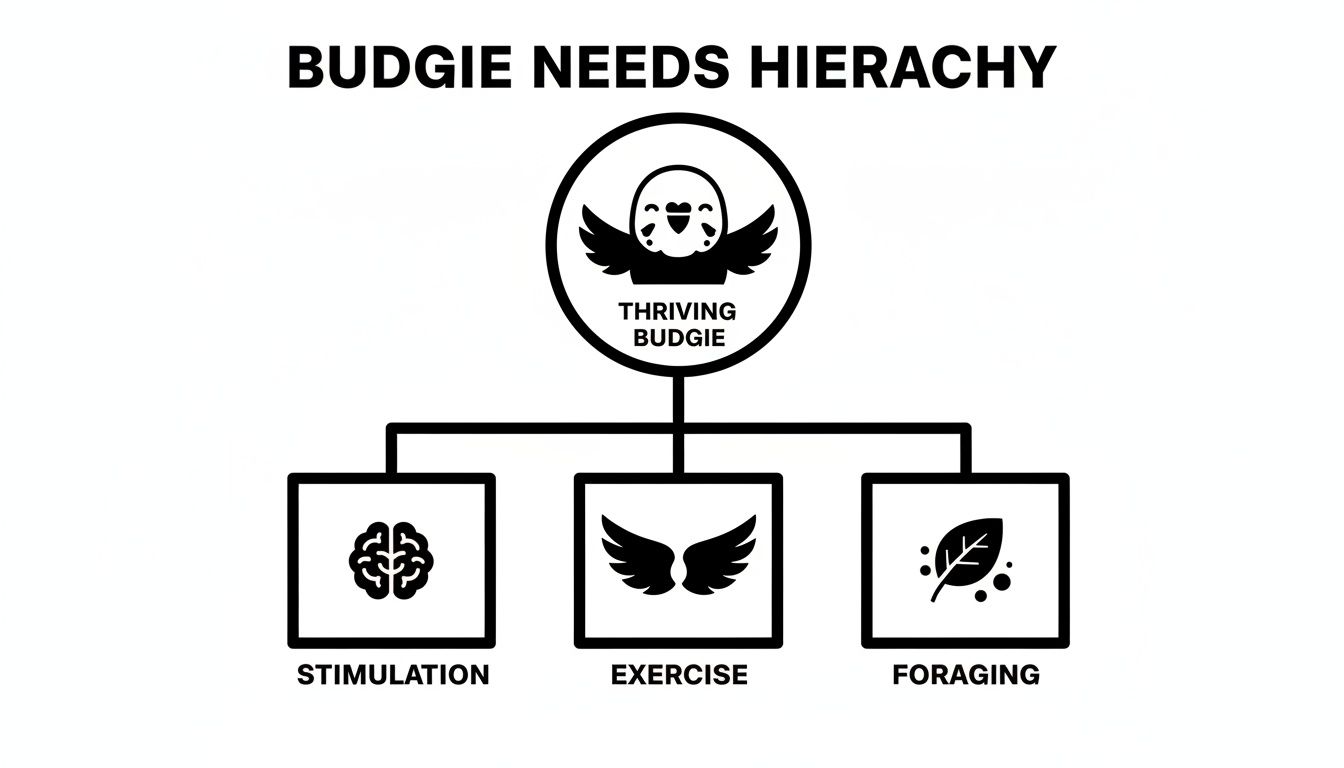
As you can see, keeping a budgie happy and healthy isn't just about one thing. It's about looking after their mind, body, and instincts all at once.
Foraging Toys: Puzzles for Their Brain
In the wild, budgies spend a huge chunk of their day flying around, searching for seeds and greens. Foraging toys bring that natural challenge into their home, turning mealtime into a fun treasure hunt.
Think of it this way: a bowl full of seed is like having your dinner just handed to you. A foraging toy is like being given a puzzle box that you have to figure out to get to the delicious snacks inside. The reward is the same, but the journey is so much more satisfying. It keeps their clever little minds busy and stops boredom in its tracks.
Foraging can be as simple as hiding seeds in a small cardboard box filled with shredded paper, or it can involve more complex puzzle toys they have to manipulate.
Shredding Toys: Satisfying Natural Instincts
Does your budgie seem obsessed with chewing on paper, cardboard, or even the bars of their cage? That’s not bad behaviour—it's pure instinct. Budgies have a powerful, built-in need to shred and destroy things. This helps keep their beaks in good shape and is a fantastic way for them to burn off energy and relieve stress.
Shredding toys give them a safe and healthy outlet for this behaviour. Made from bird-safe materials like balsa wood, yucca, mahogany pods, or palm leaves, these toys are meant to be completely annihilated.
A destroyed toy is not a wasted toy; it is a well-loved toy. The whole point of a shreddable is for your budgie to pull it apart, which tells you they've been happily engaged, both mentally and physically.
When you're picking out shreddables, always make sure the materials are non-toxic. Our collection of shredding toys offers a whole range of textures perfect for a curious budgie's beak.
Foot Toys: For Dexterity and Play
Foot toys are small, lightweight items a budgie can easily hold in their feet, toss around, and manipulate with their beak. They are brilliant for helping your bird develop better coordination and balance.
Some great examples of foot toys include:
- Small vine balls they can pick apart.
- Woven palm leaf shapes they can shred and carry.
- Lightweight plastic beads or rings they can jingle and throw.
Because they’re so small and portable, foot toys are perfect for playtime outside the cage, maybe on a play gym or a tabletop. They encourage your budgie to play independently, letting them interact with an object entirely on their own terms.
Swings and Perches: For Exercise and Comfort
Movement is vital for a budgie’s health. Swings and different types of perches encourage them to be active, which helps strengthen their leg muscles and improve their balance. A simple swing gives them a fun way to move while getting a different view of their surroundings.
It's also a great idea to move beyond the standard dowel perches that often come with cages. Offer a variety of textures and diameters to keep their feet healthy. Natural wood perches, like those made from eucalyptus or bottlebrush, feel much more like the branches they’d find in the wild. This variety exercises their feet and helps prevent problems like pressure sores. We even have swings with built-in shreddables for twice the fun!
Preening Toys: For Comfort and Soothing
Preening is a natural behaviour where budgies meticulously clean and straighten their feathers. In a flock, they often preen each other, which helps strengthen their social bonds. For single birds, preening toys can simulate this comforting activity.
These toys are usually made from soft, shreddable materials like cotton rope, leather strips, or raffia. Your budgie can nibble, pull, and fray the fibres, satisfying their preening drive and giving them a sense of security. They can be especially helpful for birds prone to feather-plucking, as they provide a safe alternative for them to direct that behaviour.
Your Budgie's Essential Toy Checklist
To help you get started, here's a quick checklist that breaks down the essential toy types. Aim to have at least one or two from each category in your rotation to keep things interesting for your feathered friend!
| Toy Type | Primary Benefit | Example from Lou Lou Bells |
|---|---|---|
| Foraging | Mental stimulation, problem-solving, prevents boredom. | The Budgie Forager Box |
| Shredding | Satisfies natural chewing instincts, beak maintenance. | Balsa & Vine Ball Skewer |
| Foot Toys | Improves dexterity, coordination, encourages independent play. | Mini Palm Leaf Shred Stars |
| Swings & Perches | Promotes physical exercise, foot health, and comfort. | Natural Wood Perch Swing |
| Preening | Soothes and comforts, mimics natural flock behaviour. | Raffia & Leather Preening Tassel |
By providing a well-rounded collection of toys, you're not just preventing boredom; you're creating an environment where your budgie can truly thrive.
Choosing Safe Materials for Budgie Toys
A budgie’s beak is how it explores the world. Every new object, whether it's a seed or a shiny toy, gets a curious nibble or a full-on chew. Because of this, understanding what their toys are made of is one of the most important jobs a bird owner has. The wrong choice can quickly turn a fun plaything into a serious health hazard.
This isn’t just about avoiding the obvious dangers. It’s about proactively picking materials that are good for your budgie and tap into their natural instincts to shred and destroy. When you give them safe, appropriate toys, you’re giving them the green light to play with confidence. At Lou Lou Bells, we get this completely—every single component in our handmade toys is carefully vetted to be non-toxic and species-appropriate.
Budgie-Safe Materials to Look For
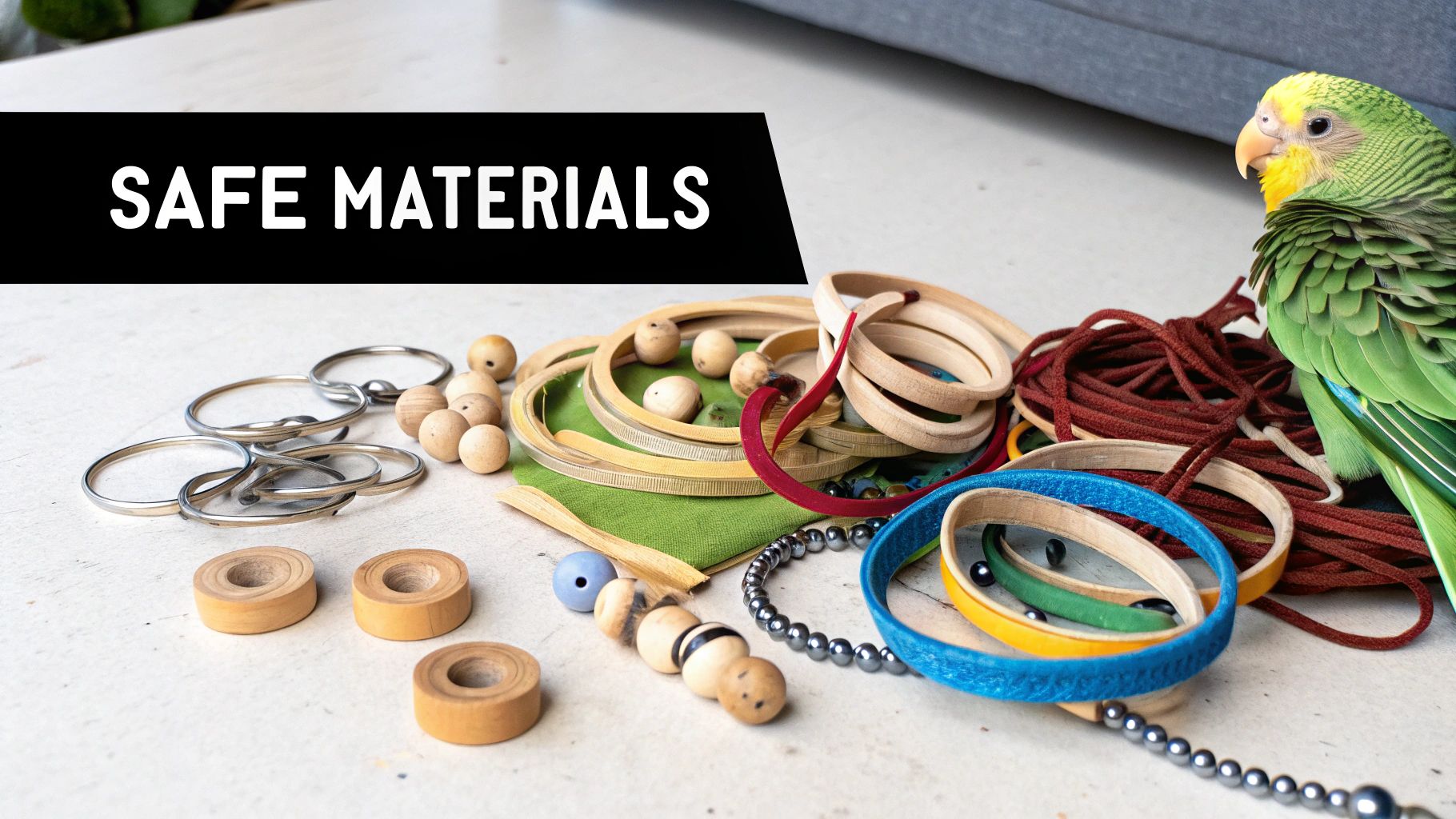
Thankfully, there are plenty of brilliant, bird-safe materials out there. Your best bet is always to focus on natural, untreated items. Just think about what a budgie might find in the Australian bush and try to bring a safe version of that into their cage.
Here are some top-notch choices for your budgie's toy box:
- Natural Australian Woods: Timbers like eucalyptus, bottlebrush, banksia, and tea tree are perfect. They offer a satisfying texture for chewing and are completely safe, as long as they haven't been sprayed with pesticides.
- Softer Woods: Balsa wood is a massive hit with smaller birds like budgies. It’s soft enough for them to tear apart easily, which is incredibly satisfying for that busy little beak.
- Vegetable-Tanned Leather: If you see leather strips or cords on a toy, make sure it’s vegetable-tanned. The alternative, chrome-tanned leather, contains heavy metals that are toxic if ingested.
- Stainless Steel Hardware: Any metal bits on a toy—like quick links, O-rings, or bells—should be made from stainless steel. It’s tough, won't rust, and is completely non-toxic.
It's a sobering fact, but choosing the right toy can prevent a tragedy. In Australia, where budgies make up a whopping 28% of pet birds (making them more popular than cockatiels), ingestion hazards are a real worry, accounting for 18% of related vet cases each year. As part of the South Australian Bird Company, Lou Lou Bells makes sure every toy is built from rigorously checked, non-toxic materials that put your bird's wellbeing first.
Hazardous Materials to Avoid at All Costs
Knowing what’s safe is only half the battle; you also need to know what to steer clear of. Lots of common household items and cheap materials used in mass-produced toys can be dangerous, or even fatal. Always be vigilant and inspect every toy, new or old, for potential risks.
Expert Advice from an Australian Avian Vet: "We see too many preventable incidents involving toxic materials. Heavy metal poisoning from zinc or lead, often found in cheap bells or metal clips, can cause severe neurological damage. It’s crucial for owners to understand that a budgie’s beak is powerful enough to break off small pieces, so the material itself must be non-toxic from the start."
Here is a clear list of hazards to keep out of the cage:
- Toxic Metals: Say no to any hardware made from zinc, lead, copper, or brass. These metals can flake off and be ingested, leading to heavy metal poisoning—a serious and often deadly condition.
- Certain Plastics: While some hard plastics are okay, soft plastics can be chewed into small pieces and swallowed, causing a dangerous crop impaction. Brittle plastics are just as bad, as they can shatter into sharp shards.
- Toxic Glues and Dyes: Check that any colour on a toy comes from non-toxic, food-grade dyes. Toys held together with toxic glue are a major risk if your budgie manages to chew them apart.
- Treated Woods: Never, ever give your budgie wood that has been painted, varnished, lacquered, or pressure-treated. These finishes are loaded with chemicals that are harmful if ingested.
By paying close attention to what goes into the cage, you can create a safe, stimulating world for your feathered friend. For a more detailed breakdown, check out our guide on how to choose the right bird toys for your bird. A little diligence from you ensures that playtime is always a happy and safe time for them.
How to Introduce and Rotate Toys for Maximum Engagement
Ever excitedly presented your budgie with a brand-new toy, only to have them flutter to the far corner of the cage and treat it like a terrifying monster? It’s a classic story for bird owners. This isn’t your budgie being difficult; it’s an instinct called neophobia (a fear of new things), and it's what keeps a small prey animal safe in the wild.
Instead of just pushing the toy on them, the real key is to patiently build their confidence. Forcing it will only cement their fear and can even damage the trust you’ve built. Think of it less as giving them a toy and more as making a friendly introduction.
A Gentle Guide to Introducing New Toys
Your job is to be the toy's friendly ambassador, showing your budgie that this new, strange object is not only safe but also a whole lot of fun.
Here’s a simple, stress-free approach:
- Place it Nearby: Start by putting the new toy on a shelf or table near the cage—not right up against the bars. Just let it sit there for a day or two. This gives your budgie a chance to observe it from the safety of their home, on their own terms.
- You Play First: Once they seem relaxed about its presence, bring the toy closer and start interacting with it yourself. Pick it up, jingle it, and chat to it in a happy, upbeat voice. Your calm and playful energy sends a powerful signal: "See? This thing is harmless!"
- Positive Reinforcement: Now it’s time to build a positive connection. Hold the toy in one hand while offering a tiny piece of a favourite treat, like millet spray, with the other. This helps their brain link the new object with something they already adore.
- Place it Inside: Finally, when your budgie is no longer showing signs of fear (like puffing up or leaning away), you can pop the toy inside the cage. Don't hang it right next to their favourite perch or food bowl. Tuck it into a quieter corner, giving them space to investigate when they feel ready.
The Power of Toy Rotation
Once you've built up a nice collection of toys your budgie loves, it's tempting to cram them all into the cage at once. But just like a child who gets bored with a toybox full of the same old things, your bird's interest will eventually fade. This is where toy rotation makes all the difference.
By regularly swapping out toys, you keep your budgie's environment fresh, exciting, and mentally stimulating. A 'new' toy, even one they haven't seen for a few weeks, can spark renewed interest and encourage them to play and explore.
It’s a simple strategy that prevents boredom from setting in and keeps their enrichment truly enriching.
Creating a 'Toy Library' System
Think of yourself as the librarian for your budgie's personal toy collection. The goal is to have more toys on hand than can fit in the cage at any one time, allowing you to cycle through them.
- Build a Collection: Aim to have at least 8-10 different toys in your library. Make sure you have a good mix of types—shreddables, foot toys like our popular Mini Palm Leaf Shred Stars, and maybe a swing or two.
- Set a Schedule: A good routine is to swap out 2-3 toys every week. Tying this in with your regular cage cleaning day makes it an easy habit to stick to.
- Inspect and Clean: As you take toys out, give them a good look over. Clean them properly and check for any unsafe wear and tear before you put them away. Our Birdie Bangles are perfect for this, as you can easily spot wear when you rotate them.
This system guarantees your budgie always has something interesting to do, keeping their mind sharp and their days full of fun. It’s one of the easiest yet most effective ways to provide consistent, high-quality enrichment for your little feathered friend.
Safe and Creative DIY Budgie Toy Ideas
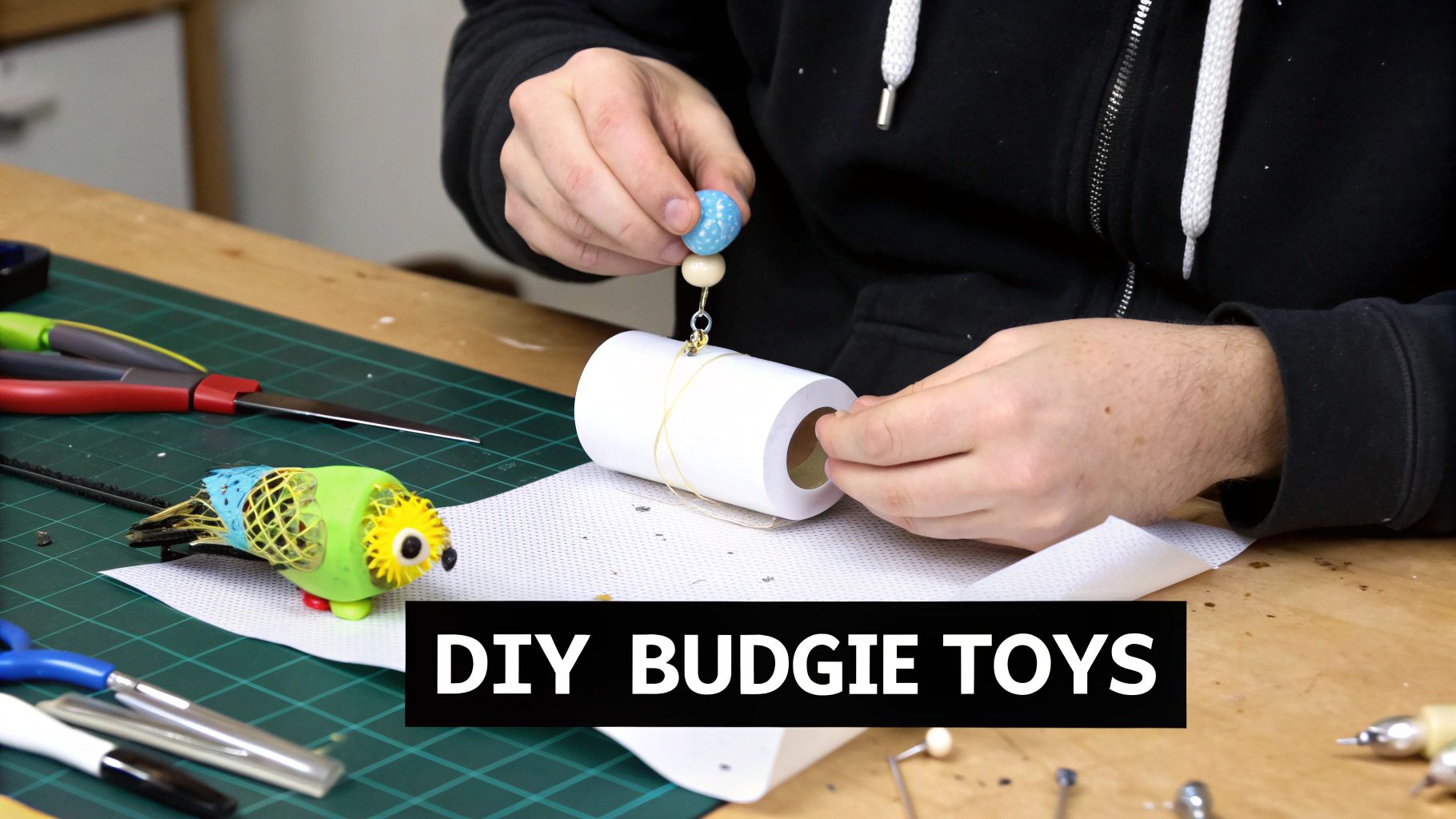
For the hands-on bird lover, making your own toys is one of the most rewarding things you can do. It's a fantastic, budget-friendly way to keep your budgie's world interesting, and it lets you create something that perfectly suits their quirky little personality. The best part? You probably have bird-safe materials sitting around your house right now, just waiting to become your flock's next favourite thing.
Of course, when you're crafting for your budgie, safety is always number one. Simple, natural, and untreated materials are your best mates for any DIY project.
Simple Shredding and Foraging Creations
Budgies have a deep-seated instinct to shred, and thankfully, making toys to satisfy this urge is incredibly easy. These ideas need hardly any tools but deliver maximum fun.
- Toilet Roll Shredder: Grab a plain, ink-free cardboard toilet paper or paper towel roll. You can cut it into rings for them to demolish or stuff it with shredded, plain paper. For a bit of a challenge, hide a few seeds inside to turn it into a simple foraging puzzle.
- Paper Foraging Pouch: Take a small square of plain paper, pop a treat in the middle, and twist the ends to make a little pouch. Your budgie will have a ball tearing it apart to get the reward inside.
- Natural Bead Mobile: Thread some untreated wooden beads, bits of balsa wood, or even plain pasta onto a strip of vegetable-tanned leather or bird-safe rope. Hang it up, and you've got a great swing-and-chew toy.
Safety Tip: Always make sure any ropes or strips you use are made from natural fibres like cotton or sisal. Check them often and snip off any long, frayed strands to make sure your budgie's feet or toes don't get tangled.
Sourcing Safe Components for Your Projects
Once you get a taste for DIY, your projects might get a bit more ambitious. This is when knowing where to find reliable, bird-safe components becomes non-negotiable for making sure your creations are totally non-toxic and secure.
Look for stainless steel hardware—things like quick links, O-rings, and bell clasps (just be sure to remove the clapper). It’s the only metal that’s guaranteed not to rust or contain nasty toxins like zinc or lead. For wood, stick to untreated, natural options like balsa, pine, or native Australian eucalyptus. You can often find safe toy parts from reputable bird supply shops. For more ideas and safety checks, our comprehensive guide to making DIY bird toys is a great resource.
Remember, the goal of any DIY toy is safe destruction. A toy that ends up in tatters is the sign of a happy, engaged, and well-cared-for budgie. Your effort will be paid back tenfold when you see your little companion joyfully playing with something you made just for them.
Your Budgie Toy Questions Answered
Even with the best intentions, it’s normal to have a few lingering questions when you’re trying to create the perfect setup for your budgie. Getting bird enrichment right can feel a bit tricky at first, so I’ve pulled together some of the most common queries I hear from Aussie budgie owners to give you clear, straightforward answers.
How Many Toys Should a Budgie Have in Its Cage?
As a good starting point, aim for three to five different types of toys inside the cage at any one time. You want to offer a nice mix of activities—maybe a swing for some exercise, a shreddable toy like our Balsa & Vine Ball Skewer for that chewing instinct, and a simple foraging toy to get their mind working.
The real key here is balance. The cage needs enough to keep them busy and prevent boredom, but not so much that it becomes a cluttered obstacle course. Your budgie still needs plenty of room to move around and stretch its wings freely. A better approach is to have a larger collection of eight to ten toys that you can rotate regularly to keep their environment feeling fresh and exciting.
What Should I Do If My Budgie Is Scared of New Toys?
Don’t worry, this is completely normal! Budgies are prey animals, which means they're naturally wired to be cautious of new and unfamiliar objects. This instinct is called neophobia. The trick is to introduce new things slowly and with plenty of patience.
Start by placing the new toy outside the cage for a day or two where your budgie can see it from a safe distance. Let them get used to its presence. You can even interact with the toy yourself near the cage, showing them it's harmless. When you do finally put it inside, place it away from their favourite perch or food bowl so they don't feel cornered. A little bit of millet spray placed nearby can also work wonders to create a positive association.
When Is It Time to Replace a Bird Toy?
It's a good habit to give your budgie's toys a quick check-over every time you clean the cage. Shredding and wood toys are meant to be destroyed—that's their job! But once they get so frayed that a little foot could get tangled in loose threads or fibres, it's time to take them out.
For plastic toys, keep an eye out for any sharp, broken edges that could cause a cut. If a toy has metal parts, check for rust. This is exactly why stainless steel is the safest choice, as it won’t rust and become a hazard. If a toy is too soiled to be properly cleaned or is just looking well and truly worn out, it's safest to replace it.
Are Mirror Toys Safe for Budgies?
Mirrors are a pretty controversial topic in the Australian bird community, and for good reason. While they might seem like a bit of harmless fun, they can sometimes trigger some serious behavioural issues.
A single budgie might form an unhealthy obsession with its reflection, thinking it’s a real mate. This can lead to problems like obsessive regurgitation for the "other bird," aggression towards you, and a breakdown of the bond you've built.
Generally, we recommend focusing on interactive toys that encourage natural behaviours like shredding, chewing, and foraging. Even better, if your situation allows for it, is providing a real budgie companion. These options offer a much healthier and more enriching form of social stimulation.
What's Next?
Hopefully, you're now feeling much more confident about choosing the perfect toys for your budgie. We've covered everything from the safest materials to clever DIY ideas, giving you the tools to keep your little feathered friend happy, busy, and mentally sharp.
The journey doesn't stop here, though. The best way to give your budgie an incredible life is to keep learning. Our guides are always here to help you along the way with trusted advice from an Aussie perspective.
Why not dive into our complete collection of species-appropriate budgie toys? You'll find everything from clever foraging puzzles to immensely satisfying shreddables, all designed right here in Australia with your budgie's wellbeing at the heart of it all.
Keep Reading
Disclaimer Summary: The information in this article is general in nature and may include external links or resources not created by Lou Lou Bells Bird Toys. Every bird is unique, so we encourage you to seek personalised advice from your own veterinarian or avian specialist. For full details, please read our complete disclaimer here.